Legislative Activity
Track August's sponsored bills, co-sponsored legislation, and voting record
This Act treats spaceports like airports for the purpose of issuing tax-exempt bonds to finance their construction and operations.
Neal Dunn
Representative
FL
Neal Dunn
Representative
FL
The Secure U.S. Leadership in Space Act of 2025 aims to bolster the commercial space industry by treating spaceports similarly to airports under tax-exempt bond rules. This allows qualifying spaceport facilities to access crucial financing benefits typically reserved for public infrastructure. The Act specifically defines what constitutes a spaceport for these purposes, including manufacturing and operational facilities, regardless of public access. This measure is designed to encourage investment in the infrastructure necessary for U.S. leadership in space activities.
This resolution expresses support for designating May as "Fallen Heroes Memorial Month" to honor the more than 1.3 million service members who died protecting American liberty and requests a Presidential proclamation to encourage national remembrance.
Barry Moore
Representative
AL
Barry Moore
Representative
AL
This resolution expresses strong support for designating the month of May as "Fallen Heroes Memorial Month." It honors the more than 1.3 million service members who have died protecting American liberty throughout history. Furthermore, the bill urges the President to issue a proclamation encouraging all Americans to reflect upon and honor the ultimate sacrifice made by these heroes.
The Emergency Care Improvement Act establishes Medicare and Medicaid coverage for specified emergency services provided by qualifying freestanding emergency centers, treating them similarly to hospital emergency departments under EMTALA.
Jodey Arrington
Representative
TX
Jodey Arrington
Representative
TX
The Emergency Care Improvement Act officially brings qualifying Freestanding Emergency Centers (FECs) into the standard Medicare and Medicaid coverage systems. This legislation ensures that these state-licensed facilities, which operate as full emergency departments, are reimbursed for providing specified emergency services. Furthermore, the Act explicitly includes FECs under the requirements of the Emergency Medical Treatment and Labor Act (EMTALA).
This Act prohibits the use of federal funds for emergency response maps after fiscal year 2026 unless the maps meet strict digital, storage, interoperability, and detailed content requirements, and mandates a federal strategy for acquiring and distributing these compliant maps.
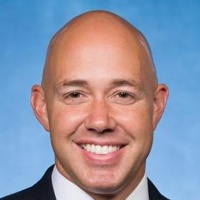
Brian Mast
Representative
FL
Brian Mast
Representative
FL
The Uniform School Mapping Act prohibits the use of federal funds to purchase emergency response maps after fiscal year 2026 unless those maps meet strict digital, storage, and content requirements. These mandated maps must detail critical building features and be easily shareable with public safety agencies at no cost. Furthermore, the Secretary of Homeland Security must develop a strategy to ensure the federal government acquires and distributes these standardized maps for critical properties.
This Act permits qualified and retired law enforcement officers to carry and discharge concealed firearms in school zones under existing authorization.
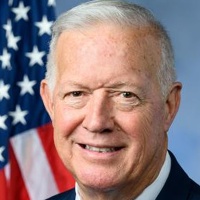
Randy Weber
Representative
TX
Randy Weber
Representative
TX
The Police Officers Protecting Children Act amends federal law to allow qualified active and retired law enforcement officers to carry and discharge concealed firearms within a school zone, provided they meet existing authorization requirements. This legislation clarifies exceptions to the general prohibition on firearms in school zones for these specific personnel.
This Act officially designates the POW/MIA Memorial and Museum in Jacksonville, Florida, as the National POW/MIA Memorial and Museum, establishing reporting requirements for its future operation.
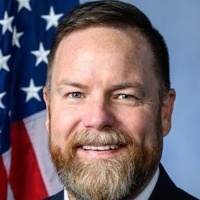
Aaron Bean
Representative
FL
Aaron Bean
Representative
FL
This bill officially designates the memorial and museum currently under construction in Jacksonville, Florida, as the **National POW/MIA Memorial and Museum**. The legislation recognizes the museum's crucial role in honoring and educating the public about service members who were prisoners of war or remain missing in action. To maintain this designation, the museum must submit a comprehensive operational report to Congress within 90 days of enactment. Failure to open satisfactorily within five years or submit the required report will result in the loss of this official federal title.
This Act repeals the federal ban on mailing concealable firearms and prohibits the U.S. Postal Service from creating rules that restrict the mailing of firearms or require the disclosure of customer records as a condition of mailing.
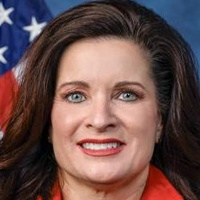
Sheri Biggs
Representative
SC
Sheri Biggs
Representative
SC
The Protecting the Mailing of Firearms Act repeals the federal ban on mailing certain concealable firearms. This legislation also prohibits the U.S. Postal Service from enacting rules that would block or unduly restrict the mailing of firearms, ammunition, or their components. Furthermore, the USPS cannot require sellers to disclose customer records or firearm serial numbers as a condition for mailing these items.
This act prohibits federal funding for colleges and universities that mandate COVID-19 vaccinations for students or employees.
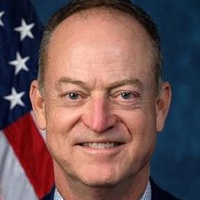
Mark Messmer
Representative
IN
Mark Messmer
Representative
IN
The No Vaccine Mandates in Higher Education Act prohibits the federal government from providing funds to colleges and universities that require students or employees to receive a COVID-19 vaccine. This measure ensures that institutions of higher education cannot mandate vaccination for enrollment, employment, or access to services without risking the loss of federal funding.
This bill voids the interagency guidance on climate-related financial risk management for large financial institutions and prohibits the issuing of substantially similar guidance.
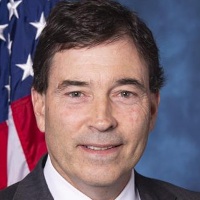
Troy Balderson
Representative
OH
Troy Balderson
Representative
OH
This bill nullifies the recent interagency guidance issued by the Federal Reserve, OCC, and FDIC concerning climate-related financial risk management for large financial institutions. By voiding this specific guidance, the legislation prevents these agencies from enforcing those climate risk management principles. Furthermore, the bill prohibits the agencies from issuing any future guidance that is substantially similar to the canceled rules.
This bill mandates that the Department of Housing and Urban Development (HUD) report annually on its methods for allocating disaster and mitigation grant funds and suggest improvements for consistency and speed.
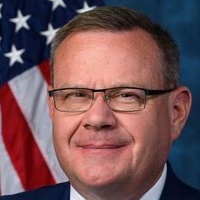
Tim Moore
Representative
NC
Tim Moore
Representative
NC
The Disaster Relief Transparency Act mandates that the Department of Housing and Urban Development (HUD) submit detailed annual reports explaining its methodology for allocating funds from key disaster recovery and mitigation grant programs. These reports must clarify how allocation amounts may change between appropriations and suggest improvements for consistency and speed. The initial report, due within 90 days of enactment, will focus on FY 2024 and 2025 funding.
This resolution strongly supports the Second Amendment right to keep and bear arms while commending President Trump for working to reverse recent Biden administration infringements on those freedoms.
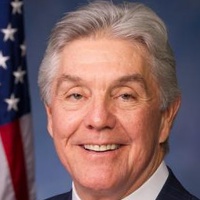
Roger Williams
Representative
TX
Roger Williams
Representative
TX
This resolution strongly affirms the constitutional right to keep and bear arms under the Second Amendment. It criticizes recent actions by the Biden administration and federal agencies, such as the ATF, for implementing what are viewed as infringements on these freedoms. The resolution commends former President Trump for his past efforts to protect Second Amendment rights against such measures.
The Safeguard American Voter Eligibility (SAVE) Act mandates that individuals registering to vote in federal elections must present documentary proof of U.S. citizenship.

Chip Roy
Representative
TX
Chip Roy
Representative
TX
The Safeguard American Voter Eligibility Act (SAVE Act) significantly amends federal law to require individuals registering to vote in federal elections to present documentary proof of U.S. citizenship. This legislation mandates that states actively clean their voter rolls and cooperate with federal agencies to verify citizenship status. It establishes new criminal penalties for officials who fail to enforce these documentation requirements.
This Act terminates the transferability of certain non-renewable portions of clean electricity credits and phases out the production and investment tax credits for solar and wind energy over four years.

Julie Fedorchak
Representative
ND
Julie Fedorchak
Representative
ND
The Ending Intermittent Energy Subsidies Act of 2025 aims to significantly reduce federal support for wind and solar energy production. This bill terminates the transferability of certain non-renewable portions of clean electricity tax credits. Furthermore, it institutes a four-year phase-out, ultimately eliminating both the clean electricity production and investment tax credits specifically for solar and wind power generation.
This act prohibits the destruction of broadband internet access service facilities by expanding federal law to protect all such infrastructure, regardless of who operates it.
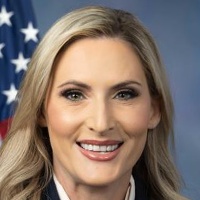
Laurel Lee
Representative
FL
Laurel Lee
Representative
FL
The Stopping the Theft and Destruction of Broadband Act of 2025 strengthens federal law to explicitly prohibit the destruction of broadband internet access service facilities. This update broadens protection beyond defense-related infrastructure to cover any privately or publicly operated broadband service. The Act provides a clear definition of what constitutes broadband internet access service under federal protection.
The Law Enforcement Support and Counter Transnational Repression Act mandates a public awareness campaign and technological development to combat transnational repression, safeguarding First Amendment rights and providing resources for victims.
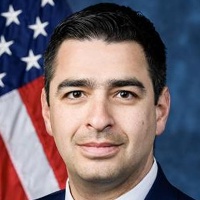
Gabe Evans
Representative
CO
Gabe Evans
Representative
CO
The Law Enforcement Support and Counter Transnational Repression Act directs the Department of Homeland Security to create a public service announcement campaign educating the public and international allies about transnational repression and related terrorism threats, including resources for victims. It also requires research and development of technologies to support law enforcement in countering transnational repression while protecting constitutional rights. "Transnational repression" is defined as actions by a foreign government or its agents to coerce, harass, threaten, or retaliate against a person or their family in the U.S. or against a U.S. person.
The "Strengthening State and Local Efforts to Counter Transnational Repression Act" enhances law enforcement training and coordination to combat transnational repression activities targeting individuals in the U.S.
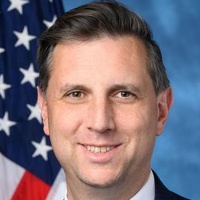
Seth Magaziner
Representative
RI
Seth Magaziner
Representative
RI
The "Strengthening State and Local Efforts to Counter Transnational Repression Act" amends the Homeland Security Act of 2002 to bolster law enforcement's ability to counter transnational repression and related terrorism threats. It mandates the development of a training program for state, local, and tribal law enforcement to identify, record, and share information on transnational repression, as well as to protect potential targets and victims. The Act also calls for research and development of technology to enhance participation in these training programs and requires a report to Congress on its implementation. Transnational repression is defined as actions by a foreign government or its agents intended to coerce, harass, or threaten individuals in the U.S.
This Act redefines immediate relatives for immigration, caps family-sponsored visas, and creates a new, non-work, temporary visa for parents of adult U.S. citizens.
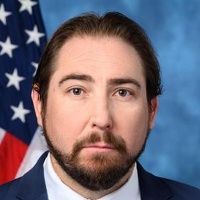
Eli Crane
Representative
AZ
Eli Crane
Representative
AZ
The Nuclear Family Priority Act significantly restructures U.S. family-based immigration by redefining "immediate relatives" to only include spouses and children of U.S. citizens, removing parents from that top category. It also establishes a new, temporary nonimmigrant visa for parents of adult U.S. citizens, which prohibits work and public benefits. Furthermore, the bill revises the annual cap for family-sponsored visas and makes numerous technical amendments across immigration law to align with these changes.
This bill expands mandatory detention for certain non-citizens by adding convictions for trespassing, vandalism, and arson to the list of triggering property crimes.
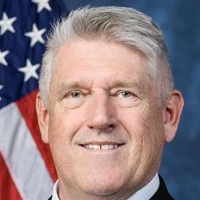
Troy Downing
Representative
MT
Troy Downing
Representative
MT
The Safeguarding American Property Act of 2025 expands mandatory detention requirements for certain non-citizens who commit specific property crimes. This legislation adds offenses like trespassing, vandalism, and arson to the list of crimes that require immigration authorities to detain an individual during removal proceedings. The bill also clarifies language related to violent offenses to ensure comprehensive grounds for detention.
The TAKE IT DOWN Act establishes federal criminal penalties for sharing nonconsensual intimate images (real or digitally forged) and mandates that covered online platforms remove such content within 48 hours of receiving a valid request.

Maria Salazar
Representative
FL
Maria Salazar
Representative
FL
The TAKE IT DOWN Act establishes federal criminal penalties for the intentional sharing of both real and digitally forged nonconsensual intimate images, with stricter penalties for images involving minors. It mandates that covered online platforms create a clear process for victims to request the removal of such content within 48 hours. Failure by platforms to reasonably comply with these removal requests will be treated as an unfair or deceptive practice enforced by the Federal Trade Commission (FTC).
This bill mandates an independent assessment of VA notices to claimants to improve clarity and efficiency, and it extends the expiration date for certain pension payment limits.
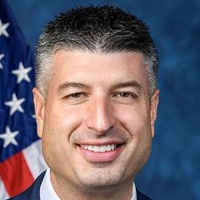
Tom Barrett
Representative
MI
Tom Barrett
Representative
MI
The Clear Communication for Veterans Claims Act mandates an independent assessment of all notices sent by the Department of Veterans Affairs (VA) to ensure they are clearer, more concise, and easier for claimants to understand. The VA Secretary must implement the resulting recommendations within one year of receiving the assessment. Additionally, this bill slightly extends the expiration date for certain existing limits on veterans' pension payments.