Legislative Activity
Track August's sponsored bills, co-sponsored legislation, and voting record
This bill restores protections to prevent private health insurance plans from discriminating against dialysis patients with End-Stage Renal Disease (ESRD) or shifting their treatment costs unfairly onto Medicare.
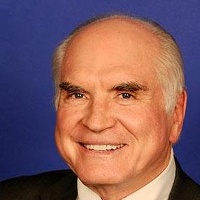
Mike Kelly
Representative
PA
Mike Kelly
Representative
PA
The Restore Protections for Dialysis Patients Act aims to prevent private health insurance plans from discriminating against patients with End-Stage Renal Disease (ESRD). This legislation clarifies that plans cannot offer worse benefits or unfairly limit coverage for dialysis treatments compared to other medical services. Furthermore, it stops these plans from shifting the primary financial responsibility for ESRD care onto Medicare. The bill maintains existing rules ensuring fair treatment while preserving a health plan's ability to select its network of dialysis providers.
This bill revises physician self-referral rules to create a special exemption for certain rural, physician-owned hospitals and removes expansion restrictions for existing physician-owned hospitals.
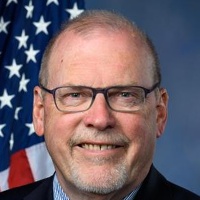
H. Griffith
Representative
VA
H. Griffith
Representative
VA
The Physician Led and Rural Access to Quality Care Act revises physician self-referral rules to improve healthcare access in underserved areas. Specifically, it creates a new exception allowing physician self-referrals to hospitals located in designated rural areas that meet specific distance requirements. Furthermore, the bill removes existing restrictions that previously limited the expansion of services at physician-owned hospitals.
The WOLF Act of 2025 increases livestock indemnity payments to 100% of market value for animals killed by Mexican gray wolves and establishes a new formula for annual emergency relief payments to affected producers.
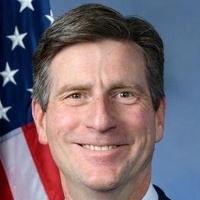
Greg Stanton
Representative
AZ
Greg Stanton
Representative
AZ
The WOLF Act of 2025 aims to increase financial support for livestock producers affected by Mexican gray wolf depredation. This legislation mandates that farmers receive 100% of the market value for livestock killed by these wolves. Additionally, it establishes a new emergency relief program to help producers mitigate ongoing negative impacts, such as increased management costs and reduced birth rates.
This act establishes a mandatory, value-based case rate payment system for Medicare radiation oncology services to incentivize quality care and cost efficiency while protecting patient access and offering transportation assistance.
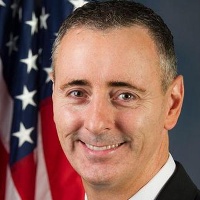
Brian Fitzpatrick
Representative
PA
Brian Fitzpatrick
Representative
PA
The Radiation Oncology Case Rate Value Based Program Act of 2025 establishes a new Medicare payment system that pays providers a single, set rate for an entire episode of radiation therapy care, rather than paying for individual services. This program aims to incentivize high-quality, efficient care while achieving cost savings for Medicare. It also includes specific provisions to support patient access, such as a health equity bonus for addressing transportation insecurity. Finally, the bill exempts the savings generated by this new payment structure from standard Medicare budget neutrality adjustments.
The Fair and Open Competition Act of 2025 prohibits the federal government from requiring or penalizing bidders or contractors on federally funded construction projects based on their agreement or non-agreement with labor unions.
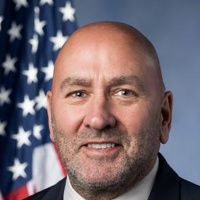
Clay Higgins
Representative
LA
Clay Higgins
Representative
LA
The Fair and Open Competition Act of 2025 ensures fair competition on federally funded construction projects by prohibiting the government from requiring or penalizing bidders based on union agreements. This legislation aims to keep federal agencies neutral in labor relations while promoting cost savings and opening opportunities for all businesses. Exceptions to this neutrality rule are strictly limited to specific public health, safety, or national security emergencies.
This bill reauthorizes funding for children's hospital graduate medical education programs through 2030 while restricting payments to hospitals that provide certain gender-affirming surgeries and medications to minors.

Dan Crenshaw
Representative
TX
Dan Crenshaw
Representative
TX
The Children’s Hospital GME Support Reauthorization Act of 2025 extends critical federal funding for graduate medical education programs at children's hospitals through fiscal year 2030. The bill increases annual funding allocations for the program during this extension period. Notably, it introduces a new restriction that prohibits payments to hospitals that provided certain gender-affirming surgeries and high-dose hormone treatments to minors in the preceding year, with specific exceptions for emergency care and treatment of certain medical conditions.
This bill mandates a study and report on the effectiveness of home cardiorespiratory monitors for preventing sudden unexpected infant death (SUID) and provides recommendations for insurance coverage.
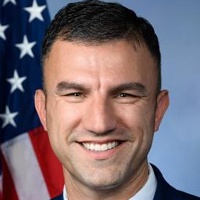
Rudy Yakym
Representative
IN
Rudy Yakym
Representative
IN
The Baby Observation Act mandates that the Secretary of Health and Human Services conduct a comprehensive study on the effectiveness of home cardiorespiratory monitors in preventing sudden unexpected infant death (SUID). The resulting report must detail the monitors' performance, suggest new infant care practices, and provide recommendations on criteria for insurance coverage. This aims to determine if these vital sign monitors warrant broader health insurance reimbursement.
This bill mandates that veterans' disability compensation, dependency and indemnity compensation, and clothing allowance rates increase starting December 1, 2025, by the same percentage as the Social Security cost-of-living adjustment for that year.
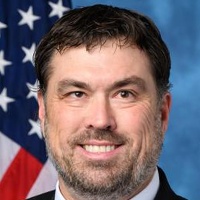
Morgan Luttrell
Representative
TX
Morgan Luttrell
Representative
TX
The Veterans’ Compensation Cost-of-Living Adjustment Act of 2025 mandates an increase in disability compensation and dependency and indemnity compensation (DIC) rates for veterans and survivors. This increase, effective December 1, 2025, will match the percentage increase applied to Social Security benefits for that year. The bill also requires the VA to publish the adjusted rates according to the Social Security Administration's COLA announcement schedule.
The Major Richard Star Act ensures that military retirees with combat-related disabilities can concurrently receive their full military retirement pay and VA disability compensation without reduction.

Gus Bilirakis
Representative
FL
Gus Bilirakis
Representative
FL
The Major Richard Star Act ensures that military retirees with combat-related disabilities can receive both their military retirement pay and VA disability compensation concurrently without reduction. This law removes previous restrictions that caused military retirement pay to be offset by VA disability payments for these specific cases. The changes take effect on the first day of the month following the Act's enactment.
This act establishes a grant program to reimburse eligible U.S. communities within 200 miles of the U.S.-Mexico border for security-related costs, provided they are not designated as "sanctuary jurisdictions."
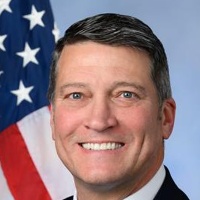
Ronny Jackson
Representative
TX
Ronny Jackson
Representative
TX
The Reimbursing Border Communities Act of 2025 establishes a grant program to help local governments within 200 miles of the U.S.-Mexico border cover specific security-related costs. To qualify, communities cannot be designated as "sanctuary jurisdictions" that limit cooperation with federal immigration enforcement. Grants are capped at $500,000 per year and strictly prohibit funding for non-citizen basic needs or legal representation.
This act expands the Work Opportunity Tax Credit to include employers who hire qualified military spouses.
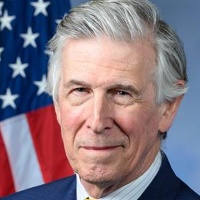
Donald Beyer
Representative
VA
Donald Beyer
Representative
VA
The Military Spouse Hiring Act amends the Internal Revenue Code to expand eligibility for the Work Opportunity Tax Credit (WOTC). This change allows employers to claim the tax credit for hiring qualified military spouses. A qualified military spouse is defined as someone certified as being married to a member of the U.S. Armed Forces.
This bill allows investors to defer taxes on capital gain dividends from mutual funds when those dividends are automatically reinvested until the shares are sold or the investor passes away.
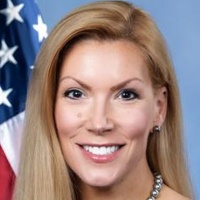
Beth Van Duyne
Representative
TX
Beth Van Duyne
Representative
TX
This bill, the Generating Retirement Ownership through Long-Term Holding Act, allows individual investors to defer paying taxes on capital gain dividends from mutual funds if those dividends are automatically reinvested into more fund shares. Taxes on these deferred gains are only due when the investor sells the shares or upon death. This provision aims to encourage long-term investment in mutual funds by providing immediate tax relief on reinvested earnings.
This bill prohibits the Department of Homeland Security from procuring batteries from specific foreign companies with ties to adversarial nations, with exceptions for national security and research purposes.

Carlos Gimenez
Representative
FL
Carlos Gimenez
Representative
FL
The "Decoupling from Foreign Adversarial Battery Dependence Act" prohibits the Department of Homeland Security from procuring batteries from specific foreign companies, primarily those with ties to China, starting in 2027. Waivers are permitted under certain conditions, such as lack of national security risk or use for research purposes, with congressional notification required. The Secretary of Homeland Security must report on the ban's impact on Department of Homeland Security operations and costs.
The SHIELD Against CCP Act establishes a working group within the Department of Homeland Security to counter threats posed by the Chinese Communist Party related to terrorism, cybersecurity, border and port security, and transportation security.
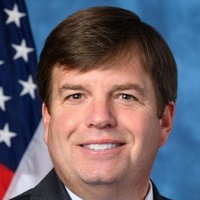
Dale Strong
Representative
AL
Dale Strong
Representative
AL
The "SHIELD Against CCP Act" establishes a working group within the Department of Homeland Security to counter threats posed by the Chinese Communist Party (CCP) related to terrorism, cybersecurity, border and port security, and transportation security. This group will examine and report on the Department's efforts, account for dedicated resources, identify policy gaps, and facilitate cooperation, while also sharing information with federal, state, and local partners. The Secretary of Homeland Security must submit annual reports to Congress for five years, assessing CCP threats and the activities of the working group. The working group will terminate seven years after its establishment.
This bill officially designates the United States Postal Service facility at 620 East Pecan Boulevard in McAllen, Texas, as the "Agent Raul H. Gonzalez Jr. Memorial Post Office Building."
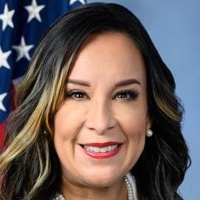
Mónica De La Cruz
Representative
TX
Mónica De La Cruz
Representative
TX
This bill officially designates the United States Postal Service facility located at 620 East Pecan Boulevard in McAllen, Texas, as the "Agent Raul H. Gonzalez Jr. Memorial Post Office Building." The legislation ensures that all official records and documents reflect this new memorial name for the building.
The BAH Restoration Act ensures that uniformed service members receive a basic housing allowance that covers the full cost of adequate housing based on location, pay grade, and dependency status.
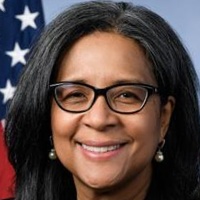
Marilyn Strickland
Representative
WA
Marilyn Strickland
Representative
WA
The BAH Restoration Act aims to restore the Basic Allowance for Housing (BAH) to cover 100% of service members' housing costs. This will be done by amending title 37 of the United States Code, ensuring that the monthly BAH is equivalent to the determined monthly cost of adequate housing based on pay grade, dependency status, and location. The Secretary of Defense will determine the specific housing costs in each area.
The SPEED for BEAD Act aims to streamline broadband deployment by modifying the Infrastructure Investment and Jobs Act, preventing unnecessary regulations, and prioritizing efficient use of funds for broadband expansion.
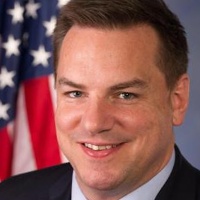
Richard Hudson
Representative
NC
Richard Hudson
Representative
NC
The SPEED for BEAD Act amends the Infrastructure Investment and Jobs Act to streamline broadband deployment grants. It renames the "Equity" program to "Expansion," allows funds for workforce development, and permits removal of high-cost locations from project areas. The act also prohibits certain conditions related to labor, climate change, and network management, and ensures consideration of all broadband technologies.
Censures Representative Al Green for disrupting President Trump's address to Congress, violating decorum, and bringing disrepute to the House.
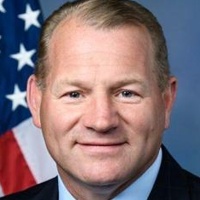
Troy Nehls
Representative
TX
Troy Nehls
Representative
TX
This resolution censures Representative Al Green for disrupting President Trump's address to Congress, violating decorum, and bringing disrepute to the House. It mandates that Representative Green present himself to the House for a public reading of the censure resolution by the Speaker.
The Fighter Force Preservation and Recapitalization Act of 2025 aims to increase and modernize the Air Force's fighter aircraft fleet, ensuring a strong national defense through the year 2030.
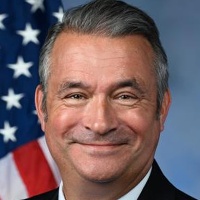
Don Bacon
Representative
NE
Don Bacon
Representative
NE
The Fighter Force Preservation and Recapitalization Act of 2025 aims to modernize and maintain the Air Force's fighter aircraft fleet by increasing the minimum number of fighter aircraft, requiring detailed reports on the fleet's status, prioritizing the assignment of new aircraft to existing squadrons, and preserving the Air National Guard's fighter capabilities. The act mandates the Air Force to assign at least three out of every four new advanced fighter aircraft to existing Air Force fighter squadrons and maintain at least 25 Air National Guard fighter aircraft squadrons. Additionally, it requires the Secretary of the Air Force to develop and submit an annual modernization plan for the Air National Guard's fighter fleet to Congress. The Act defines specific categories of fighter aircraft to clarify modernization efforts.
The "Second Chances for Rural Hospitals Act" expands Medicare eligibility for rural emergency hospitals to include certain facilities that closed between 2014 and 2020, with modified payment rules for those near existing hospitals.
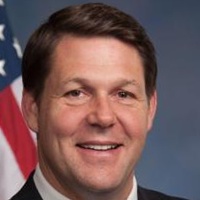
Jodey Arrington
Representative
TX
Jodey Arrington
Representative
TX
The "Second Chances for Rural Hospitals Act" broadens the definition of "rural emergency hospital" under Medicare, enabling certain previously closed rural hospitals to re-qualify. Effective January 1, 2027, it allows facilities that ceased operations between 2014 and 2020 to become rural emergency hospitals. It also modifies payment rules, specifying that increased payments will not apply to facilities located less than 35 miles from the nearest hospital.