Legislative Activity
Track August's sponsored bills, co-sponsored legislation, and voting record
This bill establishes a Department of Veterans Affairs program to designate and fund at least five geographically dispersed "Innovative Therapies Centers of Excellence" to research and provide cutting-edge treatments like MDMA and Psilocybin for conditions such as PTSD and chronic pain.
J. Correa
Representative
CA
J. Correa
Representative
CA
This bill establishes the Innovative Therapies Centers of Excellence Act of 2025, directing the Department of Veterans Affairs (VA) to designate at least five medical facilities as specialized hubs for cutting-edge treatments. These Centers of Excellence must focus on research, training partnerships, and clinical evaluation of innovative therapies for covered conditions like PTSD and chronic pain. The legislation specifically names substances such as MDMA and Psilocybin as part of the therapies to be explored, supported by dedicated annual funding.
This Act prohibits the EEOC and the Office of Congressional Workplace Rights from finalizing or enforcing any regulations under the Pregnant Workers Fairness Act that relate to abortion or abortion-related services.
Mary Miller
Representative
IL
Mary Miller
Representative
IL
The Love Them Both Act of 2025 amends the implementation of the Pregnant Workers Fairness Act by prohibiting the EEOC and the Office of Congressional Workplace Rights from finalizing or enforcing any related regulations that address abortion or abortion-related services. This measure specifically blocks the creation of new rules under the existing act concerning abortion care.
This bill removes several specific species from the lists of threatened and endangered species under the Endangered Species Act and prohibits the listing of the Bukharan markhor.

Chip Roy
Representative
TX
Chip Roy
Representative
TX
This bill amends the Endangered Species Act of 1973 to remove several specific species, including the Arabian oryx and Grevy's zebra, from the lists of threatened and endangered species. Furthermore, it prohibits the Secretary from ever listing the Bukharan markhor as either a threatened or endangered species. The overall effect is to eliminate federal protection for these particular animals under the Act.
The CARE Act of 2025 mandates Medicare to test a new payment model covering emergency response services provided by ground ambulance companies even when patient transport does not occur.

Mike Carey
Representative
OH
Mike Carey
Representative
OH
The CARE Act of 2025 mandates that the Center for Medicare and Medicaid Innovation (CMMI) test a new payment model for emergency services. This model will allow Medicare to pay ground ambulance providers for emergency responses, even when a patient does not ultimately require transport under Medicare Part B. The five-year demonstration aims to evaluate the impact of covering these non-transport emergency responses on patient access and resource utilization.
This bill drastically tightens and expands U.S. sanctions against Iran across its leadership, military, and economy while severely restricting the President's authority to lift these restrictions.
Zachary (Zach) Nunn
Representative
IA
Zachary (Zach) Nunn
Representative
IA
The Maximum Pressure Act dramatically tightens and expands U.S. sanctions against Iran across its military, missile, and economic sectors, codifying existing restrictions and severely limiting the President's authority to grant sanctions relief. It mandates immediate sanctions on top Iranian officials and increases penalties for international parties aiding Iran's weapons programs. Furthermore, the bill enhances oversight by requiring numerous detailed reports to Congress regarding Iran's terrorism financing, nuclear timeline, and economic influence, while also redirecting certain frozen Iranian funds to victims of state-sponsored terrorism.
The Old Drugs, New Cures Act establishes a "priority research drug" designation for older, approved drugs being investigated for new, high-need indications, which impacts their pricing calculations under Medicaid and Medicare.
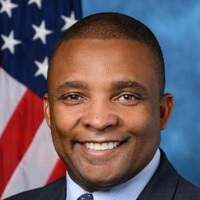
Donald Davis
Representative
NC
Donald Davis
Representative
NC
The Old Drugs, New Cures Act establishes a "priority research drug" designation for older, approved drugs being actively investigated for new uses addressing significant unmet medical needs. This designation allows manufacturers to seek this status if the target condition heavily impacts federal health program beneficiaries. Crucially, this designation modifies how these drugs are treated under Medicaid and Medicare pricing calculations, specifically excluding them from certain "best price" and "line extension" rules.
The COMPLETE Care Act increases Medicare payments to primary care providers for integrating behavioral health services between 2027 and 2029 and provides technical assistance to support these practices.
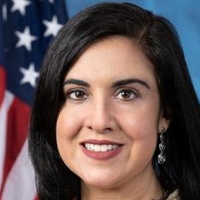
Nicole Malliotakis
Representative
NY
Nicole Malliotakis
Representative
NY
The COMPLETE Care Act aims to improve mental healthcare access by providing Medicare incentives for primary care providers to integrate behavioral health services into their practices between 2027 and 2029. This legislation offers increased Medicare payments for specific integrated services during those years, ensuring these bonuses do not trigger cuts elsewhere in the Medicare budget. Additionally, the bill mandates technical assistance to help primary care offices successfully adopt these new integrated care models.
The ABC Act mandates a comprehensive review and simplification of processes, forms, and communications across Medicare, Medicaid, CHIP, and Social Security to alleviate burdens on family caregivers.
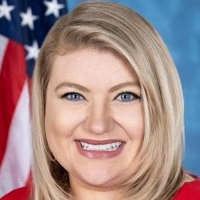
Katherine Cammack
Representative
FL
Katherine Cammack
Representative
FL
The ABC Act mandates a comprehensive review of Medicare, Medicaid, CHIP, and Social Security programs to significantly simplify application processes, forms, and communications for family caregivers. This effort requires federal agencies to streamline requirements, improve customer service, and enhance accessibility across their systems. The goal is to reduce the administrative burden on caregivers while ensuring clear and timely access to essential benefits. Agencies must report their findings and planned actions to Congress within two years of enactment.
This resolution expresses support for diplomatic efforts to ensure Mexico fulfills its annual water delivery obligations to the U.S. under the 1944 treaty.
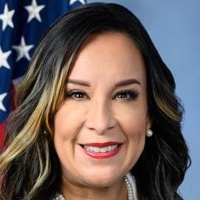
Mónica De La Cruz
Representative
TX
Mónica De La Cruz
Representative
TX
This resolution expresses strong support for diplomatic efforts to ensure Mexico fulfills its annual water delivery obligations to the United States under the 1944 treaty concerning the Colorado, Tijuana, and Rio Grande Rivers. It highlights the negative impact of Mexico's current practice of delaying deliveries until the end of five-year cycles, which causes shortages for South Texas farmers. The bill encourages the Administration to secure timely deliveries and pursue new agreements for a guaranteed minimum annual water transfer.
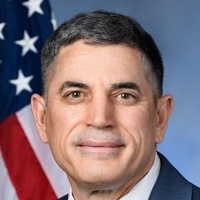
The SHORT Act redefines "firearm" to exclude certain collector's items, eliminates disparate federal treatment of short-barreled rifles and shotguns, preempts state and local registration/tax burdens on these items, and mandates the destruction of certain existing NFA records.
Andrew Clyde
Representative
GA
Andrew Clyde
Representative
GA
The SHORT Act aims to reform federal firearms regulations by redefining what constitutes a "firearm" for tax purposes, largely excluding antique or collector's items. It eliminates disparate federal treatment for short-barreled rifles and shotguns used lawfully and preempts state and local governments from imposing special taxes or registration requirements on these specific weapons. Furthermore, the bill mandates the destruction of certain existing federal registration and transfer records related to defined firearms.
This bill establishes new requirements for Medicare contractors and private Medicare plans to base prior authorization decisions strictly on medical necessity, involve practicing physicians in setting criteria, and increase transparency regarding their utilization review processes.

Mark Green
Representative
TN
Mark Green
Representative
TN
The Reducing Medically Unnecessary Delays in Care Act of 2025 aims to establish stricter federal standards for prior authorization decisions made by Medicare contractors and private Medicare plans. This bill mandates that coverage denials must be based on clear, evidence-based clinical criteria developed with input from practicing physicians. Furthermore, it requires plans to post their authorization rules online, provide advance notice of changes, and publicly report approval and denial statistics. Finally, all final denials of care must be reviewed and issued by a qualified, board-certified physician.
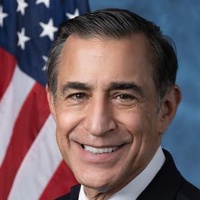
This Act prohibits state and local governments from imposing excise taxes on the sale of firearms, ammunition, or related parts in interstate or foreign commerce.
Darrell Issa
Representative
CA
Darrell Issa
Representative
CA
The Freedom from Unfair Gun Taxes Act of 2025 prohibits state and local governments from imposing excise taxes on the sale of firearms, ammunition, or firearm parts. This restriction specifically targets taxes levied on sales that involve interstate or foreign commerce. The Act explicitly preserves existing federal laws, such as the Pittman-Robertson Wildlife Restoration Act.
This Act mandates a disclaimer on standard mortgage applications directing service members to inquire about VA Home Loan eligibility.
Mónica De La Cruz
Representative
TX
Mónica De La Cruz
Representative
TX
The VA Home Loan Awareness Act of 2025 mandates the addition of a disclaimer on standard mortgage applications, informing applicants who indicate military service that they may qualify for a VA Home Loan. This ensures veterans and service members are immediately directed to explore their VA loan eligibility when applying for a mortgage. The bill also requires the GAO to study the effectiveness of this new disclaimer requirement among lenders.
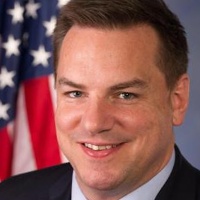
This bill establishes national reciprocity for concealed carry permits, allowing individuals legally permitted to carry in their home state to carry a handgun in any other state that allows concealed carry.
Richard Hudson
Representative
NC
Richard Hudson
Representative
NC
The Constitutional Concealed Carry Reciprocity Act of 2025 establishes a national standard for carrying concealed handguns across state lines. This act allows individuals legally permitted to carry in their home state to carry concealed in any other state that allows its residents to carry concealed firearms. The law does not override private property restrictions or prohibitions on government property, but it provides protections and legal recourse for those traveling in compliance with the new federal standard.
This act eliminates the Optional Practical Training (OPT) program, ending work authorization for F-1 visa students unless explicitly authorized by future Congressional action.

Paul Gosar
Representative
AZ
Paul Gosar
Representative
AZ
The Fairness for High-Skilled Americans Act of 2025 aims to eliminate the Optional Practical Training (OPT) program, which currently allows F-1 student visa holders to gain temporary work authorization after completing their studies. This bill removes the government's authority to grant such work permission unless explicitly authorized by a future Act of Congress.
This act updates executive branch reorganization authority by expanding presidential objectives, redefining covered entities, removing certain restrictions, and extending the relevant deadlines to 2026.

James Comer
Representative
KY
James Comer
Representative
KY
The Reorganizing Government Act of 2025 updates the laws governing presidential executive reorganization plans. This bill expands the objectives for these plans to include reducing federal employees and eliminating burdensome regulations. It also extends the authority for the President to submit reorganization plans to Congress until the end of 2026.
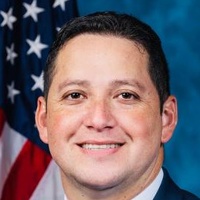
This Act authorizes the Secretary of the Interior to adjust the boundaries of Big Bend National Park by acquiring approximately 6,100 acres through donation or exchange only.
Ernest Gonzales
Representative
TX
Ernest Gonzales
Representative
TX
This Act officially authorizes the adjustment of the boundaries for Big Bend National Park. The Secretary of the Interior is permitted to acquire approximately 6,100 acres of land or rights through donation or exchange to expand the park. Crucially, this expansion explicitly prohibits the use of eminent domain to secure the additional property.
This bill establishes a principal advisor and an advisory panel to promote United States leadership, economic competitiveness, and national security in immersive technologies like AR, VR, and MR.

Suzan DelBene
Representative
WA
Suzan DelBene
Representative
WA
The United States Leadership in Immersive Technology Act of 2025 aims to secure American leadership in augmented, virtual, and mixed reality technologies. This bill establishes a principal advisor and an interagency Advisory Panel to study the economic and security impacts of immersive tech. The goal is to develop strategies for government investment, set standards, and ensure ethical deployment to maintain U.S. competitiveness globally.
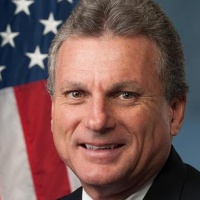
This Act nullifies the EPA's final rule reconsidering the National Ambient Air Quality Standards for Particulate Matter.
Earl Carter
Representative
GA
Earl Carter
Representative
GA
The Common Sense Air Regulations Act invalidates the Environmental Protection Agency's recent final rule concerning the National Ambient Air Quality Standards for Particulate Matter. This legislation immediately nullifies the May 16, 2024, EPA action, preventing any changes to the particulate matter air quality standards from taking effect.
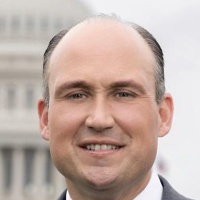
The Innovative FEED Act of 2025 establishes a new regulatory pathway under the FDA for substances added to animal food intended to modify digestive byproducts, reduce foodborne pathogens, or alter gut function without providing nutrition.
Nicholas Langworthy
Representative
NY
Nicholas Langworthy
Representative
NY
The Innovative FEED Act of 2025 establishes a new regulatory category for "zootechnical animal food substances" intended to modify animal digestive byproducts or reduce foodborne pathogens without treating disease. This bill mandates that these new substances must undergo the standard food additive approval process with the FDA, requiring petitioners to provide extensive data on their intended effects. Approval is contingent upon proving the substance achieves its claimed function under proposed use conditions, and all resulting animal food must carry a specific disclaimer stating it is not for disease treatment.