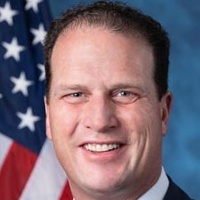
Legislative Activity
Track August's sponsored bills, co-sponsored legislation, and voting record
The HOME Act of 2025 improves VA guidance for lenders on veteran residual income, establishes a voluntary financial counseling option for VA loan recipients, creates a database of adapted housing for sale, and mandates outreach to veterans residing in U.S. Territories.
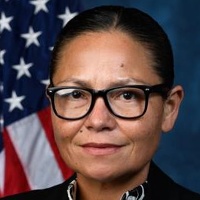
Kimberlyn King-Hinds
Representative
MP
Kimberlyn King-Hinds
Representative
MP
The Heroes Owning and Materializing Equity (HOME) Act of 2025 aims to improve VA home loan processes for veterans. It mandates clearer guidance for lenders on veteran residual income and establishes voluntary financial counseling options. Additionally, the bill requires the VA to create a database of pre-adapted homes for sale and mandates proactive outreach to veterans residing in U.S. Territories regarding their benefits.
This bill expresses Congressional disapproval of the Environmental Protection Agency's final rule setting National Emission Standards for Hazardous Air Pollutants for the rubber tire manufacturing industry.
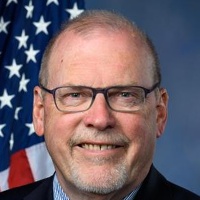
H. Griffith
Representative
VA
H. Griffith
Representative
VA
This bill expresses the disapproval of Congress, under the Congressional Review Act, of a specific rule issued by the Environmental Protection Agency (EPA). The rejected rule concerned the National Emission Standards for Hazardous Air Pollutants for the rubber tire manufacturing industry. As a result of this disapproval, the EPA's proposed standards will not take effect.
This resolution strongly condemns the rise of antisemitism in the United States and honors the memory of Yaron Lischinsky and Sarah Milgrim, who were murdered while promoting peace.
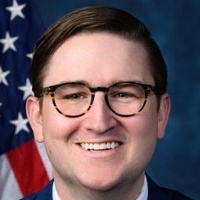
Addison McDowell
Representative
NC
Addison McDowell
Representative
NC
This resolution strongly condemns the rise of antisemitism in the United States and around the world. It specifically honors the memory of Yaron Lischinsky and Sarah Milgrim, who were tragically murdered while promoting peace. Ultimately, Congress reaffirms its commitment to combating all forms of hate and ensuring the vigorous enforcement of laws protecting religious freedom.
The END CELLS Act establishes penalties for introducing, possessing, or aiding in the introduction of unauthorized wireless communication devices in detention facilities.

Gus Bilirakis
Representative
FL
Gus Bilirakis
Representative
FL
The END CELLS Act amends the Communications Act of 1934 to prohibit the introduction, possession, or transfer of unauthorized wireless communication devices in jails and prisons. This legislation establishes significant civil and criminal penalties for violations involving contraband electronics in detention facilities. The law specifically targets actions that violate existing federal or state rules regarding such devices within correctional settings. These new rules apply to all conduct occurring after the date the Act is officially enacted.
This resolution calls upon all Americans to observe Memorial Day 2025 by honoring the service members who died defending freedom and peace.
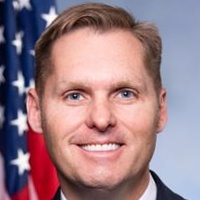
Michael Guest
Representative
MS
Michael Guest
Representative
MS
This resolution calls upon all Americans to observe Memorial Day, 2025, as a solemn occasion to honor the men and women of the Armed Forces who made the ultimate sacrifice in the pursuit of freedom and peace. Congress recognizes the profound debt owed to these patriots who have died defending American values globally. The bill encourages a national expression of respect, pride, and gratitude for their service and sacrifice.
The FREE Act mandates federal agencies to develop and implement a "permitting by rule" system to streamline and expedite permit issuance based on applicant certification of compliance with established standards.

Celeste Maloy
Representative
UT
Celeste Maloy
Representative
UT
The Full Responsibility and Expedited Enforcement (FREE) Act mandates that federal agencies develop and implement a "permitting by rule" system as an alternative to slow, traditional permitting processes. This new system requires applicants to certify compliance with written standards, streamlining approval with a 180-day automatic grant deadline if the agency fails to act. Agencies retain the right to audit and enforce compliance after permits are issued, with the burden of proof shifting to the agency during appeals.
This bill authorizes the award of a Congressional Gold Medal to honor the posthumous heroism of Medal of Honor recipient Sergeant Alfredo 'Freddy' Gonzalez during the Vietnam War, with the original to be displayed at the Museum of South Texas History.
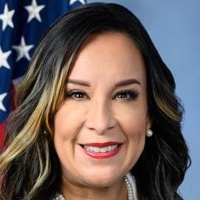
Mónica De La Cruz
Representative
TX
Mónica De La Cruz
Representative
TX
This bill authorizes the posthumous award of a Congressional Gold Medal to Sergeant Alfredo 'Freddy' Gonzalez for his extraordinary heroism during the Vietnam War. The medal will be struck by the Secretary of the Treasury and ultimately presented to the Museum of South Texas History for permanent display. The Act also permits the sale of bronze duplicates to cover production costs, with all proceeds returning to the U.S. Mint Public Enterprise Fund.
This bill establishes a new excise tax on proceeds received by parties from third-party litigation financing agreements, effective after 2025.
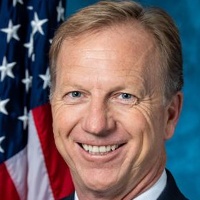
Kevin Hern
Representative
OK
Kevin Hern
Representative
OK
The Tackling Predatory Litigation Funding Act establishes a new federal excise tax on proceeds received from third-party litigation financing agreements. This tax is calculated at the highest income tax rate plus an additional 3.8 percentage points, applied annually to the proceeds received by a "covered party." The bill also institutes specific withholding requirements on payments made to financiers and reclassifies litigation funding proceeds to ensure this new tax structure is applied.
This bill moves the drug tianeptine and its analogues to Schedule III of the Controlled Substances Act.
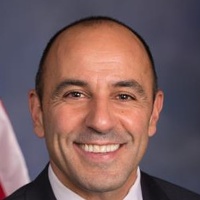
Jimmy Panetta
Representative
CA
Jimmy Panetta
Representative
CA
The STAND Against Emerging Opioids Act aims to control the emerging threat of tianeptine by reclassifying it under federal law. This bill specifically moves tianeptine, along with its analogues, salts, and isomers, to Schedule III of the Controlled Substances Act. This scheduling change will take effect 90 days after the Act is signed into law.
This Act establishes grants, amends anti-kickback statutes to cover participant expenses and digital tools, and provides a tax exclusion to modernize clinical trials and increase enrollment from underrepresented populations.
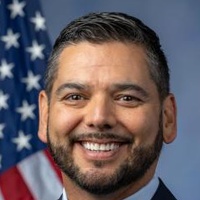
Raul Ruiz
Representative
CA
Raul Ruiz
Representative
CA
The Clinical Trial Modernization Act aims to increase diversity and accessibility in medical research by funding outreach to underrepresented populations. It updates anti-kickback laws to allow sponsors to cover participant expenses and provide necessary digital health tools to encourage enrollment. Furthermore, the bill exempts up to \$2,000 annually in payments received by participants from federal income tax.
This resolution condemns former FBI Director James Comey for allegedly inciting violence against President Trump through a cryptic social media post and demands an investigation and his permanent barring from federal employment.
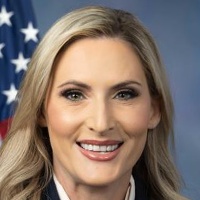
Laurel Lee
Representative
FL
Laurel Lee
Representative
FL
This resolution strongly condemns former FBI Director James Comey for a social media post interpreted as inciting violence against President Donald J. Trump during his overseas trip. Congress demands that federal authorities investigate Comey's actions and permanently bar him from any future federal employment. The measure asserts that political violence incitement by former high-ranking officials is unacceptable and threatens national security.
This Act removes the statute of limitations for surviving spouses of service members who died in the line of duty on or after September 11, 2001, to file specific survivor benefit claims against the U.S. Government.

Jared Golden
Representative
ME
Jared Golden
Representative
ME
The Supporting Our Surviving Spouses Act removes the statute of limitations for certain survivor benefit claims filed by the spouses of armed forces members who died in the line of duty on or after September 11, 2001. This change allows eligible survivors to file these specific claims at any time after the law is enacted. The bill ensures that no deadline prevents these survivors from seeking entitled benefits.
This bill mandates an independent review of VA claimant forms to ensure clarity and establishes a timeline for implementing necessary improvements, while also slightly extending a current limit on certain pension payments.

Robert Bresnahan
Representative
PA
Robert Bresnahan
Representative
PA
The Simplifying Forms for Veterans Claims Act mandates an independent review of all Department of Veterans Affairs (VA) forms sent to claimants to ensure they are clear and easy to understand. The VA Secretary must hire an outside entity to assess these forms and implement recommendations for improvement within a set timeline. Additionally, this bill slightly extends the expiration date for certain limits on veterans' pension payments.
This Act establishes federal grant funds within DHS and DOJ to assist states with border security reinforcement and the prosecution and detention of criminal aliens, including reimbursement for eligible past expenditures.

Chip Roy
Representative
TX
Chip Roy
Representative
TX
The State Border Security Assistance Act establishes two new federal grant programs to support state and local efforts along the southern border. The first fund provides billions for physical barriers, surveillance technology, and border reinforcement activities. The second fund allocates resources for the investigation, prosecution, and detention of criminal non-citizens. Both programs offer reimbursement for eligible expenses dating back to January 20, 2021, and are scheduled to sunset in January 2029.
This bill mandates the establishment of facilities to rear and release sterile New World screwworm flies to combat agricultural threats, supported by mandatory reporting and funding.
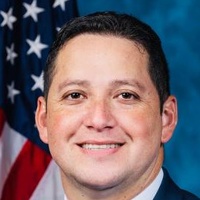
Ernest Gonzales
Representative
TX
Ernest Gonzales
Representative
TX
The STOP Screwworms Act mandates the establishment of facilities to rear and release sterile New World screwworm flies in high-risk areas to combat infestations. The Secretary of Agriculture must build these modular facilities within 180 days of enactment and provide annual public reports on the threat and control efforts. The bill authorizes up to $300 million to fund these necessary actions.
The ETHIC Act limits patent infringement lawsuits against drug and biological product manufacturers to one patent per "Patent Group" to curb the practice of creating excessive patent thickets.
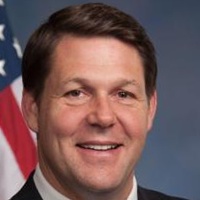
Jodey Arrington
Representative
TX
Jodey Arrington
Representative
TX
The Eliminating Thickets to Increase Competition Act (ETHIC Act) aims to curb anti-competitive practices by limiting the number of patents a company can assert in a single patent infringement lawsuit against drug or biological product competitors. This prevents brand-name manufacturers from overwhelming generic challengers with numerous, related patents, often referred to as "patent thickets." Specifically, it restricts plaintiffs to asserting only one patent per defined "Patent Group" in these actions.
This bill mandates the death penalty or life imprisonment for inadmissible or deportable aliens convicted of first-degree murder, and life imprisonment for those convicted of second-degree murder under specified immigration grounds.
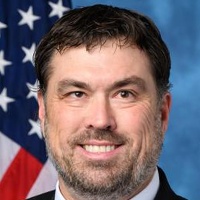
Morgan Luttrell
Representative
TX
Morgan Luttrell
Representative
TX
The Justice for Victims of Illegal Alien Murders Act establishes stricter penalties for certain non-citizens who commit murder in the United States. If an inadmissible or deportable alien is convicted of first-degree murder, they will face the death penalty or life imprisonment. Similar enhanced sentencing, including life imprisonment, applies to those convicted of second-degree murder under these specific immigration grounds.
The CHOICE for Veterans Act of 2025 establishes new federal standards, oversight, and penalties for agents and attorneys who assist veterans in filing Department of Veterans Affairs benefit claims while extending certain pension payment limitations.
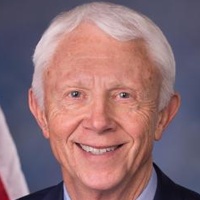
Jack Bergman
Representative
MI
Jack Bergman
Representative
MI
The CHOICE for Veterans Act of 2025 aims to overhaul how veterans receive assistance with their Department of Veterans Affairs (VA) benefit claims. It establishes new rules for the recognition, fees, and conduct of agents and attorneys who represent veterans. The bill also mandates increased transparency regarding available assistance and requires a review of the entire representative recognition process.
This Act officially renames the "Taipei Economic and Cultural Representative Office" to the "Taiwan Representative Office" to align U.S. policy with treating Taiwan with the courtesies afforded to other nations, without altering the official U.S. stance on Taiwan's status.
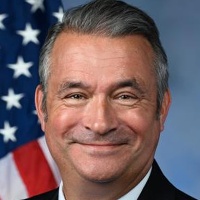
Don Bacon
Representative
NE
Don Bacon
Representative
NE
This Act officially renames Taiwan's primary diplomatic office in the U.S. from the "Taipei Economic and Cultural Representative Office" to the "Taiwan Representative Office." It directs the U.S. government to treat this office with the diplomatic courtesies afforded to other foreign nations, consistent with existing U.S. policy. This renaming does not alter the official U.S. stance on Taiwan's international status or restore full diplomatic relations.
This Act prohibits federal agencies from using the social cost of carbon or other greenhouse gases in regulatory cost-benefit analyses and requires agencies to report past usage of these metrics to Congress.
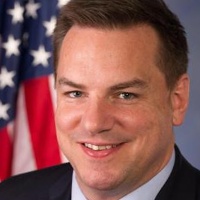
Richard Hudson
Representative
NC
Richard Hudson
Representative
NC
The Transparency and Honesty in Energy Regulations Act establishes strict definitions for various social cost metrics related to greenhouse gas emissions. The core provision of the bill prohibits federal agencies from using these specific social cost estimates—including the social cost of carbon, methane, and nitrous oxide—in their required cost-benefit analyses for rulemaking and official actions. Furthermore, the Act mandates that federal agencies must report to Congress on all past uses of these climate-related cost figures in their decision-making processes since 2009.