Legislative Activity
Track August's sponsored bills, co-sponsored legislation, and voting record
The CONTAINER Act authorizes border states to place temporary, movable structures on federal land for border security purposes without requiring special use authorizations.
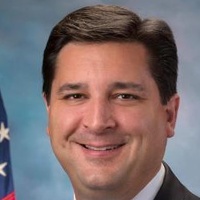
David Rouzer
Representative
NC
David Rouzer
Representative
NC
The CONTAINER Act allows border states to place temporary, movable structures on federal land for border security purposes without needing a special use authorization. States must provide 45 days' notice to the relevant federal agency, with placements initially permitted for up to one year. Extensions may be granted in 90-day increments if U.S. Customs and Border Protection determines that operational control of the border has not yet been achieved.
Affirms states' rights to defend against invasion, citing the influx of cartels and criminal elements across the southern border and criticizing the Biden administration's border security policies.
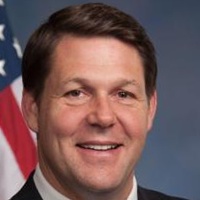
Jodey Arrington
Representative
TX
Jodey Arrington
Representative
TX
This bill asserts the constitutional right of states to defend themselves against invasion, citing the situation at the southern border from 2021-2024 as an invasion by cartels, terrorists, and criminal elements. It criticizes the Biden administration's border policies and claims the federal government failed to protect southern border states, thus empowering states to take defensive action.
The Declaration of Energy Independence Act amends the Mineral Leasing Act to reduce royalty rates, minimum bids, and rental fees while streamlining the process for onshore oil and gas leasing.
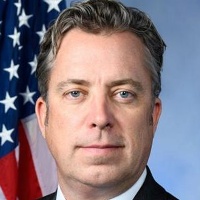
Andrew Ogles
Representative
TN
Andrew Ogles
Representative
TN
The Declaration of Energy Independence Act amends the Mineral Leasing Act to reduce costs and streamline processes for onshore oil and gas development. Key provisions include lowering royalty rates, minimum bids, and annual rental fees, while eliminating expression of interest fees. The bill also establishes new frameworks for noncompetitive leasing and provides pathways for reinstating certain abandoned oil and gas claims.
This bill mandates federal reimbursement for states that have spent over $2.5 billion on border security and enforcement efforts over the preceding decade.
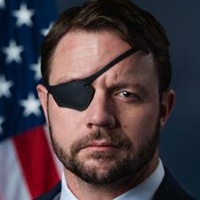
Dan Crenshaw
Representative
TX
Dan Crenshaw
Representative
TX
The State Border Security Reimbursement Act of 2025 mandates that the federal government reimburse states for significant expenditures made on border security and enforcement. This legislation aims to alleviate the financial burden on states that have spent over $2.5 billion on these federal responsibilities over the preceding decade. Eligible states may apply for full reimbursement of these non-federally funded costs within a specified timeframe.
This bill reclassifies silencers under federal tax law, removes federal registration requirements for legally transferred silencers, preempts state taxation and registration of silencers in commerce, and mandates the destruction of existing federal silencer registration records.

Ben Cline
Representative
VA
Ben Cline
Representative
VA
The Hearing Protection Act aims to remove silencers from the purview of the National Firearms Act (NFA) by treating them similarly to standard firearms under federal tax law. This legislation preempts certain state and local taxes and registration requirements related to silencers involved in interstate commerce. Furthermore, the bill mandates the destruction of existing federal silencer registration records and updates federal marking requirements for manufacturers.
The Veterans’ True Choice Act of 2025 allows eligible service-connected disabled veterans to opt into TRICARE coverage in lieu of VA health care.
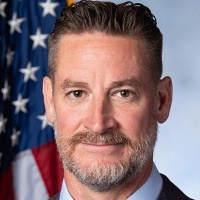
W. Steube
Representative
FL
W. Steube
Representative
FL
The Veterans’ True Choice Act of 2025 allows veterans with service-connected disabilities (VA priority groups 1, 2, or 3) to enroll in TRICARE Select or TRICARE for Life as an alternative to VA health care. By choosing TRICARE, these veterans would transition out of the VA patient enrollment system, with the VA reimbursing the Department of Defense for the associated costs. This legislation aims to provide eligible veterans with greater flexibility and expanded access to their health care providers.
The Preserving Safe Communities by Ending Swatting Act of 2025 strengthens federal criminal penalties and establishes civil liability for individuals who knowingly convey false information to trigger emergency responses.
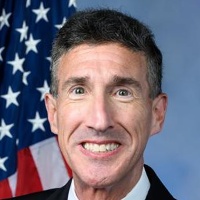
David Kustoff
Representative
TN
David Kustoff
Representative
TN
The Preserving Safe Communities by Ending Swatting Act of 2025 strengthens federal law to combat "swatting" by increasing criminal penalties for those who knowingly report false information to trigger emergency responses. The bill also establishes civil liability, requiring perpetrators to reimburse public safety agencies and organizations for the costs incurred during these emergency deployments.
This bill officially designates the Department of Veterans Affairs community-based outpatient clinic in Lubbock, Texas, as the "General Bernie Mittemeyer VA Clinic."
Jodey Arrington
Representative
TX
Jodey Arrington
Representative
TX
This bill officially designates the Department of Veterans Affairs community-based outpatient clinic in Lubbock, Texas, as the "General Bernie Mittemeyer VA Clinic." All future federal references to this facility will reflect this new name.
The REMAIN in Mexico Act of 2025 mandates the implementation of the Migrant Protection Protocols, requiring asylum seekers to wait in Mexico while their claims are processed.
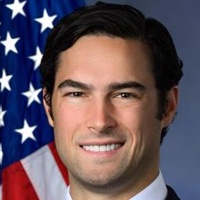
Brandon Gill
Representative
TX
Brandon Gill
Representative
TX
The REMAIN in Mexico Act of 2025 mandates that the Secretary of Homeland Security reinstate the Migrant Protection Protocols (MPP). This legislation requires that asylum seekers be returned to Mexico to await their U.S. immigration proceedings, effectively codifying the 2019 policy guidance into law.
This bill designates the United States Postal Service facility located at 107 North Hoyne Avenue in Fritch, Texas, as the "Chief Zeb Smith Post Office."
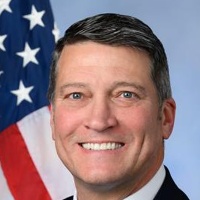
Ronny Jackson
Representative
TX
Ronny Jackson
Representative
TX
This bill designates the United States Postal Service facility located at 107 North Hoyne Avenue in Fritch, Texas, as the "Chief Zeb Smith Post Office." All official references to this facility will henceforth bear this name in honor of Chief Zeb Smith.
This bill mandates a federal study to evaluate the effectiveness of electronic automated referral systems in identifying potential organ donors and increasing donation rates.

Robert Wittman
Representative
VA
Robert Wittman
Representative
VA
The Organ Donation Referral Improvement Act directs the Secretary of Health and Human Services to conduct a comprehensive study on the effectiveness of electronic automated referral systems for organ donation. This study will evaluate how these systems can streamline the identification of potential donors, improve efficiency, and increase donation volumes. Ultimately, the report will provide recommendations and a roadmap for the nationwide adoption of these automated technologies.
The FIND Act prohibits federal agencies from contracting with entities that discriminate against the firearm and ammunition industry, ensuring fair access to government contracts for these businesses. Contractors must certify they do not discriminate against firearm entities, with violations leading to contract termination.
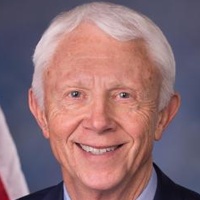
Jack Bergman
Representative
MI
Jack Bergman
Representative
MI
The FIND Act prohibits federal agencies from contracting with entities that discriminate against the firearm and ammunition industry. It requires federal contractors to certify they do not discriminate against firearm entities and prohibits them from awarding subcontracts to entities that do not provide a similar certification. Violations of these clauses will result in contract termination. The act defines "discriminate" as making judgments or refusing/limiting services based on biased criteria, rather than case-by-case evaluations, empirical data, financial risk, or legal non-compliance.
The Stopping Border Surges Act implements stricter asylum eligibility requirements, accelerates deportation timelines for unaccompanied minors, and mandates family detention to deter unauthorized border crossings.

Andy Biggs
Representative
AZ
Andy Biggs
Representative
AZ
The Stopping Border Surges Act proposes comprehensive reforms to U.S. immigration policy by tightening asylum eligibility and accelerating the processing of unaccompanied minors. The bill mandates stricter screening standards, expands detention authority for families, and limits legal protections for those seeking asylum. Ultimately, the legislation aims to deter fraudulent claims and expedite removals through more restrictive border and interior enforcement measures.
The "Lowering Costs for Caregivers Act of 2025" expands the use of health savings accounts, flexible spending arrangements, health reimbursement arrangements, and Archer MSAs to include medical expenses of parents, allowing more flexible use of these funds for elder care. These changes aim to provide tax relief and greater financial flexibility for families supporting their parents' healthcare needs.
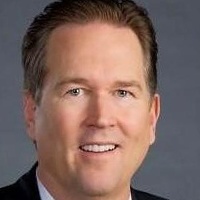
Vern Buchanan
Representative
FL
Vern Buchanan
Representative
FL
The "Lowering Costs for Caregivers Act of 2025" expands the use of tax-advantaged health accounts, including HSAs, FSAs, HRAs and Archer MSAs, to cover medical expenses of parents. This allows individuals to use these funds for their parents' or their spouse's parents' medical care. These changes aim to provide financial relief to caregivers by allowing pre-tax dollars to be used for elder care. The provisions apply to expenses and contributions made after December 31, 2024.
The Regulations from the Executive in Need of Scrutiny (REINS) Act of 2025 increases congressional accountability by requiring federal agencies to obtain legislative approval for all "major" rules before they can take effect.
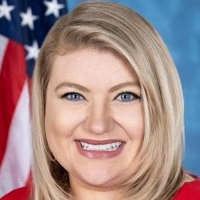
Katherine Cammack
Representative
FL
Katherine Cammack
Representative
FL
The Regulations from the Executive in Need of Scrutiny (REINS) Act of 2025 aims to increase federal regulatory accountability by requiring Congress to approve any "major" rule before it can take effect. Under this legislation, rules with a significant economic impact require a joint resolution of approval from both chambers of Congress to become law. By shifting this authority back to the legislative branch, the Act seeks to ensure greater transparency and oversight of the federal rulemaking process.