
Legislative Activity
Track Zachary's sponsored bills, co-sponsored legislation, and voting record
This Act mandates that colleges receiving federal aid establish and clearly communicate policies and resources regarding leave, accommodations, financial aid, and support services for expectant and parenting students.
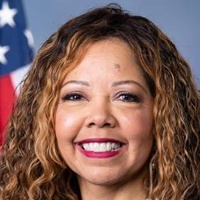
Lucy McBath
Representative
GA
Lucy McBath
Representative
GA
The Helping Student Parents Succeed Act requires colleges receiving federal aid to establish clear policies supporting expectant and parenting students. These institutions must provide comprehensive information regarding academic accommodations, financial aid adjustments like dependent care allowances, and available support services. The bill ensures these students are fully informed of their rights, available resources, and complaint procedures related to pregnancy and parental status.
This act ensures that time spent receiving outpatient observation services in a hospital counts toward the required 3-day inpatient stay for Medicare coverage of skilled nursing facility services.

Joe Courtney
Representative
CT
Joe Courtney
Representative
CT
The Improving Access to Medicare Coverage Act of 2025 ensures that time spent receiving outpatient observation services in a hospital counts toward the required 3-day inpatient stay needed to qualify for Medicare coverage of skilled nursing facility (SNF) services. This change effectively removes a significant barrier to accessing post-hospital care for many Medicare beneficiaries. The Secretary of HHS is authorized to implement this rule immediately.
The Respond, Innovate, Succeed, and Empower (RISE) Act streamlines disability documentation requirements for college students, clarifies funding for disability support centers, and mandates improved data collection on students with disabilities in higher education.

Suzanne Bonamici
Representative
OR
Suzanne Bonamici
Representative
OR
The Respond, Innovate, Succeed, and Empower (RISE) Act aims to improve support for postsecondary students with disabilities. It standardizes the types of documentation colleges must accept to verify a disability, ensuring clearer access to necessary accommodations. The bill also authorizes increased funding for national technical support centers and requires colleges to report essential data on enrolled students with disabilities. Finally, it clarifies that these changes do not alter existing rights under the Americans with Disabilities Act.
This bill allows parents to choose which of their separate health insurance plans will serve as the primary coverage for their newborn child.
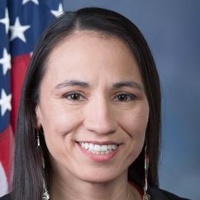
Sharice Davids
Representative
KS
Sharice Davids
Representative
KS
The Empowering Parents’ Healthcare Choices Act allows parents with separate health insurance plans to jointly choose which plan will serve as the primary coverage for their newborn child. This choice must be communicated to the insurers within 60 days of the child's birth. This new flexibility applies to coverage decisions for children born on or after January 1, 2026.
This Act directs NIST to promote the adoption of post-quantum cryptography standards and establishes a potential grant program to help high-risk entities transition away from vulnerable cryptographic methods.

Haley Stevens
Representative
MI
Haley Stevens
Representative
MI
The Post Quantum Cybersecurity Standards Act directs the National Institute of Standards and Technology (NIST) to promote the voluntary adoption of new post-quantum cryptography standards resistant to quantum computer attacks. The bill also authorizes NIST to establish a grant program to help high-risk entities cover the costs of transitioning to these new standards. Furthermore, it updates the National Science Foundation's research priorities to explicitly include post-quantum cryptography.
The ACCESS Act of 2025 raises the offering threshold requiring a public accountant review from $\$100,000$ to $\$250,000$, with potential SEC increases up to $\$400,000$, to ease burdens on small business capital formation.
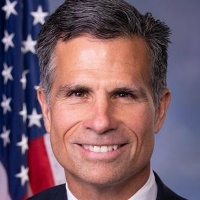
Daniel Meuser
Representative
PA
Daniel Meuser
Representative
PA
The ACCESS Act of 2025 aims to support small businesses by significantly raising the offering threshold that requires a review by a public accountant, increasing it from $\$100,000$ to $\$250,000$. This new threshold may be further increased by the SEC up to $\$400,000$ based on recommendations from key advocacy offices. The bill also includes technical updates to correct outdated cross-references within the Securities Act of 1933.
The Runaway and Homeless Youth and Trafficking Prevention Act of 2025 updates federal programs to enhance support, prevention, and data collection for runaway, homeless, and trafficked youth through updated grant requirements and service mandates.
Suzanne Bonamici
Representative
OR
Suzanne Bonamici
Representative
OR
The Runaway and Homeless Youth and Trafficking Prevention Act of 2025 updates federal programs to better support and protect runaway, homeless, and trafficked youth. This legislation modernizes grant programs to ensure services are trauma-informed, culturally sensitive, and address critical needs like housing, education, and mental health. It also expands communication channels to include online outreach and strengthens coordination across federal agencies to combat youth homelessness and exploitation.
The Community TEAMS Act of 2025 establishes grants for medical schools to partner with rural and underserved health facilities to expand community-based clinical training for medical students.

Carol Miller
Representative
WV
Carol Miller
Representative
WV
The Community TEAMS Act of 2025 establishes new federal grants to fund partnerships between medical schools and local health facilities in rural and medically underserved communities. These grants aim to expand clinical training opportunities for medical students in high-need areas. The ultimate goal is to encourage these students to establish long-term medical practices within those communities after graduation.
This Act establishes coordination between federal agencies and mandates risk management planning, training, and identification of high-risk assets to enhance cybersecurity across the Healthcare and Public Health Sector.

Jason Crow
Representative
CO
Jason Crow
Representative
CO
The Healthcare Cybersecurity Act of 2025 aims to bolster the security of the nation's critical health infrastructure against rising cyber threats. It mandates increased coordination between CISA and HHS to implement a sector-specific risk management plan and provide necessary training to healthcare operators. The bill also establishes a process for identifying and prioritizing "high-risk" healthcare assets requiring focused federal resources.
This bill establishes a grant program allowing law enforcement agencies to hire retired officers for specific civilian support tasks, such as investigation and technical analysis, while ensuring rigorous background checks and financial accountability.

Josh Harder
Representative
CA
Josh Harder
Representative
CA
The Retired Law Enforcement Officers Continuing Service Act establishes a grant program to allow law enforcement agencies to hire retired officers for specialized, non-arrest support roles, such as training and investigative assistance. This funding requires rigorous background checks for the retired personnel and mandates annual audits by the Department of Justice Inspector General to ensure accountability. Agencies with unresolved audit findings face exclusion from future funding, while the Attorney General must report on grant distribution and potential funding overlaps to Congress.
This bill directs the National Institute of Standards and Technology (NIST) to enhance domestic quantum supply chain development and reduce reliance on foreign sources through strategic partnerships.

Emilia Sykes
Representative
OH
Emilia Sykes
Representative
OH
The Support for Quantum Supply Chains Act directs the National Institute of Standards and Technology (NIST) to enhance its role in strengthening the domestic quantum technology supply chain. This legislation mandates NIST to accelerate the development of critical quantum technologies within the U.S. through new public-private partnerships. The goal is to boost domestic production capabilities and reduce reliance on foreign sources for essential quantum components.
This bill mandates that direct-to-consumer advertisements for prescription drugs covered by Medicare or Medicaid must clearly disclose the 30-day Wholesale Acquisition Cost (WAC) if it exceeds $35.
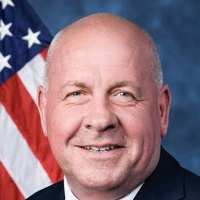
David Taylor
Representative
OH
David Taylor
Representative
OH
The Drug-price Transparency for Consumers Act of 2025 mandates that direct-to-consumer advertisements for prescription drugs covered by Medicare or Medicaid must disclose the Wholesale Acquisition Cost (WAC) for a 30-day supply, provided the cost exceeds $35. This aims to increase consumer awareness of drug pricing, as current advertising practices often drive demand for expensive, newly approved medications without providing cost transparency. Failure to comply with this new disclosure requirement will result in significant civil monetary penalties.
This Act establishes a presumption of service connection for glioblastoma multiforme in Vietnam veterans to streamline their access to VA disability benefits.

Sheila Cherfilus-McCormick
Representative
FL
Sheila Cherfilus-McCormick
Representative
FL
The Specialist Fourth Class Keith Smith Glioblastoma Parity Act of 2025 addresses the lasting impact of Agent Orange exposure during the Vietnam War. This bill mandates that the Department of Veterans Affairs (VA) presume glioblastoma multiforme is service-connected for eligible Vietnam veterans. This change simplifies the process for veterans suffering from this aggressive brain cancer to receive disability benefits.
This act updates WIC terminology and mandates the development of specialized nutrition education and outreach for participants affected by substance use disorder.

Eugene Vindman
Representative
VA
Eugene Vindman
Representative
VA
The Supporting Healthy Mothers and Infants Act of 2025 updates the WIC program by replacing outdated terminology with "substance use disorder." This legislation mandates the development of specialized, evidence-based nutrition education materials for WIC participants affected by substance use disorder. Furthermore, it requires the Secretary of Agriculture to actively reach out to and support these families through training and resource sharing. The Act authorizes $1 million for fiscal year 2026 to implement these new support activities.
This resolution officially designates the Friday before Memorial Day as National Poppy Day to honor veterans and encourage the wearing of the poppy as a symbol of remembrance.

André Carson
Representative
IN
André Carson
Representative
IN
This resolution officially designates the Friday before Memorial Day as **National Poppy Day** to honor U.S. veterans. It recognizes the poppy as a long-standing symbol of remembrance for those who died in service, inspired by World War I. The bill encourages all citizens to wear a red poppy on this day to show appreciation for our fallen service members.
This act mandates that FHA loan disclosures include comparable VA loan information and requires lenders to ask about military service on standard loan applications.

Brittany Pettersen
Representative
CO
Brittany Pettersen
Representative
CO
The VA Loan Informed Disclosure Act of 2025 (VALID Act) aims to increase awareness of VA loan options among homebuyers. It requires lenders to include comparative information about potential VA loan terms on standard FHA disclosure forms. Furthermore, the Act mandates that the Uniform Residential Loan Application include a prominent question regarding the applicant's military service.
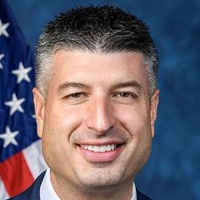
The Patriots Over Politics Act creates a special 90-day window for service members separated solely for refusing the COVID-19 vaccine between August 2021 and January 2023 to transfer their VA education benefits to an eligible dependent.
Tom Barrett
Representative
MI
Tom Barrett
Representative
MI
The Patriots Over Politics Act creates a special, limited window for certain service members separated for refusing the COVID-19 vaccine between August 2021 and January 2023 to transfer their unused VA education benefits to an eligible dependent. This transfer option is available for 90 days following the bill's enactment. If transferred to a child, the benefit use is contingent upon the service member having completed at least six years of service.
This Act mandates that colleges and universities must print or post essential suicide prevention contact information, including the 988 Lifeline, on student IDs or websites.

J. Correa
Representative
CA
J. Correa
Representative
CA
The Improving Mental Health Access for Students Act mandates that colleges and universities must prominently display essential mental health and suicide prevention contact information on student ID cards or official websites. This includes the 988 Suicide and Crisis Lifeline, the Crisis Text Line, and the campus mental health center. These requirements take effect one year after the Act is signed into law.
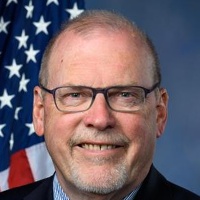
This bill expresses Congressional disapproval of the Environmental Protection Agency's final rule setting National Emission Standards for Hazardous Air Pollutants for the rubber tire manufacturing industry.
H. Griffith
Representative
VA
H. Griffith
Representative
VA
This bill expresses the disapproval of Congress, under the Congressional Review Act, of a specific rule issued by the Environmental Protection Agency (EPA). The rejected rule concerned the National Emission Standards for Hazardous Air Pollutants for the rubber tire manufacturing industry. As a result of this disapproval, the EPA's proposed standards will not take effect.
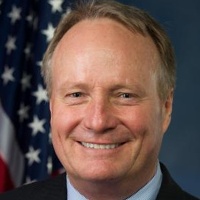
This bill reauthorizes and expands federal funding for advanced nursing education, strengthens nursing school capacity with modern training tools and partnerships, and updates appropriations through fiscal year 2030.
David Joyce
Representative
OH
David Joyce
Representative
OH
The Title VIII Nursing Workforce Reauthorization Act of 2025 aims to strengthen the nursing workforce by expanding federal grant support for advanced nursing education programs, including nurse practitioners and nurse-midwives. The bill updates funding rules to cover more training costs and allows nursing schools to invest in modern educational tools like simulation and telehealth technology. Furthermore, it authorizes increased appropriations through fiscal year 2030 to support these critical educational and practice expansion efforts.