Legislative Activity
Track Zachary's sponsored bills, co-sponsored legislation, and voting record
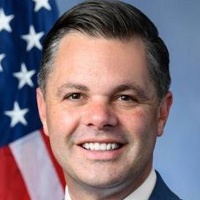
The PRICE Act establishes a competitive grant program to fund improvements, resident services, and community enhancements in low- and moderate-income manufactured housing communities.
Suzanne Bonamici
Representative
OR
Suzanne Bonamici
Representative
OR
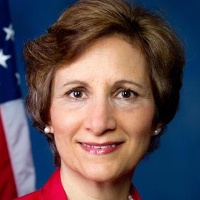
The Preservation and Reinvestment Initiative for Community Enhancement Act (PRICE Act) establishes a new competitive grant program to improve manufactured housing communities serving low- and moderate-income residents. These funds can be used for essential infrastructure repairs, resident health and safety upgrades, and community enhancement projects. Priority will be given to projects that ensure the long-term affordability and stability of the housing.
The Strong Farms, Strong Future Act updates conservation programs by expanding definitions, strengthening stewardship contract evaluations and renewals, adjusting payments for inflation, and establishing new climate change mitigation bundles for producers.
Lauren Underwood
Representative
IL
Lauren Underwood
Representative
IL
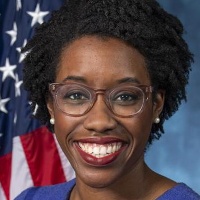
The Strong Farms, Strong Future Act updates conservation programs by broadening definitions to explicitly include climate change mitigation and "enhancements." It revises how stewardship contract offers are evaluated to prioritize soil health and carbon sequestration goals. Furthermore, the bill mandates the creation of climate change mitigation bundles for producers and requires the Secretary to adjust conservation payments for inflation.
This bill reauthorizes the Public Health and Bio-Preparedness Workforce Loan Repayment Program through fiscal year 2030.
Jason Crow
Representative
CO
Jason Crow
Representative
CO
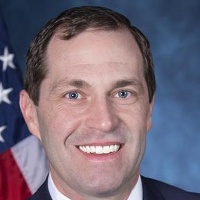
This bill reauthorizes the Public Health and Bio-Preparedness Workforce Loan Repayment Program through fiscal year 2030. It ensures continued support for professionals working in public health and bio-preparedness by extending their eligibility for loan repayment. This action secures the program for five additional years.
This bill directs a study to investigate the high cost of procuring transit buses in the U.S. and recommend ways to lower those costs for federal, state, and local agencies.
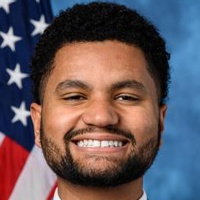
Maxwell Frost
Representative
FL
Maxwell Frost
Representative
FL
The Transit Bus Affordability Act directs the Comptroller General to investigate the high costs associated with procuring new public transit buses in the United States. This review will compare U.S. costs against international benchmarks, analyze supply chain impacts, and examine current cost-reduction efforts. The goal is to provide recommendations to ensure federal, state, and local funds are used more efficiently for transit agency bus purchases.
This bill mandates the Executive Branch to assess the risks of People's Republic of China (PRC) overseas military basing and develop a whole-of-government strategy to counter these global expansion efforts.
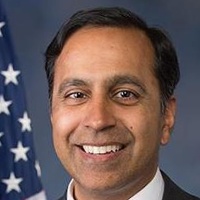
Raja Krishnamoorthi
Representative
IL
Raja Krishnamoorthi
Representative
IL
The COUNTER Act of 2025 addresses concerns over the People's Republic of China's (PRC) efforts to establish overseas military and strategic bases globally. This legislation mandates the Executive Branch to urgently develop and implement a comprehensive strategy to counter these PRC basing ambitions. Key requirements include an intelligence assessment of risks and the creation of an interagency task force to coordinate mitigation efforts against China's expansion. The law emphasizes proactive engagement with partner nations and regular reviews of the U.S. counter-strategy.
This bill authorizes international cooperation and U.S. strategy to secure critical mineral supply chains through partnerships, investment, and domestic production to reduce reliance on strategic competitors.
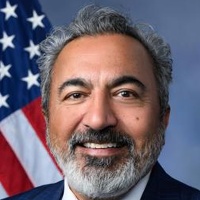
Ami Bera
Representative
CA
Ami Bera
Representative
CA
The Minerals Security Partnership Authorization Act establishes a U.S. strategy to secure critical mineral supply chains through international cooperation with allies. This involves negotiating agreements to build resilient supply networks covering mining, processing, and manufacturing, aiming to reduce reliance on strategic competitors. The State Department is authorized to lead U.S. involvement in the Minerals Security Partnership to identify and support commercial projects that advance these national security goals.
The Bridge Investment and Modernization Act of 2025 extends and modifies funding authorizations and streamlines the project selection criteria for the federal Bridge Investment Program through fiscal year 2031.
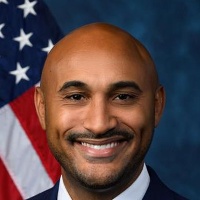
Shomari Figures
Representative
AL
Shomari Figures
Representative
AL
The Bridge Investment and Modernization Act of 2025 extends and specifies funding for the Bridge Investment Program through fiscal year 2031. This legislation allocates billions of dollars annually to support crucial bridge projects across the nation. Additionally, the Act streamlines the project selection process by removing a specific criterion for funding eligibility.
The Farmers First Act of 2025 significantly increases funding and mandates crisis line support for the Farm and Ranch Stress Assistance Network while formalizing referral options to comprehensive healthcare providers for farmers and ranchers.
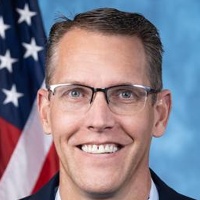
Randy Feenstra
Representative
IA
Randy Feenstra
Representative
IA
The Farmers First Act of 2025 significantly strengthens support for agricultural producers by enhancing the Farm and Ranch Stress Assistance Network. This legislation increases annual funding for the network and mandates the inclusion of dedicated crisis lines within supported programs. Furthermore, it formalizes partnerships between grant recipients and various healthcare providers to ensure comprehensive access to mental health and substance use treatment for farmers and ranchers.
The DIGNIDAD Act of 2025 comprehensively overhauls U.S. immigration policy by simultaneously increasing border security, establishing new pathways to legal status for certain long-term residents, mandating E-Verify for all employers, and reforming asylum and employment visa processes.

Maria Salazar
Representative
FL
Maria Salazar
Representative
FL
The DIGNIDAD Act of 2025 is a comprehensive bill that significantly overhauls U.S. immigration policy across five major divisions. Division A focuses on aggressive border security enhancements, infrastructure modernization, and increased criminal penalties for immigration offenses, while Division B establishes pathways to legal status for long-term residents who entered as children and creates a temporary protection program for others. Finally, Division C aims to improve legal immigration by reducing green card backlogs, streamlining employment and student visas, and providing new discretionary relief for family separation cases.
This Act mandates a comprehensive report on the cybersecurity vulnerabilities and defenses of existing mobile service networks, excluding 5G.
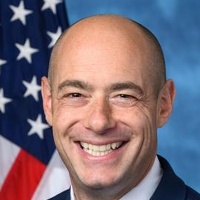
Greg Landsman
Representative
OH
Greg Landsman
Representative
OH
The Understanding Cybersecurity of Mobile Networks Act requires a comprehensive report on the security of current mobile service networks against cyberattacks and foreign surveillance. This report must analyze existing vulnerabilities, the adoption of strong encryption, and customer awareness of security risks. The goal is to provide Congress with an unclassified assessment of the security landscape, excluding 5G protocols.
This bill establishes a pilot program to help families receiving housing assistance save money by depositing rent increases resulting from higher earnings into an escrow account accessible under specific conditions.
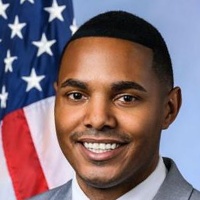
Ritchie Torres
Representative
NY
Ritchie Torres
Representative
NY
The Helping More Families Save Act establishes a new pilot program to help families receiving housing assistance save money as they increase their earnings. This program creates interest-bearing escrow accounts where increases in rent payments resulting from higher income are deposited. Families can access these savings after a set period or upon achieving self-sufficiency goals, while ensuring that participation does not negatively affect other benefits.
This bill authorizes the creation and sale of commemorative coins for the 2028 Los Angeles and 2034 Salt Lake City Olympic and Paralympic Games to help fund the events, with all surcharges going to the respective organizing committees after covering production costs.
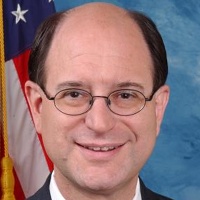
Brad Sherman
Representative
CA
Brad Sherman
Representative
CA
This Act authorizes the Secretary of the Treasury to mint and sell special commemorative coins for the 2028 Los Angeles Olympic and Paralympic Games and the 2034 Salt Lake City Winter Olympic and Paralympic Games. The coins will feature designs celebrating American athletes and the Games themselves. All surcharges collected from the sale of these coins will be directed to the respective organizing committees to help fund the events and related youth sports programs. The entire program must be conducted at no cost to the U.S. Government.
The Building Civic Bridges Act establishes an Office of Civic Bridgebuilding to fund and promote research-backed projects that reduce community division and strengthen social connection, using only donated funds.
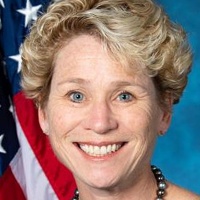
Chrissy Houlahan
Representative
PA
Chrissy Houlahan
Representative
PA
The Building Civic Bridges Act establishes a new Office of Civic Bridgebuilding within the National and Community Service Corporation to promote activities that unite divided communities. This Office will manage a competitive, research-backed grant program to fund local projects focused on reducing conflict and improving social cohesion. The Act mandates that the program be implemented using only donated funds, with no new federal appropriations authorized.
This Act establishes a program for the Air Force to demonstrate and potentially deploy a resilient, commercial Low Earth Orbit alternative to GPS for positioning, navigation, and timing services.
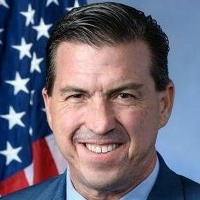
Kevin Mullin
Representative
CA
Kevin Mullin
Representative
CA
The Resilient LEO PNT Act establishes a program for the Secretary of the Air Force to contract with commercial providers to demonstrate a resilient Positioning, Navigation, and Timing (PNT) system operating in Low Earth Orbit. This demonstration must prove the system can operate independently of GPS, resist jamming, and maintain high accuracy for users. Following a successful test, the Secretary is directed to move toward awarding a contract for full operational deployment of the proven technology.
This Act updates the Higher Education Act of 1965 to explicitly include Head Start and Early Head Start programs under the definition of eligible community services.
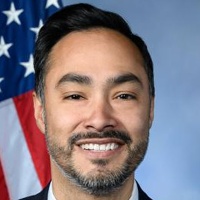
Joaquin Castro
Representative
TX
Joaquin Castro
Representative
TX
The Head Start for Our Future Act updates the Higher Education Act of 1965 by replacing the term "literacy training" with "child development and early learning" when describing eligible community services. This change explicitly ensures that Head Start and Early Head Start programs are recognized under this section of the law. The bill aims to better reflect the comprehensive nature of early childhood education services.
This bill grants the President the authority to extend special legal privileges and immunities to CERN, the European Organization for Nuclear Research.
Joaquin Castro
Representative
TX
Joaquin Castro
Representative
TX
The Strengthening Science Through Diplomacy Act of 2025 grants the President the authority to extend special legal privileges and immunities to CERN (the European Organization for Nuclear Research). This action would align CERN's legal status in the U.S. with that of other international organizations with which the United States cooperates. The President will determine the specific terms and conditions of this extension.
This bill establishes the Iranian Campaign Medal to recognize military service in support of operations during the Iran-Israel War.
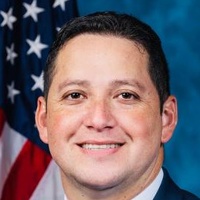
Ernest Gonzales
Representative
TX
Ernest Gonzales
Representative
TX
The Iranian Campaign Medal Act establishes a new military decoration, the Iranian Campaign Medal, to recognize service members deployed in support of operations during the Iran-Israel War. This medal will be awarded by the Secretaries of the military branches upon approval of its design by the Secretary of Defense. Eligibility requires active duty service in a designated area or performing qualifying service related to the operation.
This resolution affirms support for decisive U.S. action against Iran's nuclear program and proxies while strongly backing Israel's right to self-defense.
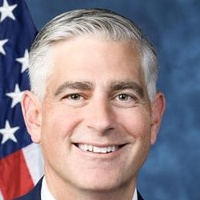
Michael Baumgartner
Representative
WA
Michael Baumgartner
Representative
WA
This resolution strongly supports President Trump's decisive actions against Iran's nuclear program and affirms unwavering support for Israel's right to self-defense. It justifies recent U.S. military action by citing Iran's state sponsorship of terrorism, regional aggression, and material support for the October 7th attacks. The bill advocates for a permanent end to Iran's nuclear ambitions through verifiable agreements backed by sustained pressure.
The CONNECT for Health Act of 2025 permanently expands Medicare telehealth access by removing geographic restrictions, increasing practitioner flexibility, bolstering program integrity, and mandating supports for quality remote care delivery.
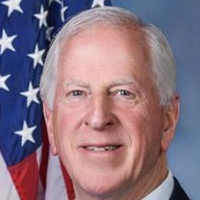
Mike Thompson
Representative
CA
Mike Thompson
Representative
CA
The CONNECT for Health Act of 2025 significantly expands and permanently secures access to Medicare telehealth services by eliminating outdated geographic restrictions and allowing more practitioners to offer remote care. The bill also strengthens program integrity by dedicating funds for telehealth oversight while clarifying rules around providing necessary technology to patients. Finally, it mandates the creation of tailored educational resources and public reporting to improve quality measurement and transparency in remote care delivery.
This bill extends the maximum holding period for certain real estate assets for Federal credit unions from 15 to 20 years and clarifies loan eligibility language.
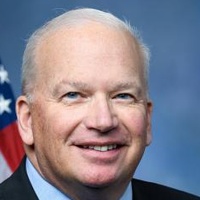
Scott Fitzgerald
Representative
WI
Scott Fitzgerald
Representative
WI
The Expanding Access to Lending Options Act directs the National Credit Union Administration (NCUA) to prioritize the safety and soundness of federally chartered credit unions. This legislation primarily amends the Federal Credit Union Act by extending the maximum holding period for certain real estate assets from 15 to 20 years. It also clarifies the eligibility language for property involved in these real estate loans.