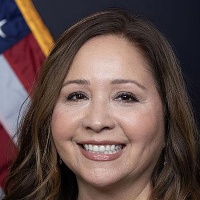
Legislative Activity
Track Adelita's sponsored bills, co-sponsored legislation, and voting record
This proposed constitutional amendment establishes a federal right to vote for all eligible citizens and mandates that states adhere to federal election standards, including same-day registration and voting.
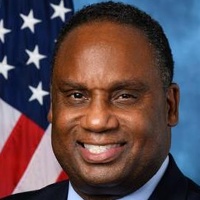
Jonathan Jackson
Representative
IL
Jonathan Jackson
Representative
IL
This proposed constitutional amendment establishes a fundamental federal right to vote for all eligible U.S. citizens. It prohibits denying or restricting this right and mandates that states administer elections according to federal standards, including requiring same-day registration and voting. Congress is authorized to pass legislation to enforce these provisions.
This bill directs the Assistant Secretary of Commerce to study and report to Congress on the technologies, economics, and performance of various broadband internet access services.
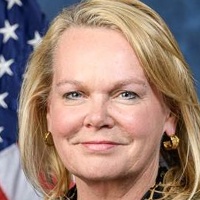
April McClain Delaney
Representative
MD
April McClain Delaney
Representative
MD
This bill, the Broadband Deployment and Economic Impact Study Act of 2026, directs the Assistant Secretary of Commerce for Communications and Information to conduct a comprehensive study on current broadband internet access technologies. The resulting report to Congress must analyze the workforce needs, economics, performance metrics, and consumer costs associated with technologies like fiber, wireless, and satellite. The goal is to provide Congress with detailed information on the landscape of broadband deployment.
This bill establishes six mandatory fee-free days annually for entry to federal recreational lands and waters to encourage public service and national pride.
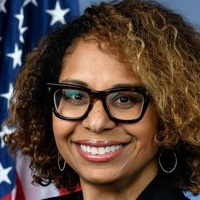
Sydney Kamlager-Dove
Representative
CA
Sydney Kamlager-Dove
Representative
CA
This bill, the "Encouraging Public Service in Our National Parks and Public Land Act," amends existing law to mandate six specific fee-free days annually for entry to federal recreational lands and waters. These free admission days are set to coincide with significant holidays like Martin Luther King Jr. Day and Veterans Day. The goal is to promote national pride and encourage public volunteerism by increasing access to these public lands.
This bill expresses congressional disapproval of the Department of Health and Human Services' rule aimed at restoring flexibility within the Child Care and Development Fund (CCDF).
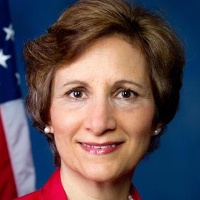
Suzanne Bonamici
Representative
OR
Suzanne Bonamici
Representative
OR
This bill expresses the disapproval of Congress, under the Congressional Review Act, of a Department of Health and Human Services rule concerning the Child Care and Development Fund (CCDF). Specifically, it rejects the rule that aimed to restore flexibility within the CCDF program. As a result, the rule published on May 12, 2026, will not take effect.
This bill establishes a mandatory timeline and binding arbitration process to expedite the negotiation of first-time collective bargaining agreements between employers and newly certified unions.
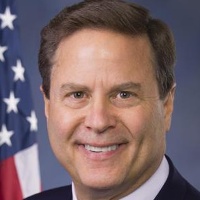
Donald Norcross
Representative
NJ
Donald Norcross
Representative
NJ
The Faster Labor Contracts Act aims to speed up the process of securing a first collective bargaining agreement after a union is certified. It establishes a mandatory timeline, including mediation and binding arbitration, if an agreement is not reached within 90 days of bargaining. This process is designed to prevent lengthy delays that currently weaken the union's position. The bill also requires a GAO report on current time-to-contract averages.
This act amends federal law to double the overtime pay rate for covered employees from time-and-a-half to double their regular rate of pay.
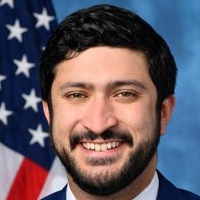
Gregorio Casar
Representative
TX
Gregorio Casar
Representative
TX
The Double the Wage for Overtime Act of 2026 amends the Fair Labor Standards Act to increase the required overtime pay rate for covered employees from time-and-a-half to double their regular rate of pay. This means employees will earn twice their normal hourly wage for all hours worked beyond 40 in a workweek. This change will take effect 180 days after the bill is enacted.
This bill, the "No Toxic Chemicals in Food Packaging Act of 2026," bans specific harmful chemicals from being used in food contact substances and requires extra safety reviews for alternatives impacting vulnerable populations.
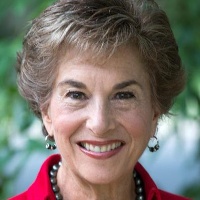
Janice Schakowsky
Representative
IL
Janice Schakowsky
Representative
IL
The "No Toxic Chemicals in Food Packaging Act of 2026" amends federal law to deem specific toxic chemicals, including certain phthalates, PFAS, and Bisphenols, unsafe for use in food contact materials. This legislation mandates that the FDA consider the impact on vulnerable populations when reviewing alternatives to these banned substances. Furthermore, the Act preserves the authority of states and local governments to enact stricter regulations regarding food additives and contact substances.
This bill mandates an EPA study on the environmental impacts of AI data centers, establishes a NIST consortium to develop measurement standards, and requires large AI data centers to publicly report their environmental impacts.
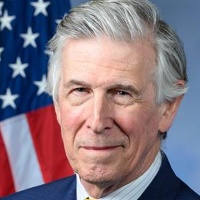
Donald Beyer
Representative
VA
Donald Beyer
Representative
VA
This bill, the "Artificial Intelligence Environmental Impacts Act of 2026," mandates a comprehensive study by the EPA on the environmental and energy impacts of AI data centers and infrastructure. It also requires the National Institute of Standards and Technology to establish a consortium to develop measurement standards for these impacts. Finally, the legislation establishes an annual public reporting system for large AI data centers detailing their environmental footprint.
This resolution directs the President to remove all United States Armed Forces from Lebanon within seven days of its adoption.
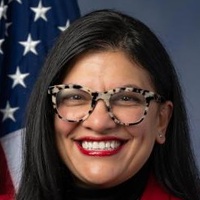
Rashida Tlaib
Representative
MI
Rashida Tlaib
Representative
MI
This resolution invokes the War Powers Resolution to mandate the withdrawal of all United States Armed Forces from Lebanon. It directs the President to complete this removal within seven days of the resolution's adoption.
This Act prohibits the use of federal student financial aid information for immigration enforcement purposes, with limited exceptions.
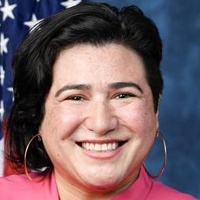
Emily Randall
Representative
WA
Emily Randall
Representative
WA
The Protecting Student Privacy Act amends the Higher Education Act to safeguard student financial aid information from being used for immigration enforcement purposes by federal, state, or local agencies. This bill specifically prohibits the sharing of this personally identifiable data with immigration enforcement entities unless compelled by a court order or with voluntary, uncoerced consent from the individual. Furthermore, the Act mandates reporting to Congress if any violations of this privacy protection occur.
This concurrent resolution marks the 250th anniversary of the U.S. by reaffirming a national commitment to reducing gun violence and strengthening public safety through evidence-informed measures.
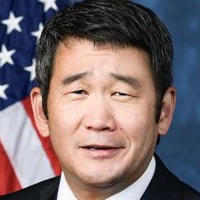
Dave Min
Representative
CA
Dave Min
Representative
CA
This concurrent resolution marks the U.S. 250th anniversary by reaffirming a national commitment to reducing gun violence and strengthening public safety. It recognizes the devastating impact of gun violence and supports evidence-informed measures like community intervention and universal background checks. The resolution calls for prioritizing support for law enforcement, investing in proactive violence prevention, and ensuring robust funding for victim services. Ultimately, it commits the nation to making gun violence prevention a priority for the next 250 years.
This act amends federal law to require labeling of foods containing gluten-containing grains as a major food allergen.
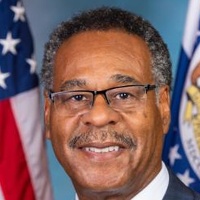
Emanuel Cleaver
Representative
MO
Emanuel Cleaver
Representative
MO
The Celiac Safety Act of 2026 amends federal law to officially classify gluten-containing grains (wheat, rye, and barley) as a major food allergen. This change mandates that foods containing these grains must be clearly labeled as such, similar to existing major allergens like peanuts or milk. This new labeling requirement will take effect 18 months after the Act's enactment.
This act establishes a pilot grant program to fund the renovation and development of vital community gathering places, known as "third spaces," especially in underserved areas.
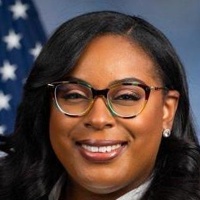
LaMonica McIver
Representative
NJ
LaMonica McIver
Representative
NJ
The RESTORE Third Spaces Act of 2026 establishes a three-year pilot grant program to renovate and develop vital community gathering places, known as "third spaces," outside of homes and workplaces. Administered by the Secretary of Commerce, the program prioritizes projects in underserved communities that strengthen local economies and combat social isolation. Grantees must ensure the resulting spaces remain free or low-cost to the public to foster social cohesion and civic engagement.
This Act amends bankruptcy law to prioritize environmental cleanup costs and employee wages over shareholder claims when fossil fuel companies file for bankruptcy, while also preventing the abandonment of related assets.
Dave Min
Representative
CA
Dave Min
Representative
CA
The Ending Fossil Fuel Bailouts Act of 2026 fundamentally reforms federal bankruptcy law concerning fossil fuel companies. This legislation prioritizes cleanup and employee obligations over other claims when these companies file for bankruptcy. It also prevents fossil fuel assets from being abandoned and makes certain environmental debts non-dischargeable.
This bill establishes rigorous fitness-to-operate standards for offshore oil and gas operators and mandates fully funded, interest-bearing escrow accounts to cover all future decommissioning liabilities.
Dave Min
Representative
CA
Dave Min
Representative
CA
The Offshore Leasing Standards and Accountability Act of 2026 establishes rigorous "fitness-to-operate" standards for offshore oil and gas operators, requiring certification based on environmental compliance, safety records, and financial solvency before issuing or extending leases. The bill also mandates that leaseholders fully fund future decommissioning liabilities through interest-bearing escrow accounts, with required payments scheduled to cover estimated costs within five years. Furthermore, it restricts the temporary abandonment of offshore wells to a maximum of three years, subject to strict operational or environmental justification.
The Stay Cool Act coordinates federal heat response, funds community cooling centers and housing upgrades, and invests in urban green infrastructure to mitigate extreme heat risks.
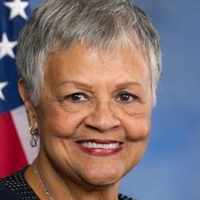
Bonnie Watson Coleman
Representative
NJ
Bonnie Watson Coleman
Representative
NJ
The **Stay Cool Act** is a comprehensive bill designed to combat the dangers of extreme heat through coordinated federal response, improved public warnings, and direct aid to vulnerable seniors. It establishes significant grant programs to fund community cooling centers, upgrade public housing with air conditioning, and develop urban green spaces and water features for neighborhood cooling. Overall, the legislation aims to increase community resilience, protect residents in federally assisted housing, and ensure more equitable access to safe, cool environments during heat emergencies.
This bill establishes the Smithsonian American Women's History Museum, designates its site on the National Mall, and sets requirements for its mission, construction, and diverse representation of viewpoints.
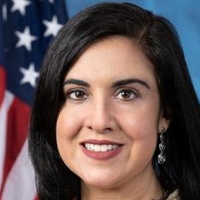
Nicole Malliotakis
Representative
NY
Nicole Malliotakis
Representative
NY
This act officially establishes the Smithsonian American Women’s History Museum and designates its location on the National Mall, requiring the transfer of land jurisdiction to the Smithsonian Institution. The museum is mandated to preserve and present the history and achievements of biological women in the United States. Furthermore, the legislation requires that exhibits and programs reflect diverse political viewpoints and authentic experiences of women, as guided by a broad array of knowledgeable sources.
This bill disapproves the Department of Education's final rule on federal student loan programs, preventing its implementation.
Suzanne Bonamici
Representative
OR
Suzanne Bonamici
Representative
OR
This bill seeks to disapprove the Department of Education's final rule regarding the "Reimagining and Improving Student Education-Federal Student Loan Program." By utilizing the Congressional Review Act, this legislation prevents the new regulations from taking legal effect. Consequently, the Department of Education cannot implement the changes outlined in that specific rule.
This act establishes new mandatory paid and unpaid break requirements for employees, including meal, rest, restroom, and medical breaks, under the Fair Labor Standards Act.
Bonnie Watson Coleman
Representative
NJ
Bonnie Watson Coleman
Representative
NJ
The Worker Rights and Support Act amends the Fair Labor Standards Act to establish new mandatory meal, rest, restroom, and medical break requirements for employees. This legislation ensures employees receive specific paid and unpaid break times based on hours worked or medical necessity. Violations of these new break provisions are subject to enforcement actions under the Fair Labor Standards Act.
This bill authorizes the minting and sale of commemorative gold and silver coins to honor the 25th anniversary of the September 11, 2001, terrorist attacks, with surcharges supporting the National September 11 Memorial and Museum.

Dan Goldman
Representative
NY
Dan Goldman
Representative
NY
This bill authorizes the Secretary of the Treasury to mint and issue commemorative gold and silver coins marking the 25th anniversary of the September 11, 2001, terrorist attacks. The coins will honor the victims, first responders, and survivors, with designs selected in consultation with the National September 11 Memorial and Museum. All surcharges from the sale of these coins will be paid directly to the Memorial and Museum to support its operations and maintenance.