Legislative Activity
Track Adelita's sponsored bills, co-sponsored legislation, and voting record
This act strengthens worker protections by increasing pay transparency, expanding recovery for wage theft, and establishing grants to combat illegal pay practices.

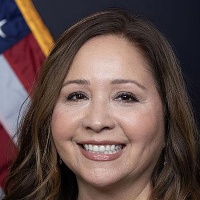
Rosa DeLauro
Representative
CT
Rosa DeLauro
Representative
CT
The Wage Theft Prevention and Wage Recovery Act strengthens worker protections by amending the Fair Labor Standards Act to mandate pay transparency, guarantee timely final pay, and significantly increase penalties for wage theft. It also extends the statute of limitations for filing wage claims and establishes a federal grant program to support local efforts in preventing wage theft and assisting workers with recovery. Overall, the bill aims to ensure workers receive the full wages they are owed through stricter enforcement and greater accountability for employers.
This bill renames and revises the Great American Outdoors Act's maintenance fund, increases dedicated funding through new, higher fees for foreign visitors, and sets spending priorities for deferred maintenance across public lands agencies.
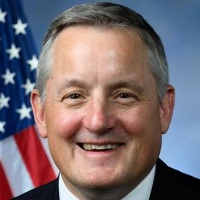
Bruce Westerman
Representative
AR
Bruce Westerman
Representative
AR
This bill, the Great American Outdoors Act 250, significantly reforms and renames the existing public lands restoration fund to the America’s Legacy Restoration Fund. It secures dedicated funding streams, primarily from energy revenues and new fees on foreign visitors, to address critical deferred maintenance across the National Park Service, Forest Service, and other public land agencies. The legislation establishes strict spending priorities for infrastructure repair while also creating pilot programs for enhancing outdoor recreation and sportsmen's access. Finally, it mandates increased transparency and accountability through standardized metrics and public reporting on all funded projects.
This Act establishes a moratorium on the construction and upgrading of new artificial intelligence data centers until Congress passes legislation ensuring AI safety, equitable economic benefits, and community approval, while also imposing export controls on related computing hardware.
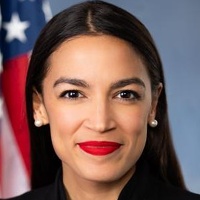
Alexandria Ocasio-Cortez
Representative
NY
Alexandria Ocasio-Cortez
Representative
NY
This Act imposes an immediate moratorium on the construction and upgrading of new or existing large-scale Artificial Intelligence Data Centers. The pause will remain in effect until Congress passes legislation that mandates federal safety reviews for AI products and ensures the economic benefits of AI are shared broadly. Upon lifting the moratorium, any new or upgraded facilities must meet strict environmental, community approval, and labor standards.
This bill restricts federal agencies from relocating to states with restrictive abortion laws, provides travel allowances and administrative leave for employees seeking out-of-state reproductive care, and protects employees' privacy regarding such care in security clearance and personnel decisions.
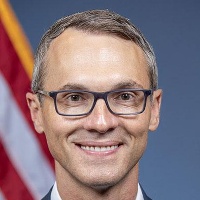
James Walkinshaw
Representative
VA
James Walkinshaw
Representative
VA
The Federal Workforce Reproductive Rights Protection Act restricts federal agencies from relocating operations to states with restrictive abortion laws. It also provides federal employees with travel allowances and administrative leave to access out-of-state reproductive healthcare services. Furthermore, the bill prohibits using reproductive health decisions as a factor in security clearance determinations or other personnel actions.
The LIFT the BAR Act restores federal public benefit eligibility, including SNAP, Medicaid, and housing assistance, for many lawfully present noncitizens by repealing restrictions from the 1996 welfare law and updating terminology.
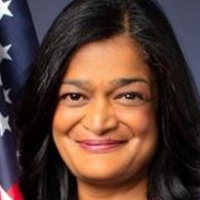
Pramila Jayapal
Representative
WA
Pramila Jayapal
Representative
WA
The LIFT the BAR Act repeals decades-old restrictions that barred many lawfully present noncitizens from accessing essential federal public benefits. This legislation restores eligibility for programs like SNAP, Medicaid, CHIP, and housing assistance for qualified noncitizens. The bill also updates terminology, replacing "alien" with "noncitizen" throughout relevant statutes.
This bill commemorates the 50th anniversary of women enrolling in U.S. military service academies and honors their distinguished contributions to national service.
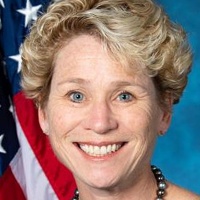
Chrissy Houlahan
Representative
PA
Chrissy Houlahan
Representative
PA
This resolution commemorates the 50th anniversary of women enrolling in U.S. military service academies, recognizing their significant growth and distinguished achievements since 1976. It honors the thousands of women graduates who have served with distinction across all branches of the armed forces and in national service. The bill also expresses support for designating a "50 Years of Women at the Service Academies Day."
This act doubles the maximum Pell Grant award, makes funding mandatory, extends eligibility to Dreamer students, restores previous eligibility limits, and reforms Satisfactory Academic Progress rules.
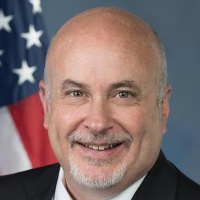
Mark Pocan
Representative
WI
Mark Pocan
Representative
WI
The Pell Grant Preservation and Expansion Act of 2026 aims to significantly strengthen federal student aid by doubling the maximum Pell Grant award and funding it through mandatory appropriations. This bill also expands eligibility to include Dreamer students, restores Pell Grant eligibility for students with certain scholarships, and reforms Satisfactory Academic Progress (SAP) rules to make regaining aid easier after academic setbacks. These changes are designed to stabilize and expand access to postsecondary education for millions of students.
This bill mandates the creation of an online detainee locator system by DHS, requires notification for medical transfers, and increases public reporting on CBP arrests and enforcement operations.
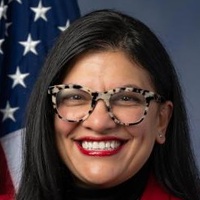
Rashida Tlaib
Representative
MI
Rashida Tlaib
Representative
MI
This bill, the "Find Our Families Act of 2026," mandates the creation of a public, online detainee locator system for individuals in CBP and ICE custody, accessible in multiple languages. It requires timely posting of custody and location information, along with new notification requirements for medical transfers to family members. Additionally, the bill requires the public reporting of detailed information regarding CBP arrests and ongoing enforcement operations.
This bill significantly strengthens child labor protections under federal law by expanding definitions of oppressive labor, increasing penalties, enhancing supply chain accountability, and imposing new requirements on federal contractors.
Rosa DeLauro
Representative
CT
Rosa DeLauro
Representative
CT
The CHILD Labor Act significantly strengthens protections against child labor by expanding the definition of oppressive child labor and requiring updated regulations for hazardous work under the Fair Labor Standards Act. It enhances enforcement through supply chain accountability, extended "hot goods" restrictions, liability for successor businesses, and increased civil and criminal penalties for violations. Furthermore, the Act imposes strict child labor requirements on federal contractors and recipients of federal financial assistance.
This bill seeks to disapprove the CMS rule detailing the 2027 Benefit and Payment Parameters for the Affordable Care Act and the Basic Health Program.
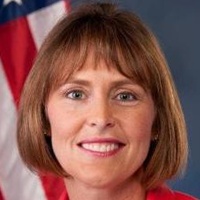
Kathy Castor
Representative
FL
Kathy Castor
Representative
FL
This bill seeks to disapprove the rule submitted by the Centers for Medicare & Medicaid Services (CMS) regarding the 2027 Benefit and Payment Parameters for the Affordable Care Act and the Basic Health Program. If enacted, this disapproval would render the specified CMS rule without any legal force or effect.
This bill, the "Protect Local Funding Act," prohibits the finalization, implementation, or enforcement of the proposed "Regulation for Federal Financial Assistance" rule published on May 29, 2026, or any substantially similar rule.
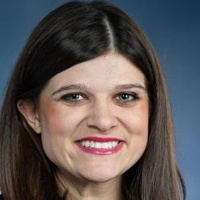
Haley Stevens
Representative
MI
Haley Stevens
Representative
MI
This bill, the "Protect Local Funding Act," prohibits the finalization, implementation, or enforcement of the proposed "Regulation for Federal Financial Assistance" published on May 29, 2026, or any substantially similar rule. It prevents federal agencies from enacting this specific regulation concerning federal financial assistance.
This bill prohibits Medicare Advantage plans from requiring prior authorization for repairs to complex rehabilitation technology like certain wheelchairs.
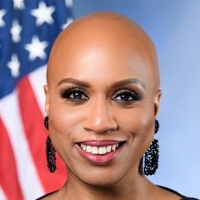
Ayanna Pressley
Representative
MA
Ayanna Pressley
Representative
MA
The FAST Repairs for Wheelchairs Act aims to speed up the repair process for essential mobility devices covered under Medicare Advantage. This bill prohibits Medicare Advantage plans from requiring prior authorization or extra documentation before covering necessary repairs to complex rehabilitation wheelchairs and related accessories. These new rules take effect for plan years beginning on or after January 1st following the law's enactment.
This act establishes allowed evidence-based interventions and prohibits punitive measures for student absences to combat chronic absenteeism in K-12 education.
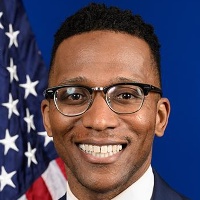
Christian Menefee
Representative
TX
Christian Menefee
Representative
TX
The All in For Attendance Act addresses the widespread problem of chronic student absenteeism by expanding federal support for proven, non-punitive interventions. The bill allows schools to use federal funds for strategies like data tracking, family engagement, and targeted support programs. Crucially, it also prohibits local educational agencies from imposing suspensions, fines, or academic penalties on students solely due to their absences.
This bill imposes a temporary halt on the Department of Homeland Security's procurement of surveillance technologies used for immigration enforcement until a comprehensive audit, public reporting, and compliance review are completed.

Dan Goldman
Representative
NY
Dan Goldman
Representative
NY
This Act places an immediate moratorium on the Department of Homeland Security (DHS) awarding new contracts for specific surveillance technologies used in immigration enforcement, such as facial recognition and location tracking. The freeze remains in place until the DHS Inspector General completes a comprehensive audit of these technologies and the Secretary reports on necessary safeguards. Upon completion of the audit and reporting requirements, DHS must issue annual public reports detailing the continued use of these surveillance tools.
This resolution commemorates the 10th anniversary of the Pulse nightclub shooting, honoring the victims, recognizing first responders, and reaffirming support for gun safety and mental health efforts.
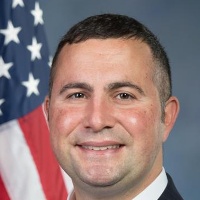
Darren Soto
Representative
FL
Darren Soto
Representative
FL
This resolution commemorates the 10th anniversary of the tragic Pulse nightclub shooting in Orlando, honoring the 49 lives lost and expressing support for all affected. It recognizes the bravery of first responders and reaffirms the nation's unity against hate and terrorism. The bill also highlights ongoing efforts toward gun safety and mental health legislation.
This act repeals the federal tax credit for contributions to scholarship organizations and eliminates the income exclusion for certain scholarship amounts received from those organizations.
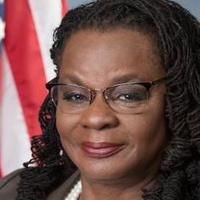
Gwen Moore
Representative
WI
Gwen Moore
Representative
WI
The Keep Public Funds in Public Schools Act of 2026 aims to redirect funding by eliminating federal tax incentives for private school scholarships. Specifically, it repeals the tax credit for contributions to scholarship-granting organizations and removes the income exclusion for certain scholarship amounts received. These changes are set to take effect starting in 2027.
This bill expresses support for designating July 3–10, 2026, as "National Extreme Heat Awareness Week" to educate the public on the dangers and risks associated with extreme heat.
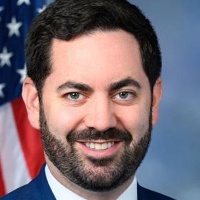
Michael Lawler
Representative
NY
Michael Lawler
Representative
NY
This bill expresses support for designating July 3 through July 10, 2026, as "National Extreme Heat Awareness Week." The week aims to educate the public on the significant dangers of extreme heat, which is the leading weather-related cause of death in the U.S. It encourages nationwide educational initiatives and community programming to promote preparedness and safety against heat-related risks.
This bill directs the Assistant Secretary of Commerce to study and report to Congress on the technologies, economics, and performance of various broadband internet access services.
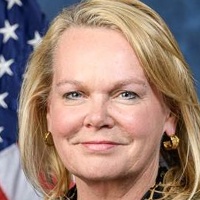
April McClain Delaney
Representative
MD
April McClain Delaney
Representative
MD
This bill, the Broadband Deployment and Economic Impact Study Act of 2026, directs the Assistant Secretary of Commerce for Communications and Information to conduct a comprehensive study on current broadband internet access technologies. The resulting report to Congress must analyze the workforce needs, economics, performance metrics, and consumer costs associated with technologies like fiber, wireless, and satellite. The goal is to provide Congress with detailed information on the landscape of broadband deployment.
The PRIDE Act of 2026 expands federal diversity and inclusion requirements within financial agencies to explicitly include LGBTQI individuals and LGBTQI-owned businesses by renaming and updating the Office of Minority and Women Inclusion.
Nikema Williams
Representative
GA
Nikema Williams
Representative
GA
The PRIDE Act of 2026 officially renames the Offices of Minority and Women Inclusion at certain federal financial agencies to the Office of Minority, Women, and LGBTQI Inclusion. This expansion explicitly incorporates LGBTQI individuals and LGBTQI-owned businesses into existing diversity, inclusion, and contracting requirements. The bill adds specific definitions for "LGBTQI" and "LGBTQI-owned business" across relevant statutes.
This proposed constitutional amendment establishes a federal right to vote for all eligible citizens and mandates that states adhere to federal election standards, including same-day registration and voting.
Jonathan Jackson
Representative
IL
Jonathan Jackson
Representative
IL
This proposed constitutional amendment establishes a fundamental federal right to vote for all eligible U.S. citizens. It prohibits denying or restricting this right and mandates that states administer elections according to federal standards, including requiring same-day registration and voting. Congress is authorized to pass legislation to enforce these provisions.