This Act establishes federal minimum salary and wage floors for school paraprofessionals and support staff, providing federal funding to help states meet these new pay standards within four years.
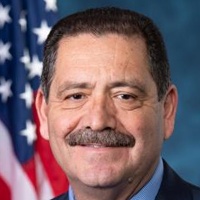
Jesús "Chuy" García
Representative
IL-4
The Pay Paraprofessionals and Support Staff Act establishes minimum federal salary and wage floors for school support staff, requiring states to implement higher state-level standards. It authorizes significant federal funding through grants to help states and local districts meet these new pay requirements within four years. States must prioritize funding distribution to districts serving high numbers of low-income students to ensure compliance with the mandated pay increases.
New Act Mandates $45K Minimum Salary for School Support Staff, Kicking Off with $25 Billion Federal Boost
Alright, let's talk about the folks who keep our schools running behind the scenes. We're talking paraprofessionals, teaching assistants, cafeteria staff, school secretaries—the whole crew. This new piece of legislation, the Pay Paraprofessionals and Support Staff Act, is looking to give their paychecks a serious upgrade.
This bill sets up new minimum salary and wage floors for these essential school support staff, and it comes with a hefty federal purse to help make it happen. Starting in fiscal year 2026, full-time staff would see a minimum annual salary floor of $45,000, while part-timers would get a minimum hourly wage floor of $30.00. These aren't just one-time numbers; every five years after 2030, these floors will adjust upwards, either by inflation or a minimum of 2%, to keep pace with the rising cost of living. Think of it as a built-in cost-of-living adjustment, which is pretty smart given how quickly prices seem to climb these days.
The Federal Wallet Opening Up
To grease these wheels, the federal government is throwing some serious cash into the mix. We're talking $25,000,000,000 (that's twenty-five billion dollars) for fiscal year 2026 alone, with that amount also increasing annually. The Department of Education will be dishing out these funds as grants to states. A small slice (up to 1%) is reserved for research and technical assistance, but the vast majority is headed straight to states to help them boost staff pay.
States Step Up to the Plate
Now, states don't just get this money for free. To grab a grant, they've got to submit a plan to the Secretary of Education. This plan needs a timeline showing how, within four years of getting the grant, every single local school district in that state will be paying their full-time support staff at least the state’s new minimum salary and part-timers the new minimum wage. They also need to set annual goals for increasing wages, with the first bump happening by the second year of the grant. And here’s a key detail: districts serving a high number of low-income students get priority, meaning they’ll need to hit these pay standards even faster, within two years of receiving funds. This is a smart move to ensure the districts that often struggle the most financially get the support they need quickly.
Where the Money Goes on the Ground
Once a state gets its grant, at least 98% of it has to go directly to local school districts. These districts must use the funds to meet the new salary and wage requirements. But there's flexibility too: they may also use the funds to increase pay for other school staff like teachers, principals, or even bus drivers, and to offer training and credentialing opportunities for support staff. This means a paraprofessional could not only see a fatter paycheck but also get help earning a new certification, which is a win-win. Crucially, any staff, whether directly employed or contracted, must be paid at least the new minimums. And let's be clear, this federal money is meant to add to, not replace, what states and local districts are already spending on education. The feds will be watching to make sure no one tries to pull a fast one and just shift existing funds around.