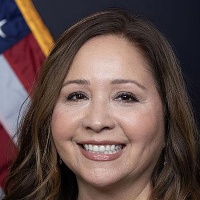
Legislative Activity
Track Adelita's sponsored bills, co-sponsored legislation, and voting record
The Justice for Incarcerated Moms Act aims to improve maternal health outcomes for incarcerated individuals by prohibiting the shackling of pregnant prisoners and establishing federal and state programs to provide comprehensive prenatal and postpartum care.
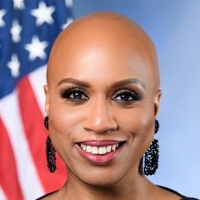
Ayanna Pressley
Representative
MA
Ayanna Pressley
Representative
MA
The Justice for Incarcerated Moms Act aims to improve maternal health outcomes and reduce disparities for pregnant and postpartum individuals in the criminal justice system. The bill mandates the end of shackling for pregnant individuals in federal and state facilities and establishes comprehensive model programs to provide prenatal and postpartum care. Additionally, it creates a grant program for state and local facilities to improve maternal health services and requires a federal report to identify and address systemic barriers to care.
The Family Grocery and Farmer Relief Act aims to lower food prices and strengthen the food supply by breaking up dominant meatpacking monopolies, restricting foreign control, and empowering independent farmers and small businesses.

Pramila Jayapal
Representative
WA
Pramila Jayapal
Representative
WA
The Family Grocery and Farmer Relief Act aims to lower food prices and increase market competition by breaking up dominant, multi-protein meatpacking enterprises. The legislation empowers the Federal Trade Commission to enforce divestitures, restrict foreign control, and prevent excessive market concentration in the beef industry. By prioritizing sales to farmer cooperatives and small businesses, the bill seeks to create a more resilient food supply chain that benefits both independent producers and American consumers.
The Protecting Students from Worthless Degrees Act mandates that higher education programs meet strict licensure and debt-to-earnings standards to remain eligible for federal student aid.
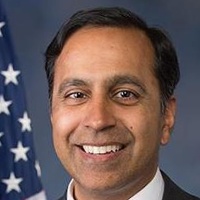
Raja Krishnamoorthi
Representative
IL
Raja Krishnamoorthi
Representative
IL
The Protecting Students from Worthless Degrees Act aims to ensure educational programs provide real value by holding institutions accountable for student outcomes and professional readiness. The bill mandates that programs meet strict debt-to-earnings standards to remain eligible for federal student aid and requires institutions to ensure their curricula fully qualify graduates for necessary professional licensure. Additionally, it strengthens oversight of distance education by requiring institutions to maintain legal authorization in every state where their students reside.
The Stop CHEATERS Act provides significant multi-year funding to the IRS to modernize technology, improve taxpayer services, and enhance tax enforcement efforts focused on high-income individuals and large corporations.

Suzan DelBene
Representative
WA
Suzan DelBene
Representative
WA
The Stop CHEATERS Act provides significant multi-year funding to the IRS to modernize its technology, improve taxpayer services, and strengthen tax enforcement. The bill specifically mandates that the agency prioritize auditing high-income individuals and large corporations to close the tax gap. Additionally, it requires regular reporting to Congress to ensure accountability and progress in these enforcement efforts.
The Essential Caregivers Act of 2026 mandates that long-term care facilities allow residents to designate essential caregivers who maintain in-person visitation rights even during periods when regular visitation is suspended.

Claudia Tenney
Representative
NY
Claudia Tenney
Representative
NY
The Essential Caregivers Act of 2026 ensures that residents in long-term care facilities maintain access to designated essential caregivers, even when general visitation is suspended. The bill mandates that facilities allow residents to appoint up to two caregivers who can provide in-person support, provided they adhere to established safety protocols. It also prioritizes the investigation of access complaints and guarantees that these visitation rights cannot be waived during emergencies.
This resolution reaffirms the commitment to universal accessibility by advocating for the full implementation of disability-inclusive design standards across all federally funded infrastructure and public facilities.
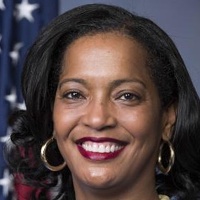
Jahana Hayes
Representative
CT
Jahana Hayes
Representative
CT
This resolution reaffirms the federal commitment to ensuring equal access to public facilities and rights-of-way for all individuals, including the more than 70 million Americans living with disabilities. It supports the full implementation of accessibility guidelines for pedestrian infrastructure and pledges to prioritize universal, inclusive design in all future federal projects. By upholding the principles of the Americans with Disabilities Act, the bill aims to remove systemic barriers and guarantee that all citizens can engage fully and safely in society.
The Mamas First Act mandates that state Medicaid programs provide comprehensive, no-cost coverage for pregnancy and postpartum services delivered by doulas, midwives, and lactation support providers.
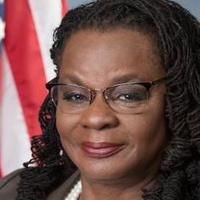
Gwen Moore
Representative
WI
Gwen Moore
Representative
WI
The Mamas First Act aims to improve maternal health outcomes and reduce mortality rates by mandating Medicaid coverage for doula, midwife, and lactation support services. This legislation ensures that these essential prenatal, labor, and postpartum care services are provided without out-of-pocket costs to patients. By expanding access to these culturally congruent care providers, the bill seeks to address significant disparities in maternal health across the United States.
This bill mandates electronic prior authorization, increases transparency through required data reporting, and establishes faster decision timelines for Medicare Advantage plans to improve timely access to care for seniors.

Mike Kelly
Representative
PA
Mike Kelly
Representative
PA
The Improving Seniors’ Timely Access to Care Act of 2025 aims to streamline and modernize the prior authorization process within Medicare Advantage plans. This bill mandates the adoption of electronic prior authorization systems and significantly increases transparency regarding approval rates and decision times starting in 2027. Furthermore, it establishes new enrollee protections and grants the Secretary authority to enforce faster decision timeframes for medical services.
The Menopausal Workers’ Fairness Act of 2026 mandates that employers provide reasonable accommodations for employees experiencing menopause and its related symptoms to ensure workplace equity and prevent discrimination.

Debbie Dingell
Representative
MI
Debbie Dingell
Representative
MI
The Menopausal Workers’ Fairness Act of 2026 establishes federal protections to ensure employees experiencing menopause or the menopausal transition can access reasonable workplace accommodations. By requiring employers to provide support for symptoms—such as flexible breaks or environmental adjustments—the Act aims to reduce workplace stigma and prevent discrimination. Ultimately, this legislation seeks to promote inclusivity, improve employee retention, and ensure that workers can maintain their health and productivity throughout all stages of their careers.
The Fund Schools, Not ICE Act redirects unobligated immigration enforcement funds and proceeds from the sale of detention facilities to support financial assistance programs for low-income school districts.

Greg Stanton
Representative
AZ
Greg Stanton
Representative
AZ
The "Fund Schools, Not ICE Act" redirects unobligated U.S. Immigration and Customs Enforcement (ICE) funds to the Department of Education to support school districts serving low-income families. Additionally, the bill mandates the sale of specific immigration detention facilities acquired in early 2026.
This resolution affirms reproductive justice as a fundamental human right and a pillar of American democracy, calling for universal access to comprehensive reproductive healthcare, family support, and protection from systemic discrimination.
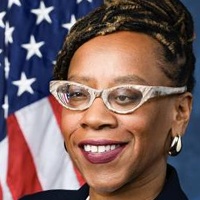
Lateefah Simon
Representative
CA
Lateefah Simon
Representative
CA
This resolution affirms that reproductive justice—including the rights to have children, not have children, and raise families with dignity—is a fundamental human right and a pillar of American democracy. It calls for a national commitment to protect bodily autonomy, eliminate systemic barriers to healthcare, and ensure equitable access to the resources necessary for all families to thrive.
This bill strengthens the Department of Homeland Security’s Office for Civil Rights and Civil Liberties by formalizing its authority, expanding its oversight and investigative powers, and mandating greater transparency and accountability in protecting civil rights across the Department.

Al Green
Representative
TX
Al Green
Representative
TX
The Department of Homeland Security Office for Civil Rights and Civil Liberties Authorization Act strengthens the oversight and authority of the Office for Civil Rights and Civil Liberties. This legislation ensures the Office has the necessary resources, access, and independence to integrate civil rights protections into all Department policies, investigate potential abuses, and provide transparent reporting to Congress and the public.
The Living Wage for Federal Contractors Act establishes a phased-in $25 hourly minimum wage for federal contract workers, adjusted annually for inflation, while strengthening enforcement and compliance standards across federal procurement.
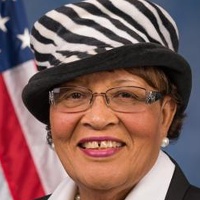
Alma Adams
Representative
NC
Alma Adams
Representative
NC
The Living Wage for Federal Contractors Act establishes a phased increase in the minimum hourly wage for federal contract employees, reaching $25.00 per hour within five years, followed by annual inflation-based adjustments. The bill mandates strict enforcement mechanisms, including contract termination, debarment for violators, and civil penalties, while aligning existing federal wage standards with these new requirements.
This bill directs the President to remove U.S. Armed Forces from hostilities in Lebanon within seven days, pursuant to the War Powers Resolution.
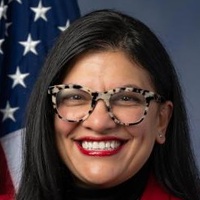
Rashida Tlaib
Representative
MI
Rashida Tlaib
Representative
MI
This resolution directs the President to withdraw U.S. Armed Forces from hostilities in Lebanon within seven days, utilizing authority under the War Powers Resolution. It explicitly clarifies that this action does not authorize the use of military force or limit security cooperation with Lebanese forces or the protection of diplomatic facilities.
The Save MEDICARE Act of 2026 reforms Medicare Advantage by tightening payment accuracy, enhancing audit and enforcement authority, and requiring private insurers to reimburse the VA for veteran healthcare services.

Lloyd Doggett
Representative
TX
Lloyd Doggett
Representative
TX
The Save MEDICARE Act of 2026 aims to increase transparency and accountability within the Medicare Advantage program by reforming payment methodologies, tightening oversight of diagnosis coding, and accelerating audit processes. The bill also enhances the Department of Veterans Affairs' ability to recover healthcare costs from private insurers and empowers states to enforce federal requirements for Medicare Advantage plans. These measures are designed to ensure more accurate payments, reduce deceptive practices, and protect resources for all Medicare enrollees.
This Act prohibits the executive branch from indefinitely suspending the entire Diversity Visa Program, requiring transparency and congressional notification for any narrower, temporary limitations.
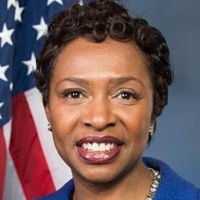
Yvette Clarke
Representative
NY
Yvette Clarke
Representative
NY
This bill, the Diversity Visa Protection and Modernization Act, aims to prevent the executive branch from indefinitely or broadly suspending the Diversity Immigrant Visa Program. It reaffirms that only Congress can halt the entire program, while allowing for narrowly tailored, temporary, or country-specific restrictions under strict transparency and notification requirements. The Act protects eligible visa selectees from losing their opportunities due to unexplained administrative pauses.
This bill extends the window for military survivors to contribute death benefits to a Roth IRA or Coverdell ESA from one year to three years.
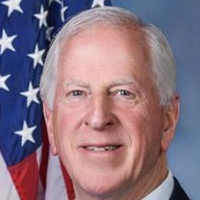
Mike Thompson
Representative
CA
Mike Thompson
Representative
CA
The GRACE for Military Survivors Act extends the window for military survivors to contribute death benefits to a Roth IRA or Coverdell education savings account from one year to three years. This change applies to benefits received on or after the date of enactment, and retroactively covers benefits received since October 7, 2001. This provides survivors with more time to utilize these tax-advantaged savings options.
This bill authorizes a single Congressional Gold Medal to honor the individuals who defended Bataan, Corregidor, and other Pacific locations during World War II.

Teresa Leger Fernandez
Representative
NM
Teresa Leger Fernandez
Representative
NM
This bill authorizes the award of a single Congressional Gold Medal to recognize the collective heroism of the individuals who defended Bataan, Corregidor, and other locations in the Pacific theater during World War II. The medal honors the extraordinary sacrifice of U.S. service members and Filipino forces who fought and endured imprisonment by Imperial Japan. Following the presentation, the medal will be permanently displayed at the Smithsonian's National Museum of American History. The legislation also allows for the production and sale of bronze duplicate medals.
This bill impeaches Secretary of Education Linda M. McMahon for high crimes and misdemeanors, citing unlawful transfers of departmental offices, misleading Congress, and disrupting federal education funding.
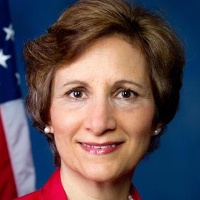
Suzanne Bonamici
Representative
OR
Suzanne Bonamici
Representative
OR
This bill impeaches Secretary of Education Linda M. McMahon for high crimes and misdemeanors related to her alleged unlawful transfer of departmental offices, willful non-compliance with federal law, and misleading Congress. The resolution cites her actions as a deliberate attempt to dismantle the Department of Education without congressional approval and a breach of her oath of office. These actions, including massive workforce reductions and the delayed disbursement of congressionally authorized funds, warrant her removal and disqualification from future office.
The Freedom of Association in Higher Education Act of 2026 prohibits colleges and universities that receive federal funding from taking adverse actions against students or organizations based on their participation in single-sex social groups.
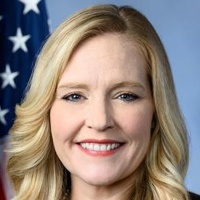
Erin Houchin
Representative
IN
Erin Houchin
Representative
IN
The Freedom of Association in Higher Education Act of 2026 protects students and single-sex social organizations from adverse actions by colleges and universities that receive federal funding. The bill ensures that students can freely join or lead these organizations without facing institutional bias or discrimination based on their membership. It establishes clear standards to prevent schools from penalizing students or organizations solely for maintaining single-sex membership policies.