Legislative Activity
Track Adelita's sponsored bills, co-sponsored legislation, and voting record
This resolution commends U.S. public servants for their dedication to defending the Constitution, delivering essential services, and supporting the economy, particularly during Public Service Recognition Week.
Brian Fitzpatrick
Representative
PA
Brian Fitzpatrick
Representative
PA
This resolution expresses the sense of the House of Representatives commending public servants for their dedication to defending the Constitution and delivering essential services to the American people. It specifically designates the week of May 3 through May 9, 2026, as Public Service Recognition Week. The bill honors the millions of federal, state, and local employees and uniformed service members who support the economy and democratic foundations of the nation.
This resolution designates the week of May 4 through May 8, 2026, as Teacher Appreciation Week while recognizing the critical role and priorities of the nation's public school teachers.
Jahana Hayes
Representative
CT
Jahana Hayes
Representative
CT
This resolution officially designates the week of May 4 through May 8, 2026, as Teacher Appreciation Week. It recognizes the vital role of public school teachers and highlights their key priorities, including support for existing federal protections and funding. Furthermore, the bill encourages leaders to engage directly with teachers to ensure their expertise informs education policy.
This bill prohibits House members, officers, and employees from participating in certain prediction markets involving excluded commodities, while also encouraging the executive and judicial branches to adopt similar restrictions.
Dina Titus
Representative
NV
Dina Titus
Representative
NV
This bill amends the House of Representatives' rules to prohibit Members, officers, and employees from participating in certain prediction markets involving excluded commodities. The legislation aims to prevent conflicts of interest by banning trades tied to the outcome of specific events. It also expresses the sense of the House that the executive and judicial branches should adopt similar restrictions.
This bill establishes an excise tax on PFAS chemicals and creates a corresponding federal tax credit for public water systems that remediate PFAS contamination.
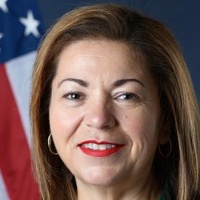
Linda Sánchez
Representative
CA
Linda Sánchez
Representative
CA
The PFAS Cleanup Act establishes a new excise tax on the sale or use of PFAS "forever chemicals" to generate revenue for remediation efforts. It also creates a federal tax credit for public water systems that incur qualified expenses to remove PFAS contamination exceeding EPA safety standards. This legislation aims to address the significant health and social costs associated with PFAS pollution.
This act prohibits public stock buybacks and mandates that large companies reserve at least one-third of their board seats for employee-elected representatives.
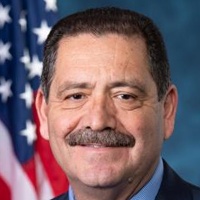
Jesús García
Representative
IL
Jesús García
Representative
IL
The Reward Work Act aims to shift corporate focus from shareholder enrichment to worker investment. It achieves this by prohibiting publicly traded companies from conducting open market stock buybacks and mandating that large companies reserve at least one-third of their board seats for employee representatives. This legislation requires the SEC to establish regulations ensuring fair employee elections for these director positions.
The No WAR Act establishes a point of order preventing the use of budget reconciliation to fund unauthorized military hostilities against Iran.
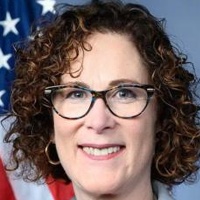
Valerie Hoyle
Representative
OR
Valerie Hoyle
Representative
OR
The No WAR Act establishes a procedural barrier, a "point of order," in Congress to prevent funding for unauthorized military action against Iran through the budget reconciliation process. This means that any reconciliation bill providing budget authority for hostilities against Iran will be out of order unless Congress has first formally authorized that military force. The Act ensures that funding for military conflict against Iran requires explicit prior congressional approval.
This resolution opposes any rollback of the EPA's Greenhouse Gas Reporting Program, emphasizing its critical role in tracking emissions, protecting public health, and supporting scientific integrity and economic growth.
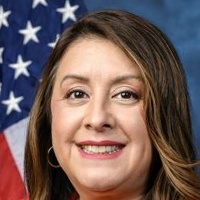
Luz Rivas
Representative
CA
Luz Rivas
Representative
CA
This resolution strongly opposes any rollback of the EPA's Greenhouse Gas Reporting Program, emphasizing its critical role in tracking U.S. emissions. The program provides essential, transparent data vital for protecting public health, advancing environmental justice, and supporting federal, state, and business climate initiatives. Undermining this system would erode scientific integrity and hinder efforts to address climate change and pollution impacts.
The CHARTER Act prohibits federally funded charter schools from contracting with for-profit entities to operate, oversee, or manage the school's core administration, ensuring public funds serve educational needs rather than generate private profit.

Rosa DeLauro
Representative
CT
Rosa DeLauro
Representative
CT
The CHARTER Act ensures that federally funded charter schools adhere to nonprofit requirements by prohibiting them from contracting with for-profit entities to operate or manage the school's core operations. This legislation aims to prevent public education funds from being diverted as profit for private entities. It clarifies that while core management must remain nonprofit, charters can still contract for specific support services like food or transportation.
This bill nullifies three specific Department of State rules regarding foreign assistance, effectively voiding their implementation and preventing enforcement of similar future policies.

Grace Meng
Representative
NY
Grace Meng
Representative
NY
This Act nullifies three specific Department of State rules concerning foreign assistance, effectively treating them as if they never existed. It prohibits any federal agency from implementing or enforcing these rules, or any substantially similar future policies. The legislation aims to prevent the enforcement of rules related to "Protecting Life," "Discriminatory Equity Ideology," and "Gender Ideology" in foreign aid.
This bill mandates stricter federal and state regulation of utility rate-setting by establishing lower return-on-equity ranges and banning numerous non-operational costs from being passed on to consumers.
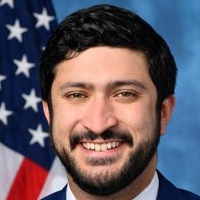
Gregorio Casar
Representative
TX
Gregorio Casar
Representative
TX
The Lowering Utility Bills Act aims to reduce consumer energy costs by establishing stricter federal and state guidelines for how electric transmission providers and investor-owned utilities calculate their allowed rate of return. The bill mandates using the lowest reasonable return on equity based on market data and explicitly bans passing numerous lobbying, administrative, and political expenses onto customers. Furthermore, it requires utilities to prioritize lower-cost, grid-enhancing technologies when planning new capital expenditures.
This Act establishes a phased-in increase of the federal minimum wage, ultimately tying it to two-thirds of the national median hourly wage while also reforming wages for tipped workers, youth workers, and incarcerated workers, and phasing out subminimum wages for workers with disabilities.
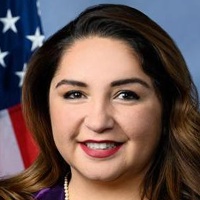
Delia Ramirez
Representative
IL
Delia Ramirez
Representative
IL
The Living Wage For All Act establishes a phased increase of the federal minimum wage, ultimately aiming to tie it to two-thirds of the national median hourly wage. It creates differentiated wage schedules, requiring large corporations to reach higher minimums sooner than other employers. Furthermore, the bill phases out subminimum wages for tipped workers and workers with disabilities, and extends federal wage protections to incarcerated workers.
This bill establishes the Short-Term Holding Facility Standards Restoration Act, limiting ICE holding facility detention to 12 hours except in exceptional circumstances, while mandating humane conditions and strict documentation.
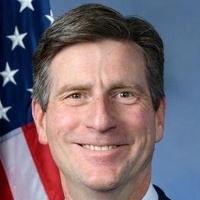
Greg Stanton
Representative
AZ
Greg Stanton
Representative
AZ
This bill, the Short-Term Holding Facility Standards Restoration Act, limits the time individuals can be held in U.S. Immigration and Customs Enforcement (ICE) holding facilities to a maximum of 12 hours, except in rare, exceptional circumstances. It also mandates humane conditions, including regular meals and constant access to drinking water, for all detainees. Furthermore, the legislation requires detailed documentation and annual reporting to Congress regarding any instances where the 12-hour limit is exceeded.
The HCBS Access Act mandates comprehensive, federally funded home- and community-based services under Medicaid, establishes a distinct classification for direct support professionals, and invests in workforce training and national program evaluation.

Debbie Dingell
Representative
MI
Debbie Dingell
Representative
MI
The HCBS Access Act aims to fundamentally transform long-term care by mandating that all states provide home- and community-based services (HCBS) as a required Medicaid benefit, backed by 100% federal funding. This sweeping legislation seeks to eliminate waiting lists, end institutional bias, and ensure older adults and people with disabilities can receive care in their own homes. Additionally, the bill includes provisions to strengthen the direct care workforce through better classification, training, and grant funding, while also requiring comprehensive national evaluation of the changes.
The Long-Term Care Workforce Support Act aims to significantly improve the pay, training, working conditions, and stability of the direct care workforce through federal funding, new labor protections, and national compensation strategies.
Debbie Dingell
Representative
MI
Debbie Dingell
Representative
MI
The Long-Term Care Workforce Support Act aims to significantly improve the lives of direct care professionals by increasing their pay, benefits, and training opportunities through federal funding and grants. The bill establishes new labor protections, including fair scheduling, paid sick leave, and workplace violence prevention plans. Ultimately, this legislation seeks to stabilize the essential long-term care workforce to ensure better quality care for older adults and people with disabilities.
This act prohibits involuntary workforce reductions and separations at the Department of the Interior and the U.S. Forest Service through September 30, 2030, without specific congressional committee approval.
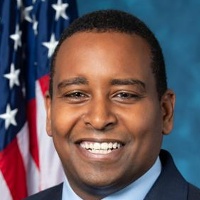
Joe Neguse
Representative
CO
Joe Neguse
Representative
CO
The Public Lands Workforce Stability Act prohibits the Department of the Interior and the U.S. Forest Service from implementing involuntary layoffs or reductions in force for most career employees through September 30, 2030. This measure prevents the use of federal funds for such actions unless specific congressional committee approval is obtained. Separations are only permitted for cause, such as misconduct or poor performance.
This bill establishes the Savings Opportunity and Affordable Repayment (SOAR) plan, a new income-driven repayment option for federal student loans with lower payments and defined forgiveness timelines.
Rosa DeLauro
Representative
CT
Rosa DeLauro
Representative
CT
The Savings Opportunity and Affordable Repayment Act establishes the new Savings Opportunity and Affordable Repayment (SOAR) plan for federal student loans. This income-driven option features low monthly payments calculated based on a percentage of income above 250% of the federal poverty line. The plan offers loan forgiveness after 10 or 15 years, depending on whether the borrower has undergraduate or graduate loans. Additionally, 50% of each payment is applied directly to the loan principal.
This bill prohibits the Department of Homeland Security from establishing or operating any new immigration detention models, such as converting warehouses or using tent systems.
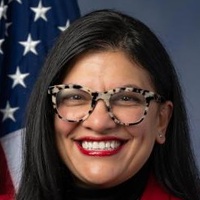
Rashida Tlaib
Representative
MI
Rashida Tlaib
Representative
MI
This bill prohibits the Department of Homeland Security (DHS) from establishing or operating any new models of immigration detention facilities, such as converting warehouses or using temporary structures. It specifically bans entering into new contracts for these alternative detention setups. Furthermore, any funds already allocated for these new models must be transferred to support services like affordable housing and healthcare.
This bill mandates that developers of AI-focused data centers must publicly disclose detailed project plans, including environmental impact analyses, 180 days before taking definitive steps to establish the facility.
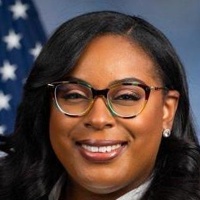
LaMonica McIver
Representative
NJ
LaMonica McIver
Representative
NJ
The AI Data Center Site Selection Transparency Act of 2026 mandates that developers of large AI-focused data centers must publicly disclose comprehensive project details, including environmental impact analyses, at least 180 days before taking significant action. This bill requires extensive public notification across multiple media channels and limits the use of non-disclosure agreements concerning public resources. Violations of these transparency requirements will be enforced by the Federal Trade Commission as unfair or deceptive practices.
This bill designates April as Community College Month to recognize the vital role of over 1,000 community colleges in advancing accessible higher education, workforce training, and national economic prosperity.
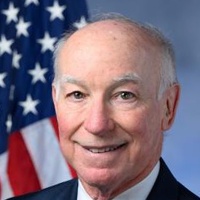
Joe Courtney
Representative
CT
Joe Courtney
Representative
CT
This resolution officially designates April as Community College Month to celebrate the vital role of over 1,000 community colleges nationwide. It recognizes these institutions for providing accessible higher education, workforce training, and significant contributions to the U.S. economy. The bill highlights their affordability, local presence, and impact on student success across the country.
This bill expresses support for U.S. library staff, recognizes their essential community services, advocates for adequate funding, and defends their rights to free access to information and union organization.
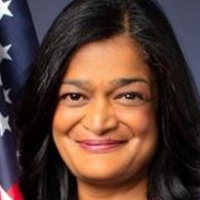
Pramila Jayapal
Representative
WA
Pramila Jayapal
Representative
WA
This resolution expresses strong support for library staff across the United States and recognizes the essential, expanding community services they provide. It advocates for commensurate funding, defends the right of all citizens to freely access information, and supports the civil rights and union voice of library workers. Furthermore, the bill condemns threats to library access and staff, such as book bans and funding cuts.