This act requires states and local governments to stop charging fees for public access to specific law enforcement camera footage to remain eligible for major federal grants.
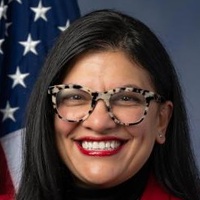
Rashida Tlaib
Representative
MI-12
The Stop Body Camera Paywalls Act requires states and local governments to stop charging the public fees to access or obtain copies of specific law enforcement camera footage, including body-worn and dash camera video. To receive funding from major federal law enforcement grant programs, applicants must certify they comply with this requirement. Non-compliant governments will be ineligible for these federal grants.
Stop Body Camera Paywalls Act Prohibits Fees for Police Footage Access in Federal Grant Swap
The Stop Body Camera Paywalls Act aims to end the practice of law enforcement agencies charging the public to see their own records. Under this bill, state and local governments would be barred from imposing any financial costs or court fees on citizens who want to view or obtain copies of body camera, dash camera, or correctional facility surveillance footage. To ensure compliance, the bill ties these transparency requirements directly to federal funding; any agency that wants a piece of the major federal 'Byrne' or 'COPS' grant programs must certify that they provide this footage to the public for free. If they don't waive the fees, they don't get the cash.
Opening the Digital Vault
Currently, if you are involved in a fender bender or an encounter with police and want to see the footage, some departments might hit you with 'processing fees' or 'redaction costs' that can climb into the hundreds or even thousands of dollars. Section 2 of this bill specifically targets these 'paywalls' by defining 'certain camera video footage' to include everything from the camera on an officer’s vest to the surveillance tapes inside jails and prisons. For a local journalist or a resident trying to clear their name after a traffic stop, this means the right to see what happened is no longer dependent on the size of their paycheck.
The Price of Federal Funding
The bill uses a 'carrot and stick' approach by leveraging the Edward Byrne Memorial Justice Assistance Grant (JAG) and the COPS grant programs—two of the largest sources of federal money for local police. By requiring a formal certification in the grant application, the federal government is essentially making 'free access' a prerequisite for buying new patrol cars or hiring more officers. For local taxpayers, this is a double-edged sword: while it guarantees transparency without extra out-of-pocket fees for records, local governments that currently rely on those fees to fund their clerical staff will have to find a new way to cover the administrative costs of blurring faces and prepping files or risk losing their federal funding entirely.
Real-World Accountability
This shift moves the burden of transparency from the individual to the institution. For example, if a family member is involved in an incident at a county jail, the bill ensures the family can access the surveillance footage without being blocked by 'related court fees' or administrative hurdles mentioned in the certification requirement. By standardizing this across all agencies that take federal money, the bill creates a more uniform landscape for public oversight, making it much harder for departments to hide footage behind a prohibitive invoice.