The Pensions for All Act establishes federal grants to help states create retirement programs for uncovered private-sector workers and mandates that employers either offer a comparable plan or enroll employees in FERS, while also providing tax credits for contributions.
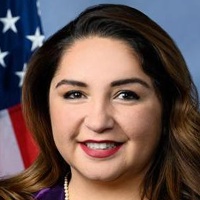
Delia Ramirez
Representative
IL-3
The Pensions for All Act aims to expand retirement security by providing federal grants to help states establish retirement programs for private-sector workers without workplace plans. It also mandates that employers either offer a comparable retirement plan or enroll employees in the Federal Employees Retirement System (FERS). Furthermore, the bill establishes tax credits for small employers and self-employed individuals contributing to these plans, alongside penalties for non-compliance.
Pensions for All Act: New Rules Require Employers to Provide Retirement Plans or Join the Federal System by 2026.
The Pensions for All Act is a massive shift in how we save for the future, essentially telling every employer and freelancer in the country: you must have a retirement plan. If you’re one of the millions of workers whose job doesn't currently offer a 401(k), this bill aims to fix that by creating a federal grant program to help states build retirement systems and, more importantly, opening the doors of the Federal Employees Retirement System (FERS) and the Thrift Savings Plan (TSP) to the private sector. Starting in 2026, if an employer doesn't offer a private plan that is 'comparable' to the federal one, they have to enroll their staff in FERS. It’s a bold move to ensure that whether you’re swinging a hammer or coding at a startup, you aren't hitting age 67 with just a Social Security check.
Your Office, Now a Federal Satellite?
Under Section 3, every employer must choose: either provide a private plan that the Secretary of Labor deems 'comparable' to the federal system or sign their employees up for FERS. For a small business owner—say, running a local landscaping crew or a boutique—this means you’ll be responsible for withholding employee contributions just like a federal agency does. To take the sting out of the cost, Section 4 offers a sliding scale for employer contributions. If your business brings in $25 million or less, you only have to pay 50% of the standard employer contribution rate. As your revenue grows toward $100 million, that discount slowly disappears. Self-employed folks get a similar break: if you earn $75,000 or less, your required contribution is halved. It’s a 'pay-to-play' system designed to be affordable for the little guy while making sure everyone is putting skin in the game.
The Carrot and the $10-a-Day Stick
To make this work, the bill uses both a carrot and a very specific stick. Section 5 introduces a tax credit worth 50% of the pension contributions made by small businesses and the self-employed, provided they aren't already taking the 'discounted' contribution rate mentioned above. But if you ignore the rules, Section 6 kicks in with a daily fine: $10 per employee for every day you aren't in compliance. For a shop with 10 employees, an accidental month of non-compliance could lead to a $3,000 penalty. While there’s a $500,000 annual cap on these fines for 'reasonable cause' errors, the message is clear: the government expects you to be a retirement provider now.
The Fine Print on Your Paycheck
One of the most interesting protections is found in Section 7, which tells employers they cannot cut your current pay to offset the costs of these new retirement benefits. If you’re already on the payroll when this passes, your boss can't say, 'I’m giving you a pension but taking $2 an hour off your wage.' However, there's a catch: this protection only applies to people employed on or before the date the Act becomes law. For anyone hired after that date, there’s no specific rule in this bill stopping a company from offering a lower starting salary to cover their new pension obligations. Additionally, because the Secretary of Labor gets to decide what counts as a 'comparable' plan (Section 2), we might see a lot of variety in what 'Pensions for All' actually looks like in practice depending on who is running the Department of Labor.