This act establishes a grant program for institutions and national laboratories to develop AI-driven testbeds for simulating and defending against large-scale cyberattacks on the power grid.
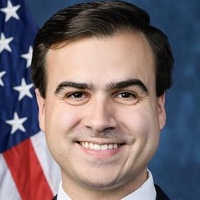
Pablo José Hernández Rivera
Representative
PR
The AI Cyber Grid Protection Resilient Development Act of 2026 establishes a $100 million grant program to develop secure AI testbeds for simulating and defending against large-scale cyberattacks on the power grid. Managed by CISA and the Department of Homeland Security, this initiative supports research institutions and National Laboratories in advancing AI-driven grid security. The bill also mandates annual reporting to Congress to track evolving threats and progress in grid resilience through 2031.
New AI Cyber Grid Act Funds $100 Million for Digital War Games to Protect Your Power Bill
The AI Cyber Grid Protection Resilient Development Act of 2026 is essentially a high-stakes insurance policy for the nation's electrical system. Within 180 days of becoming law, the Department of Homeland Security and CISA will launch a grant program aimed at building 'cyber-physical testbeds.' Think of these as high-tech flight simulators for the power grid. These environments allow researchers to launch massive, simulated cyberattacks against digital versions of our energy infrastructure to see where the cracks are—all without actually turning the lights off in your neighborhood. By authorizing $100 million through 2030, the bill focuses on using artificial intelligence to predict and block hacks before they can cause real-world blackouts.
Digital Sandboxes for Real-World Safety
The meat of this bill is in Section 2, which targets 'eligible entities' like universities and National Laboratories to do the heavy lifting. If you’re a student at a community college or a researcher at a state university, this could mean new, well-funded labs on your campus dedicated to AI defense. For the rest of us—whether you’re running a small business that can’t afford a four-hour power outage or a remote worker dependent on a stable connection—this is about building a 'grid-scale' shield. The bill specifically requires these testbeds to train AI models safely, ensuring that the software managing our electricity is smart enough to recognize a foreign intrusion and pivot before the local hospital or grocery store loses power.
Accountability and the Long Game
This isn't just a 'set it and forget it' check. The bill mandates that the Director of CISA and the Secretary of Homeland Security report back to Congress every single year through 2031. These reports must detail evolving threats and provide recommendations for new laws. This keeps the government on the hook for explaining exactly how that $100 million is being used to stay ahead of hackers. For the average person, this means there’s a formal paper trail tracking how the government is adapting to new tech. While the bill is clear on who gets the money—mostly academic and federal labs—the real challenge will be ensuring these 'simulated' fixes actually make it into the hardware used by local utility companies.