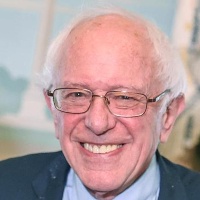
Legislative Activity
Track Bernie's sponsored bills, co-sponsored legislation, and voting record
This bill authorizes the Attorney General to appoint qualified, temporary immigration judges for limited terms to assist with complex immigration case backlogs while emphasizing the need for permanent judges and rigorous training standards.
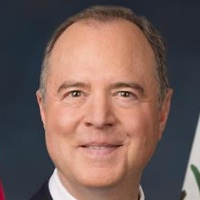
Adam Schiff
Senator
CA
Adam Schiff
Senator
CA
This bill establishes the **Temporary Immigration Judge Integrity Act** to authorize the Attorney General to appoint highly qualified individuals as temporary immigration judges for limited terms. These temporary judges will have the same authority as permanent judges but will be subject to rigorous oversight and mandatory training requirements. The legislation emphasizes that these temporary appointments are not intended to replace the need for permanent immigration judges.
This bill exempts unaccompanied children from various immigration fees, restricts certain body examinations, limits sponsor information sharing with immigration enforcement, and mandates refunds for previously paid fees.

Catherine Cortez Masto
Senator
NV
Catherine Cortez Masto
Senator
NV
The Upholding Protections for Unaccompanied Children Act of 2025 aims to strengthen protections for unaccompanied children navigating the immigration system. This bill exempts these children from various immigration-related fees, including those for asylum and employment authorization. Furthermore, it places limitations on body examinations and restricts the sharing of sponsor information with immigration enforcement agencies. The Act also mandates the refund of previously paid fees that are now waived.
This joint resolution directs the President to remove U.S. Armed Forces from hostilities within or against Venezuela unless Congress specifically authorizes such use of force.
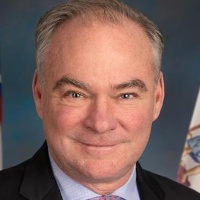
Timothy Kaine
Senator
VA
Timothy Kaine
Senator
VA
This joint resolution directs the President to remove U.S. Armed Forces from any hostilities within or against Venezuela that have not been explicitly authorized by Congress. It affirms Congress's constitutional authority to declare war and mandates expedited procedures for considering this measure. The resolution ensures that any ongoing military action against Venezuela ceases unless Congress provides a specific authorization for the use of force.
This bill mandates that VA disability and dependency compensation rates increase effective December 1, 2025, by the same percentage as the Social Security cost-of-living adjustment.

Jerry Moran
Senator
KS
Jerry Moran
Senator
KS
This bill, the Veterans’ Compensation Cost-of-Living Adjustment Act of 2025, mandates an increase in disability compensation and dependency and indemnity compensation rates for veterans. Effective December 1, 2025, these rates will be raised by the same percentage as the Social Security cost-of-living adjustment (COLA) for that year. The Secretary of Veterans Affairs is required to implement these increases and publish the adjusted rates.
This Act prohibits discrimination based on religion, sex, or marital status in federally funded child welfare services while establishing measures to improve outcomes for LGBTQ youth in care.

Kirsten Gillibrand
Senator
NY
Kirsten Gillibrand
Senator
NY
The John Lewis Every Child Deserves a Family Act prohibits discrimination based on religion, sex, or marital status in federally funded child welfare services. This aims to increase the number of available, stable foster and adoptive homes, particularly for LGBTQ youth and youth of color who are overrepresented in the system. The bill mandates federal guidance, cultural competency training, and the establishment of a resource center to improve safety and permanency outcomes for all children in care. Entities found in violation may face the withholding of federal payments.
This bill removes age restrictions for disabled survivors to receive full Social Security benefits, increases the age limit for child-in-care benefits, and introduces new rules to increase survivor benefits for those who delay claiming.
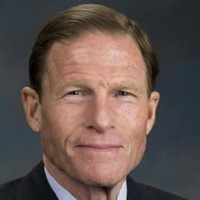
Richard Blumenthal
Senator
CT
Richard Blumenthal
Senator
CT
The Surviving Widow(er) Income Fair Treatment Act (SWIFT Act) of 2025 aims to significantly improve Social Security benefits for surviving spouses and divorced spouses. It removes the age restriction for disabled survivors to receive full benefits and introduces new incentives for delaying the claiming of survivor benefits. Furthermore, the bill raises the age limit for a child to qualify a parent for child-in-care benefits from 16 to 18. These major changes are set to take effect on January 1, 2027.
This act restores previous agricultural laws by repealing sections of Public Law 11921 to enhance food security for American families and farmers.
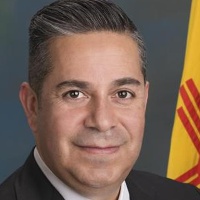
Ben Luján
Senator
NM
Ben Luján
Senator
NM
The Restoring Food Security for American Families and Farmers Act of 2025 aims to strengthen domestic food security by repealing specific sections of a previous law (Public Law 11921). This repeal effectively reinstates the original statutes that were previously altered by those sections.
This act establishes federal requirements mandating licensed dealers to conduct background checks for most private firearm transfers between unlicensed individuals.

Christopher Murphy
Senator
CT
Christopher Murphy
Senator
CT
The Background Check Expansion Act mandates that nearly all private firearm transfers between unlicensed individuals must go through a licensed dealer to complete a federal background check. This legislation establishes a universal background check requirement for these transactions, with specific exceptions for family gifts and law enforcement transfers. The bill aims to close loopholes in existing firearm transfer laws while explicitly prohibiting the creation of a national firearms registry.
The EXPERTS Act of 2025 aims to increase transparency and accountability in federal rulemaking by mandating disclosures for submitted studies, streamlining agency review processes, establishing new judicial review standards, and creating an Office of the Public Advocate.

Elizabeth Warren
Senator
MA
Elizabeth Warren
Senator
MA
The EXPERTS Act of 2025 aims to reform the federal rulemaking process by increasing transparency and accountability across executive agencies. It mandates extensive disclosure requirements for studies and funding sources submitted during public comment periods and establishes new standards for judicial review of agency actions. Furthermore, the bill creates an Office of the Public Advocate to focus on social equity in regulations and streamlines the review timeline for significant regulatory actions by the Office of Information and Regulatory Affairs (OIRA).
This Act prohibits rental property owners and others from using or providing services that coordinate rental prices, lease terms, or occupancy levels.
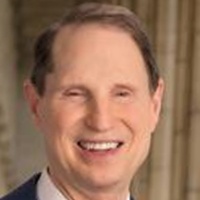
Ron Wyden
Senator
OR
Ron Wyden
Senator
OR
The End Rent Fixing Act of 2025 prohibits rental property owners from using coordinators to gather and analyze rental data to recommend prices or terms. This bill makes paying for or performing such "coordinating functions" illegal under federal antitrust law. Enforcement is granted to the FTC, the Department of Justice, and State Attorneys General, and allows harmed individuals to sue for treble damages.
This act grants most Department of Veterans Affairs employees the right to have a representative present during certain examinations that could lead to disciplinary action.
Richard Blumenthal
Senator
CT
Richard Blumenthal
Senator
CT
This bill establishes the Right to Representation for Department of Veterans Affairs Workers Act of 2025. It grants most VA employees the right to have a representative present during certain examinations if they believe the exam could lead to disciplinary action. This representation can occur during paid duty time upon the employee's request.
This bill mandates U.S. directors at international financial institutions to oppose fossil fuel financing and reduces U.S. contributions based on institutions' fossil fuel investments, while also prohibiting U.S. foreign assistance that supports fossil fuel activity.

Jeff Merkley
Senator
OR
Jeff Merkley
Senator
OR
This Act mandates that U.S. representatives at major international financial institutions must actively oppose financing for new fossil fuel capacity and promote clean energy transitions. It requires the Treasury to reduce U.S. contributions to these institutions dollar-for-dollar based on the amount they finance fossil fuel activities. Furthermore, the bill prohibits U.S. foreign assistance from supporting any activity related to fossil fuels.
This bill, the Restoring Access for Detainees Act, mandates the provision of free telephone, email, and video communication services for individuals in ICE custody to ensure access to legal counsel and family contact.
Christopher Murphy
Senator
CT
Christopher Murphy
Senator
CT
This bill, the Restoring Access for Detainees Act, mandates that U.S. Immigration and Customs Enforcement (ICE) provide detained individuals with free, limited telephone and electronic communication services. It aims to ensure detainees can consult with legal counsel and maintain essential family ties at no cost. The legislation specifies minimum free calling minutes, required access for legal consultation, and prohibits monitoring of confidential communications with attorneys.
This Act ensures continuous funding for all Head Start programs through fiscal year 2026 until regular appropriations are enacted or September 30, 2026, whichever comes first.

Tammy Baldwin
Senator
WI
Tammy Baldwin
Senator
WI
The Keep Head Start Funded Act of 2025 ensures the uninterrupted continuation of all Head Start projects and activities throughout fiscal year 2026, even if full appropriations are delayed. This legislation provides necessary continuing funding based on the terms of existing 2025 continuing resolutions. Funding authority under this Act will terminate upon the enactment of regular 2026 appropriations or by September 30, 2026.
This bill mandates public listing and FDA review for all Generally Recognized as Safe (GRAS) food substances and establishes procedures for postmarket safety reevaluation of these substances and other food additives.

Roger Marshall
Senator
KS
Roger Marshall
Senator
KS
The Better FDA Act of 2025 overhauls the regulation of substances Generally Recognized as Safe (GRAS) by requiring mandatory FDA listing and review for all such food ingredients. This legislation establishes strict deadlines for submitting GRAS notices and subjects substances not listed or under review to adulteration penalties. Furthermore, the Act grants the FDA authority to reevaluate the safety of existing food additives and GRAS substances based on new concerns, ensuring all final safety determinations involve review by career FDA scientific experts.
This Senate resolution urges the Department of Agriculture to immediately use its contingency funds to finance the Supplemental Nutrition Assistance Program (SNAP) through November.
Jeff Merkley
Senator
OR
Jeff Merkley
Senator
OR
This Senate resolution urges the Department of Agriculture to immediately use its contingency funds and interchange authority to ensure the Supplemental Nutrition Assistance Program (SNAP) is fully financed. The Senate asserts the administration has a legal obligation to use these existing resources to support millions of vulnerable Americans through November. This measure expresses a position and does not enact new law.
This Act prohibits the use of federal funds in fiscal year 2026 for nuclear weapons test explosions that produce a measurable yield, while allowing for zero-yield stockpile stewardship activities.
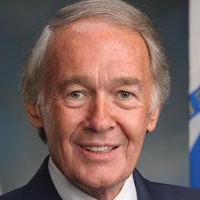
Edward Markey
Senator
MA
Edward Markey
Senator
MA
The No Nuclear Testing Act of 2025 prohibits the use of federal funds in fiscal year 2026 for any nuclear weapons test explosion that produces a measurable yield. This measure maintains the current ban on explosive testing while allowing for zero-yield stockpile stewardship activities to continue.
This joint resolution terminates the national emergency declared to impose duties on articles imported from Canada.
Timothy Kaine
Senator
VA
Timothy Kaine
Senator
VA
This joint resolution officially terminates the national emergency declared by the President on February 1, 2025, which was used to impose duties on articles imported from Canada. It exercises the authority granted under the National Emergencies Act to end the emergency status established by Executive Order 14193.
This resolution commemorates the seventh anniversary of Jamal Khashoggi's murder while calling on Saudi Arabia to hold those responsible accountable and cease its transnational repression against dissidents.
Timothy Kaine
Senator
VA
Timothy Kaine
Senator
VA
This resolution commemorates the seventh anniversary of Jamal Khashoggi's murder and addresses ongoing transnational repression by the Government of Saudi Arabia. It calls for accountability for those responsible for Khashoggi's death and urges Saudi Arabia to release all wrongfully detained individuals. Furthermore, the resolution emphasizes that these human rights abuses strain the strategic relationship between the U.S. and Saudi Arabia.
This bill suspends federal student loan payments, stops interest accrual, and counts payments toward forgiveness for federal employees affected by a government shutdown lasting at least 14 days.

Angela Alsobrooks
Senator
MD
Angela Alsobrooks
Senator
MD
The Shutdown Student Loans for Feds Act provides relief for federal employees and certain contractors affected by government shutdowns lasting 14 days or more, starting in fiscal year 2026. During these lapses in appropriations, federal student loan payments must be suspended, and no interest will accrue on those loans. Furthermore, suspended payment periods will count toward loan forgiveness requirements and be reported positively to credit agencies.