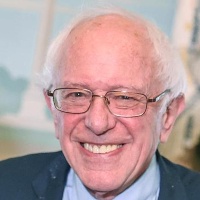
Legislative Activity
Track Bernie's sponsored bills, co-sponsored legislation, and voting record
This bill ensures uninterrupted funding for SNAP and WIC benefits through fiscal year 2026, covering any missed payments during a funding lapse.
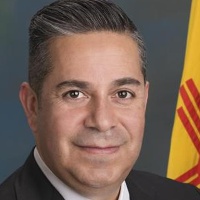
Ben Luján
Senator
NM
Ben Luján
Senator
NM
The Keep SNAP and WIC Funded Act of 2025 ensures that essential nutrition programs, including SNAP and WIC, continue to provide benefits without interruption if full appropriations for the Department of Agriculture are not enacted for Fiscal Year 2026. This legislation immediately makes funds available to cover benefits and state operating costs during any funding lapse, retroactive to September 30, 2025. These special appropriations terminate once the standard FY 2026 funding bill is passed or by September 30, 2026.
This joint resolution terminates the national emergency declared in July 2025 concerning duties on articles imported from Brazil.
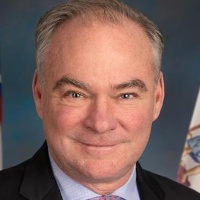
Timothy Kaine
Senator
VA
Timothy Kaine
Senator
VA
This joint resolution terminates the national emergency declared by Executive Order 14323 on July 30, 2025. The declaration was originally put in place to impose duties on articles imported from Brazil. This bill officially ends that emergency status using the authority granted by the National Emergencies Act.
This bill changes how Social Security cost-of-living adjustments (COLAs) are calculated by mandating the use of the more favorable index between the Consumer Price Index for Urban Wage Earners and Clerical Workers or a newly established Consumer Price Index for Elderly Consumers.
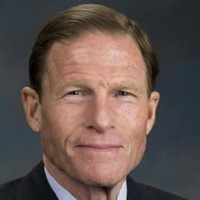
Richard Blumenthal
Senator
CT
Richard Blumenthal
Senator
CT
The Boosting Benefits and COLAs for Seniors Act seeks to update how Social Security cost-of-living adjustments (COLAs) are calculated. It mandates using the index that results in a higher adjustment: either the Consumer Price Index for Urban Wage Earners and Clerical Workers or a newly established Consumer Price Index for Elderly Consumers. This change aims to provide a more accurate reflection of seniors' actual cost of living in benefit calculations starting after September 2026.
This Act ensures back pay for federal employees, contractors, and service members affected by a government shutdown beginning October 1, 2025, and prohibits agency staffing reductions during such lapses.

Chris Van Hollen
Senator
MD
Chris Van Hollen
Senator
MD
The True Shutdown Fairness Act ensures that federal employees, contractors, and service members affected by a government funding lapse starting October 1, 2025, receive retroactive back pay for the period they worked without funding. Additionally, the bill prohibits agencies from initiating permanent staffing reductions or furloughs during such a lapse. These provisions are designed to provide financial security and stability to essential government personnel during periods of lapsed appropriations.
This bill appropriates funds to ensure military and federal employees and contractors receive full compensation for work performed or time furloughed during a lapse in government appropriations between October 1, 2025, and the date of enactment.
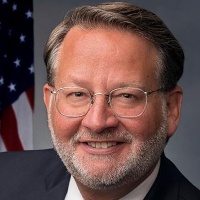
Gary Peters
Senator
MI
Gary Peters
Senator
MI
The Military and Federal Employee Protection Act ensures that federal employees, military members, and covered contractors receive their full standard compensation for work performed or time furloughed during a lapse in government appropriations occurring after September 30, 2025. This bill appropriates necessary funds for agencies to make these retroactive payments. Payments must be made promptly, generally within seven days of enactment for furloughed individuals. This legislation guarantees that no covered individual loses pay due to a government shutdown during the specified period.
This bill ensures uninterrupted Supplemental Nutrition Assistance Program (SNAP) benefits for fiscal year 2026 by automatically appropriating necessary funds if Congress fails to pass the Department of Agriculture budget.
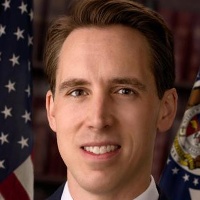
Joshua Hawley
Senator
MO
Joshua Hawley
Senator
MO
The Keep SNAP Funded Act of 2025 ensures that Supplemental Nutrition Assistance Program (SNAP) benefits continue without interruption, even if Congress fails to pass the Department of Agriculture's budget for fiscal year 2026. This legislation authorizes automatic funding from the Treasury to maintain payments and cover any retroactive benefits missed due to the delay. This temporary funding mechanism remains active until the regular fiscal year 2026 appropriations are officially enacted.
This joint resolution directs the President to immediately remove U.S. Armed Forces from hostilities within or against Venezuela unless explicitly authorized by Congress.
Timothy Kaine
Senator
VA
Timothy Kaine
Senator
VA
This joint resolution directs the President to immediately remove United States Armed Forces from any hostilities within or against Venezuela that lack explicit authorization from Congress. It asserts that only Congress has the constitutional authority to declare war or approve such military actions. The bill ensures that U.S. forces can only remain if acting in self-defense against an armed attack.
This resolution expresses the Senate's support for designating the second Monday in October 2025 as Indigenous Peoples' Day to honor the history, culture, and contributions of Indigenous Peoples.
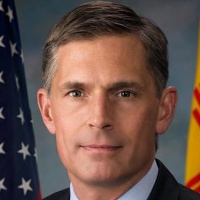
Martin Heinrich
Senator
NM
Martin Heinrich
Senator
NM
This resolution expresses the Senate's support for designating the second Monday in October 2025 as "Indigenous Peoples' Day." It formally recognizes the invaluable contributions of Indigenous Peoples to the United States and encourages public observance to celebrate their history and culture. The measure also voices support for establishing this day as an official Federal holiday.
The Voter Purge Protection Act establishes strict federal standards for removing registered voters, prohibits purging based solely on moving within a state, and allows voters to update their address on Election Day.

Alejandro Padilla
Senator
CA
Alejandro Padilla
Senator
CA
The Voter Purge Protection Act aims to safeguard voter registration by preventing states from removing individuals from voter rolls solely because they moved within the state. This legislation establishes strict standards for voter list maintenance, requiring objective proof before removal and allowing registered voters to update their address up to Election Day. Furthermore, it ensures that voters who move within a state can easily cast their ballot by updating their address at the polls.
This resolution expresses Congress's strong opposition to the growing trend of book banning and threats to freedom of expression in the United States.
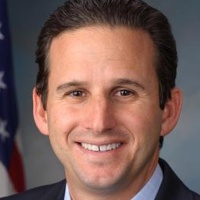
Brian Schatz
Senator
HI
Brian Schatz
Senator
HI
This resolution expresses deep concern over the rising trend of book banning and threats to freedom of expression across the United States. It strongly opposes censorship in schools and libraries, citing constitutional rights and the harm done to democratic discourse. The measure urges local entities to protect students' access to diverse viewpoints and calls for the reversal of restrictive orders impacting educational materials.
This joint resolution officially terminates the national emergency declared with respect to energy.
Timothy Kaine
Senator
VA
Timothy Kaine
Senator
VA
This joint resolution officially terminates the national emergency concerning energy that was declared on January 20, 2025. By enacting this measure, all special authorities and regulations implemented under the National Emergencies Act due to the energy crisis are immediately canceled.
This Act restricts healthcare entities from entering into risky property deals with Real Estate Investment Trusts (REITs) subject to HHS review and modifies tax rules for REITs receiving rent from qualified healthcare properties.
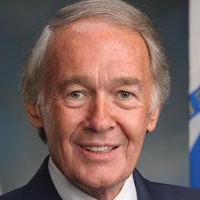
Edward Markey
Senator
MA
Edward Markey
Senator
MA
The Stop Medical Profiteering and Theft Act (Stop MPT Act) aims to protect healthcare stability and patient care by regulating property transactions between healthcare entities and Real Estate Investment Trusts (REITs). This bill requires the Secretary of HHS to review and approve such deals to prevent long-term financial harm or public health risks, imposing penalties for violations. Additionally, it modifies tax code provisions to favorably treat rental income REITs receive from qualified healthcare properties.
This Act temporarily halts certain legal and administrative actions that could harm the civil rights of federal employees and contractors during a government shutdown.
Brian Schatz
Senator
HI
Brian Schatz
Senator
HI
The Federal Employees Civil Relief Act temporarily halts certain legal and administrative actions that could negatively affect the civil rights of federal employees and contractors during a government shutdown. This protection includes pausing evictions, foreclosures, lien enforcement, and providing relief for student loan and income tax obligations. The law also ensures that seeking these protections will not negatively impact an employee's credit or future financial standing.
This Act mandates federal agencies to compensate contractors for employee costs incurred due to funding lapses and appropriates necessary funds to cover resulting contract price adjustments.

Tina Smith
Senator
MN
Tina Smith
Senator
MN
The Fair Pay for Federal Contractors Act of 2025 ensures federal agencies compensate contractors for employee costs incurred due to government funding lapses or shutdowns. This act mandates contract price adjustments to cover reasonable expenses for furloughed or impacted contractor employees, up to a specified weekly limit. The law also provides necessary appropriations to cover these adjustments and requires public reporting on the compensation provided.
This bill prohibits the use of the Exchange Stabilization Fund to provide any financial assistance to Argentina's financial markets until December 10, 2027.
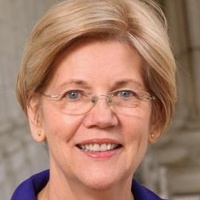
Elizabeth Warren
Senator
MA
Elizabeth Warren
Senator
MA
This Act prohibits the use of the U.S. Treasury Department's Exchange Stabilization Fund to provide any financial assistance or bailout to Argentina's financial markets. Congress asserts that these funds should instead protect American jobs and stability against foreign currency manipulation. The prohibition on using the fund to aid Argentina remains in effect until December 10, 2027.
This resolution officially recognizes Hispanic Heritage Month (September 15 - October 15, 2025) while celebrating the immense and growing cultural, economic, and civic contributions of Latinos to the United States.

Catherine Cortez Masto
Senator
NV
Catherine Cortez Masto
Senator
NV
This resolution officially recognizes Hispanic Heritage Month, running from September 15 to October 15, 2025. It celebrates the immense and vital contributions of Latinos to the United States across culture, the economy, and civic life. The bill encourages all Americans to observe this month with appropriate programs and activities honoring this heritage.
This resolution recognizes October 2025 as Filipino American History Month to celebrate the community's deep history, significant contributions to the United States, and ongoing cultural impact.

Mazie Hirono
Senator
HI
Mazie Hirono
Senator
HI
This resolution formally recognizes October 2025 as Filipino American History Month to celebrate the rich history and culture of Filipino Americans. It highlights their significant and long-standing contributions across all sectors of American life, including military service, healthcare, and public office. The measure encourages all Americans to observe the month with appropriate programs to promote the study of this vital community's heritage.
The Child Care for Every Community Act establishes a universal, federally-backed system guaranteeing access to high-quality, affordable early learning for every child while mandating rigorous standards and improved compensation for the childcare workforce.
Elizabeth Warren
Senator
MA
Elizabeth Warren
Senator
MA
The Child Care for Every Community Act establishes a universal, high-quality, and affordable early learning system, guaranteeing access to eligible children nationwide. It mandates rigorous federal standards for programs, facilities, and staff compensation, linking pay to public school benchmarks. The bill requires local governance through "prime sponsors" who must plan for equitable access and coordinate closely with K-12 education systems. Finally, it ensures state funding continuity through a maintenance of effort requirement to secure federal support.
This Senate resolution affirms the unwavering commitment to First Amendment freedoms of speech and the press as foundational pillars of the U.S. democratic republic, while urging the President and federal agencies to uphold these rights against coercion or censorship.

Jeff Merkley
Senator
OR
Jeff Merkley
Senator
OR
This Senate resolution strongly reaffirms the unwavering commitment to the First Amendment, emphasizing that freedom of speech and the press are essential foundations of American democracy. It explicitly warns against government officials using regulatory power to coerce or censor protected speech, citing key Supreme Court precedents. Furthermore, the resolution directs federal agencies, including the FCC, to uphold these constitutional rights and condemns any threats or violence against those exercising free expression.
This joint resolution seeks to disapprove and nullify the recent CMS rule concerning the Patient Protection and Affordable Care Act's Market Integrity and Affordability.

Mark Warner
Senator
VA
Mark Warner
Senator
VA
This joint resolution seeks to disapprove and nullify a specific rule published by the Centers for Medicare & Medicaid Services concerning the "Patient Protection and Affordable Care Act; Market Integrity and Affordability." If enacted, this measure would prevent the CMS rule from having any legal force or effect.