
Legislative Activity
Track Mike's sponsored bills, co-sponsored legislation, and voting record
Partisan Hack-O-Meter
This Act establishes new federal rules, term limits, and public accountability measures for court-appointed monitors overseeing state or local governments.
Andy Biggs
Representative
AZ
Andy Biggs
Representative
AZ
The Monitor Accountability Act establishes new federal rules to increase oversight and transparency for court-appointed monitors overseeing state or local governments. This legislation sets limits on monitor compensation, imposes a five-year term limit for service, and requires public comment before an appointment is finalized. Furthermore, the Act mandates annual public accounting of services and fees for all active monitorships.
This Act mandates that jurisdictions receiving federal grants report data on their use of cashless bail systems and identifies those that allow pre-trial release without cash bail for certain offenses.
Mark Harris
Representative
NC
Mark Harris
Representative
NC
The Cashless Bail Reporting Act mandates that states and local governments receiving specific federal grants must report annual data on their use of cashless bail systems. This data includes the number of individuals released, subsequent failures to appear, and new arrests while on pretrial release. Furthermore, the Act requires the Attorney General to annually publish a list of jurisdictions that permit pretrial release without cash bail for certain offenses threatening public safety.
This bill directs the President to remove U.S. Armed Forces from hostilities against Iran within 30 days, pursuant to the War Powers Resolution.
Josh Gottheimer
Representative
NJ
Josh Gottheimer
Representative
NJ
This bill directs the President to remove all U.S. Armed Forces from hostilities against Iran within 30 days, utilizing the authority granted by the War Powers Resolution. Congress asserts this action is necessary as it has not formally declared war or authorized military force against Iran. The resolution explicitly preserves the ability of the U.S. to defend itself, its allies, and its facilities from imminent attack, and does not interfere with intelligence-gathering activities.
This act amends federal law to disqualify individuals who commit fraud in connection with posting bail from certain bail-related activities.
Scott Fitzgerald
Representative
WI
Scott Fitzgerald
Representative
WI
The Keeping Violent Offenders Off Our Streets Act of 2025 targets fraud in the bail process. This legislation amends federal law to specifically disqualify individuals who commit fraud related to posting bail from participating in certain bail-related activities.
This resolution urges the President to prioritize securing the release of specific unjustly detained religious and political figures during future engagements with the President of the People's Republic of China.
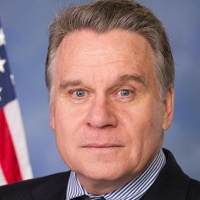
Christopher Smith
Representative
NJ
Christopher Smith
Representative
NJ
This resolution urges the President to prioritize securing the release of several specific religious and political detainees, including Pastor Jin Mingri, Pastor Gao Quanfu and his wife Pang Yu, Dr. Gulshan Abbas, and Jimmy Lai, during future engagements with the President of China. It condemns the ongoing detention of these and other individuals by the People's Republic of China. The bill calls for the President to seek proof of life, legal counsel, and medical access for those unjustly held.
This bill designates May 2025 as Jewish American Heritage Month while calling for efforts to counter antisemitism and educate the public on the community's vital contributions.
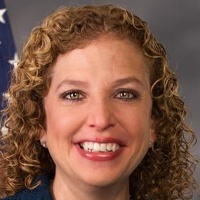
Debbie Wasserman Schultz
Representative
FL
Debbie Wasserman Schultz
Representative
FL
This resolution designates May 2025 as Jewish American Heritage Month to recognize the significant contributions of Jewish Americans to the nation. It also addresses the concerning rise in antisemitism across the country. The bill calls on leaders to actively counter hate, educate the public on Jewish heritage, and ensure the safety and dignity of Jewish Americans.
This resolution expresses strong support for law enforcement officers and recognizes their vital role in protecting communities while opposing efforts to defund police departments.
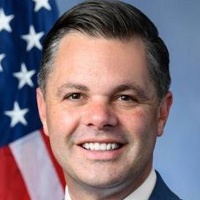
Zachary (Zach) Nunn
Representative
IA
Zachary (Zach) Nunn
Representative
IA
This resolution expresses strong support for law enforcement officers, recognizing their vital role in protecting communities and upholding the rule of law. It acknowledges the daily sacrifices officers make and affirms their essential contributions to public safety. The resolution also opposes policies that undermine law enforcement, such as defunding efforts and sanctuary policies.
This bill allows for year-round sales of E15 gasoline and restructures the Renewable Fuel Standard program by phasing out small refinery exemptions in favor of a 75% compliance obligation reduction starting in 2028.

Adrian Smith
Representative
NE
Adrian Smith
Representative
NE
This bill, the Nationwide Consumer and Fuel Retailer Choice Act of 2025, makes two major changes: it allows for the year-round sale of E15 gasoline and reforms the Renewable Fuel Standard (RFS) for small refineries. The RFS reform phases out existing small refinery exemptions starting in 2028, replacing them with a 75% compliance obligation reduction. The Act also directs the EPA to update fuel infrastructure rules for E15 distribution.
This resolution designates specific dates to honor law enforcement officers killed in the line of duty and expresses support for all officers.
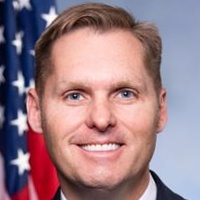
Michael Guest
Representative
MS
Michael Guest
Representative
MS
This resolution officially designates May 15, 2026, as Peace Officers Memorial Day and the week of May 10-16, 2026, as National Police Week. It honors the service and sacrifice of law enforcement officers killed in the line of duty, specifically recognizing 363 officers lost in 2025. The bill expresses unwavering support for law enforcement and acknowledges the need for proper resources to ensure officer safety.
This bill voids Section 11 of House Resolution 1224.
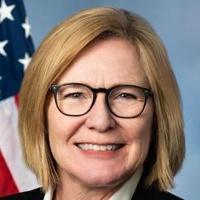
Michelle Fischbach
Representative
MN
Michelle Fischbach
Representative
MN
This bill repeals Section 11 of House Resolution 1224, rendering that specific provision void and unenforceable.
This resolution establishes the House consideration process for five measures, including bills on cashless bail disclosure, bail fraud, court monitors, support for law enforcement, and military construction/VA appropriations.
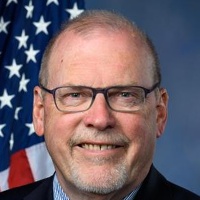
H. Griffith
Representative
VA
H. Griffith
Representative
VA
This resolution establishes the House floor schedule for considering five specific legislative items. It sets the debate parameters and limits procedural motions for bills concerning cashless bail disclosure, bail fraud, court monitors, support for law enforcement, and the military construction/VA appropriations bill for FY 2027. The process streamlines consideration for all five measures by waiving most procedural objections.
This Act establishes a program to expedite mortgage processing for tribal trust land homeownership by setting strict deadlines for the Bureau of Indian Affairs and creating a Realty Ombudsman position.
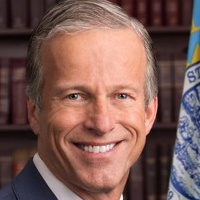
John Thune
Senator
SD
John Thune
Senator
SD
The Tribal Trust Land Homeownership Act of 2025 establishes a new program to expedite mortgage processing for tribal members seeking to buy, build, or improve homes on trust land. It mandates strict, short deadlines for the Bureau of Indian Affairs (BIA) to approve or deny mortgage applications, with automatic approval if deadlines are missed. The Act also creates a Realty Ombudsman position within the BIA to ensure compliance and resolve disputes related to these land transactions.
The Farm, Food, and National Security Act of 2026 extends and modifies major U.S. agricultural, conservation, trade, nutrition, and rural development programs through 2031, focusing on disaster relief, supply chain security, and resource management.
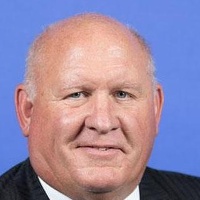
Glenn Thompson
Representative
PA
Glenn Thompson
Representative
PA
The **Farm, Food, and National Security Act of 2026** is a comprehensive bill that extends and modernizes major U.S. agricultural policy through 2031. It significantly expands disaster relief for farmers, increases funding for conservation efforts, and centralizes international food aid under the Department of Agriculture. The Act also reforms crop insurance, boosts rural broadband and infrastructure development, and tightens oversight on foreign ownership of American farmland.
This concurrent resolution sets the US federal budget for fiscal year 2026 and establishes spending targets through 2035, while also outlining reconciliation processes and reserve fund procedures.
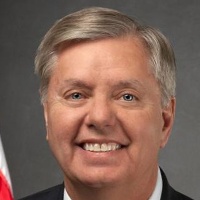
Lindsey Graham
Senator
SC
Lindsey Graham
Senator
SC
This concurrent resolution sets the proposed federal budget for fiscal year 2026 and outlines spending targets through 2035, projecting continued annual deficits and growth in the national debt. It directs committees to propose legislation affecting homeland security and the judiciary via a reconciliation process, while establishing flexible, deficit-neutral reserve funds for future policy adjustments. Finally, it solidifies the procedural rules for enforcing these budget allocations across both chambers of Congress.
This bill funds the Department of Homeland Security for fiscal year 2026 while imposing strict oversight, accountability measures, and specific spending restrictions across its management, enforcement, and preparedness operations.
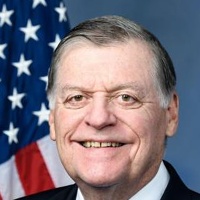
Tom Cole
Representative
OK
Tom Cole
Representative
OK
The Department of Homeland Security Appropriations Act, 2026 provides funding and sets strict operational rules for DHS agencies, including CBP, TSA, and FEMA, for the fiscal year 2026. The bill allocates over $60 billion while imposing significant oversight requirements on management, border enforcement, and disaster response activities. Key provisions focus on increasing accountability through body camera mandates, restricting new pilot programs without clear plans, and speeding up disaster aid processing. Division B of the act includes technical adjustments and extensions to ensure government funding remains continuous through various continuing resolutions.
This bill extends specific surveillance authorities under Title VII of the Foreign Intelligence Surveillance Act (FISA) until June 12, 2026.
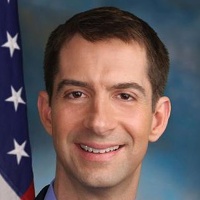
Tom Cotton
Senator
AR
Tom Cotton
Senator
AR
This bill proposes a short-term extension of specific surveillance authorities under Title VII of the Foreign Intelligence Surveillance Act (FISA). It moves the expiration date for these authorities from April 30, 2026, to June 12, 2026.
This bill seeks to reform foreign intelligence surveillance by adding accountability measures while simultaneously prohibiting the Federal Reserve from issuing a central bank digital currency.

Jerry Moran
Senator
KS
Jerry Moran
Senator
KS
This bill combines two major components: the **Foreign Intelligence Accountability Act**, which reforms and extends key surveillance authorities like Section 702 of FISA with new privacy protections and criminal penalties for misuse, and the **Anti-CBDC Surveillance State Act**, which explicitly prohibits the Federal Reserve from creating or issuing a central bank digital currency (CBDC) to the public. In essence, the legislation tightens oversight on foreign intelligence gathering while blocking the creation of a government-controlled digital currency.
This resolution establishes the House procedures for considering five specific bills concerning agriculture reform, parental consent for student gender marker changes, the fiscal year 2026 budget, identifying Jewish servicemembers' graves, and Clean Air Act ethanol waivers.
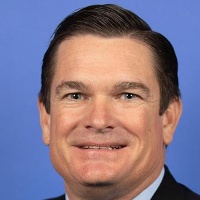
Austin Scott
Representative
GA
Austin Scott
Representative
GA
This resolution establishes the expedited House procedures for considering several key pieces of legislation, including a major multi-year farm bill (H.R. 7567) and bills related to parental consent in schools and correcting military grave markers. It sets strict debate limits and waives most procedural objections to ensure swift consideration of these measures. The resolution also outlines the process for considering the fiscal year 2026 budget resolution and a bill amending the Clean Air Act regarding ethanol waivers.
This bill expresses congressional disapproval of the Bureau of Land Management's rule withdrawing federal lands in three Minnesota counties.
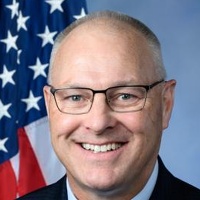
Pete Stauber
Representative
MN
Pete Stauber
Representative
MN
This bill expresses the disapproval of Congress regarding a Bureau of Land Management rule that withdrew federal lands in specific Minnesota counties under Public Land Order No. 7917. By disapproving the rule, Congress renders it legally void.
The FIRE Act establishes new, clearer criteria for the EPA to exclude air quality monitoring data caused by wildfires and prescribed burns from regulatory decisions under the Clean Air Act.
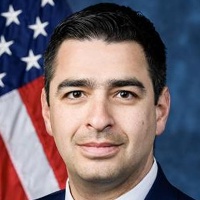
Gabe Evans
Representative
CO
Gabe Evans
Representative
CO
The FIRE Act reforms how the EPA handles air quality data affected by wildfires and prescribed burns under the Clean Air Act. It establishes clearer standards for states to exclude wildfire-related air quality data from regulatory decisions, focusing on causality rather than event predictability. The bill also updates regulations regarding air quality data influenced by actions taken to mitigate wildfire risk, such as prescribed fires.