Legislative Activity
Track Brian's sponsored bills, co-sponsored legislation, and voting record
This bill repeals the Arctic National Wildlife Refuge oil and gas program and designates over 1.5 million acres of the refuge as protected wilderness.
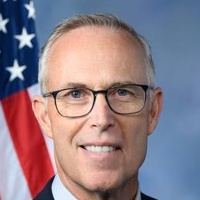
Jared Huffman
Representative
CA
Jared Huffman
Representative
CA
The Arctic Refuge Protection Act officially repeals the previous law authorizing oil and gas leasing in the Arctic National Wildlife Refuge. This legislation simultaneously designates approximately 1.56 million acres within the Refuge as protected wilderness under the National Wilderness Preservation System. The Secretary of the Interior is now required to manage this newly designated land according to strict wilderness preservation standards.
This Act officially designates the POW/MIA Memorial and Museum in Jacksonville, Florida, as the National POW/MIA Memorial and Museum, establishing reporting requirements for its future operation.
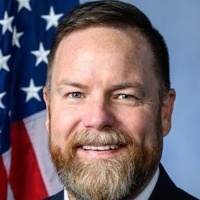
Aaron Bean
Representative
FL
Aaron Bean
Representative
FL
This bill officially designates the memorial and museum currently under construction in Jacksonville, Florida, as the **National POW/MIA Memorial and Museum**. The legislation recognizes the museum's crucial role in honoring and educating the public about service members who were prisoners of war or remain missing in action. To maintain this designation, the museum must submit a comprehensive operational report to Congress within 90 days of enactment. Failure to open satisfactorily within five years or submit the required report will result in the loss of this official federal title.
This Act directs the SelectUSA program to coordinate with state economic development organizations to attract foreign direct investment for securing the domestic semiconductor supply chain.
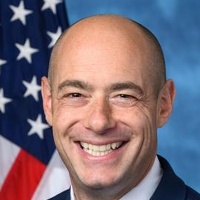
Greg Landsman
Representative
OH
Greg Landsman
Representative
OH
The Securing Semiconductor Supply Chains Act of 2025 directs the Commerce Department's SelectUSA program to focus on attracting foreign direct investment into domestic semiconductor manufacturing. This involves coordinating with state-level economic development groups to identify barriers and opportunities for boosting investment in the critical chip supply chain. The Act mandates a report detailing current and future strategies to secure this supply chain without authorizing new funds.
This resolution designates a week in 2025 to recognize and support the vital role of over one million specialized instructional support personnel in creating safe, supportive, and effective learning environments for all students.
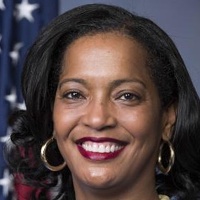
Jahana Hayes
Representative
CT
Jahana Hayes
Representative
CT
This resolution supports designating the week of April 28 through May 2, 2025, as "National Specialized Instructional Support Personnel Appreciation Week." It recognizes the vital role of over one million school-based professionals, such as counselors, social workers, and nurses, in supporting student learning and well-being. The bill commends these staff for providing essential prevention and intervention services that create safe and supportive learning environments. Ultimately, it encourages policymakers to recognize and promote the importance of these personnel for improving overall educational outcomes.
This Act establishes and funds regional "Ocean Innovation Clusters" to foster sustainable economic growth and collaboration within the "Blue Economy."

Chellie Pingree
Representative
ME
Chellie Pingree
Representative
ME
The Ocean Regional Opportunity and Innovation Act of 2025 establishes "Ocean Innovation Clusters" across the U.S. to foster sustainable growth in the "Blue Economy." This legislation directs the Secretary of Commerce to designate at least seven regional clusters led by non-profits to enhance collaboration between industry, academia, and local governments. The Act authorizes a competitive grant program, up to $10 million per award, to help these clusters operate and create physical collaboration centers. Ultimately, the goal is to drive economic opportunity, workforce development, and climate resilience in ocean-related sectors.
This Act mandates that group health plans and insurers must cover diagnostic and supplemental breast examinations without any out-of-pocket cost-sharing requirements for plan years beginning on or after January 1, 2026.
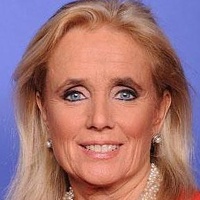
Debbie Dingell
Representative
MI
Debbie Dingell
Representative
MI
The Access to Breast Cancer Diagnosis Act of 2025 ensures that group health plans and insurers must cover diagnostic and supplemental breast examinations with no out-of-pocket costs for patients. This means no deductibles, copayments, or coinsurance will apply to these necessary exams. These provisions take effect for plan years beginning on or after January 1, 2026.
This bill ensures that certain WIFIA financial assistance repaid solely through non-federal revenue sources is treated as non-federal for budgetary purposes.
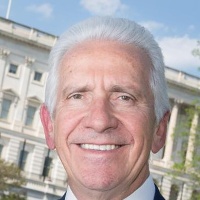
Jim Costa
Representative
CA
Jim Costa
Representative
CA
The Restoring WIFIA Eligibility Act clarifies the budgetary treatment of certain financial assistance provided under the Water Infrastructure Finance and Innovation Act (WIFIA). Specifically, it ensures that WIFIA assistance repaid entirely through non-Federal revenue sources is counted as non-Federal funding for budgetary purposes. This change affects how these loans and guarantees are categorized under the Federal Credit Reform Act of 1990.
This Act establishes new federal grants to fund collaborative research partnerships between the seafood industry and academic institutions to address ocean acidification.
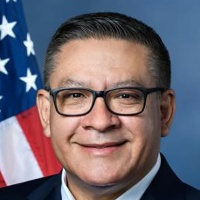
Salud Carbajal
Representative
CA
Salud Carbajal
Representative
CA
The Ocean Acidification Research Partnerships Act establishes new federal grants to fund collaborative research projects focused on ocean acidification. These grants require partnerships between the seafood industry and academic researchers to address critical adaptation and monitoring needs. The legislation aims to integrate real-world industry knowledge with scientific expertise to better understand and mitigate the impacts of ocean acidification.
The TREES Act of 2025 establishes a federal grant program to fund tree planting projects specifically designed to reduce residential energy consumption, prioritizing areas with high energy burdens and low tree canopy.

Doris Matsui
Representative
CA
Doris Matsui
Representative
CA
The TREES Act of 2025 establishes a new federal grant program managed by the Secretary of Energy to fund community-based tree planting projects. These grants aim to reduce residential energy consumption by strategically planting trees for shade and wind protection. Priority funding will be given to projects that maximize energy savings for low-income households and benefit underserved neighborhoods. The program is authorized to plant at least 300,000 trees annually, with federal funding covering 90% of eligible project costs.
This bill updates federal highway safety programs to enhance protections and data collection for roadside workers and motorists experiencing disabled vehicle incidents, while also establishing working groups to address crashes in both scenarios.
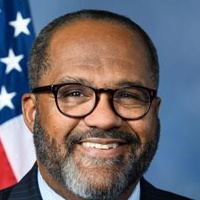
Troy Carter
Representative
LA
Troy Carter
Representative
LA
This bill aims to enhance safety for individuals outside their vehicles and for workers in construction zones by updating federal highway safety programs. It mandates improved data collection on roadside and work zone crashes and expands public awareness campaigns to cover disabled vehicles and work zones. Furthermore, the legislation establishes two specialized working groups to develop strategies and share data to reduce fatalities and injuries in these specific high-risk areas.
This Act establishes a new federal program to provide grants and technical assistance to coastal states for developing and implementing voluntary plans to adapt to and mitigate the impacts of climate change.
Salud Carbajal
Representative
CA
Salud Carbajal
Representative
CA
The Coastal State Climate Preparedness Act of 2025 establishes a new federal program to help coastal states proactively address climate change impacts. This program provides financial assistance and technical support for states to develop and implement comprehensive adaptation and response plans. Grants will fund risk identification, land use strategies, ocean ecosystem planning, and the physical implementation of resilience projects like green infrastructure.
This Act clarifies the duty treatment of whiskies by updating the Harmonized Tariff Schedule and requiring the USITC to add statistical tracking codes for imported whiskies.
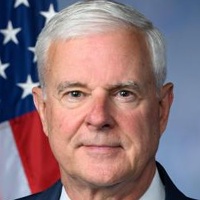
Steve Womack
Representative
AR
Steve Womack
Representative
AR
The Duty Drawback Clarification Act updates the U.S. tariff schedule to standardize the classification of whiskies under Chapter 22. This legislation removes an outdated whiskey classification code and requires the U.S. International Trade Commission to add new statistical tracking codes for imports. These changes will take effect 15 days after the Act is officially enacted.
This Act establishes a dedicated position within the SBA to advise small businesses on setting up and maintaining Employee Stock Ownership Plans (ESOPs) and requires annual reporting to Congress on its activities.
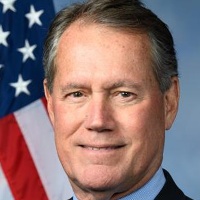
Ed Case
Representative
HI
Ed Case
Representative
HI
This bill establishes a new dedicated position within the Small Business Administration (SBA) to exclusively assist small businesses in setting up and navigating Employee Stock Ownership Plans (ESOPs). This expert will provide guidance on compliance, valuation, and resource connection for businesses interested in employee ownership. The Act also mandates annual reporting to Congress detailing the assistance provided and offering recommendations for improving the ESOP process. Funding is authorized as necessary, with a specific initial appropriation of $500,000 for the first fiscal year.
The BUILD Act of 2025 establishes federal grant programs through the DOJ and FEMA to fund facility upgrades and new construction for small, local police and fire departments serving communities under 50,000 residents.
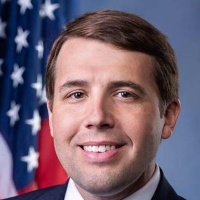
Chris Pappas
Representative
NH
Chris Pappas
Representative
NH
The BUILD Act of 2025 establishes two new federal grant programs to fund facility upgrades and construction for local public safety agencies. These grants are specifically targeted toward police and fire departments serving communities with fewer than 50,000 residents. Funds must be used for projects directly related to improving emergency services, training, recruitment, or community safety. The legislation also mandates studies to assess the long-term infrastructure needs of these smaller departments.
The Training and Nutrition Stability Act amends the Supplemental Nutrition Assistance Program by removing a specific existing rule and excluding income earned from certain employment and training programs from benefit calculations.
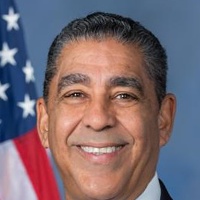
Adriano Espaillat
Representative
NY
Adriano Espaillat
Representative
NY
The Training and Nutrition Stability Act amends the Supplemental Nutrition Assistance Program (SNAP) by removing an outdated rule. Crucially, this bill excludes income earned from specific employment and job training programs when calculating a household's SNAP eligibility. This change aims to encourage participation in workforce development and rehabilitation efforts without negatively impacting food assistance benefits.
This Act prohibits the use of federal funds to eliminate the Corporation for National and Community Service and reinforces Congress's commitment to national service programs.
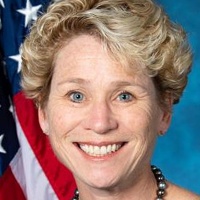
Chrissy Houlahan
Representative
PA
Chrissy Houlahan
Representative
PA
The Protect National Service Act affirms the significant societal return on investment provided by national service programs like AmeriCorps. This bill prohibits the use of federal funds to eliminate the Corporation for National and Community Service (CNCS) or alter its status as a Government corporation. It ensures that any future reorganization must maintain the Trust's solvency and continue federal commitment to civic engagement. The CEO must annually certify compliance with these protections to Congress for five years.
This resolution recognizes the vital contributions of linemen, often acting as first responders, and supports designating April 18, 2025, as "National Lineman Appreciation Day."
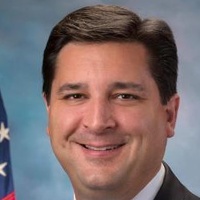
David Rouzer
Representative
NC
David Rouzer
Representative
NC
This resolution officially recognizes the vital and dangerous work performed by power linemen who maintain our electrical infrastructure and ensure public safety. It highlights their crucial role as first responders, often working in hazardous conditions after disasters. Furthermore, the resolution supports the designation of April 18, 2025, as "National Lineman Appreciation Day" to formally honor their service.
This Act establishes a 30% tax credit for businesses investing in qualifying on-site or municipal water reuse projects to encourage the use of recycled water.
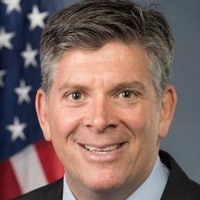
Darin LaHood
Representative
IL
Darin LaHood
Representative
IL
The Advancing Water Reuse Act establishes a new "qualifying water reuse project credit" to incentivize businesses to recycle water. This credit offers a 30% tax break on qualified investments in on-site water recycling systems or infrastructure that supports industrial or commercial water reuse. The tax incentive is designed to encourage the adoption of water conservation technologies until the end of 2032.
The PROTECT 911 Act establishes federal guidelines and grant funding to support the mental health and wellness of public safety telecommunicators, such as 911 operators.
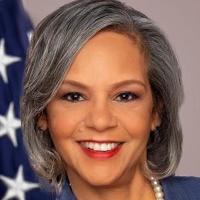
Robin Kelly
Representative
IL
Robin Kelly
Representative
IL
The PROTECT 911 Act aims to support the mental health of 911 operators and emergency dispatchers. It requires the government to develop evidence-based mental health guidelines and training materials specifically for these workers. Furthermore, the Act establishes grants for emergency communications centers to implement or enhance behavioral health and wellness programs for their staff.
The Deafblind DATA Act mandates the Census Bureau to cross-reference existing survey data to produce annual, state-level demographic and economic statistics on the U.S. deafblind population.
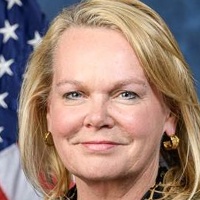
April McClain Delaney
Representative
MD
April McClain Delaney
Representative
MD
The Deafblind DATA Act aims to establish a more accurate count of Americans who are deafblind by directing the Census Bureau to cross-reference existing survey data. This new law mandates the annual publication of a public table detailing the demographic and economic characteristics of the deafblind population by state, starting in 2026. The goal is to provide essential data to ensure these individuals receive necessary support and resources.