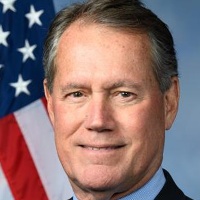
Legislative Activity
Track Ed's sponsored bills, co-sponsored legislation, and voting record
This bill amends existing law to mandate minimum staffing levels and adequate resources for the Institutes of Tropical Forestry and Pacific Islands Forestry.
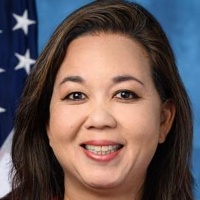
Jill Tokuda
Representative
HI
Jill Tokuda
Representative
HI
This bill amends existing law to rename and strengthen the Institutes of Tropical and Pacific Islands Forestry. It mandates minimum staffing levels—50 personnel for the Puerto Rico institute and 30 for the Pacific Islands institute—and ensures both have adequate resources. The goal is to substantially advance the science, research, and knowledge exchange activities conducted by these vital forestry centers.
This Act establishes a grant program to strengthen North American travel and tourism and mandates the creation of a USMCA Working Group to boost industry competitiveness.
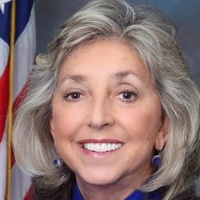
Dina Titus
Representative
NV
Dina Titus
Representative
NV
This bill establishes the USMCA Travel and Tourism Resiliency Act to strengthen North American travel and tourism through a new grant program. It also directs the U.S. Trade Representative to advocate for a dedicated Travel and Tourism Trade Working Group under the USMCA framework. The goal is to boost competitiveness, support economic recovery, and foster long-term resilience across the U.S., Canada, and Mexico.
This resolution recognizes January 2026 as National Mentoring Month to honor mentors and promote quality mentoring programs for America's youth.
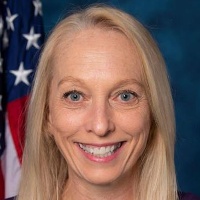
Mary Scanlon
Representative
PA
Mary Scanlon
Representative
PA
This resolution officially recognizes January 2026 as National Mentoring Month to honor the dedicated staff and volunteers in mentoring programs. It highlights the significant benefits of mentoring, such as boosting educational achievement and reducing juvenile delinquency. The bill encourages the growth of quality mentoring programs nationwide to ensure more young people have supportive adult connections.
This bill allows certain states to directly purchase food commodities using their allocated federal funds under the Emergency Food Assistance Act.
Jill Tokuda
Representative
HI
Jill Tokuda
Representative
HI
This bill amends the Emergency Food Assistance Act of 1983 to grant certain eligible states the option to receive their allocated federal funds as cash instead of commodities. States choosing this option can then directly purchase food commodities from the private commercial marketplace. This provides flexibility in how states procure food assistance resources.
This bill mandates that Federally-qualified health centers receive the full 340B discounted drug price upfront at the point of purchase, prohibiting post-purchase price adjustments.
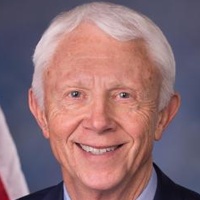
Jack Bergman
Representative
MI
Jack Bergman
Representative
MI
The Community Health Center Drug Pricing Protection Act ensures that Federally-qualified health centers (FQHCs) receive the full 340B discounted price for drugs at the point of purchase. This legislation prohibits manufacturers from requiring FQHCs to pay more than the established ceiling price upfront, regardless of any later rebates or reimbursements. The goal is to guarantee immediate, upfront savings for these vital health centers.
This resolution condemns federal workforce reductions at FEMA that threaten national preparedness, response, and recovery capabilities, and expresses concern over proposed future staffing cuts.
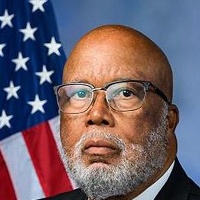
Bennie Thompson
Representative
MS
Bennie Thompson
Representative
MS
This resolution condemns current and proposed staffing cuts at the Federal Emergency Management Agency (FEMA), arguing they undermine national preparedness and disaster response capabilities. It highlights that workforce reductions endanger the ability to effectively manage increasingly severe disasters and critical counterterrorism programs. The bill expresses concern that these cuts compromise institutional knowledge and slow vital assistance to communities recovering from events like recent hurricanes. Ultimately, it commits Congress to supporting a stable and adequately resourced FEMA workforce.
This Act establishes a grant program administered by the Attorney General to fund library services in prisons to advance reintegration, reduce recidivism, and increase educational opportunities for incarcerated individuals.
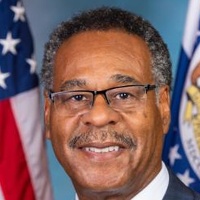
Emanuel Cleaver
Representative
MO
Emanuel Cleaver
Representative
MO
The Prison Libraries Act of 2026 establishes a federal grant program, administered by the Attorney General, to fund essential library services for incarcerated individuals. These grants aim to reduce recidivism and boost reintegration efforts by supporting education, job training, and access to modern library materials. States and territories can apply for these renewable, multi-year grants, which must be used strictly for library-related activities and cannot charge inmates for access to resources.
This bill seeks to disapprove and nullify the Department of Veterans Affairs' final rule regarding "Reproductive Health Services."
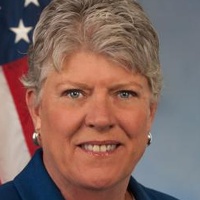
Julia Brownley
Representative
CA
Julia Brownley
Representative
CA
This resolution seeks to disapprove the Department of Veterans Affairs' final rule concerning "Reproductive Health Services" issued in September 2024. If enacted, this disapproval, made under the Congressional Review Act, would prevent the VA rule from taking legal effect.
This bill establishes a commission to investigate and recommend remedies for historical and ongoing racial, ethnic, and LGBTQ+ discrimination within the uniformed services.
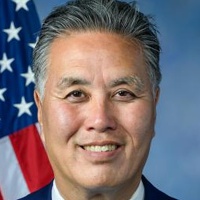
Mark Takano
Representative
CA
Mark Takano
Representative
CA
This bill establishes the Commission on Equity and Reconciliation in the Uniformed Services to investigate and document the history of racial, ethnic, and LGBTQ+ discrimination within the U.S. military since 1775. The Commission is tasked with holding hearings, gathering testimony, and developing recommendations for remedies, including apologies, compensation, and policy changes. It must submit a final report to Congress and the President detailing its findings and proposed actions within 18 months of its first meeting.
The Language Access for All Act of 2026 mandates that federal agencies implement comprehensive language assistance services, including translation and interpretation, to ensure meaningful access for individuals with limited English proficiency.
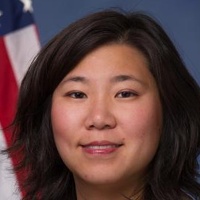
Grace Meng
Representative
NY
Grace Meng
Representative
NY
The Language Access for All Act of 2026 mandates that federal agencies provide meaningful access to programs and services for individuals with limited English proficiency. The bill requires agencies to implement comprehensive language access plans, establish technical standards for translation and interpretation, and appoint dedicated coordinators to ensure compliance. Additionally, it creates a public complaint system and sets strict guidelines for the use of AI in language services to ensure accuracy and accountability.
This bill directs the Secretary of Commerce to collect and publish standardized, up-to-date geospatial data on fishing and recreational vessel restrictions in federally managed ocean areas.
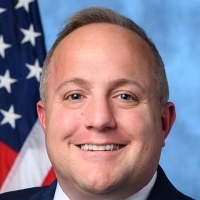
Russell Fry
Representative
SC
Russell Fry
Representative
SC
The Modernizing Access to Our Public Oceans Act directs the Secretary of Commerce to collect and publish comprehensive, up-to-date information on fishing restrictions in federally managed fisheries on a public website. This legislation also mandates the standardization of geospatial data related to ocean activities and marine protected areas. The goal is to improve accessibility and interoperability of critical ocean use information for the public, while explicitly preserving existing regulatory authority and Tribal rights.
This bill establishes competitive federal grants for states to implement and expand financial literacy education in public elementary and secondary schools.
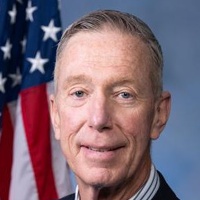
Stephen Lynch
Representative
MA
Stephen Lynch
Representative
MA
The Youth Financial Learning Act establishes a competitive grant program to incentivize states to integrate comprehensive financial literacy education into public elementary and secondary schools. State educational agencies will receive federal grants to award subgrants to local school districts for implementing and expanding curriculum on topics like credit and student loans. States must secure matching funds and prioritize districts demonstrating the greatest need to ensure broad access to financial education.
This Act establishes mandatory health and safety standards, independent inspections, and stringent accountability measures for privatized military housing to protect service members and their families from hazardous living conditions.
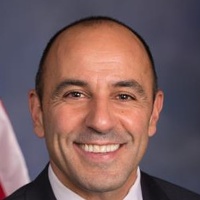
Jimmy Panetta
Representative
CA
Jimmy Panetta
Representative
CA
The Military Occupancy Living Defense (MOLD) Act establishes mandatory minimum health and safety standards for privatized military housing to combat hazardous conditions like mold. It institutes rigorous independent inspection protocols, requires standardized reporting on housing quality, and holds contractors financially accountable for remediation and tenant relocation costs. This legislation aims to improve habitability, protect service members' health, and enhance military readiness.
The PORCUPINE Act amends the Arms Export Control Act to include Taiwan in existing certification and reporting requirements and mandates a feasibility study for expediting military equipment transfers to Taiwan from key allies.
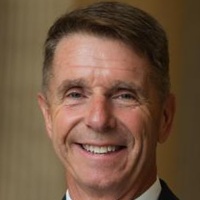
Robert Wittman
Representative
VA
Robert Wittman
Representative
VA
The PORCUPINE Act amends the Arms Export Control Act to formally include Taiwan in existing certification and reporting requirements. It also mandates a feasibility study for expediting the licensing process for allied nations transferring U.S.-origin military equipment to Taiwan. The legislation is intended to enhance security cooperation while affirming that it does not alter existing U.S. policy as defined by the Taiwan Relations Act.
This bill impeaches Secretary of Homeland Security Kristi Lynn Arnold Noem for high crimes and misdemeanors, citing willful refusal to comply with oversight law, violating the Impoundment Control Act, directing unlawful ICE misconduct, and misusing federal funds for personal gain.
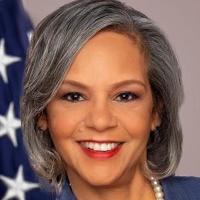
Robin Kelly
Representative
IL
Robin Kelly
Representative
IL
This resolution initiates impeachment proceedings against Secretary of Homeland Security Kristi Lynn Arnold Noem for high crimes and misdemeanors. The articles of impeachment charge her with willfully refusing to comply with Congressional oversight laws and violating the Impoundment Control Act by improperly withholding funds. Further articles allege she directed widespread misconduct by ICE agents that violated federal law and constitutional rights, and misused taxpayer funds for personal gain through improper contracting.
This resolution designates January 13th as Korean American Day to honor the contributions of Korean Americans and recognize the anniversary of the first Korean immigrants' arrival.
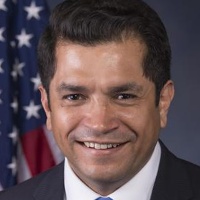
Jimmy Gomez
Representative
CA
Jimmy Gomez
Representative
CA
This resolution officially designates January 13th as Korean American Day. It expresses support for the day's ideals and encourages Americans to observe it. The resolution also honors the 123rd anniversary of the first Korean immigrants arriving in the United States.
This bill modifies deposits into the Crime Victims Fund by excluding certain False Claims Act recoveries and mandates an Inspector General audit of the Fund's sustainability.
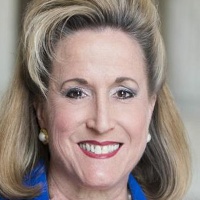
Ann Wagner
Representative
MO
Ann Wagner
Representative
MO
This bill amends the Victims of Crime Act of 1984 to temporarily exclude certain False Claims Act recoveries from being deposited into the Crime Victims Fund through fiscal year 2029. It also mandates a comprehensive audit by the Department of Justice Inspector General on the Fund's sustainability and the impact of recent legislative changes. The resulting report will provide recommendations for improving the Fund's effectiveness and oversight.
This resolution recognizes the 15th anniversary of the 2011 Tucson shooting, honoring the victims, survivors, and the ongoing advocacy of Gabby Giffords.
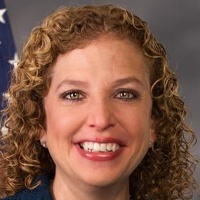
Debbie Wasserman Schultz
Representative
FL
Debbie Wasserman Schultz
Representative
FL
This resolution commemorates the 15th anniversary of the tragic January 8, 2011, Tucson shooting, honoring the six lives lost and the thirteen injured. It specifically commends the courage and ongoing advocacy of gun violence survivor and former Congresswoman Gabby Giffords. The resolution also recognizes the resilience of the community and reaffirms a commitment to ending political violence.
This resolution expresses the House's sense that the United States should aim to reduce and maintain the federal budget deficit at or below 3 percent of the Gross Domestic Product.
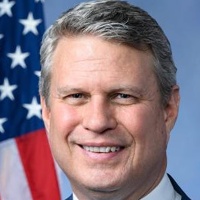
Bill Huizenga
Representative
MI
Bill Huizenga
Representative
MI
This resolution expresses the sense of the House that the United States should commit to reducing the annual federal budget deficit to 3% of GDP or less. It calls for Congress and the President to adopt fiscal policies aimed at achieving this bipartisan target by the end of fiscal year 2030. The bill also mandates recommendations for enforcement mechanisms and requires budget analyses to show how legislation impacts progress toward this goal.
This bill imposes comprehensive sanctions on Russia for its war against Ukraine while permanently extending the U.S. sanctions authority against Iran.
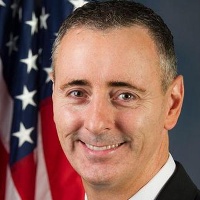
Brian Fitzpatrick
Representative
PA
Brian Fitzpatrick
Representative
PA
The Peace Through Strength Against Russia Act of 2025 imposes comprehensive sanctions on Russia's financial, military, and energy sectors in response to its war against Ukraine. This legislation cuts off major Russian banks from the U.S. financial system and bans new American investment in Russia. Additionally, the bill makes the existing sanctions authority against Iran permanent by removing its expiration date.