Legislative Activity
Track Eugene's sponsored bills, co-sponsored legislation, and voting record
This bill establishes the National Biochar Research Network to study the environmental, agricultural, and economic impacts of biochar application across various U.S. conditions.
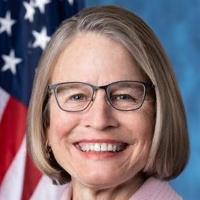
Mariannette Miller-Meeks
Representative
IA
Mariannette Miller-Meeks
Representative
IA
The Biochar Research Network Act of 2025 establishes a National Biochar Research Network, managed by the USDA, to study the real-world effectiveness of biochar across various soils and climates. This network will focus on quantifying carbon sequestration, improving crop production, and developing science-backed guidance for sustainable biochar use. The goal is to provide farmers and land managers with the data needed to boost profits while enhancing soil health and climate resilience.
This Act establishes a federal grant program to fund community-based mentoring initiatives for children and young adults who are currently in or have aged out of the foster care system.
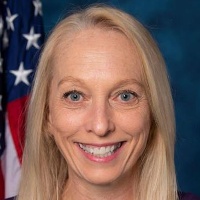
Mary Scanlon
Representative
PA
Mary Scanlon
Representative
PA
The Foster Youth Mentoring Act of 2025 establishes a new federal grant program to fund community-based organizations that provide structured, long-term mentoring for children and young adults who are currently or formerly in foster care. These grants aim to expand high-quality mentoring relationships, requiring rigorous mentor training, thorough background screening, and significant input from youth with lived experience. The goal is to improve outcomes for foster youth in areas like education, mental health, and successful transition to adulthood.
This act establishes a new, potentially transferable, refundable tax credit of up to $15,000 for first-time homebuyers, subject to income, price limits, and a four-year recapture provision.
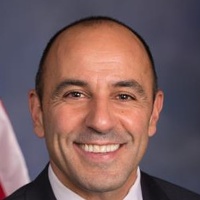
Jimmy Panetta
Representative
CA
Jimmy Panetta
Representative
CA
The First-Time Homebuyer Tax Credit Act of 2025 establishes a new, refundable tax credit for eligible first-time homebuyers, equal to 10% of the purchase price, up to a maximum of $15,000. This credit is subject to income and home price phase-outs based on local median figures. Homebuyers may elect to transfer this credit directly to their mortgage lender at closing in exchange for immediate cash. The bill also includes recapture provisions requiring repayment if the home is sold within four years.
The VISIBLE Act mandates that federal immigration officers clearly display their agency and identifying information when conducting public-facing enforcement activities.
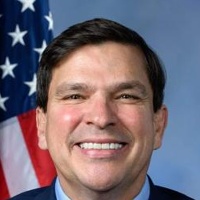
Vicente Gonzalez
Representative
TX
Vicente Gonzalez
Representative
TX
The VISIBLE Act mandates that federal immigration enforcement officers, such as those from CBP and ICE, must clearly display their agency name and either their last name or badge number during all public-facing civil immigration enforcement activities. This requirement ensures officers are easily identifiable to the public from a distance, promoting transparency and public trust. The law also establishes disciplinary procedures for non-compliance and requires annual reporting to Congress on enforcement activities and violations.
This Act establishes a grant program to help rural residents afford point-of-use or point-of-entry water treatment systems to address immediate drinking water contamination issues.
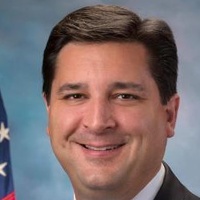
David Rouzer
Representative
NC
David Rouzer
Representative
NC
The Healthy Drinking Water Affordability Act establishes the Healthy H2O Program to provide grants for improving drinking water quality in rural areas. These grants help eligible households and small facilities address contamination from issues like lead or PFAS by covering the costs of certified water treatment systems, installation, and testing. The program prioritizes private well owners and requires annual reporting on contamination trends and program effectiveness.
This Act increases penalties for health plans and insurers that violate surprise billing rules, imposes severe financial penalties for late payments after dispute resolution, and mandates more frequent and detailed transparency reporting on enforcement actions.
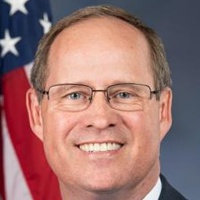
Gregory Murphy
Representative
NC
Gregory Murphy
Representative
NC
The No Surprises Act Enforcement Act significantly increases financial penalties for group health plans and insurance issuers that violate balance billing protections. It establishes steep fines, including up to $\$10,000$ per affected individual for serious non-compliance. Furthermore, the bill imposes severe penalties, including triple the disputed amount plus interest, for failing to make required payments promptly after an Independent Dispute Resolution (IDR) determination. Finally, it mandates more frequent and detailed transparency reporting on enforcement actions and violations.
This bill mandates a comprehensive study to investigate potential links between military rotary-wing operations and increased cancer prevalence or mortality among pilots and support personnel.
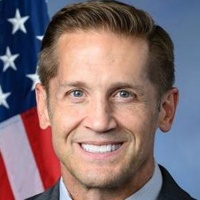
Rich McCormick
Representative
GA
Rich McCormick
Representative
GA
The ROTOR Act mandates a comprehensive study to investigate cancer prevalence and mortality rates among military rotary-wing pilots and aviation support personnel. This research, conducted by the Defense Health Agency in partnership with the NIH and NCI, will first compare cancer rates in these service members against the general population. If elevated rates are found, a second phase will seek to identify potential toxic exposures or environmental factors linked to helicopter operations that may be causing the increased risk.
This Act establishes a Department of Veterans Affairs grant program to fund facility repairs and technology upgrades for Veterans Service Organizations.
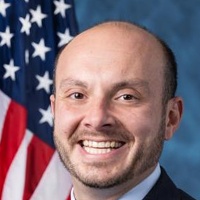
Andrew Garbarino
Representative
NY
Andrew Garbarino
Representative
NY
The Saving Vet Halls Act of 2025 establishes a new grant program administered by the Department of Veterans Affairs. This program provides funding to Veterans Service Organizations (VSOs) specifically for repairing facilities and upgrading technology. Grants are capped at $\$75,000$ or the total project cost (whichever is higher), and organizations receiving funds are ineligible to reapply for five years. The legislation authorizes $\$10$ million to support these essential improvements for VSOs.
This bill amends federal law to explicitly classify the trafficking of children in residential care facilities as a severe form of human trafficking.
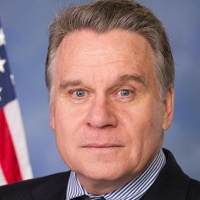
Christopher Smith
Representative
NJ
Christopher Smith
Representative
NJ
The Orphanage Trafficking Prevention and Protection Act addresses the severe vulnerability of children in residential care facilities to human trafficking. This bill amends federal law to explicitly define the exploitation of orphaned, abandoned, or institutionalized children as a "severe form of trafficking in persons." This change aims to strengthen legal accountability for traffickers and enhance protections for these at-risk youth.
The SPARC Act establishes a new six-year federal loan repayment program to incentivize specialty medical providers to work in underserved rural communities.
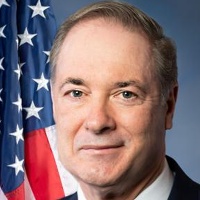
John Joyce
Representative
PA
John Joyce
Representative
PA
The SPARC Act establishes a new federal loan repayment program to incentivize specialty medical providers to practice in underserved rural communities. This program offers to repay up to $250,000 of eligible education loans in exchange for a six-year service commitment in a designated rural shortage area. The Secretary of Health and Human Services will administer the program through HRSA, prioritizing loan repayment for both physicians and non-physician specialists.
This act establishes a new federal tax credit covering 50% of qualified infertility treatment expenses, subject to annual and income limitations, with up to $\$5,000$ being refundable.
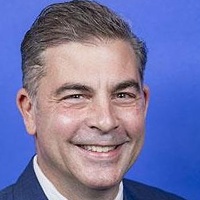
Mike Carey
Representative
OH
Mike Carey
Representative
OH
The Infertility Treatment Affordability Act of 2025 establishes a new federal tax credit equal to 50% of qualified expenses paid for infertility treatments. This credit is subject to annual limits and income phase-outs, with up to $\$5,000$ being potentially refundable. The Act aims to reduce the financial burden of fertility care for eligible individuals and families.
This Act establishes a new reciprocal temporary work visa category for South Korean nationals in specialty occupations, subject to an annual cap of 15,000 principal applicants.
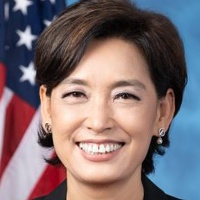
Young Kim
Representative
CA
Young Kim
Representative
CA
The Partner with Korea Act establishes a new reciprocal temporary work visa category specifically for South Korean nationals seeking employment in specialty occupations within the United States. This program is subject to an annual cap of 15,000 principal applicants. The legislation updates immigration procedures to incorporate this dedicated visa stream, contingent upon employer attestations approved by the Secretary of Labor.
This bill establishes a new system for distributing up to 2,000 additional Medicare-funded residency positions annually from 2026 through 2032, prioritizing hospitals serving underserved areas, and mandates a study on strategies to increase workforce diversity.
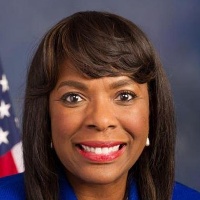
Terri Sewell
Representative
AL
Terri Sewell
Representative
AL
The Resident Physician Shortage Reduction Act of 2025 establishes a structured process for distributing up to 2,000 additional, federally funded residency positions annually between fiscal years 2026 and 2032. This distribution prioritizes hospitals serving in underserved areas, those already training above their limit, and those committed to primary care and general surgery training. The bill also mandates a study and report by the Comptroller General on effective strategies to increase diversity within the health professional workforce.
This Act streamlines the environmental review process under NEPA for certain HUD housing-related activities to accelerate the development of housing supply, particularly for infill projects.
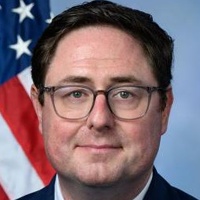
Mike Flood
Representative
NE
Mike Flood
Representative
NE
This Act, the Unlocking Housing Supply Through Streamlined and Modernized Reviews Act, aims to accelerate housing development by modernizing and simplifying the environmental review process managed by the Department of Housing and Urban Development (HUD). It reclassifies numerous routine housing and rehabilitation activities for faster processing under NEPA, including assistance programs and infill projects. The Secretary of HUD must annually report on the resulting administrative cost savings and increased speed over five years.
This bill prohibits denying veterans' claims solely for missing a medical exam and mandates numerous improvements to VA claims processing, Board of Veterans Appeals efficiency, and quality assurance.
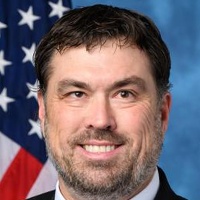
Morgan Luttrell
Representative
TX
Morgan Luttrell
Representative
TX
The Review Every Veterans Claim Act of 2025 aims to significantly improve the efficiency and fairness of the VA claims and appeals process. This bill prohibits the VA from denying a veteran's claim solely because they missed a medical examination and mandates comprehensive tracking and reporting on claim adjudication times. Furthermore, it introduces quality assurance programs, enhanced training for Board of Veterans' Appeals members, and new authority for the Board to aggregate related appeals.
The GIVE MILK Act grants participants in the WIC program the explicit choice to select their preferred type of milk—nonfat, low-fat, reduced-fat, or whole milk.
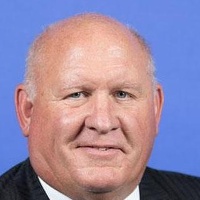
Glenn Thompson
Representative
PA
Glenn Thompson
Representative
PA
The GIVE MILK Act aims to address low dairy consumption among Americans, particularly children, by emphasizing milk's essential role in providing key nutrients like calcium and Vitamin D. This legislation specifically grants participants in the WIC program the direct choice of selecting their preferred type of milk—including whole, low-fat, reduced-fat, or nonfat—when receiving benefits. The Secretary of Agriculture is required to update regulations to implement this new participant choice.
This bill grants federal law enforcement authority and corresponding benefits to certified Tribal law enforcement officers working under federal contracts, while also establishing DOJ oversight for public safety coordination in Indian communities.
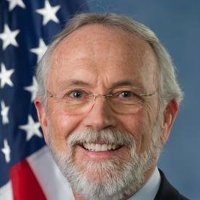
Dan Newhouse
Representative
WA
Dan Newhouse
Representative
WA
The Parity for Tribal Law Enforcement Act aims to grant qualified Tribal law enforcement officers the authority to enforce federal law within their jurisdiction under specific federal contracts or compacts. This requires Tribal officers and their departments to meet rigorous federal training and procedural standards comparable to those of Bureau of Justice Services employees. When acting under this authority, these Tribal officers will receive the same legal protections and benefits as federal law enforcement officers. The bill also mandates the Department of Justice to improve coordination and accountability for public safety efforts on tribal lands.
This bill mandates the swift re-establishment of the Charting My Path for Future Success Project to train educators in helping students with disabilities set and achieve post-secondary goals through personalized action plans.
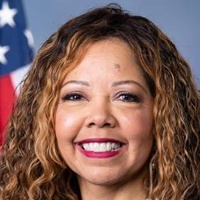
Lucy McBath
Representative
GA
Lucy McBath
Representative
GA
The Charting My Path for Future Success Act mandates the immediate restart and re-award of a contract for the "Charting My Path for Future Success Project." This project focuses on training high school teachers to help students with disabilities develop clear post-secondary goals and create actionable success plans. The legislation ensures the project maintains its established scope of supporting 1,600 students across numerous schools and protects the newly awarded contract from cancellation without Congressional approval.
The SAVES Act establishes a VA pilot program to award grants to nonprofits providing service dogs and veterinary insurance to eligible veterans managing specific service-connected conditions.
Morgan Luttrell
Representative
TX
Morgan Luttrell
Representative
TX
The SAVES Act establishes a Department of Veterans Affairs (VA) pilot program to award grants to nonprofit organizations that provide service dogs to eligible veterans. These grants, up to $\$2,000,000$ each, will fund the training and provision of service dogs for veterans with qualifying conditions like PTSD or TBI. The bill also extends the expiration date for certain limits on veterans' pension payments until February 2033.
The Burma GAP Act establishes U.S. policy to hold the Burmese military accountable for genocide against the Rohingya, appoints a Special Representative, and mandates comprehensive support for the protection, justice, and durable solutions for the Rohingya people.
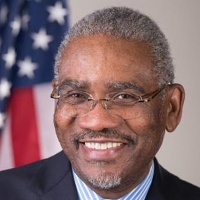
Gregory Meeks
Representative
NY
Gregory Meeks
Representative
NY
The Burma Genocide Accountability and Protection Act (Burma GAP Act) establishes a comprehensive U.S. policy to address the ongoing atrocities against the Rohingya people in Myanmar. The bill mandates the appointment of a Special Representative for Burma, increases humanitarian and protection support for refugees, and prioritizes accountability for genocide and crimes against humanity. Furthermore, it commits the U.S. to isolating the military junta until civilian rule is restored.