Legislative Activity
Track Eugene's sponsored bills, co-sponsored legislation, and voting record
This act expands the eligible food purchases for seniors using their benefits at farmers' markets to include tree nuts.
Barry Moore
Representative
AL
Barry Moore
Representative
AL
The Farmers’ Market Expansion Act of 2025 amends the Seniors Farmers' Market Nutrition Program to enhance purchasing options for seniors. This bill specifically updates the list of eligible foods under the program. The key change allows seniors to use their benefits to purchase tree nuts at participating farmers' markets.
This Act mandates a disclaimer on standard mortgage applications directing service members to inquire about VA Home Loan eligibility.
Mónica De La Cruz
Representative
TX
Mónica De La Cruz
Representative
TX
The VA Home Loan Awareness Act of 2025 mandates the addition of a disclaimer on standard mortgage applications, informing applicants who indicate military service that they may qualify for a VA Home Loan. This ensures veterans and service members are immediately directed to explore their VA loan eligibility when applying for a mortgage. The bill also requires the GAO to study the effectiveness of this new disclaimer requirement among lenders.
This Act establishes a framework for U.S.-Taiwan tourism cooperation and mandates a report on the feasibility of establishing U.S. preclearance facilities in Taiwan.
Young Kim
Representative
CA
Young Kim
Representative
CA
This Act establishes the **Taiwan Travel and Tourism Coordination Act** to strengthen tourism cooperation between the United States and Taiwan through joint initiatives. It mandates the Assistant Secretary of Commerce for Travel and Tourism to engage with Taiwanese officials to ease travel and support industry partners. Furthermore, the bill requires a comprehensive report on the feasibility and impact of establishing U.S. preclearance facilities in Taiwan.
This Act raises the minimum age for Federal Firearms Licensees to sell certain semiautomatic rifles and shotguns to 21, with exceptions for qualified individuals aged 18-20, and mandates an FBI report on its public access line operations.
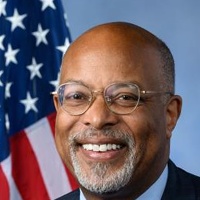
Glenn Ivey
Representative
MD
Glenn Ivey
Representative
MD
The Raise the Age Act of 2025 generally prohibits Federal Firearms Licensees from selling certain semiautomatic centerfire rifles or shotguns capable of holding magazines over five rounds to anyone under 21, with exceptions for qualified military or government personnel. The bill also maintains the existing minimum age of 18 for general firearm purchases, excluding the newly restricted categories. Finally, it mandates that the FBI Director report on the operational procedures of its public access line within 90 days of enactment.
The DETERRENCE Act increases federal penalties for kidnapping, murder-for-hire, stalking, and assaults against federal officials and protected persons when the crimes are directed or coordinated by a foreign government.
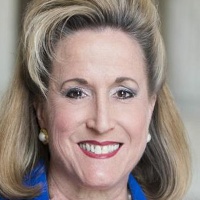
Ann Wagner
Representative
MO
Ann Wagner
Representative
MO
The DETERRENCE Act significantly increases federal penalties for serious crimes like kidnapping, murder-for-hire, stalking, and assaults against federal officials. These enhanced sentences are specifically triggered when the criminal activity is knowingly directed by or coordinated with a foreign government or its agents. The bill aims to deter foreign interference in domestic criminal acts by imposing much harsher punishments on those involved.
The Safer Skies Act of 2025 mandates that certain smaller charter and commuter air carriers currently exempt from TSA checkpoints must adopt the same security screening standards as larger airlines.
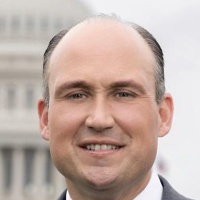
Nicholas Langworthy
Representative
NY
Nicholas Langworthy
Representative
NY
The Safer Skies Act of 2025 mandates enhanced security screening for certain smaller charter and commuter air carriers that sell individual passenger seats publicly. This legislation requires these specific operations, currently exempt from TSA checkpoints, to adopt the security standards applied to larger commercial airlines. The goal is to raise the baseline security level across a broader segment of air travel operations.
This resolution formally recognizes the 250th anniversary of the United States Marine Corps, honoring its legacy, service, and core values.
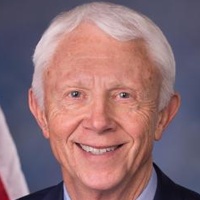
Jack Bergman
Representative
MI
Jack Bergman
Representative
MI
This resolution formally recognizes the upcoming 250th anniversary of the United States Marine Corps in 2025. Congress is honoring the Corps' long history, core values of honor, courage, and commitment, and its consistent readiness to defend the nation. The bill encourages the public to join in celebrating this significant milestone and acknowledging the service and sacrifice of all Marines.
This bill expands Medicare coverage under Part B to pay qualified home infusion suppliers for augmentation therapy kits and nursing services for Medicare beneficiaries with Alpha-1 Antitrypsin Deficiency Disorder who require emphysema treatment in their homes.

Maria Salazar
Representative
FL
Maria Salazar
Representative
FL
The John W. Walsh Alpha-1 Home Infusion Act of 2025 amends Medicare to specifically cover augmentation therapy for individuals with severe Alpha-1 Antitrypsin Deficiency Disorder when administered in the home. This legislation establishes new payment rules under Medicare Part B for the necessary intravenous kits and associated nursing services. The goal is to ensure qualified home infusion suppliers are reimbursed directly for providing this essential, ongoing maintenance treatment.
This act establishes a federally funded national public safety campaign utilizing television, radio, and digital media to warn against illegally passing stopped school buses.
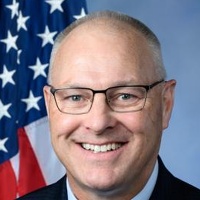
Pete Stauber
Representative
MN
Pete Stauber
Representative
MN
The Brake for Kids Act of 2025 establishes a national public safety messaging campaign to raise awareness about the dangers of illegally passing a stopped school bus. This initiative will be funded using existing allocations from the Infrastructure Investment and Jobs Act. The required campaign must utilize broad outreach methods, including national television, radio, social media, and edge service advertising.
The Virginia Beach Heroes Act establishes special tax rules to ensure donations supporting the families of law enforcement officers killed in Virginia Beach on February 22, 2025, are treated as valid charitable contributions.
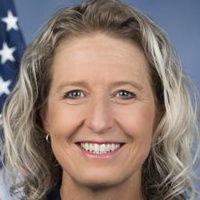
Jennifer Kiggans
Representative
VA
Jennifer Kiggans
Representative
VA
The Virginia Beach Heroes Act establishes special tax provisions to support the families of law enforcement officers killed in Virginia Beach on February 22, 2025. This bill ensures that donations made to these families qualify as charitable contributions. Furthermore, it protects charities distributing funds to the surviving spouses or dependents from adverse tax consequences, provided payments are made in good faith and follow reasonable guidelines.
The Unity through Service Act of 2025 establishes an Interagency Council to unify and expand recruitment efforts across military, national, and public service sectors while improving transition opportunities for participants.
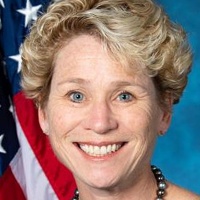
Chrissy Houlahan
Representative
PA
Chrissy Houlahan
Representative
PA
The Unity through Service Act of 2025 establishes an Interagency Council on Service to advise the President on strengthening recruitment across military, national, and public service opportunities. The bill mandates joint market research between defense and national service agencies and improves transition assistance for separating service members into public sector jobs. Ultimately, the Act aims to foster civic duty by coordinating federal efforts to promote and measure the impact of all forms of national service.
The Paycheck Fairness Act strengthens equal pay enforcement by tightening defenses against pay discrimination, expanding protections against retaliation, increasing penalties for violations, and requiring comprehensive data collection and training initiatives.
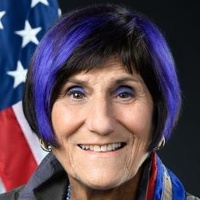
Rosa DeLauro
Representative
CT
Rosa DeLauro
Representative
CT
The Paycheck Fairness Act significantly strengthens federal equal pay protections by broadening definitions of sex discrimination, tightening employer defenses against pay disparities, and increasing penalties for violations. It also prohibits employers from using salary history in hiring decisions and mandates new data collection by the EEOC to better enforce anti-discrimination laws. Furthermore, the bill establishes new training and outreach programs to combat systemic wage bias.
This bill formalizes and expands the research and development coordination between the Department of Energy and NASA across key areas like advanced propulsion, quantum technology, and fundamental science.
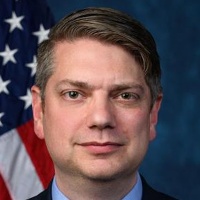
Nicholas Begich
Representative
AK
Nicholas Begich
Representative
AK
The DOE and NASA Interagency Research Coordination Act formalizes collaboration between the Department of Energy and NASA on critical research and development projects. This bill authorizes the two agencies to jointly pursue advancements in areas like advanced propulsion, quantum technology, and fundamental science through competitive awards. The coordination aims to leverage the unique capabilities of both agencies to achieve shared mission goals and requires a public report on progress two years after enactment.
This bill officially ratifies the Equal Rights Amendment, validating its inclusion in the Constitution regardless of any prior ratification deadlines.
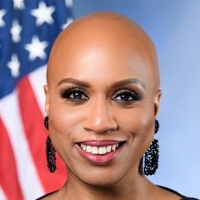
Ayanna Pressley
Representative
MA
Ayanna Pressley
Representative
MA
This bill officially ratifies the Equal Rights Amendment, declaring it a valid part of the U.S. Constitution. It specifically removes any previously imposed deadlines for state ratification. If three-fourths of the states have approved the amendment, this law confirms its official status regardless of past time constraints.
The WING Act of 2025 establishes a research program to develop and implement solutions for maintaining accurate weather radar detection despite obstructions like wind turbines and buildings.
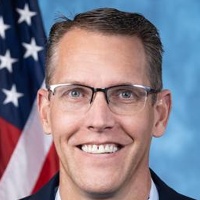
Randy Feenstra
Representative
IA
Randy Feenstra
Representative
IA
The Weather Innovation for the Next Generation Act of 2025 (WING Act) establishes a new research program to ensure the accuracy of weather radar systems despite physical obstructions like wind turbines and buildings. This initiative directs the National Weather Service to develop and test new technologies and forecasting methods to mitigate issues such as beam blockage and ghost echoes. The program will prioritize proven fixes and require annual reports to Congress until its conclusion in 2030.
This bill mandates the National Weather Service to replace its current instant messaging system with a modern, commercially available, public cloud-hosted solution by October 1, 2027, funded through existing appropriations.
Randy Feenstra
Representative
IA
Randy Feenstra
Representative
IA
This bill, the National Weather Service Communications Improvement Act, mandates the replacement of the current NWSChat instant messaging system with a modern, commercially available, public cloud-hosted solution by October 1, 2027. The new system must meet standards for scalability and usability. Funding for this upgrade, up to \$3 million annually from 2026 to 2029, will be sourced from the existing NWS Operations, Research, and Facilities budget.
This bill increases the tax-free limit for length of service award program payments to $\$1,000$ and clarifies that these awards qualify for the exclusion.
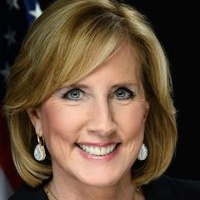
Claudia Tenney
Representative
NY
Claudia Tenney
Representative
NY
The No Tax on Length of Service Award Programs Act significantly increases the tax-free exclusion limit for qualified payments from $\$50$ to $\$1,000$. This legislation also explicitly clarifies that payments received through length of service award programs qualify as "qualified payments" for tax purposes. These changes apply to awards granted after the date the Act becomes law.
This Act establishes a presumption of service connection for certain diseases in military veterans who served five or more years as firefighters, making it easier to obtain VA disability benefits.
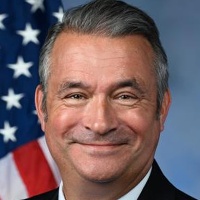
Don Bacon
Representative
NE
Don Bacon
Representative
NE
The Michael Lecik Military Firefighters Protection Act aims to ease the process for military veterans who served as firefighters to receive VA disability benefits for certain illnesses. This bill establishes a presumption of service connection for specific heart and various cancers if the veteran served five or more years in a firefighting role. If the qualifying illness is rated at 10% or more disabling and manifests within 15 years of service separation, the VA must presume it is service-connected.
The House of Representatives affirms every person's basic right to emergency health care, including abortion care.
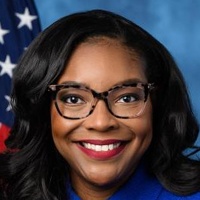
Emilia Sykes
Representative
OH
Emilia Sykes
Representative
OH
This bill affirms the House of Representatives' belief that every person has the right to emergency health care, including abortion care. It argues that abortion restrictions endanger lives, force doctors to make impossible choices, and disproportionately harm people of color, low-income individuals, and LGBTQI individuals. The bill emphasizes that delays in emergency care due to abortion bans can lead to life-threatening situations and that everyone, including pregnant individuals, should have access to necessary medical care without discrimination.
This Act establishes automatic dependency and indemnity compensation for survivors of veterans whose death by suicide is linked to a service-connected mental disorder.
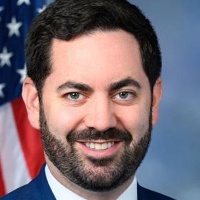
Michael Lawler
Representative
NY
Michael Lawler
Representative
NY
The Service-Connected Suicide Compensation Act ensures that survivors of veterans who died by suicide receive dependency and indemnity compensation. This benefit is automatically provided if the veteran had a service-connected mental disorder. The Act establishes a direct link between service-connected mental health issues and eligibility for survivor benefits following a veteran's suicide.