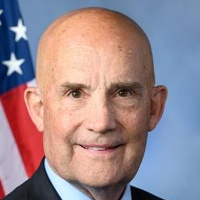
Legislative Activity
Track Keith's sponsored bills, co-sponsored legislation, and voting record
The SHIELD Act prohibits schools receiving federal funds from allowing abortion providers to distribute information about abortion or related services to students on school grounds or virtual platforms.
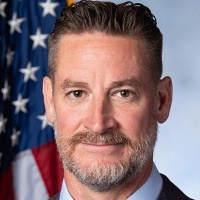
W. Steube
Representative
FL
W. Steube
Representative
FL
The School Health and Instructional Environment Limits and Disclosure (SHIELD) Act prohibits schools that receive federal funding from allowing abortion providers to distribute information about abortion or related services to students. This restriction applies to both physical school grounds and virtual platforms operated by local educational agencies.
This resolution commemorates the 13 U.S. servicemembers killed at Abbey Gate and condemns the Biden administration’s handling of the 2021 withdrawal from Afghanistan.
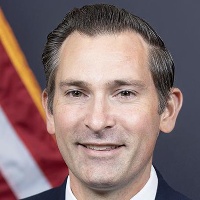
Matt Van Epps
Representative
TN
Matt Van Epps
Representative
TN
This resolution commemorates the 13 U.S. servicemembers killed during the 2021 Abbey Gate bombing in Afghanistan. It formally condemns the Biden-Harris administration for its handling of the withdrawal, citing failures in planning, security, and accountability. The measure denounces the administration's decisions as a dereliction of duty that compromised national security and abandoned American allies.
The SRBIJA Act aims to promote democratic governance, rule of law, and accountability in Serbia while addressing concerns regarding the country's foreign influence and alignment with Euro-Atlantic institutions.
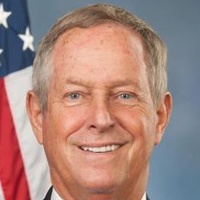
Joe Wilson
Representative
SC
Joe Wilson
Representative
SC
The SRBIJA Act aims to promote democratic governance, rule of law, and accountability in Serbia while addressing concerns regarding the country's deepening ties with Russia, China, and Iran. The bill mandates reports on foreign influence, establishes conditions for U.S.-Serbia diplomatic engagement, and authorizes sanctions against actors destabilizing the Western Balkans. Ultimately, the legislation seeks to encourage Serbia’s alignment with Euro-Atlantic institutions by conditioning future assistance and cooperation on verifiable democratic reforms.
This resolution honors the life and historic congressional legacy of the Honorable Kay Granger, recognizing her trailblazing service as a Representative from Texas and her dedicated contributions to national defense and the city of Fort Worth.
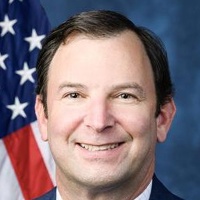
Craig Goldman
Representative
TX
Craig Goldman
Representative
TX
This resolution honors the life and legacy of the Honorable Kay Granger, celebrating her nearly 28 years of service in the U.S. House of Representatives. It recognizes her historic achievements as a trailblazer for women in public office, her dedicated advocacy for national defense, and her lasting contributions to the city of Fort Worth, Texas.
The Permanent CBDC Ban Act prohibits the Federal Reserve from issuing a central bank digital currency.
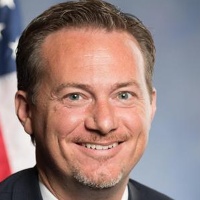
Michael Cloud
Representative
TX
Michael Cloud
Representative
TX
The Permanent CBDC Ban Act seeks to codify a long-term prohibition on the issuance of a Central Bank Digital Currency (CBDC) by the Federal Reserve. By amending the Federal Reserve Act, this legislation aims to permanently restrict the government from implementing a digital dollar.
This bill restricts stock trading by Members of Congress and their families while establishing new federal requirements for voters to provide photo identification in federal elections.
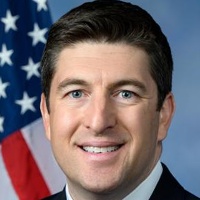
Bryan Steil
Representative
WI
Bryan Steil
Representative
WI
The Stop Insider Trading Act restricts Members of Congress, their spouses, and dependent children from purchasing or selling individual stocks to prevent conflicts of interest. Additionally, the bill mandates that voters provide valid photo identification when voting in person or by mail in federal elections.
The Preventing Forced Abortions Act of 2026 prohibits federal courts from enforcing surrogacy contract provisions that mandate abortion and protects a surrogate mother's right to full compensation regardless of her decision to carry a pregnancy to term.
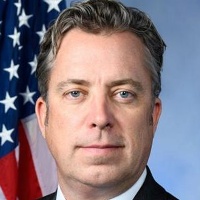
Andrew Ogles
Representative
TN
Andrew Ogles
Representative
TN
The Preventing Forced Abortions Act of 2026 prohibits federal courts from enforcing surrogacy contract provisions that mandate abortion at the request of an intended parent. The bill ensures that surrogate mothers remain entitled to their full contractual compensation regardless of their refusal to undergo an abortion. Additionally, it grants federal district courts jurisdiction over civil disputes involving such surrogacy agreements.
This Act mandates that schools must obtain prior written consent from parents or eligible students before collecting specific survey or evaluation data.
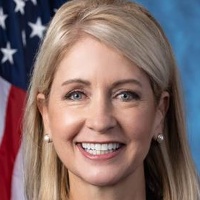
Mary Miller
Representative
IL
Mary Miller
Representative
IL
The Parents Opt-in Protection Act requires schools to obtain prior written consent before collecting specific survey or evaluation data from students. This legislation amends existing law to ensure that participation in certain student surveys is voluntary and requires explicit parental or student permission.
The "Combating Illicit Xylazine Act" aims to combat the misuse of xylazine by adding it to Schedule III of the Controlled Substances Act, tracking its distribution, and ensuring appropriate penalties for related offenses, while also protecting legitimate veterinary use.
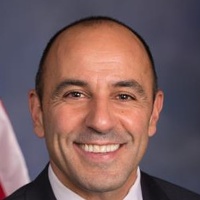
Jimmy Panetta
Representative
CA
Jimmy Panetta
Representative
CA
The "Combating Illicit Xylazine Act" aims to combat the illegal use of xylazine by adding it to Schedule III of the Controlled Substances Act, which would allow for increased regulation and tracking of the substance. The bill includes exemptions and delayed effective dates for certain requirements to ease the transition for legitimate users, such as veterinarians and animal handlers. It also directs the Sentencing Commission to review sentencing guidelines for xylazine-related offenses and mandates reports to Congress on the prevalence and impact of illicit xylazine use. Finally, it will include xylazine in Arcos tracking.
This bill clarifies that a franchisor is only considered a joint employer of a franchisee's workers if it exercises substantial, direct, and immediate control over essential terms of employment.
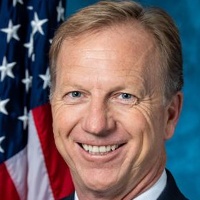
Kevin Hern
Representative
OK
Kevin Hern
Representative
OK
The American Franchise Act aims to protect the traditional franchise business model by clarifying the definition of a "joint employer." This legislation establishes that a franchisor is only considered a joint employer if it exercises "substantial direct and immediate control" over the essential terms of employment for a franchisee's workers. This change specifically targets liability risks associated with maintaining brand standards, ensuring franchisors are not automatically held responsible for local labor practices. The new standard applies prospectively to future legal proceedings.
This bill supports the designation of July 20, 2026, as "National Moon Landing Day" to honor the historic Apollo 11 mission and celebrate the ongoing achievements of the U.S. space program.
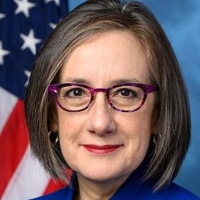
Andrea Salinas
Representative
OR
Andrea Salinas
Representative
OR
This resolution supports the designation of July 20, 2026, as "National Moon Landing Day" to commemorate the historic Apollo 11 mission and celebrate the United States' ongoing leadership in space exploration. It honors the contributions of astronauts, scientists, and the private sector while encouraging educational initiatives to inspire future generations in STEM fields.
The Chloe Cole Act of 2026 establishes a private right of action allowing individuals to sue healthcare providers for damages resulting from gender-transition medical interventions performed on them as minors.
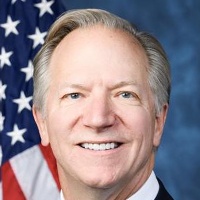
Robert Onder
Representative
MO
Robert Onder
Representative
MO
The Chloe Cole Act of 2026 establishes a federal private right of action allowing individuals to sue healthcare professionals and institutions for damages related to gender-transition medical interventions performed on them as minors. The bill permits lawsuits regardless of when the intervention occurred and sets a statute of limitations extending 25 years past the individual's 18th birthday. Additionally, it mandates strict liability for such interventions performed after the Act's enactment.
This bill amends the federal charter of the Daughters of the American Revolution to restrict membership eligibility to individuals who meet the organization's genealogical requirements and are defined as adult human females.

Ben Cline
Representative
VA
Ben Cline
Representative
VA
The Daughters of the American Revolution Membership Integrity Act amends the organization’s federal charter to formally define membership eligibility. The bill restricts membership to adult human females, establishing a biological definition for the term "female" based on reproductive system development.
This resolution honors the public service of the late Senator Lindsey Graham, condemns Omar Suleiman for celebrating his death, and supports efforts to address the incompatibility of Sharia Law with American constitutional principles.
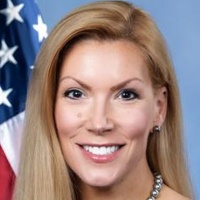
Beth Van Duyne
Representative
TX
Beth Van Duyne
Representative
TX
This resolution honors the life and public service of the late Senator Lindsey Graham while formally condemning Omar Suleiman for his public remarks celebrating the Senator's death. Additionally, the bill acknowledges Suleiman’s 2019 invitation to serve as a Guest Chaplain in the U.S. House and reaffirms support for efforts to address the perceived dangers of Sharia Law to American constitutional principles.
This act prohibits the use of federal funds, Treasury borrowing, or Federal Reserve lending to bail out state and local governments facing or at risk of default after January 1, 2026, except in cases of declared disasters.
W. Steube
Representative
FL
W. Steube
Representative
FL
The Government Bailout Prevention Act aims to prohibit the use of federal funds, Treasury borrowing, and Federal Reserve lending to bail out financially distressed state and local governments. This ban applies to entities that default or face default after January 1, 2026, with an exception for assistance provided in response to a declared disaster. The legislation specifically targets debt guarantees and financial assistance to state, municipal, and local entities.
This resolution commends Taiwan on the 30th anniversary of its first direct presidential election and expresses continued U.S. support for its democratic institutions.
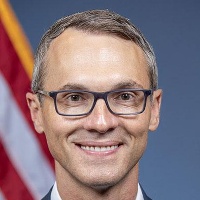
James Walkinshaw
Representative
VA
James Walkinshaw
Representative
VA
This resolution commemorates the 30th anniversary of Taiwan's first direct presidential election in 1996, commending its successful transition to a robust democracy. It expresses strong support for Taiwan in preserving its democratic institutions against external pressure. The resolution reaffirms the enduring U.S. commitment to the U.S.-Taiwan relationship as established by existing policy frameworks.
This bill impeaches U.S. District Judge Eleanor Louise Ross for high crimes and misdemeanors stemming from an undisclosed affair, workplace misconduct, extortion vulnerability, partisan political activity, and obstruction of a judicial investigation through false statements.
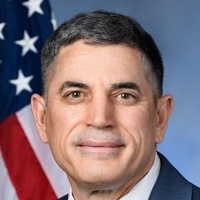
Andrew Clyde
Representative
GA
Andrew Clyde
Representative
GA
This bill initiates impeachment proceedings against U.S. District Judge Eleanor Louise Ross for high crimes and misdemeanors. The articles of impeachment cite judicial misconduct, including an undisclosed extramarital affair creating conflicts of interest, inappropriate conduct in chambers, attending a partisan political event, and making false statements to obstruct a judicial investigation. The bill ultimately declares Judge Ross guilty and calls for her removal from office.
This bill mandates sweeping border wall construction, tightens asylum eligibility to near-impossible standards, expands detention capacity, and reforms immigration parole while penalizing visa overstays.

Chip Roy
Representative
TX
Chip Roy
Representative
TX
The Permanent Trump Secure Border Act mandates immediate and accelerated construction of the border wall, significantly tightens asylum eligibility standards by raising the "credible fear" threshold, and severely restricts the use of immigration parole. The bill also requires comprehensive technology upgrades for border security, mandates specific staffing levels for Border Patrol, and increases penalties for visa overstays. Overall, it represents a sweeping legislative effort to enhance physical barriers, restrict entry pathways, and increase interior immigration enforcement.
This bill bars entry to and mandates the deportation of close family members of designated terrorists, officials from adversarial nations, and sanctioned kleptocrats.
W. Steube
Representative
FL
W. Steube
Representative
FL
The "No Safe Haven for Terrorist Families Act" amends immigration law to bar entry to and mandate the deportation of specified close family members of foreign threat actors, including designated terrorists and senior officials from adversarial nations. This measure expands inadmissibility grounds to address national security risks posed by relatives of individuals involved in terrorism, state sponsorship of terrorism, or significant corruption. The Act requires mandatory visa revocation and prioritizes the removal of these inadmissible individuals, eliminating most forms of discretionary relief.
The Millstone Act significantly increases penalties for numerous federal offenses involving sexual violence against children, child exploitation, and female genital mutilation by adding the death penalty or life imprisonment as possible punishments.
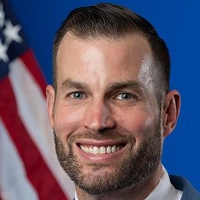
Clay Fuller
Representative
GA
Clay Fuller
Representative
GA
The Millstone Act significantly increases federal penalties for a range of severe offenses. This legislation amends multiple criminal statutes to make the death penalty or life imprisonment the maximum punishment for crimes involving sexual violence against children, child exploitation, and female genital mutilation. Essentially, it mandates the harshest possible sentences for these specific violent crimes.