This bill pauses H-1B visa issuance for three years while enacting sweeping reforms, including eliminating dual intent, imposing a $100,000 employer fee, setting a $200,000 wage floor, eliminating the lottery, banning dependent visas, prohibiting federal employment, eliminating OPT, and severely restricting status adjustments for nonimmigrants.
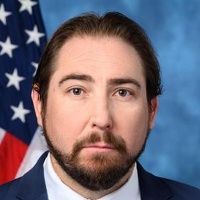
Eli Crane
Representative
AZ-2
The End H–1B Visa Abuse Act of 2026 institutes a three-year pause on new H-1B visa issuance while enacting sweeping reforms to the program, including eliminating dual intent and drastically increasing employer fees. The bill significantly restricts H-1B employment by setting a low annual cap, mandating high minimum wages, and prohibiting third-party staffing arrangements. Furthermore, it eliminates dependent visas for H nonimmigrants, bars federal employment of visa holders, and severely restricts nonimmigrants from adjusting status or changing visa classifications while in the U.S.
New Bill Halts H1B Visas for 3 Years, Adds $100K Employer Fee, and Sets $200K Minimum Wage
Alright, let's talk about the 'End H1B Visa Abuse Act of 2026.' This bill is a massive shake-up for how skilled foreign workers come to the U.S. and what they can do once they're here. If you or your company relies on international talent, or if you're a foreign student hoping to work here after graduation, this one's going to hit close to home. Basically, it slams the brakes on a lot of existing immigration pathways, making it much harder and more expensive for companies to hire non-U.S. citizens in certain categories.
The Three-Year Hiatus and the Big Price Tag
First up, the bill proposes a three-year pause on issuing any new H1B visas. That's a complete freeze. If you're a company that's been planning to bring in specialized talent, or a skilled professional hoping for an H1B, you're looking at a minimum three-year wait from when this bill becomes law. On top of that, for any H1B visas issued after the pause, employers would face a new, eye-popping fee of $100,000 for each H1B petition. Yes, you read that right: one hundred thousand dollars. Imagine being a startup or a mid-sized company trying to compete for talent when every H1B hire comes with that kind of upfront cost. It’s a game-changer for budgets, especially for smaller businesses and could push them to look elsewhere for talent or simply not grow as fast.
Bye-Bye 'Dual Intent' and Hello $200K Wage Floor
Currently, H1B visa holders can have 'dual intent,' meaning they can work towards permanent residency while on their temporary visa. This bill scraps that for most H1B workers, which means if you're on an H1B, your path to a green card just got a lot more complicated, potentially forcing you to leave the country after your visa expires. The bill also slashes the maximum H1B stay from six years down to three years. And if that wasn't enough, employers would be required to pay H1B workers at least $200,000 per year. For context, the current average H1B wage varies by industry and location, but this new floor is significantly higher than what many H1B workers currently earn. This wage floor, combined with the $100,000 fee, could make hiring H1B talent prohibitively expensive for all but the largest companies or those in extremely high-paying fields.
Family, Federal Jobs, and Student Work on the Chopping Block
This bill doesn't stop at H1Bs. It also eliminates the ability for H-1B, H-2A, H-2B, and H-3 visa holders to bring their spouses and minor children to the U.S. as dependents. This means if you're a skilled worker coming to the U.S. on one of these visas, you'd be coming alone, leaving your family behind. This could be a huge deterrent for many professionals considering a move here. On another front, the bill prohibits federal agencies from hiring any nonimmigrant visa holders, directly or through contracts. So, if you're a foreign national with specialized skills working for, say, NASA or the CDC, this could directly impact your employment.
The End of OPT and Status Adjustments
For foreign students, this bill is a major blow. It eliminates the Optional Practical Training (OPT) program, which currently allows many F-1 and M-1 student visa holders to work in their field after graduation. If you're an international student who came to the U.S. for a degree with the hope of gaining work experience here, that pathway would be gone. This could seriously impact U.S. universities' ability to attract top global talent. Finally, the bill prohibits most nonimmigrants from adjusting their status to lawful permanent residence while in the U.S. and invalidates existing work permits for those who've applied for adjustment of status. This means if you're here on a temporary visa, even if you qualify for a green card, you'd likely have to leave the country and apply from abroad, a process that can be incredibly long and disruptive. It also stops people from changing from one visa type to another while they're in the U.S., adding another layer of rigidity to the system.