Legislative Activity
Track Adelita's sponsored bills, co-sponsored legislation, and voting record
This act amends Medicare Part B to cover pharmacist-provided HIV prevention services, including PrEP and PEP management, starting January 1, 2027.
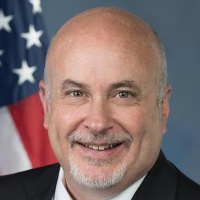
Mark Pocan
Representative
WI
Mark Pocan
Representative
WI
The PrEP Access Act aims to expand access to HIV prevention by amending Medicare Part B to cover HIV prevention services, such as PrEP and PEP management, when provided by pharmacists. This coverage will take effect on January 1, 2027. The bill also establishes specific payment rates and prohibits pharmacists from balance billing Medicare beneficiaries for these services.
This bill disallows certain tax deductions and imposes an excise tax on single-family home sales by large investors, while prohibiting federal mortgage assistance to these entities, with collected funds supporting low-income housing.
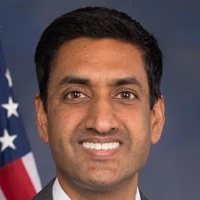
Ro Khanna
Representative
CA
Ro Khanna
Representative
CA
The Stop Wall Street Landlords Act of 2026 aims to curb large corporate ownership of single-family homes. It disallows key tax deductions, such as mortgage interest and depreciation, for investors holding over $100 million in assets who own these properties. The bill also imposes a full excise tax on the sale of these homes by such investors. Finally, it prohibits Fannie Mae, Freddie Mac, and Ginnie Mae from financing mortgages held by these specified large investors.
This bill establishes a comprehensive, department-wide use of force policy for DHS law enforcement, mandates regular public reporting of use of force data, and requires enhanced training and oversight.
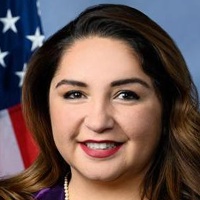
Delia Ramirez
Representative
IL
Delia Ramirez
Representative
IL
The DHS Use of Force Oversight Act establishes a comprehensive, department-wide policy for the use of force by all DHS law enforcement personnel. This policy mandates de-escalation as the preferred approach, prohibits chokeholds, and requires extensive training. Furthermore, the bill mandates regular public reporting of use-of-force data and requires timely briefings to Congress following serious incidents.
This act requires states and local governments to stop charging fees for public access to specific law enforcement camera footage to remain eligible for major federal grants.
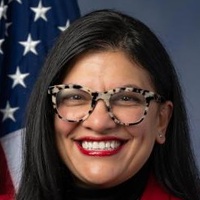
Rashida Tlaib
Representative
MI
Rashida Tlaib
Representative
MI
The Stop Body Camera Paywalls Act requires states and local governments to stop charging the public fees to access or obtain copies of specific law enforcement camera footage, including body-worn and dash camera video. To receive funding from major federal law enforcement grant programs, applicants must certify they comply with this requirement. Non-compliant governments will be ineligible for these federal grants.
This bill impeaches Secretary of Homeland Security Kristi Lynn Arnold Noem for high crimes and misdemeanors, citing willful refusal to comply with oversight law, violating the Impoundment Control Act, directing unlawful ICE misconduct, and misusing federal funds for personal gain.
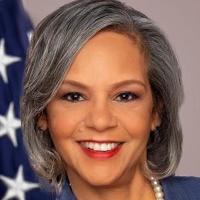
Robin Kelly
Representative
IL
Robin Kelly
Representative
IL
This resolution initiates impeachment proceedings against Secretary of Homeland Security Kristi Lynn Arnold Noem for high crimes and misdemeanors. The articles of impeachment charge her with willfully refusing to comply with Congressional oversight laws and violating the Impoundment Control Act by improperly withholding funds. Further articles allege she directed widespread misconduct by ICE agents that violated federal law and constitutional rights, and misused taxpayer funds for personal gain through improper contracting.
This bill delays the implementation of certain 2026 amendments to the hemp production provisions of the Agricultural Marketing Act of 1946 by extending the current delay period from one year to three years.
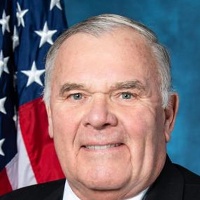
James Baird
Representative
IN
James Baird
Representative
IN
This bill, the Hemp Planting Predictability Act, seeks to amend the Agriculture Appropriations Act of 2026. Specifically, it delays the implementation of recent amendments affecting hemp production under the Agricultural Marketing Act of 1946. The delay for these changes is extended from one year to three years.
This Act establishes federal minimum salary and wage floors for school paraprofessionals and support staff, providing federal funding to help states meet these new pay standards within four years.
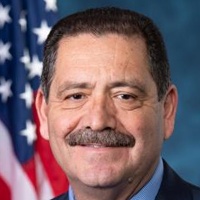
Jesús García
Representative
IL
Jesús García
Representative
IL
The Pay Paraprofessionals and Support Staff Act establishes minimum federal salary and wage floors for school support staff, requiring states to implement higher state-level standards. It authorizes significant federal funding through grants to help states and local districts meet these new pay requirements within four years. States must prioritize funding distribution to districts serving high numbers of low-income students to ensure compliance with the mandated pay increases.
This act prohibits the use of federal funds and official action for any invasion of NATO member territory.
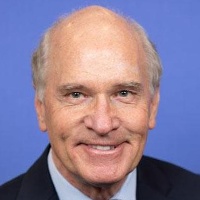
William Keating
Representative
MA
William Keating
Representative
MA
The **No Funds for NATO Invasion Act** prohibits the use of any federal funds for an invasion of any territory belonging to a member nation of the North Atlantic Treaty Organization (NATO). Furthermore, the bill bars U.S. officials from taking any action to execute such an invasion.
This bill mandates regular federal reporting on the air quality, water usage, and electricity consumption impacts of data centers across the United States.
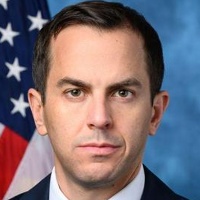
Robert Menendez
Representative
NJ
Robert Menendez
Representative
NJ
The Data Center Transparency Act establishes new federal reporting requirements to monitor the environmental and energy impacts of data centers across the United States. This legislation mandates regular reports from the EPA detailing data center water consumption, reuse, and pollution discharge, as well as reports from the EIA on total electricity consumption broken down by state. These measures aim to provide transparency regarding how data centers affect local air quality, water resources, and household energy costs.
This act mandates that all large data centers must generate 100% of their annual electricity consumption on-site, with increasing requirements for clean energy sources starting in 2035.
Robert Menendez
Representative
NJ
Robert Menendez
Representative
NJ
The **Preventing Rate Inflation in Consumer Energy (PRICE) Act** mandates that all large data centers in the U.S. must generate 100% of the electricity they consume annually. This requirement includes escalating clean energy benchmarks, demanding 75% clean energy generation by 2035 and 100% by 2040. Non-compliance will result in significant daily civil penalties.
This act establishes a ten-year, \$50 billion program to fund grants for recruiting, hiring, and training public health nurses, particularly in underserved areas.
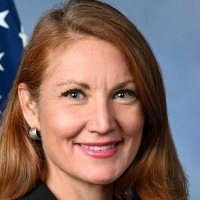
Melanie Stansbury
Representative
NM
Melanie Stansbury
Representative
NM
The Public Health Nursing Act establishes a ten-year, \$50 billion program to fund and expand the public health nursing workforce across the nation. This funding will provide grants to state, local, and territorial health departments to recruit, hire, and train registered nurses for essential public health services. Priority will be given to applicants serving medically underserved areas facing high rates of chronic disease, infant mortality, or maternal morbidity.
This resolution recognizes the 15th anniversary of the 2011 Tucson shooting, honoring the victims, survivors, and the ongoing advocacy of Gabby Giffords.
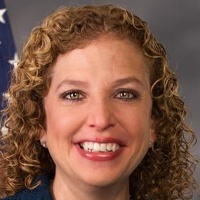
Debbie Wasserman Schultz
Representative
FL
Debbie Wasserman Schultz
Representative
FL
This resolution commemorates the 15th anniversary of the tragic January 8, 2011, Tucson shooting, honoring the six lives lost and the thirteen injured. It specifically commends the courage and ongoing advocacy of gun violence survivor and former Congresswoman Gabby Giffords. The resolution also recognizes the resilience of the community and reaffirms a commitment to ending political violence.
This act prohibits naming or renaming any federal property after a currently serving President.
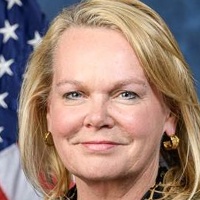
April McClain Delaney
Representative
MD
April McClain Delaney
Representative
MD
The Federal Property Integrity Act prohibits naming any federal building, land, or asset after a President currently serving in office. This new rule establishes a clear standard for naming federal property, ensuring such designations are not made while a President is actively serving.
This act voids the recent renaming of the Kennedy Center and restricts the Board of Trustees from ever renaming the center again.
April McClain Delaney
Representative
MD
April McClain Delaney
Representative
MD
The Kennedy Center Protection Act voids the Board of Trustees' 2025 vote to rename the performing arts center. This legislation mandates the immediate removal of any signage reflecting the altered name and restores the official title to the "John F. Kennedy Center for the Performing Arts." Furthermore, it explicitly prohibits the Board from ever taking action to rename the center in the future.
This bill establishes a federal multi-agency task force to combat the illegal importation, distribution, and sale of e-cigarettes.
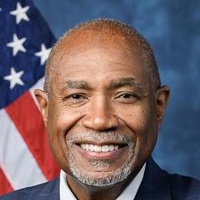
Herbert Conaway
Representative
NJ
Herbert Conaway
Representative
NJ
The S.T.O.P. Illicit Vapes Act establishes a high-level, multi-agency federal task force to combat the illegal importation, distribution, and sale of unauthorized e-cigarettes. Co-chaired by the Attorney General and the Secretary of Health and Human Services, this group will coordinate enforcement strategies and share information. The task force is required to meet regularly and submit detailed semi-annual reports to Congress outlining enforcement actions and recommendations for new legal authorities.
The Tobacco TRACE Act mandates that the Secretary of Health and Human Services establish a mandatory tracking and tracing system for tobacco products by June 1, 2026.
Herbert Conaway
Representative
NJ
Herbert Conaway
Representative
NJ
The Tobacco TRACE Act mandates that the Secretary of Health and Human Services establish a comprehensive tracking and tracing system for all tobacco products. By converting previous discretionary authority into a firm requirement, the bill sets a deadline of June 1, 2026, to implement these product codes to improve regulatory compliance and enforcement.
This resolution honors Senate President Pro Tempore Monique Limón for her historic service as the first Latina and first mother to hold the position.
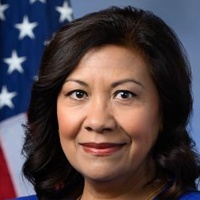
Norma Torres
Representative
CA
Norma Torres
Representative
CA
This resolution honors Senator Monique Limón for her historic service and achievements as the first Latina and first mother to serve as President pro Tempore of the California State Senate. It recognizes her background as a first-generation college graduate and dedicated educator. The bill commends her legislative leadership, particularly her work championing issues for working families. Finally, it celebrates her swearing-in ceremony for this landmark role.
This Act establishes a comprehensive federal strategy to combat rising antisemitism through policy statements, enhanced security grants, improved hate crime reporting, and specific mandates for educational institutions and federal agencies, while prohibiting the weaponization of antisemitism for partisan goals.
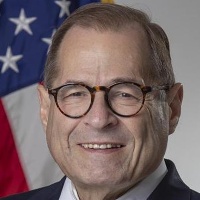
Jerrold Nadler
Representative
NY
Jerrold Nadler
Representative
NY
The Antisemitism Response and Prevention Act of 2025 aims to combat rising antisemitism through comprehensive federal action, emphasizing evidence-based strategies consistent with democratic values. The bill establishes new offices within the DOJ and FBI to coordinate counter-efforts and improve hate crime data collection. Furthermore, it mandates specific compliance and reporting requirements for colleges regarding civil rights and prohibits partisan conditions on nonprofit security grants.
The Schedules That Work Act establishes rights for employees to request flexible schedules, mandates advance notice and predictability pay for schedule changes in covered sectors, and grants employees rest time between shifts.
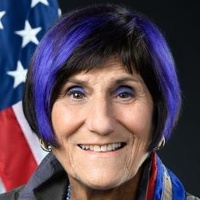
Rosa DeLauro
Representative
CT
Rosa DeLauro
Representative
CT
The Schedules That Work Act aims to provide workers with greater stability and predictability in their work hours. It grants employees the right to request flexible or stable schedules and requires employers to engage in a good-faith discussion about these requests. For covered sector employees (like retail and food service), the bill mandates 14 days' advance notice of schedules and establishes "predictability pay" for last-minute changes or split shifts. The Act also grants employees the right to 11 hours of rest between shifts, with premium pay required if this rest period is violated.
This Act shifts control of certain munitions exports from the Commerce Department to the State Department and establishes new strategies and reporting requirements to combat illegal U.S. firearm trafficking to Mexico, Central America, and the Caribbean.
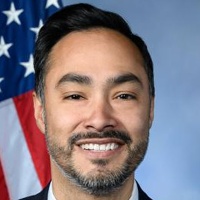
Joaquin Castro
Representative
TX
Joaquin Castro
Representative
TX
The Americas Regional Monitoring of Arms Sales (ARMAS) Act of 2025 seeks to combat illegal firearms trafficking to Mexico, Central America, and the Caribbean. It transfers regulatory control of certain munitions exports from the Department of Commerce back to the Department of State. The bill also mandates comprehensive reporting, strategy development, and increased tracking of U.S. firearm exports to designated "covered countries."