Legislative Activity
Track Brian's sponsored bills, co-sponsored legislation, and voting record
This act formally defines nursing as a professional degree, alongside other established professions, within federal education law.
Jennifer Kiggans
Representative
VA
Jennifer Kiggans
Representative
VA
The Nursing is a Professional Degree Act officially designates nursing as a professional degree under federal law. This bill amends the Higher Education Act to provide a clear statutory definition for "professional degree," explicitly including nursing alongside other established professions like medicine and law. This change ensures consistency in recognizing the advanced academic requirements necessary to practice nursing.
This bill updates FDA regulations to include pregnant women in clinical trials, launches an education campaign on research for pregnant and lactating women, and directs NIH to prioritize funding for research on medications used by this population.
Kathy Castor
Representative
FL
Kathy Castor
Representative
FL
The Advancing Safe Medications for Moms and Babies Act of 2026 aims to improve medication safety for pregnant and lactating women. This bill directs the FDA to update regulations to encourage including these women in clinical trials. It also mandates an education campaign to raise awareness about relevant research and requires the NIH to prioritize and fund research on drugs used by this population.
This bill establishes federal tax credits to incentivize developers to build or rehabilitate rental housing affordable to middle-income workers earning between 60% and 120% of the area median income.
Jimmy Panetta
Representative
CA
Jimmy Panetta
Representative
CA
This bill establishes two new federal tax credits to incentivize the development and rehabilitation of rental housing for middle-income workers. The Workforce Housing Tax Credit targets those earning between 60% and 120% of the area median income, while the Middle-Income Housing Credit focuses on units for those at 100% of the area median income or less. These credits aim to address the housing gap for essential workers who often cannot afford market-rate rents or qualify for existing low-income housing programs.
This resolution supports National Fentanyl Awareness Day in 2026 to raise awareness about the deadly threat of counterfeit fentanyl pills to families and young people.
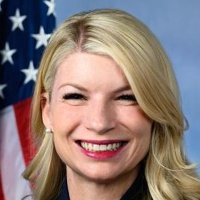
Brittany Pettersen
Representative
CO
Brittany Pettersen
Representative
CO
This resolution supports the goals of National Fentanyl Awareness Day in 2026 to combat the deadly threat of counterfeit pills. It aims to increase public awareness regarding the dangers of fake fentanyl-laced medications, which are increasingly accessible to young people. The bill also applauds law enforcement efforts to stop the distribution of these illicit and often lethal counterfeit pills.
This resolution supports designating the week of April 27 through May 1, 2026, as "National Specialized Instructional Support Personnel Appreciation Week" to recognize their vital role in student success.
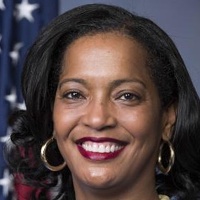
Jahana Hayes
Representative
CT
Jahana Hayes
Representative
CT
This resolution supports designating the week of April 27 through May 1, 2026, as "National Specialized Instructional Support Personnel Appreciation Week." It recognizes the vital role of over one million school-based professionals, such as counselors, social workers, and therapists, in removing barriers to learning for all students. The bill commends these individuals for delivering essential educational, social, and emotional support that improves student outcomes and school climate.
This Act clarifies that clergy are considered employees for Social Security and Medicare tax purposes, mandates employer withholding, and allows previously exempt clergy to revoke their opt-out status.
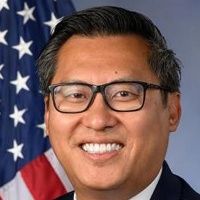
Vince Fong
Representative
CA
Vince Fong
Representative
CA
This bill amends federal law to reclassify clergy and religious workers as employees for Social Security and Medicare tax purposes, requiring churches to withhold these taxes. It also repeals the existing religious exemption that allows clergy to opt out of Social Security coverage. Furthermore, the Act establishes a process for currently exempt clergy to revoke their exemption and mandates the IRS to report on informing these workers of their new options.
This bill establishes a legal presumption that certain diseases are caused by employment for federal workers exposed to toxic burn pits during overseas military operations.
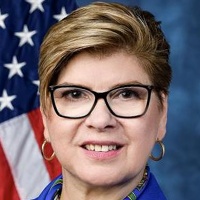
Nellie Pou
Representative
NJ
Nellie Pou
Representative
NJ
The Kenya Merritt Renewing our PACT Act of 2026 establishes a legal presumption that certain diseases are proximately caused by employment for federal workers exposed to toxic burn pits during overseas military operations. This means qualifying federal employees who served in designated locations will automatically have covered illnesses considered work-related for disability or death claims. The bill mandates that the list of covered diseases aligns with the Department of Veterans Affairs' list.
The HELP Act of 2026 establishes a program to strengthen nationwide access to and coordination of 211 health and human services referral systems through federal funding and administrative oversight.
Morgan McGarvey
Representative
KY
Morgan McGarvey
Representative
KY
The HELP Act of 2026 establishes a program within HHS to strengthen nationwide access to 211 services for health and human services information and referrals. This initiative aims to increase 211 capacity, improve coordination with 911 and 988 crisis lines, and raise public awareness. The Act authorizes $250 million annually through 2032 to provide grants to local 211 providers to expand and improve service accessibility across all states.
This bill amends the tax code to allow the federal rehabilitation tax credit to be used for the rehabilitation of public school buildings.
Dwight Evans
Representative
PA
Dwight Evans
Representative
PA
This bill, the Rehabilitation of Historic Schools Act of 2026, amends the Internal Revenue Code to extend the federal rehabilitation tax credit to expenditures made on public school buildings. This change allows for tax incentives for renovating qualified public educational facilities. The Treasury Department will report to Congress on the impact of this new credit five years after enactment.
This bill establishes federal grant programs and research to improve screening, intervention, and support services for pregnant and postpartum individuals affected by domestic violence, sexual violence, and human trafficking.
Gwen Moore
Representative
WI
Gwen Moore
Representative
WI
This bill establishes a grant program to enhance screening, intervention, and services for pregnant and postpartum individuals affected by domestic violence, sexual violence, and human trafficking. It also mandates a study on how various forms of violence and trauma impact maternal health risks. Finally, the legislation supports grants for innovative approaches to improve maternal and child health outcomes for victims of violence and trauma.
This bill strengthens Certified Community Behavioral Health Clinics by expanding Medicaid and Medicare coverage, establishing grant funding, and providing liability protection for their clinicians.
Doris Matsui
Representative
CA
Doris Matsui
Representative
CA
The Ensuring Excellence in Mental Health Act aims to significantly improve access to and quality of mental health and substance use care nationwide. It strengthens Certified Community Behavioral Health Clinics (CCBHCs) by establishing stable Medicaid and Medicare payment systems, providing substantial grant funding for expansion, and extending federal liability protection to their clinicians. Overall, the bill seeks to ensure comprehensive, affordable, and sustainable behavioral health services for patients across all major federal health programs.
This bill mandates clear, machine-readable disclosures for content generated or substantially modified by artificial intelligence to protect consumers from deception.
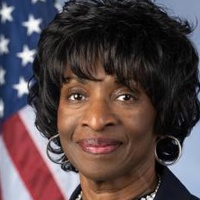
Valerie Foushee
Representative
NC
Valerie Foushee
Representative
NC
This bill aims to protect consumers from deceptive content created by generative Artificial Intelligence, such as deepfakes. It requires AI application providers to embed machine-readable disclosures in AI-generated audio or visual content. Covered online platforms must then clearly display these disclosures to users. The FTC is tasked with issuing regulations to enforce these transparency requirements.
The PRIMATE Act generally bans the importation of live nonhuman primates into the U.S., with a narrow exception for accredited zoos and aquariums that certify the animals will not be used for experiments or testing.
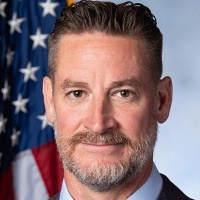
W. Steube
Representative
FL
W. Steube
Representative
FL
The PRIMATE Act generally bans the importation of live nonhuman primates into the United States to prevent toxic exposures. This prohibition includes a narrow exception allowing importation only by AZA-accredited facilities under strict conditions regarding the animal's future use. Violations of this ban are subject to significant civil penalties and forfeiture of the illegally imported primates.
This Act establishes penalties and restrictions to deter foreign adversaries from stealing proprietary, closed-source artificial intelligence models owned by U.S. entities through model extraction attacks.
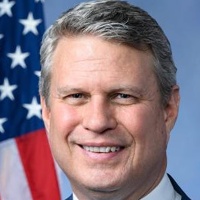
Bill Huizenga
Representative
MI
Bill Huizenga
Representative
MI
The Deterring American AI Model Theft Act of 2026 aims to protect proprietary, closed-source Artificial Intelligence models owned by U.S. entities from theft by foreign adversaries. It establishes new legal restrictions and penalties targeting "model extraction attacks" used by designated "entities of concern" to replicate advanced AI capabilities. The bill mandates government assessments, public reporting, and grants the President authority to impose sanctions against those found violating these provisions.
This Act mandates a comprehensive report to Congress detailing emerging military, cyber, and political threats to the Baltic states and recommending strategies to enhance their security and U.S. partnership.
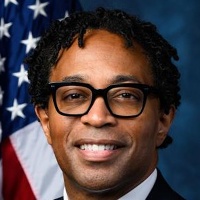
Wesley Bell
Representative
MO
Wesley Bell
Representative
MO
The Baltic Security Assessment Act of 2025 affirms the critical importance of Estonia, Latvia, and Lithuania to U.S. national security amidst Russian aggression. This bill mandates that the Secretary of State and Secretary of Defense deliver a comprehensive report to Congress detailing emerging military, cyber, and political threats to the Baltic states. The report must also recommend specific actions to enhance U.S. and NATO defense cooperation and bolster Baltic resilience.
This bill mandates the modernization of the Bureau of Industry and Security's (BIS) information technology systems to enhance export control efficiency, supply chain visibility, and threat detection through 2030.
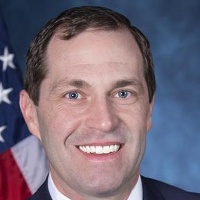
Jason Crow
Representative
CO
Jason Crow
Representative
CO
The BIS IT Modernization Act mandates a comprehensive overhaul of the Bureau of Industry and Security's (BIS) technology systems through fiscal year 2030. This modernization aims to leverage advanced tools like AI and data analysis to speed up export licensing and enhance supply chain tracking. The goal is to improve national security by better identifying and tracking entities involved in illicit trade, particularly concerning adversaries like China and Russia. Ultimately, the Act requires a unified, secure IT environment to boost efficiency and data sharing capabilities across government and industry partners.
This act establishes a national system for mapping, designating, and funding the conservation of wildlife corridors on federal and nonfederal lands to ensure habitat connectivity for native species.
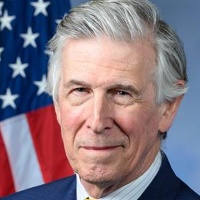
Donald Beyer
Representative
VA
Donald Beyer
Representative
VA
The Wildlife Corridors and Habitat Connectivity Conservation Act of 2026 establishes a national system to map, protect, and restore critical pathways for wildlife movement across federal and nonfederal lands. It creates a scientific mapping program, designates formal wildlife corridors on federal property, and funds grants for habitat connectivity projects on private and state lands. The bill aims to reduce habitat fragmentation, improve species adaptation to climate change, and enhance public safety by mitigating wildlife-vehicle conflicts.
This bill mandates a report on Russia's persecution of religious groups in occupied Ukraine and authorizes sanctions against responsible individuals and entities.
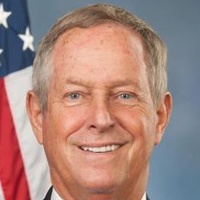
Joe Wilson
Representative
SC
Joe Wilson
Representative
SC
This bill mandates a comprehensive report to Congress detailing Russia's systematic persecution of religious groups in occupied Ukrainian territories. It requires the administration to identify responsible individuals and entities involved in suppressing religious freedom, including the destruction of houses of worship. Following the report, the President must impose sanctions on those found responsible for this religious persecution.
This bill establishes a coordinated federal effort to advance research, prevention, and early detection of lung cancer specifically in women and underserved populations.
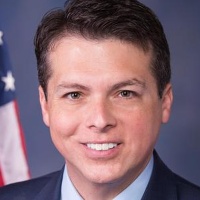
Brendan Boyle
Representative
PA
Brendan Boyle
Representative
PA
The Women and Lung Cancer Research and Preventive Services Act of 2025 aims to establish a coordinated federal effort to combat lung cancer in women. This legislation focuses on increasing research tailored to women's specific risk factors, updating guidelines for preventive screening, and improving public awareness. It also mandates an interagency review to accelerate progress in research and access to preventive services for women and underserved populations.
This Act establishes a program for SCORE volunteers to teach entrepreneurship to students in disadvantaged communities through community learning centers.
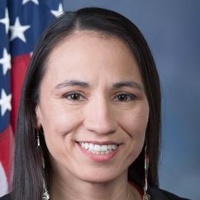
Sharice Davids
Representative
KS
Sharice Davids
Representative
KS
The 21st Century Entrepreneurship Act aims to boost economic growth by increasing entrepreneurship rates, particularly in disadvantaged communities. This is achieved by requiring the Small Business Administration (SBA) to develop an entrepreneurship curriculum for SCORE volunteers to teach at community learning centers. The bill mandates collaboration between the SBA and the Department of Education to implement this program and includes regular reporting to Congress on its progress and impact.