Legislative Activity
Track Donald's sponsored bills, co-sponsored legislation, and voting record
This bill officially renames the Robert E. Lee Memorial as the Arlington House National Historic Site.
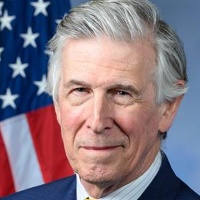
Donald Beyer
Representative
VA
Donald Beyer
Representative
VA
This bill officially redesignates the site currently known as the Robert E. Lee Memorial as the "Arlington House National Historic Site." It mandates that all official U.S. records, maps, and documents be updated to reflect this new name and repeals the previous joint resolutions that established the former designation.
The APLUS Act loosens restrictions on market agencies' financial ties to smaller meatpacking companies, provided they disclose these ties to livestock sellers, while maintaining the Secretary's authority to enforce fair practices.
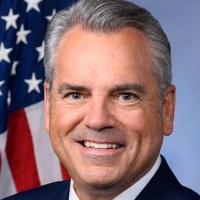
Mark Alford
Representative
MO
Mark Alford
Representative
MO
The APLUS Act directs the Secretary of Agriculture to update regulations, permitting market agencies to have financial interests in smaller meatpacking companies, defined by specific slaughter capacities. These market agencies must disclose these financial ties to livestock sellers. The Act does not reduce the Secretary's authority to enforce rules protecting producers, competition, and market integrity under existing law.
The Rural Veterans Transportation to Care Act expands transportation grants to include rural areas, broadens eligible recipients, increases grant amounts, and removes funding limits to improve healthcare access for veterans.

Marie Gluesenkamp Perez
Representative
WA
Marie Gluesenkamp Perez
Representative
WA
The Rural Veterans Transportation to Care Act expands the Department of Veterans Affairs' transportation grant program to include rural areas, not just highly rural ones. It broadens the range of eligible grant recipients to include county veterans service organizations and tribal organizations. The bill also increases the maximum grant amount to $60,000, with a possible increase to $80,000 for vehicle purchases needed to comply with the Americans with Disabilities Act and authorizes necessary funding by removing the previous funding limit.
The "Rebuild America’s Health Care Schools Act of 2025" expands Medicare coverage to include all direct and indirect costs hospitals incur for nursing and allied health education programs, ensuring better funding and preventing recoupment of previously covered costs.
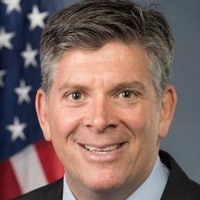
Darin LaHood
Representative
IL
Darin LaHood
Representative
IL
The "Rebuild America’s Health Care Schools Act of 2025" updates how Medicare reimburses hospitals for the costs of running nursing and allied health education programs. It broadens the definition of "reasonable costs" to include both direct and indirect expenses, regardless of whether they are incurred directly by the hospital or through related entities. The Act also requires the Secretary of Health and Human Services to issue rules implementing these changes and to refund hospitals for past cost reductions that would now be allowable. This aims to provide greater financial support for these crucial healthcare education programs.
The Humane Cosmetics Act of 2025 bans cosmetic animal testing in the U.S., restricts the use of animal testing data, and sets penalties for violations, while also preventing states from enacting conflicting regulations.
Donald Beyer
Representative
VA
Donald Beyer
Representative
VA
The Humane Cosmetics Act of 2025 bans cosmetic animal testing in the U.S. and restricts the use of animal testing data for cosmetic safety, with certain exceptions. It authorizes the Secretary of Health and Human Services to impose civil penalties for non-compliance and preempts states from enacting conflicting regulations. The Act defines key terms related to cosmetic animal testing and cosmetics.
This bill allows the National Guard Bureau to accept funds from states as reimbursement for the use of military property by National Guard units operating under state active duty, and directs how the Department of Defense can use these funds.
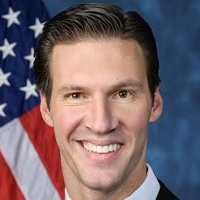
Pat Harrigan
Representative
NC
Pat Harrigan
Representative
NC
The Guarding Readiness Resources Act allows the National Guard Bureau to accept funds from states and territories as reimbursement for the use of military property. These funds will be used by the Department of Defense for the repair, maintenance, and replacement of assets used by National Guard units on state active duty.
This bill authorizes a joint session of Congress to be held in Philadelphia on July 2, 2026, to commemorate the 250th anniversary of the Declaration of Independence.
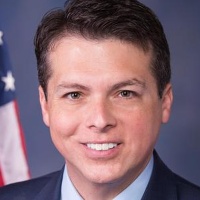
Brendan Boyle
Representative
PA
Brendan Boyle
Representative
PA
This resolution authorizes a joint session of Congress to be held at Independence National Historical Park in Philadelphia on July 2, 2026. This historic meeting will commemorate the 250th anniversary of the signing of the Declaration of Independence.
The Truck Parking Safety Improvement Act establishes a grant program to expand commercial truck parking and improve safety on Federal-aid highways.
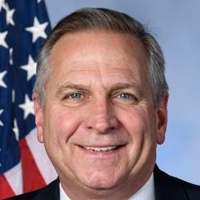
Mike Bost
Representative
IL
Mike Bost
Representative
IL
The Truck Parking Safety Improvement Act establishes a grant program to expand commercial truck parking and improve safety. The program provides funds to states, local governments, and tribal entities for projects that increase parking availability, improve existing facilities, and use technology to manage parking. The Act also requires a biennial report to Congress on the availability of truck parking and the effectiveness of funded projects. It authorizes $151 million per fiscal year from 2025 through 2029 for these initiatives.
This act reinstates criminal penalties for individuals who charge unauthorized fees to veterans for assisting with claims for VA benefits.
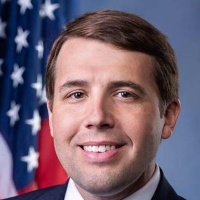
Chris Pappas
Representative
NH
Chris Pappas
Representative
NH
The GUARD VA Benefits Act establishes criminal penalties for individuals who charge veterans unauthorized fees for assisting with claims for benefits administered by the Department of Veterans Affairs. This legislation amends existing law to prohibit soliciting, contracting for, or receiving compensation for preparing or prosecuting VA benefit claims, except where explicitly authorized by other statutes.
This Act directs the Architect of the Capitol to create, bury, and seal a time capsule on the U.S. Capitol grounds to commemorate the nation's 250th anniversary, to be opened in 2276.
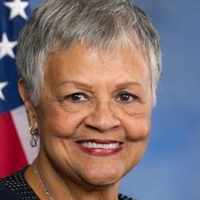
Bonnie Watson Coleman
Representative
NJ
Bonnie Watson Coleman
Representative
NJ
The Semiquincentennial Congressional Time Capsule Act directs the Architect of the Capitol to create and bury a time capsule on the U.S. Capitol grounds to commemorate the nation’s 250th anniversary. Curated by congressional leadership, the capsule will contain historical items and legislative milestones to be preserved for future generations. It is scheduled to be sealed on July 4, 2026, and reopened by Congress on July 4, 2276.
The "Finn Sawyer Access to Cancer Testing Act" expands healthcare coverage under Medicare, Medicaid, and CHIP to include comprehensive cancer diagnostic and laboratory tests, while also establishing an education program on genomic testing for both healthcare providers and the public.

Doris Matsui
Representative
CA
Doris Matsui
Representative
CA
The "Finn Sawyer Access to Cancer Testing Act" expands healthcare coverage under Medicare, Medicaid, and CHIP to include comprehensive cancer diagnostic and laboratory tests, such as genomic sequencing, starting in 2027. It ensures coverage upon diagnosis, recurrence, and as needed for treatment planning. Additionally, the Act directs the Department of Health and Human Services to establish an education program to raise awareness among healthcare providers and the public about genomic testing and its applications in cancer care.
This bill would allow nurse practitioners and physician assistants to complete Medicare paperwork for covering certain shoes for people with diabetes.
Darin LaHood
Representative
IL
Darin LaHood
Representative
IL
The "Promoting Access to Diabetic Shoes Act" allows nurse practitioners and physician assistants to complete Medicare paperwork for covering therapeutic shoes for people with diabetes, increasing access to this benefit.
This resolution condemns the Iranian regime’s terrorism and human rights abuses while affirming support for the Iranian people’s right to establish a democratic, secular, and non-nuclear republic.
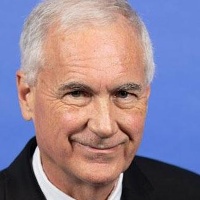
Tom McClintock
Representative
CA
Tom McClintock
Representative
CA
This resolution condemns the Iranian regime for its ongoing human rights abuses, state-sponsored terrorism, and regional instability. It expresses strong support for the Iranian people's struggle for a democratic, secular, and non-nuclear republic. Furthermore, the bill advocates for international accountability for the regime's crimes and calls for the protection of Iranian political refugees.
The CROWN Act of 2025 prohibits discrimination based on hair texture and hairstyle in federally funded programs, housing, public accommodations, and employment.
Bonnie Watson Coleman
Representative
NJ
Bonnie Watson Coleman
Representative
NJ
The CROWN Act of 2025 prohibits discrimination based on hair texture and hairstyle if that style is commonly associated with a particular race or national origin. This protection extends to federally funded programs, housing, public accommodations, and employment. The act aims to ensure equal opportunity and prevent discrimination based on hair, addressing historical biases and stereotypes. It clarifies that existing civil rights laws should be interpreted to include protection against hair-based discrimination.
The TREATS Act amends the Controlled Substances Act to allow telehealth evaluations for prescribing certain medications for substance use disorder treatment.
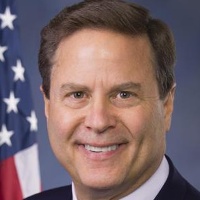
Donald Norcross
Representative
NJ
Donald Norcross
Representative
NJ
The TREATS Act amends the Controlled Substances Act to allow telehealth evaluations for prescribing certain controlled substances used in substance use disorder treatment. This removes the prior requirement for an in-person evaluation, enabling remote medical assessments via real-time audio-visual or audio-only communication, in accordance with federal and state laws. The goal of this bill is to increase access to treatment for substance use disorders.
The "Farm and Food Cybersecurity Act of 2025" mandates regular risk assessments of cybersecurity threats to the agriculture and food sector and requires annual simulation exercises to enhance food security and cyber resilience.
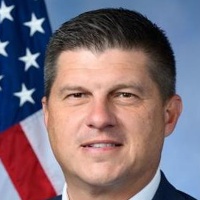
Brad Finstad
Representative
MN
Brad Finstad
Representative
MN
The Farm and Food Cybersecurity Act of 2025 aims to bolster the cybersecurity of the agriculture and food critical infrastructure sector by requiring the Secretary of Agriculture to conduct regular risk assessments of cybersecurity threats and vulnerabilities. It also mandates annual cross-sector crisis simulation exercises to assess preparedness, identify gaps, and improve coordination in the food supply chain. These exercises will involve government and private sector entities, with reports submitted to Congress to enhance cybersecurity and resilience in the agriculture and food sector. Finally, the Act authorizes $1,000,000 per fiscal year from 2026 through 2030 to carry out the simulation exercises.
The "Student Debt Alternative and CTE Awareness Act" aims to increase awareness of career and technical education programs by requiring the Department of Education to disclose program details on its website and include CTE information on the FAFSA application.
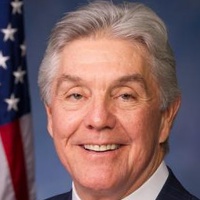
Roger Williams
Representative
TX
Roger Williams
Representative
TX
The "Student Debt Alternative and CTE Awareness Act" aims to increase awareness of career and technical education (CTE) programs as alternatives to traditional four-year degrees. It mandates the Department of Education to publish CTE program details, including costs and employment rates, on its website and to include CTE information on the FAFSA application. No additional funds will be authorized to implement the requirements of this Act.
The "Protect and Serve Act of 2025" establishes federal penalties for intentionally causing serious harm or death to law enforcement officers because of their position, under certain circumstances, and requires Attorney General certification for federal prosecution in many cases.
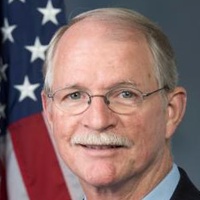
John Rutherford
Representative
FL
John Rutherford
Representative
FL
The "Protect and Serve Act of 2025" creates federal offenses for intentionally causing serious injury or death to law enforcement officers because of their status as officers. It sets penalties including imprisonment and fines, with increased penalties if death results or if kidnapping or attempted killing is involved. Federal prosecution requires certification from the Attorney General, based on a request from the state or if it is in the public interest to ensure substantial justice. The act defines "law enforcement officer" and "State" for the purposes of the new offenses.
The "ALYSSA Act" would require all elementary and secondary schools to install silent panic alarms to alert law enforcement during a school security emergency as a condition for receiving federal funding.
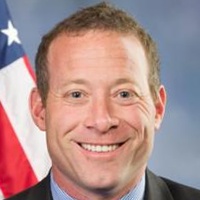
Josh Gottheimer
Representative
NJ
Josh Gottheimer
Representative
NJ
The "ALYSSA Act" amends the Elementary and Secondary Education Act of 1965 to require all elementary and secondary schools to install silent panic alarms for use during school security emergencies. To receive federal funding, local education agencies must equip each school with at least one panic alarm, defined as a silent security system for signaling life-threatening emergencies to law enforcement. This ensures schools have a direct and immediate way to alert law enforcement during critical situations.
The Federal Retirement Fairness Act allows temporary employees' service after 1988 to count toward retirement benefits under the Federal Employees Retirement System.

Gerald Connolly
Representative
VA
Gerald Connolly
Representative
VA
The Federal Retirement Fairness Act amends title 5 of the United States Code, allowing civilian service in a temporary position after December 31, 1988, to be creditable under the Federal Employees Retirement System. This change applies to current employees and Members of the United States Postal Service, and requires the Office of Personnel Management to notify eligible individuals and issue implementing regulations.