Legislative Activity
Track Donald's sponsored bills, co-sponsored legislation, and voting record
The "DOC Access Act of 2025" aims to improve dental and vision care coverage by ensuring fair payment practices, protecting providers' choices, and upholding state regulatory authority.
Earl Carter
Representative
GA
Earl Carter
Representative
GA
The "DOC Access Act of 2025" aims to enhance health care coverage under vision and dental plans by ensuring fair payment practices, protecting doctors' choices in labs and suppliers, and respecting state laws. It allows optometrists and dentists to charge their standard rate for non-covered services if the plan's payment is unreasonable, while ensuring they can only charge the contracted rate for dental cleanings. The bill also gives doctors more control over agreement extensions with limited benefit plans and allows them to opt out of certain provisions. Ultimately, this act seeks to balance federal guidelines with state oversight in regulating health insurance issuers and dental or vision benefit plans.
The "Delivering for Rural Seniors Act of 2025" establishes a pilot program providing grants to states for home delivery of commodities to low-income elderly people, especially in rural areas, from 2026-2028.
Zachary (Zach) Nunn
Representative
IA
Zachary (Zach) Nunn
Representative
IA
The "Delivering for Rural Seniors Act of 2025" aims to improve food access for low-income elderly individuals in rural areas by establishing a pilot program for home delivery of commodities. The program will award grants to state agencies, prioritizing those serving rural areas, to cover costs associated with transportation, staffing, and outreach. This act authorizes $10 million annually from 2026 to 2028 for these initiatives.
This resolution recognizes January 2025 as "National Mentoring Month" to highlight the vital role of mentorship in empowering youth and strengthening communities across the United States.
Mary Scanlon
Representative
PA
Mary Scanlon
Representative
PA
This resolution recognizes January 2025 as "National Mentoring Month" to highlight the vital role mentoring plays in fostering academic success, self-esteem, and career development for youth. It celebrates the contributions of mentors nationwide while calling for increased public and private collaboration to expand quality mentoring programs. Ultimately, the bill aims to close the "mentoring gap" to ensure all young people have the supportive adult connections necessary to reach their full potential.
This bill ensures Medicare patients can continue receiving physical therapy services without interruption by allowing temporary substitute therapists ("locum tenens") to be covered when a physical therapist is temporarily unavailable.

Gus Bilirakis
Representative
FL
Gus Bilirakis
Representative
FL
The "Prevent Interruptions in Physical Therapy Act of 2025" ensures Medicare beneficiaries can continue receiving uninterrupted physical therapy services. It allows physical therapists to utilize temporary staffing arrangements, known as "locum tenens," when the regular therapist is temporarily unavailable. This ensures Medicare payments for services provided by qualified substitute physical therapists, maintaining consistent care for patients.
The "New Era of Preventing End-Stage Kidney Disease Act" aims to improve research, early intervention, and treatment for rare kidney diseases through centers of excellence, studies, and provider education initiatives.
Gus Bilirakis
Representative
FL
Gus Bilirakis
Representative
FL
The "New Era of Preventing End-Stage Kidney Disease Act" aims to improve the prevention, diagnosis, and treatment of rare kidney diseases through research, education, and increased public awareness. It establishes Centers of Excellence for Rare Kidney Disease Research, directs studies on testing and treatment approaches, and promotes provider education in nephrology. The Act prioritizes addressing disparities in affected populations and seeks to delay or eliminate the need for dialysis and transplant. It authorizes appropriations for these activities from 2026 through 2030.
Ensures Coast Guard members receive pay and benefits during funding lapses, comparable to other armed forces, by providing continued funding for salaries, benefits, and essential services.
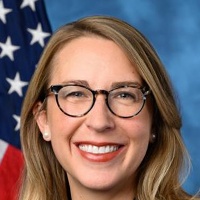
Hillary Scholten
Representative
MI
Hillary Scholten
Representative
MI
The "Pay Our Coast Guard Parity Act of 2025" ensures that Coast Guard members receive equitable pay and benefits compared to other branches of the Armed Forces. During a Coast Guard-specific funding lapse, the bill guarantees continued pay for Coast Guard military members, qualified civilian and contract employees, death gratuities, funeral travel, and basic housing allowance for dependents of Coast Guard members who die on active duty. This funding continues as long as Department of Defense funding is available, up to two weeks after a Coast Guard-specific funding lapse begins. The bill affirms the Coast Guard as a military service and aims to provide financial security to its members during funding uncertainties.
The Leveling the Playing Field 2.0 Act strengthens U.S. trade laws to counteract unfair trade practices like foreign subsidies, currency manipulation, and duty evasion, ensuring fair competition for American businesses.
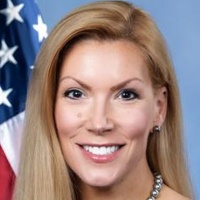
Beth Van Duyne
Representative
TX
Beth Van Duyne
Representative
TX
The Leveling the Playing Field 2.0 Act aims to strengthen U.S. trade laws by addressing unfair subsidies, currency undervaluation, duty evasion, and circumvention of trade remedies. It refines the process for handling successive trade investigations, ensuring that the International Trade Commission considers prior findings and assesses cumulative effects on domestic industries. The act also empowers authorities to counteract cost distortions in foreign countries and prevent importers from avoiding duties. Additionally, it includes provisions related to trade with Canada and Mexico and sets effective dates for new regulations.
The "Sporting Goods Excise Tax Modernization Act" clarifies that marketplace providers are responsible for excise taxes on certain imported sporting goods sold through their platforms.
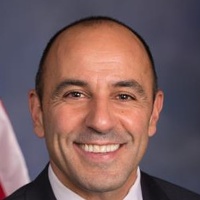
Jimmy Panetta
Representative
CA
Jimmy Panetta
Representative
CA
The "Sporting Goods Excise Tax Modernization Act" modifies excise tax regulations by treating marketplace providers as the importer and seller for excise tax purposes on taxable sporting goods sold through their platform if the goods are shipped from outside the U.S. This applies when the marketplace provider lists the product, collects payments, and the manufacturer is not the marketplace provider. The regulations will be applied to sales in calendar quarters starting 60 days after the enactment of this Act.
The SWIM Act of 2025 amends the Internal Revenue Code to allow a deduction of up to $500 for qualified water competency and water safety lesson expenses for children.
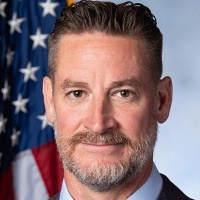
W. Steube
Representative
FL
W. Steube
Representative
FL
The SWIM Act of 2025 amends the Internal Revenue Code to allow taxpayers to deduct up to $500 ($1,000 for joint returns/heads of household) for expenses related to water competency and safety lessons for minors. This includes costs for basic swimming instruction and necessary equipment, with equipment expenses limited to $100 per item. The lessons must focus on water safety and competency, not competitive swimming. This change applies to taxable years starting after the Act's enactment.
The "SOS Act of 2025" increases funding by $50 million annually for school resource officers from 2026-2035, allocating a minimum of $50 million in grants to local governments or law enforcement agencies.
Josh Gottheimer
Representative
NJ
Josh Gottheimer
Representative
NJ
The SOS Act of 2025 amends the Omnibus Crime Control and Safe Streets Act of 1968 to increase funding for school resource officers by $50 million per fiscal year from 2026 through 2035, allocating a minimum of $50,000,000 in grants to local governments or law enforcement agencies.
This bill equalizes the negotiation period for drug price negotiations under the Drug Price Negotiation Program by extending the period for small-molecule drugs from 7 years to 11 years, matching that of biologic drugs.
Gregory Murphy
Representative
NC
Gregory Murphy
Representative
NC
This bill amends the Social Security Act to equalize the negotiation period for drug price negotiations under the Drug Price Negotiation Program. It changes the negotiation period for small-molecule drugs from 7 years to 11 years, matching the period already in place for biologic drugs. This adjustment aims to create parity in negotiation timelines between different types of medications, effective as if included in the original legislation.
This House resolution clarifies that UN Resolution 2758 only addressed UN representation and does not validate the PRC's "One China Principle" regarding Taiwan's status, while supporting Taiwan's international participation.
Young Kim
Representative
CA
Young Kim
Representative
CA
This resolution clarifies that United Nations General Assembly Resolution 2758 only addressed seating arrangements and does not validate the People's Republic of China's "One China Principle" regarding Taiwan's status. It asserts that the U.S. "One China Policy" is distinct from Beijing's claims and does not endorse PRC sovereignty over Taiwan. The bill strongly opposes PRC efforts to use the resolution to exclude Taiwan from international organizations and supports Taiwan's meaningful participation globally.
The PLASMA Act phases in discounts for plasma-derived products under the manufacturer discount program, starting in 2026, with varying percentages based on whether the beneficiary has met their annual out-of-pocket threshold.
Richard Hudson
Representative
NC
Richard Hudson
Representative
NC
The PLASMA Act, or the Preserving Life-saving Access to Specialty Medicines in America Act, introduces a phased-in approach for manufacturer discounts on plasma-derived products under Medicare Part D, starting in 2026. The discounted price will be a percentage of the negotiated price, with the percentage varying based on whether the beneficiary has met their annual out-of-pocket threshold. Certain beneficiaries and small manufacturers are exempt from these discount requirements.
The "Postal Processing Protection Act" would require the USPS to meet specific requirements before closing or consolidating any facility that supports a post office.
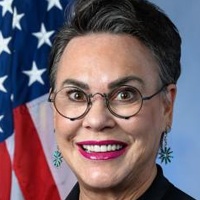
Harriet Hageman
Representative
WY
Harriet Hageman
Representative
WY
The Postal Processing Protection Act amends title 39 of the United States Code to include any Postal Service owned or operated acceptance, processing, shipping, delivery, or distribution facility that supports one or more post offices. This change broadens the scope of facilities subject to specific requirements when the Postal Service considers closing or consolidating them.
Cameron's Law incentivizes pharmaceutical companies to develop treatments for rare diseases by increasing the orphan drug tax credit from 25% to 50%.
Josh Gottheimer
Representative
NJ
Josh Gottheimer
Representative
NJ
Cameron's Law amends the Internal Revenue Code of 1986 to increase the orphan drug tax credit from 25% to 50%. This change aims to incentivize the development of treatments for rare diseases by offering greater financial support to companies through enhanced tax benefits. The adjusted tax credit will be effective for taxable years starting after the enactment of this law.
This bill expands and codifies the Department of Agriculture's Rural Health Care Facility Technical Assistance Program to improve the financial stability and healthcare delivery in rural facilities.
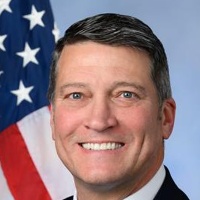
Ronny Jackson
Representative
TX
Ronny Jackson
Representative
TX
The Rural Health Care Facility Technical Assistance Program Act expands and codifies a Department of Agriculture program to provide technical assistance and training to rural health care facilities. This program aims to improve financial stability, prevent closures, and strengthen health care delivery in rural areas. The Act authorizes up to $2,000,000 annually from 2026-2030 for these activities and requires annual reports to Congress. It prioritizes outreach to facilities at risk and those serving underserved populations.
The "Make American Flags in America Act of 2025" mandates that U.S. flags displayed on Federal property or bought by Federal agencies be made entirely in the U.S., and requires a study on country-of-origin labeling enforcement for flags.
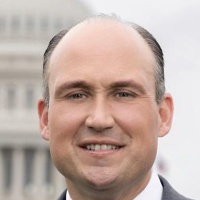
Nicholas Langworthy
Representative
NY
Nicholas Langworthy
Representative
NY
The "Make American Flags in America Act of 2025" mandates that U.S. flags displayed on Federal property or bought by Federal agencies be entirely manufactured in the U.S. using 100% U.S.-made materials, in accordance with international agreements. It also directs the Federal Trade Commission to study and report on country-of-origin labeling enforcement for U.S. flags, aiming to improve enforcement and deter violations.
The "Kids Access to Primary Care Act of 2025" aims to improve children's access to primary care by increasing Medicaid payments to primary care providers, including OB/GYNs, and encouraging the use of Bright Futures guidelines.
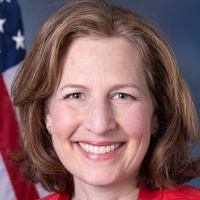
Kim Schrier
Representative
WA
Kim Schrier
Representative
WA
The "Kids Access to Primary Care Act of 2025" aims to improve children's healthcare access by increasing Medicaid payments for primary care services to match Medicare rates, expanding the types of providers eligible for these payments, and mandating compliance from Medicaid managed care plans. It also requires a study on the impact of these changes on enrollment and provider payment rates. Additionally, the Act encourages healthcare providers to utilize the Bright Futures guidelines for pediatric care.
The bill modifies and extends funding for the World Trade Center Health Program, expands the types of healthcare providers who can certify mental health conditions, and requires a report to Congress on the program's budget.
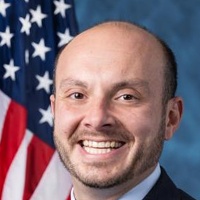
Andrew Garbarino
Representative
NY
Andrew Garbarino
Representative
NY
The 9/11 Responder and Survivor Health Funding Correction Act of 2025 amends the Public Health Service Act to improve the World Trade Center (WTC) Health Program by expanding the types of healthcare providers who can conduct mental health evaluations, modifying provider credentialing, clarifying enrollment calculations, and extending the time frame for adding health conditions for WTC responders. The act adjusts the funding formula for fiscal years 2026 through 2090 and requires the Secretary of Health and Human Services to report to Congress on the program's budget, including projected needs through 2090 and recommendations for changes to the funding formula. It also stipulates that remaining funds in the Supplemental Fund, Special Fund, and Pentagon-Shanksville Fund will revert to the Treasury.
This bill ensures that Native American patients are not held liable for the cost of purchased/referred healthcare and mandates reimbursements for past out-of-pocket expenses.
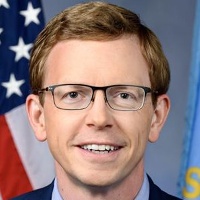
Dusty Johnson
Representative
SD
Dusty Johnson
Representative
SD
The "Purchased and Referred Care Improvement Act of 2025" ensures that Native American patients are not liable for the cost of purchased/referred care, and mandates a process for reimbursing patients who have already paid for such services. It updates the Indian Health Care Improvement Act by replacing the term "contract health service" with "purchased/referred care" to modernize the language used in the Act. These changes aim to streamline the payment process and reduce the financial burden on patients.