Legislation
The MORE DOT Grants Act simplifies and prioritizes federal transportation grant access for local and Tribal governments in counties with high amounts of federal land by reducing matching fund requirements and providing targeted technical assistance.

Catherine Cortez Masto
Senator
NV
Catherine Cortez Masto
Senator
NV
The MORE DOT Grants Act aims to increase transportation funding opportunities for specific rural areas designated as "High-Density Public Land Counties." This bill lowers the required local matching funds by 50% for eligible DOT grant programs in these counties. It also mandates technical assistance and gives priority to applicants from these areas that have not recently received funding from the specific program. Finally, the legislation allows for greater flexibility in application requirements for these local and Tribal governments.
The MAPWaters Act of 2025 mandates federal agencies to standardize, consolidate, and publish comprehensive online maps detailing public access points and all restrictions for federal waterways and fishing areas.
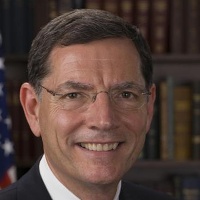
John Barrasso
Senator
WY
John Barrasso
Senator
WY
The MAPWaters Act of 2025 mandates federal land and water management agencies to standardize and digitize geospatial data regarding public access points and restrictions on federal waterways. This legislation requires the creation of a centralized, publicly accessible online database detailing current fishing rules, access status, and navigation limitations. The Act ensures that existing state and federal authority over water regulation and fishery management remains unchanged.
This Act updates Social Security by basing cost-of-living adjustments on the Consumer Price Index for Elderly Consumers and modifies benefit calculations for high earners starting in 2026.

Mazie Hirono
Senator
HI
Mazie Hirono
Senator
HI
The Protecting and Preserving Social Security Act aims to update Social Security by changing how cost-of-living adjustments (COLAs) are calculated using a new index specific to the elderly (CPI-E). It also modifies contribution and benefit fairness by adjusting how earnings above the current wage limit are treated starting in 2026. Furthermore, the bill incorporates a portion of these higher earnings into the formula used to determine an individual's final benefit amount. These changes are designed to better reflect senior spending and adjust benefits for higher earners.
This Act improves the Conservation Reserve Program by allowing continuous enrollment for wildlife enhancement land, establishing specific rules for emergency haying during nesting season, providing cost-sharing for grazing infrastructure, and increasing the annual rental payment cap.
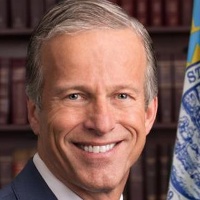
John Thune
Senator
SD
John Thune
Senator
SD
The CRP Improvement and Flexibility Act of 2025 updates the Conservation Reserve Program to enhance flexibility for farmers, particularly regarding land management. Key changes include allowing continuous enrollment for certain wildlife enhancement lands and establishing specific, limited conditions under which emergency haying may occur during the final weeks of nesting season. Furthermore, the bill introduces cost-sharing for necessary grazing infrastructure and significantly raises the maximum annual CRP rental payment cap to \$125,000.
The REMEDY Act reforms the process for brand-name drug companies to select a single, unchangeable patent to trigger the thirty-month exclusivity period against generic drug applications.

Richard Durbin
Senator
IL
Richard Durbin
Senator
IL
The REMEDY Act aims to reform how brand-name drug companies use patent listings to delay generic competition. This legislation requires companies to designate a single, unchangeable "covered patent" to trigger the thirty-month exclusivity period against generic applications. Consequently, the automatic 30-month delay will only start if a patent infringement lawsuit is filed specifically concerning that designated patent for newer drugs. This measure seeks to prevent the manipulation of patent listings that extends market exclusivity beyond intended limits.
The Validation and Evaluation for Trustworthy (VET) Artificial Intelligence Act establishes voluntary guidelines for testing and verifying AI systems to boost public trust and support NIST's risk management framework.

John Hickenlooper
Senator
CO
John Hickenlooper
Senator
CO
The Validation and Evaluation for Trustworthy (VET) Artificial Intelligence Act aims to foster trust and adoption of AI by establishing voluntary technical guidelines for testing and validating AI systems based on risk. This legislation directs the National Institute of Standards and Technology (NIST) to create these guidelines, which will cover safety, privacy, and transparency. Furthermore, the Act establishes an advisory committee to recommend qualifications for entities performing these AI assurance checks and mandates a study on the capacity of current assurance providers.
This Act establishes programs to boost research, technology transfer, and commercialization of wood products while creating a dedicated science and education program for mass timber construction.
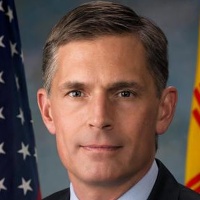
Martin Heinrich
Senator
NM
Martin Heinrich
Senator
NM
The Forest Bioeconomy Act aims to boost the commercialization of wood-based products and renewable fuels by establishing a new Office of Technology Transfer within the Forest Service. The bill also creates a Joint Mass Timber Science and Education Program to advance research, education, and practical application of engineered wood products in construction. Furthermore, it authorizes a pilot program to provide innovation vouchers to small businesses for research and development in the forest products industry.
This bill clarifies existing language assistance requirements for elections, provides incentives for voluntary language services, and directs a study on potential threshold changes for mandatory translation coverage.
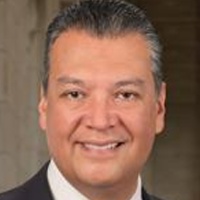
Alejandro Padilla
Senator
CA
Alejandro Padilla
Senator
CA
The Expanding the VOTE Act clarifies existing requirements for providing voting materials in minority languages under the Voting Rights Act. It establishes a new grant program to incentivize jurisdictions to offer language assistance beyond current mandates. Furthermore, the bill addresses specific provisions for American Indian and Alaska Native languages and directs a study on lowering language assistance thresholds.
The All Aboard Act of 2025 establishes massive federal funding programs to electrify, modernize, and expand national passenger and freight rail infrastructure while prioritizing zero-emission technology and robust labor protections.
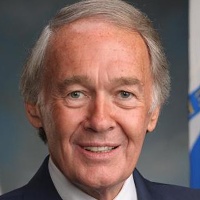
Edward Markey
Senator
MA
Edward Markey
Senator
MA
The All Aboard Act of 2025 aims to significantly modernize and expand the nation's passenger and freight rail systems through massive federal investment. It establishes major grant programs focused on electrifying infrastructure, developing zero-emission locomotives, and improving high-performance rail service. Furthermore, the Act mandates strong labor protections and creates new training centers to ensure a skilled workforce is ready for the industry's technological transition.
This bill establishes a pilot program for VA facility disability exams, mandates studies on rural access and scheduling improvements, and enhances training and quality review for medical disability examinations.
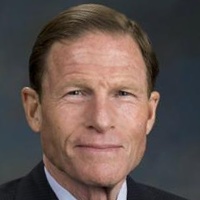
Richard Blumenthal
Senator
CT
Richard Blumenthal
Senator
CT
The Medical Disability Examination Improvement Act of 2025 aims to enhance the efficiency and quality of medical disability examinations for veterans' claims. It establishes a pilot program for the VA to use its own medical facilities for these exams and mandates studies to improve access for rural veterans and review current scheduling processes. Furthermore, the bill requires improved training for VA staff reviewing these examinations and establishes a system for regular quality reviews of all disability exams.
This act increases the flexibility for states to transfer up to 75 percent of designated federal-aid highway funds to other approved uses.
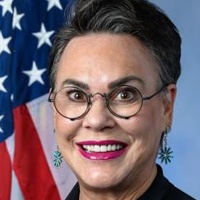
Harriet Hageman
Representative
WY
Harriet Hageman
Representative
WY
The Highway Funding Transferability Improvement Act increases the flexibility for states to manage their federal highway funds. This legislation raises the maximum percentage of designated federal-aid highway funds that a state can transfer to other approved uses from 50 percent to 75 percent. This change allows states greater autonomy in directing federal transportation dollars to meet their specific infrastructure needs.
The Unearth America’s Future Act establishes federal incentives, oversight, and research funding to secure and expand domestic supply chains for materials critical to U.S. national security and economic competitiveness.

Haley Stevens
Representative
MI
Haley Stevens
Representative
MI
The Unearth America’s Future Act is a comprehensive legislative package designed to secure and strengthen U.S. supply chains for materials critical to national security and economic competitiveness. It achieves this through significant federal incentives, including loans and tax credits, to boost domestic and allied production capacity. The bill imposes strict labor protections, environmental standards, and robust restrictions on foreign influence for all recipients of federal support. Ultimately, this legislation aims to foster American self-sufficiency in vital materials through investment, innovation, and workforce development.
The Youth Voting Rights Act establishes new federal protections and requirements to expand and enforce voting access for young citizens, including pre-registration for 16- and 17-year-olds, mandatory on-campus polling places, and validation of student IDs.
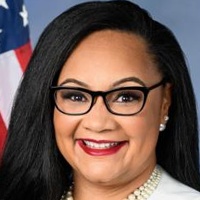
Nikema Williams
Representative
GA
Nikema Williams
Representative
GA
The Youth Voting Rights Act aims to strengthen voting access for young Americans by enforcing the 26th Amendment. This bill mandates that public colleges facilitate voter registration, allows 16- and 17-year-olds to pre-register for federal elections, and requires on-campus polling locations. It also establishes grants to encourage youth civic engagement and strengthens protections against age-based barriers in voting, including ID rules and absentee voting.
This act allows federal highway safety funds to be used for implementing "blue envelope programs" that assist drivers with communication barriers during traffic stops.

Eleanor Norton
Representative
DC
Eleanor Norton
Representative
DC
The Blue Envelope Act of 2025 updates the Highway Safety Improvement Program to allow states to use federal funds for safety projects specifically designed to improve communication during traffic stops. This legislation enables the implementation of "blue envelope programs" to assist drivers who are deaf or have speech impediments when interacting with law enforcement.
This Act updates the criteria for recognizing membership in a U.S. federally recognized Indian Tribe or Canadian First Nation for certain immigration purposes by removing the blood quantum requirement.
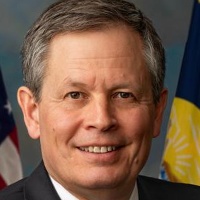
Steve Daines
Senator
MT
Steve Daines
Senator
MT
The McCarran-Walter Technical Corrections Act updates the criteria for determining membership in federally recognized Indian Tribes or Canadian First Nations for specific immigration purposes. This legislation removes the previous requirement for proving a minimum blood quantum. Instead, eligibility is now based on current membership or eligibility for membership in a recognized U.S. Tribe, or registration/membership in a Canadian First Nation under the *Indian Act* or a self-governing First Nation.
This act establishes a tax credit for working individuals, rebating revenue collected from tariffs directly to eligible taxpayers.
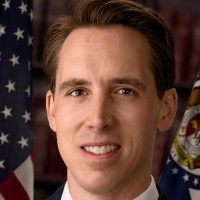
Joshua Hawley
Senator
MO
Joshua Hawley
Senator
MO
The American Worker Rebate Act of 2025 establishes a new tax credit designed to return revenue collected from tariffs directly to working individuals. This credit is calculated based on a base amount (the greater of $600 or a per-person share of total tariff revenue) plus an additional amount for qualifying children. Eligible individuals may receive advance refund payments based on their expected 2025 credit amount.
This Act prohibits broker-dealers and investment advisers controlled by or significantly reliant on the People's Republic of China from operating in U.S. financial markets for five years.
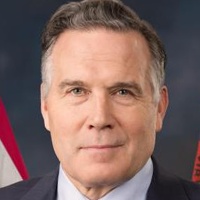
Dave McCormick
Senator
PA
Dave McCormick
Senator
PA
This Act establishes a five-year moratorium on new broker-dealers and investment advisers that are controlled by, or rely on essential services from, entities or residents of the People's Republic of China (PRC). The legislation prohibits these PRC-connected firms from registering or joining national securities associations in the U.S. Financial regulators are granted examination authority over these entities to ensure compliance with the new restrictions.
This bill mandates clear, front-of-package warning labels for foods high in added sugar, sodium, or saturated fat, and requires disclosure of non-nutritive sweeteners.
Richard Blumenthal
Senator
CT
Richard Blumenthal
Senator
CT
The TRUTH in Labeling Act mandates clear, front-of-package warning labels for foods high in added sugars, sodium, or saturated fat to help consumers make healthier choices. This legislation requires the Secretary of HHS to finalize rules establishing what constitutes "high in" these nutrients based on daily reference values. Furthermore, the bill requires specific disclosure and warnings on front labels if a product contains non-nutritive sweeteners, especially for foods marketed to young children.
This Act establishes a national strategy and timeline for federal agencies to migrate their critical systems to quantum-resistant cryptography to prepare for future quantum computing threats.
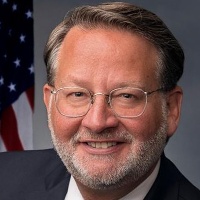
Gary Peters
Senator
MI
Gary Peters
Senator
MI
The National Quantum Cybersecurity Migration Strategy Act of 2025 establishes a comprehensive federal strategy to transition government systems to quantum-resistant security methods, known as Post-Quantum Cryptography (PQC). This legislation mandates the creation of a national migration plan, requires a pilot program for upgrading critical systems, and directs agencies to assess their risks and migration costs. Ultimately, the Act aims to secure federal data and critical infrastructure against future threats posed by advanced quantum computers.
This bill establishes a formal partnership between the U.S. and Indo-Pacific allies to strengthen and integrate their defense industrial bases, secure supply chains, and enhance cooperative research and production.

Andy Kim
Senator
NJ
Andy Kim
Senator
NJ
This bill establishes the Partnership for Indo-Pacific Industrial Resilience to strengthen defense industrial capabilities and supply chains among the U.S. and its regional allies. The initiative directs the Department of Defense to collaborate with partners on joint development, production, and standardization of key defense articles. The goal is to enhance collective security by ensuring reliable access to necessary materials and maintaining a technological edge. This program will be overseen by a designated official and will conclude its authorization at the end of 2030.