Legislation
This Act prohibits the imposition or continuation of any duties on specific baby and educational toy items under the authority of the International Emergency Economic Powers Act or any similar authority.
Bradley Schneider
Representative
IL
Bradley Schneider
Representative
IL
The Educational Toy Tax Relief Act prohibits the President from imposing or continuing any duties (taxes) on specific baby and toddler items, such as educational toys, playpens, and tricycles, under the authority of the International Emergency Economic Powers Act (IEEPA). This legislation immediately ends any existing or previously imposed similar duties on these products. The goal is to provide tax relief for essential items designed for children under three years old.
This Act expands federal disaster relief eligibility for certain freshwater fisheries, specifically including infrastructure-related causes and clarifying criteria for crawfish fisheries.
Clay Higgins
Representative
LA
Clay Higgins
Representative
LA
The Fisheries Modernization Act of 2025 expands federal disaster relief eligibility for certain freshwater fisheries, specifically including those impacted by infrastructure-related failures. This amendment allows freshwater fisheries, like the crawfish industry, to qualify for aid due to issues like water quality problems or environmental events stemming from infrastructure operation. The bill broadens the criteria for disaster declarations while maintaining existing eligibility for marine and anadromous fisheries.
This Act mandates that funds from the Infrastructure Investment and Jobs Act designated for lead pipe replacement in drinking water systems must be distributed as forgivable loans or grants exclusively to disadvantaged communities.
Zachary (Zach) Nunn
Representative
IA
Zachary (Zach) Nunn
Representative
IA
The Safe Drinking Water for Disadvantaged Communities Act mandates that funds from the Infrastructure Investment and Jobs Act designated for lead pipe replacement must be distributed as forgivable loans or grants. This funding is exclusively targeted toward disadvantaged communities to ensure equitable access to safe drinking water infrastructure upgrades.
This Act bans for-profit corporations from establishing separate segregated funds for political purposes, restricts solicitation to executive and administrative personnel, and requires existing non-nonprofit corporate funds to dissolve within one year.
Josh Harder
Representative
CA
Josh Harder
Representative
CA
The Ban Corporate PACs Act restricts the ability of corporations to establish separate segregated funds for political purposes. Under this bill, only nonprofit corporations will be permitted to set up these political action committees. Furthermore, these funds will be prohibited from soliciting contributions from stockholders and their families. Existing non-nonprofit corporate political funds must dissolve within one year of the Act's enactment.
The Corporate Crime Database Act of 2025 establishes a public, searchable national database managed by the Bureau of Justice Statistics to track and report on federal enforcement actions related to corporate offenses.
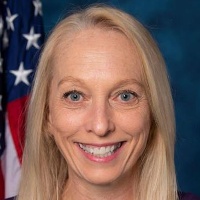
Mary Scanlon
Representative
PA
Mary Scanlon
Representative
PA
The Corporate Crime Database Act of 2025 establishes a new, public, and searchable national database managed by the Bureau of Justice Statistics to track federal enforcement actions against corporate offenses. This database will require federal agencies to report detailed information on violations, enforcement outcomes, and involved entities. The Act mandates annual public reporting and analysis of the data to Congress, including estimates of victim harm and recommendations for future crime prevention.
This Act establishes a corporate tax rate reduction for qualifying U.S. corporations that implement broad-based employee stock ownership plans, while also making the distributed stock tax-free to the employees upon receipt.
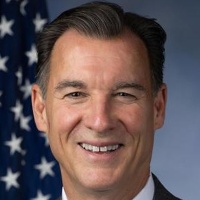
Thomas Suozzi
Representative
NY
Thomas Suozzi
Representative
NY
The Share Holder Allocation for Rewards to Employees Plan Act (SHARE Plan Act) establishes a new corporate tax incentive for U.S. companies that distribute a significant amount of their stock equity to employees through formal, broad-based plans. Eligible "SHARE corporations" receive a 3 percentage point reduction in their corporate income tax rate. Crucially, stock received by employees under a qualified SHARE plan is excluded from the employee's gross income for federal tax purposes. The bill sets strict requirements for plan structure, employee participation, and minimum equity distribution ratios to qualify for these benefits.
This Act requires institutions receiving federal student aid or Title VI funds to annually certify they will not participate in nonexpressive commercial boycotts against U.S. strategic partners and will maintain reciprocal academic exchange terms with them.
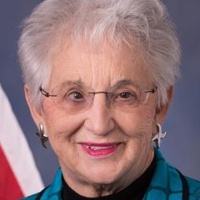
Virginia Foxx
Representative
NC
Virginia Foxx
Representative
NC
The Protect Economic and Academic Freedom Act of 2025 requires institutions receiving federal student aid (Title IV) to annually certify they will not participate in non-expressive commercial boycotts against U.S. strategic partners. Furthermore, institutions seeking Title VI funding must certify that they will maintain reciprocal academic and research exchange opportunities with these partners. Failure to certify results in ineligibility for federal funding programs.
This act mandates clear, front-of-package labeling to alert consumers when foods are high in added sugars, sodium, or saturated fat, and requires warnings for artificial sweeteners in certain products.

Janice Schakowsky
Representative
IL
Janice Schakowsky
Representative
IL
The Transparency, Readability, Understandability, Truth, and Helpfulness in Labeling Act mandates clear front-of-package labeling for foods high in added sugars, sodium, or saturated fat. These labels must use a prominent "High in" warning icon to help consumers make healthier choices quickly. Furthermore, the law requires a specific warning on labels if a product contains non-nutritive (artificial) sweeteners, especially for products marketed to children. These requirements aim to align food labeling with current dietary guidelines and public health concerns.
This bill ensures urban Indian organizations providing healthcare services through the Indian Health Service receive the same federal medical assistance matching funds as tribal organizations.
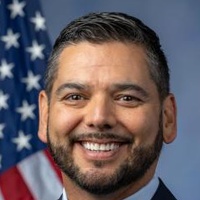
Raul Ruiz
Representative
CA
Raul Ruiz
Representative
CA
The Urban Indian Health Parity Act ensures that urban Indian organizations providing healthcare services under contract with the Indian Health Service can receive the same enhanced federal medical assistance matching funds (FMAP) currently available to tribes. This change expands access to federal healthcare dollars for these vital community organizations. The bill aims to achieve parity in federal funding for urban Indian healthcare providers.
This act establishes a culturally and linguistically appropriate national strategy to improve mental health and substance abuse outreach and education specifically for Hispanic and Latino communities.
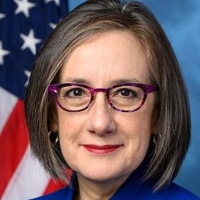
Andrea Salinas
Representative
OR
Andrea Salinas
Representative
OR
The Mental Health for Latinos Act of 2025 mandates the creation of a comprehensive, culturally sensitive outreach and education strategy to improve mental health and substance abuse support specifically for Hispanic and Latino communities. This plan requires collaboration with community groups to ensure materials address diverse linguistic and cultural needs across different age groups. The Secretary must report annually to Congress on the strategy's effectiveness in improving health outcomes for these populations.
The Save Our Seniors Act mandates that Social Security trust fund reports include a comparison graph showing budget assumptions versus actual projected payouts based on dedicated funding.
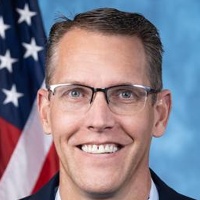
Randy Feenstra
Representative
IA
Randy Feenstra
Representative
IA
The Save Our Seniors Act (SOS Act) mandates that reports on the Social Security Old-Age and Survivors Insurance and Disability Insurance Trust Funds must now include a new graphical comparison. This comparison will show the difference between initial budget assumptions and the actual projected payouts from the Trust Funds based on dedicated funding sources. The goal is to provide clearer transparency regarding the financial status and projections of these vital funds.
This bill modernizes unemployment insurance by federally funding extended benefits, establishing national minimum standards for regular benefits, and creating a new federal Jobseeker Allowance program.
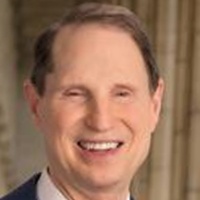
Ron Wyden
Senator
OR
Ron Wyden
Senator
OR
The Unemployment Insurance Modernization and Recession Readiness Act comprehensively overhauls the nation's unemployment system by strengthening federal support during downturns, establishing robust national minimum standards for regular benefits, and creating a new federal Jobseeker Allowance program. Title I modernizes extended benefits by shifting costs to the federal government and updating activation triggers, while Title II mandates a 26-week minimum duration and eliminates the waiting week for regular state benefits. Finally, Title III establishes a new, federally funded Jobseeker Allowance starting in 2027 to provide ongoing support to those actively seeking work.
This resolution demands the Secretary of State promptly report to Congress on the Kingdom of Eswatini's human rights practices, particularly concerning non-U.S. citizens removed there by the U.S. government.
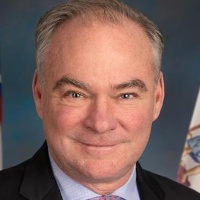
Timothy Kaine
Senator
VA
Timothy Kaine
Senator
VA
This resolution formally requests the Secretary of State to submit a detailed report on the human rights practices of the Kingdom of Eswatini to Congress within 30 days. The report must specifically detail alleged human rights violations, particularly concerning non-U.S. citizens removed to Eswatini by the U.S. government. Furthermore, the Secretary must outline U.S. actions taken to promote human rights and assess the risks associated with U.S. security assistance in the country.
This bill mandates new research to understand and improve how the public receives, interprets, and acts upon hurricane forecasts and warnings, with a focus on vulnerable populations.
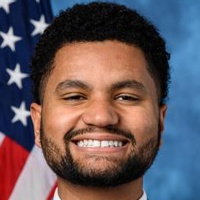
Maxwell Frost
Representative
FL
Maxwell Frost
Representative
FL
The Fixing Gaps in Hurricane Preparedness Act mandates new research to better understand how the public receives, interprets, and acts upon hurricane warnings. This effort focuses on the social and behavioral sciences to improve forecast communication, especially for vulnerable populations. The goal is to use this evidence to update NOAA's hurricane forecasting and warning services.
This resolution commemorates the 69th anniversary of the Mauna Loa Observatory's continuous operations and recognizes its vital role in long-term atmospheric measurement and climate science.

Mazie Hirono
Senator
HI
Mazie Hirono
Senator
HI
This resolution commemorates the 69th anniversary of the continuous operations of the Mauna Loa Observatory (MLO). It recognizes the MLO as the premier global site for long-term atmospheric measurements, crucial for tracking climate-altering gases like carbon dioxide. The bill honors the dedicated workforce and reaffirms Congressional support for the observatory's vital scientific mission.
The Fighting Fibers Act of 2025 mandates that new washing machines sold in the U.S. starting in 2030 must include microfiber filtration systems and requires the EPA to conduct a comprehensive study on microfiber pollution.

Jeff Merkley
Senator
OR
Jeff Merkley
Senator
OR
The Fighting Fibers Act of 2025 mandates that all new washing machines sold in the U.S. starting in 2030 must include a microfiber filtration system with a mesh size no larger than 100 micrometers. The bill also directs the EPA Administrator to conduct a comprehensive national study on the sources, health impacts, and environmental justice implications of microfiber pollution. This legislation establishes civil penalties for manufacturers who fail to comply with the new filtration and labeling requirements.
The Supporting Apprenticeship Colleges Act of 2025 establishes grant programs to boost outreach for construction and manufacturing apprenticeships and to fund academic advising and student support services for apprentices in those fields.
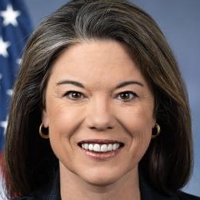
Angie Craig
Representative
MN
Angie Craig
Representative
MN
The Supporting Apprenticeship Colleges Act of 2025 establishes two grant programs totaling \$10 million annually to boost construction and manufacturing apprenticeships. The first program funds community outreach to recruit students and connect programs with local employers, particularly in rural areas. The second program provides funds for expanded academic advising and student support services to improve program retention and completion rates. The Act also formally defines specialized apprenticeship colleges and sets reporting requirements for grant recipients.
This bill establishes a federal grant program to help low-income households pay for their drinking water and sewer services.
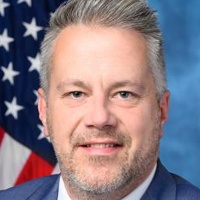
Eric Sorensen
Representative
IL
Eric Sorensen
Representative
IL
This bill establishes the Low-Income Household Water Assistance Program to provide grants to states and tribes. These funds will help public water systems cover the water and sewer bills for eligible low-income households. The program aims to supplement existing aid by assisting families whose income is at or below 150% of the poverty level or 60% of the state median income. Funding is authorized at $500 million annually from fiscal years 2026 through 2030.
This bill establishes the Agricultural and Rural Road Improvement Program to repair and upgrade local and rural roads crucial for farm access, safety, and economic efficiency.
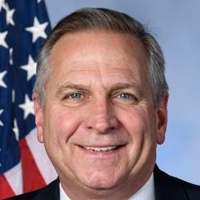
Mike Bost
Representative
IL
Mike Bost
Representative
IL
The Agricultural and Rural Road Improvement Program Act establishes a new federal program dedicated to repairing and improving critical local and rural roads essential for agriculture. This program aims to enhance access to farms and agricultural facilities, reduce weight-restricted bridges, and increase the safety and resilience of rural transportation networks. Federal funding for these projects will cover up to 90 percent of the total cost.
This act prohibits the imposition or continuation of emergency-related import duties on essential baby safety items, including strollers, car seats, and baby carriers.
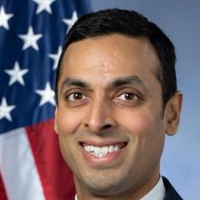
Suhas Subramanyam
Representative
VA
Suhas Subramanyam
Representative
VA
The Baby Safety Tax Relief Act prohibits the President from imposing or continuing any special import duties on essential baby safety items, including strollers, car seats, and baby carriers. This law specifically blocks the use of emergency powers, like the International Emergency Economic Powers Act (IEEPA), to tax these necessary goods. The goal is to ensure these critical items remain affordable by preventing new or existing emergency-related tariffs.