Legislation
This bill mandates that Medicare Advantage plan advertisements must disclose the plan's rates of prior authorization denials and subsequent approvals.
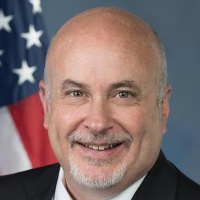
Mark Pocan
Representative
WI
Mark Pocan
Representative
WI
This bill mandates that all advertisements for Medicare Advantage (MA) plans must clearly disclose key statistics regarding their prior authorization denial rates. Specifically, ads must include the total number of denials, the number of denials later overturned upon reconsideration, and the average time taken for those reversals. This aims to provide consumers with crucial transparency about plan utilization management practices before enrollment.
The SROS Act excludes certain retirement income received by qualified former military or law enforcement personnel employed as school resource officers from gross income.
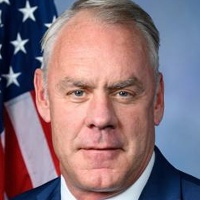
Ryan Zinke
Representative
MT
Ryan Zinke
Representative
MT
The Strengthening Resources for our Schools (SROS) Act aims to encourage qualified retirees to serve as school resource officers. This bill amends the Internal Revenue Code to exclude certain retirement income received by eligible former members of the Armed Forces or law enforcement officers from gross income while they are employed as school resource officers. The exclusion may become a lifetime exemption if the individual serves in the role for at least 10 years.
This bill requires the Secretary to prohibit enrollment in Medicare Advantage plans whose average monthly payment exceeds the average monthly cost of original Medicare coverage, with an exception for special needs plans.
Mark Pocan
Representative
WI
Mark Pocan
Representative
WI
This bill amends the Social Security Act to establish new requirements regarding the average monthly cost of Medicare Advantage (MA) plans compared to original Medicare. If an MA plan's average monthly payment exceeds the cost of original Medicare coverage for its enrollees, the Secretary must prohibit new enrollment in that plan for the following year. This restriction does not apply to specialized Medicare Advantage plans for special needs individuals.
This Act establishes rules and procedures for deploying telecommunications and broadband facilities in public and railroad rights-of-way, including application requirements, timelines, and dispute resolution via the FCC.
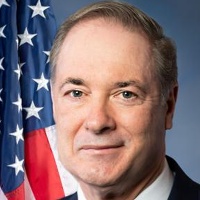
John Joyce
Representative
PA
John Joyce
Representative
PA
The Broadband and Telecommunications RAIL Act establishes new rules for deploying telecommunications and broadband facilities within public rights-of-way that cross railroad corridors, as well as directly within railroad rights-of-way. It outlines specific notification and application procedures, decision timelines for railroad carriers, and compensation requirements for application processing. The Act grants the Federal Communications Commission sole jurisdiction to resolve disputes between providers and railroads regarding facility placement and mandates rulemaking to ensure safety and efficiency.
This Act authorizes the Great Lakes Fishery Commission to develop and fund efforts to combat invasive mussel species in the Great Lakes through 2035.

Debbie Dingell
Representative
MI
Debbie Dingell
Representative
MI
The Save Great Lakes Fish Act of 2025 authorizes the Great Lakes Fishery Commission to develop comprehensive strategies to combat invasive mussel species. This effort requires coordination with federal agencies, state, tribal, and local governments. The bill authorizes $500 million in funding for fiscal years 2026 through 2035 to support these critical conservation measures.
This bill expands the grounds for deportability to include any alien convicted of a felony or two misdemeanors under state or federal law.

Paul Gosar
Representative
AZ
Paul Gosar
Representative
AZ
The Criminal Alien Removal Clarification Act of 2025 amends immigration law to establish new, clear grounds for deportability. This bill mandates that any alien convicted of a single felony or two misdemeanors, under either state or federal law, after admission to the U.S. is subject to removal.
This resolution expresses support for designating November 19, 2025, as "National GIS Day" to recognize the importance and broad applications of Geographic Information System technology.
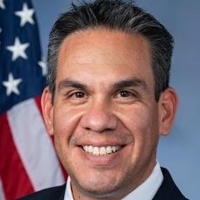
Pete Aguilar
Representative
CA
Pete Aguilar
Representative
CA
This resolution expresses support for designating November 19, 2025, as "National GIS Day" to recognize the critical role of Geographic Information System (GIS) technology. It highlights how GIS data management supports government, private enterprise, and addresses societal challenges through data analysis. The bill encourages the continued use of GIS in education and innovation to drive economic growth.
This Act establishes a federal grant program to help states voluntarily collect and secure emergency contact information linked to driver's licenses and IDs for use by authorized emergency personnel.
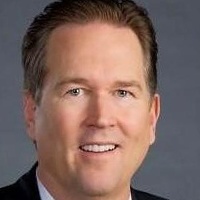
Vern Buchanan
Representative
FL
Vern Buchanan
Representative
FL
The To Inform Families First Act of 2025 establishes a grant program through the National Highway Traffic Safety Administration (NHTSA) to help states create voluntary systems for collecting emergency contact information linked to driver's licenses. This assistance requires states to implement strong data security and restrict access to authorized emergency personnel only. The bill ensures that providing this information remains voluntary and does not need to appear on physical identification cards.
This resolution censures Delegate Stacey Plaskett and removes her from the House Intelligence Committee for allegedly colluding with convicted sex offender Jeffrey Epstein during a congressional hearing.
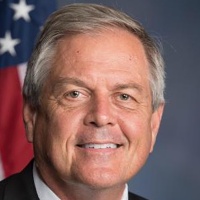
Ralph Norman
Representative
SC
Ralph Norman
Representative
SC
This resolution censures and condemns Delegate Stacey Plaskett for allegedly colluding with convicted sex offender Jeffrey Epstein during a 2019 congressional hearing. It cites evidence suggesting Plaskett coordinated her line of questioning with Epstein in real-time via text message. Consequently, the bill removes Delegate Plaskett from the House Permanent Select Committee on Intelligence and directs an ethics investigation into her conduct.
This bill mandates that a percentage of federal cancer research funds, based on the proportion of the US population under 18, must be dedicated to pediatric cancer research starting in fiscal year 2026.
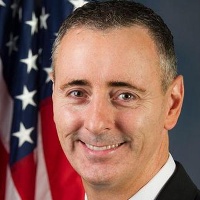
Brian Fitzpatrick
Representative
PA
Brian Fitzpatrick
Representative
PA
The Fairness to Kids with Cancer Act of 2025 mandates that a specific, population-based percentage of total Federal cancer research funds must be dedicated to pediatric cancer research each fiscal year starting in 2026. This required percentage will be calculated annually based on the ratio of the U.S. population under age 18 to the total U.S. population. This ensures federal research funding reflects the proportion of children affected by cancer.
This resolution supports the goals of National Rural Health Day by recognizing the vital role of rural communities and committing to policies that improve rural healthcare access and affordability.
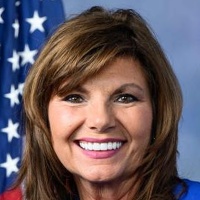
Diana Harshbarger
Representative
TN
Diana Harshbarger
Representative
TN
This resolution officially recognizes and supports the goals of National Rural Health Day to honor the vital role of rural communities and their healthcare providers. It acknowledges the unique challenges faced by rural residents, such as limited access to care and hospital closures. The bill expresses a commitment to advancing policies that improve the accessibility and affordability of healthcare in rural America.
This act repeals Senate notification requirements related to legal processes concerning Senate data and mandates the disgorgement of any funds awarded to Senators under the repealed provisions.
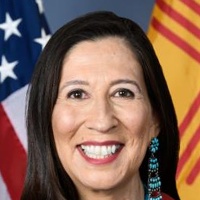
Teresa Leger Fernandez
Representative
NM
Teresa Leger Fernandez
Representative
NM
The No Payola Act repeals existing Senate notification requirements concerning legal processes related to the disclosure of Senate data. Furthermore, it mandates that any Senator who received funds through a private right of action under the repealed law must return those awarded funds to the Treasury.
This bill reauthorizes the Stop, Observe, Ask, and Respond (SOAR) to Health and Wellness Training Program for fiscal years 2026 through 2030.
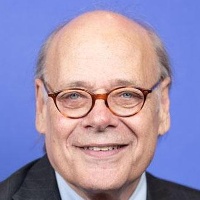
Steve Cohen
Representative
TN
Steve Cohen
Representative
TN
This bill reauthorizes the Stop, Observe, Ask, and Respond to Health and Wellness Training Program under the Public Health Service Act. It extends the program's authorized funding period for fiscal years 2026 through 2030.
This resolution censures Representative Cory Mills based on allegations of assault, domestic violence, financial improprieties, and a disputed military award, resulting in his removal from the House Armed Services Committee.
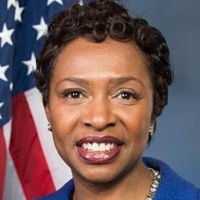
Yvette Clarke
Representative
NY
Yvette Clarke
Representative
NY
This resolution seeks to formally censure Representative Cory Mills based on allegations including domestic violence, threats against a former partner, potential financial disclosure violations, and significant disputes regarding his military service award. The censure action includes a formal reprimand on the House floor and removal from the Committee on Armed Services.
This bill formally elects specific members to designated standing committees of the House of Representatives.
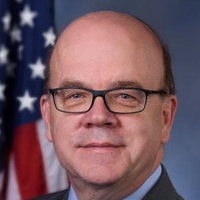
James McGovern
Representative
MA
James McGovern
Representative
MA
This bill formally establishes the appointments of specific members to various standing committees within the House of Representatives. It confirms the placement of Mr. Conaway, Mrs. Grijalva, and Mr. Walkinshaw onto committees such as Armed Services, Education and Workforce, Homeland Security, and Natural Resources.
This bill affirms existing VA collective bargaining agreements and nullifies specific Executive Orders related to Federal labor-management relations within the Department of Veterans Affairs.
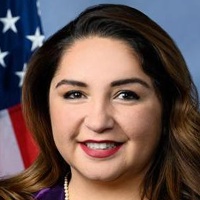
Delia Ramirez
Representative
IL
Delia Ramirez
Representative
IL
The VA Care and Benefits Accountability Act ensures that existing collective bargaining agreements within the Department of Veterans Affairs remain in effect until their specified end dates. Furthermore, this bill nullifies Executive Orders 14251 and 14343, preventing their enforcement or implementation within the VA. This action solidifies current labor agreements for VA employees.
This bill elects Mr. Fong to the House of Representatives Committee on Homeland Security.
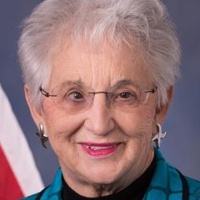
Virginia Foxx
Representative
NC
Virginia Foxx
Representative
NC
This bill formally elects Mr. Fong to serve as a member of the House of Representatives Committee on Homeland Security.
This bill extends Post-9/11 GI Bill benefits for veterans needing extra time to complete remedial courses and allows service members without immediate dependents to designate future dependents for benefit transfer.
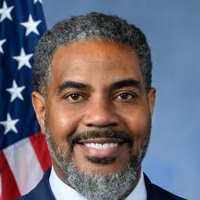
Steven Horsford
Representative
NV
Steven Horsford
Representative
NV
The VET Extension Act of 2025 addresses key issues within the Post-9/11 GI Bill program. It increases the educational assistance time available—up to 15 additional months—for veterans needing remedial or deficiency courses to complete their degree. Furthermore, the bill provides greater flexibility by allowing service members without current dependents to designate a future dependent for the transfer of their education benefits.
Here are one-sentence summaries for each bill described: **Commonsense Legislating Act (Small Business Funding):** This act extends support for small businesses seeking federal research funding by extending the FAST Program and mandating targeted assistance to increase participation from underrepresented regions and institutions. **Commonsense Legislating Act (Native Tourism Grants):** This legislation establishes new federal grant programs, funded at $35 million annually, to support and improve tourism and visitor experiences within Native American and Native Hawaiian communities. **Commonsense Legislating Act (Military Spouse Tax Credit):** This bill expands the Work Opportunity Tax Credit to include the spouses of active-duty military personnel as an eligible category for the tax incentive. **Commonsense Legislating Act (Veteran Mental Health Outreach):** This legislation mandates that the VA proactively offer annual mental health consultations and outreach to veterans already receiving disability compensation for a mental health condition. **Commonsense Legislating Act (Package Theft Protection):** This act strengthens federal protections by criminalizing the theft of packages handled by interstate carriers from the time of delivery until the recipient physically takes custody of the property. **Commonsense Legislating Act (Working Families Task Force):** This legislation creates an Interagency National Task Force on Working Families, chaired by the Secretary of Labor, to examine family challenges and develop concrete recommendations for improving living standards. **Commonsense Legislating Act (Fentanyl Disruption):** This bill establishes a high-level Fentanyl Disruption Steering Group within the National Security Council to coordinate and oversee all federal efforts aimed at stopping fentanyl trafficking across ten major government agencies. **Commonsense Legislating Act (House Review Hearing):** This legislation mandates that every standing committee in the House of Representatives must conduct a review hearing within one year to assess the implementation of this Act's provisions. **Commonsense Legislating Act (House Ethics Conduct):** This act amends the official conduct code for House personnel by prohibiting them from serving as an officer or director of any publicly traded company to prevent conflicts of interest. **Commonsense Legislating Act (PAYGO Budgetary Impact):** This legislation sets the procedural requirement for calculating the budgetary impact of the entire Act using the most recent official PAYGO statement, which must be published in the Congressional Record before the final vote. **Commonsense Legislating Act (Funding Allocations):** This act allocates specific additional funding amounts from unallocated Treasury funds for fiscal year 2026 to support diverse federal programs, including diabetes research, the Congressional Research Service, the Marine Corps, and HUD inspections.
James McGovern
Representative
MA
James McGovern
Representative
MA
This comprehensive bill addresses several distinct areas of federal policy, including extending support for small business research funding and increasing outreach to underserved institutions. It also establishes new grant programs to boost tourism in Native American and Native Hawaiian communities and expands the Work Opportunity Tax Credit to include military spouses. Furthermore, the Act mandates proactive mental health outreach for veterans with service-connected mental health disabilities and strengthens federal protections against interstate package theft.
This resolution expresses condolences for the victims of the July 4 Texas floods, honors heroic efforts, and pledges continued support for recovery.
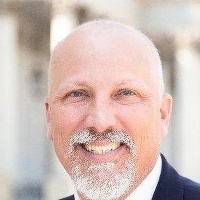
Chip Roy
Representative
TX
Chip Roy
Representative
TX
This resolution expresses the House's deep condolences for the lives lost during the catastrophic July 4th flooding in the Texas Hill Country. It honors the heroism of first responders and volunteers who aided in rescue efforts. Furthermore, the resolution commits the House to stand with the impacted communities in their ongoing recovery and rebuilding process.