Legislation
The CLEAN SMART Act of 2026 establishes a Network of National Laboratories to accelerate scientific and technical expertise for minimizing radioactive waste risks, lowering cleanup costs, and improving environmental stewardship across the Department of Energy.
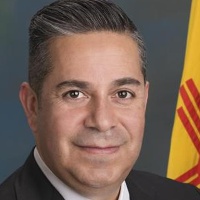
Ben Luján
Senator
NM
Ben Luján
Senator
NM
The CLEAN SMART Act of 2026 establishes a Network of National Laboratories to accelerate the cleanup of radioactive and hazardous defense waste managed by the Department of Energy. This Network will develop new technologies, review cleanup plans, and lower overall lifecycle costs for environmental remediation. The Act also mandates improved coordination across federal agencies and establishes protocols for better program management and technology deployment within the cleanup mission.
This bill seeks to amend Medicare law to provide coverage for medically necessary wigs as durable medical equipment.
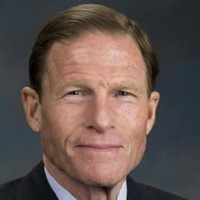
Richard Blumenthal
Senator
CT
Richard Blumenthal
Senator
CT
This bill seeks to amend Medicare law to provide coverage for wigs, referred to as cranial prostheses, as durable medical equipment. Coverage would be granted only when a physician certifies the wig is medically necessary due to hair loss from a health condition like cancer or an autoimmune disease. This ensures Medicare covers essential supportive care for patients requiring cranial prostheses.
This act adjusts the asset thresholds for supervisory examination cycles for well-managed depository institutions.
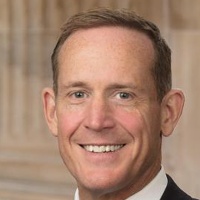
Ted Budd
Senator
NC
Ted Budd
Senator
NC
The TRUST Act of 2026 modifies federal law to adjust the asset thresholds used to determine examination cycles for depository institutions. This change specifically raises the asset size requirement from \$3 billion to \$6 billion for institutions considered "well-managed." The goal is to tailor regulatory oversight based on an institution's size.
This bill establishes criminal and civil penalties, clawback authority for unjust enrichment, and mandatory ownership reporting for private equity-owned healthcare companies, while also restricting certain real estate investment trust transactions and mandating a study on profit-driven healthcare practices.

Elizabeth Warren
Senator
MA
Elizabeth Warren
Senator
MA
The Corporate Crimes Against Health Care Act establishes new federal criminal and civil penalties, including asset clawbacks, for individuals at private equity-owned healthcare companies whose actions lead to patient harm or failure. The bill also prohibits federal healthcare payments to entities involved in certain real estate transactions with REITs and mandates comprehensive annual reporting on ownership and financial structures of specified healthcare entities. Finally, it requires a study on the impact of profit-driven practices on patient care and provider well-being.
This bill officially renames the United States Postal Service facility in Mahaffey, Pennsylvania, as the "Robert Allen Bishop, Sr., Post Office Building."
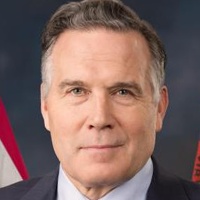
Dave McCormick
Senator
PA
Dave McCormick
Senator
PA
This bill officially renames the United States Postal Service facility located at 10 East Main Street in Mahaffey, Pennsylvania. The building will now be known as the "Robert Allen Bishop, Sr., Post Office Building." This designation will be used in all future federal records pertaining to the facility.
This bill mandates enhanced public disclosure from companies with multi-class share structures regarding the ownership and voting power of key individuals.
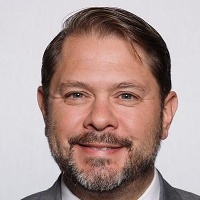
Ruben Gallego
Senator
AZ
Ruben Gallego
Senator
AZ
This act, the Enhancing Multi-Class Share Disclosures Act, mandates that public companies with multi-class share structures provide enhanced disclosures to shareholders. These new rules require companies to detail the share ownership and voting power percentages held by directors, nominees, executives, and major beneficial owners. The goal is to increase transparency regarding control within companies utilizing unequal voting rights.
The FENCES Act clarifies that states can avoid certain Clean Air Act penalties if air quality standards are not met due to emissions originating outside the United States.
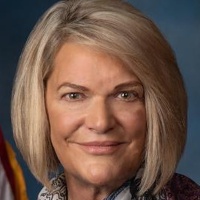
Cynthia Lummis
Senator
WY
Cynthia Lummis
Senator
WY
The FENCES Act amends the Clean Air Act to protect states from certain regulatory consequences when air quality standards are unmet due to emissions originating outside the United States. Specifically, it prohibits nonattainment designations if pollution is caused by foreign emissions. Furthermore, the bill exempts severely polluted areas from sanctions and fees if they can demonstrate that compliance failure is due to uncontrollable external emissions or exceptional events. States must still implement all authorized control measures and periodically renew their demonstration to the EPA.
The Health Investment Zones Act of 2026 establishes a 10-year program to designate areas with significant health disparities as Health Investment Zones, supporting them with tax incentives, grants, and student loan repayment to improve health outcomes and reduce costs.
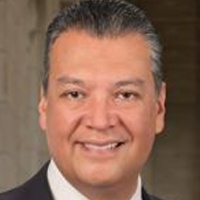
Alejandro Padilla
Senator
CA
Alejandro Padilla
Senator
CA
The Health Investment Zones Act of 2026 establishes a program to designate areas with significant health disparities as Health Investment Zones for a 10-year period. This designation unlocks federal incentives, including tax credits for employers and workers, dedicated grant funding for local initiatives, and student loan repayment options for healthcare providers. The goal is to reduce health disparities, improve health outcomes, and lower healthcare system costs within these targeted zones.
This act imposes a 100% tax on certain civil lawsuit damages received by current or former high-ranking U.S. officials and their relatives when they sue the United States.
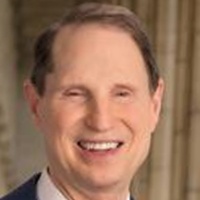
Ron Wyden
Senator
OR
Ron Wyden
Senator
OR
The Stop Presidential Embezzlement Act imposes a 100% tax on certain civil lawsuit damages received by current or former high-ranking U.S. officials, including the President, and their relatives. This tax specifically targets damages awarded to these individuals from lawsuits they filed against the United States during their tenure in office. The purpose is to prevent the misuse of public funds or legal actions for personal financial gain by covered officials.
The Fair Repair Act mandates that Original Equipment Manufacturers provide owners and independent repair providers with fair access to necessary parts, tools, and documentation for digital electronic equipment.
Ben Luján
Senator
NM
Ben Luján
Senator
NM
The Fair Repair Act requires Original Equipment Manufacturers (OEMs) to make necessary documentation, parts, and tools available to owners and independent repair providers on fair and reasonable terms. This legislation prohibits OEMs from using practices like parts pairing to restrict independent repair or steer consumers toward authorized services. Enforcement is granted to the Federal Trade Commission, treating violations as unfair or deceptive acts, while excluding motor vehicles and medical devices from these requirements.
This bill mandates the structural separation of vertically integrated healthcare conglomerates by prohibiting common ownership between providers, insurers, pharmacy benefit managers, and drug wholesalers.
Elizabeth Warren
Senator
MA
Elizabeth Warren
Senator
MA
The Break Up Big Medicine Act aims to restore competition and eliminate conflicts of interest in the healthcare system by structurally separating large, vertically integrated conglomerates. This legislation prohibits entities from simultaneously owning providers alongside insurers, pharmacy benefit managers, or drug/device wholesalers. It mandates divestiture within one year for existing violations and grants federal agencies and private citizens new authority to enforce these structural separations.
The RAMP Act creates a private right of action for damages against group health plans that fail to make primary payments or provide appropriate reimbursement.

Tim Scott
Senator
SC
Tim Scott
Senator
SC
The Repair Abuses of MSP Payments (RAMP) Act establishes a private right of action allowing individuals to sue group health plans that fail to make primary payments or provide appropriate reimbursement as required by law. This legislation strengthens enforcement by creating a direct legal recourse against non-compliant plans.
This bill establishes the Accelerating Reliable Capacity Program to provide up to \$3.6 billion in cost-overrun protection for large, advanced nuclear energy projects that secure a federal loan guarantee.

James Risch
Senator
ID
James Risch
Senator
ID
The Accelerating Reliable Capacity Act of 2026 establishes a program to provide cost certainty for large, advanced nuclear energy projects that secure federal loan guarantees. This program creates a dedicated account to cover eligible project cost overruns above 120% of the base estimate, up to a specified maximum payment per project. Additionally, the bill enhances financing terms for these qualifying projects and amends existing law to exempt certain utility and military-affiliated nuclear projects from "double benefit" restrictions.
The Soil CARE Act of 2026 establishes a mandatory training program for the Natural Resources Conservation Service (NRCS) to educate its personnel and third-party providers on soil health management practices for agricultural producers.

Jeff Merkley
Senator
OR
Jeff Merkley
Senator
OR
The Soil CARE Act of 2026 establishes a dedicated training program for the Natural Resources Conservation Service (NRCS) focused on soil health management. This initiative aims to equip NRCS personnel and third-party providers with the necessary science and technical support to assist agricultural producers in implementing improved soil health practices. The program mandates comprehensive curriculum development, including online and in-person training, to advance conservation and regeneration efforts across the agricultural sector.
The FAIR Act establishes a 3.1% base pay increase and a 1% locality pay adjustment for federal employees in calendar year 2027.
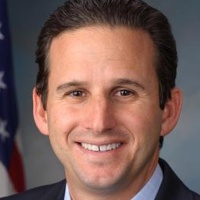
Brian Schatz
Senator
HI
Brian Schatz
Senator
HI
The FAIR Act establishes pay increases for federal employees in calendar year 2027. This legislation mandates a 3.1 percent increase to the basic pay rates for General Schedule and similar employees. Additionally, it provides a 1 percent adjustment to federal locality pay rates for the same year.
This act establishes non-mandatory guidance for private employers and mandatory requirements for federal agencies regarding opioid overdose reversal medication in the workplace.
Jeff Merkley
Senator
OR
Jeff Merkley
Senator
OR
The WORK to Save Lives Act aims to combat workplace opioid overdoses by providing non-mandatory guidance to private employers on stocking and training for overdose reversal medication. Additionally, the bill mandates that all federal agencies must acquire and maintain this medication and provide annual employee training on its use. This legislation seeks to ensure preparedness for opioid emergencies across various workplaces.
This Act prohibits the U.S. government from awarding contracts to "inverted domestic corporations" that shift their tax base overseas while maintaining significant domestic operations.
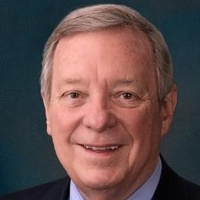
Richard Durbin
Senator
IL
Richard Durbin
Senator
IL
The American Business for American Companies Act of 2026 prohibits the U.S. government from awarding contracts to "inverted domestic corporations"—companies that relocate overseas but maintain significant U.S. management and business activity. This legislation also imposes restrictions on large prime contractors awarding subcontracts to these prohibited entities. Exceptions exist for national security or critical public health program needs, subject to congressional notification.
This act establishes the Spotted Wing Abatement Trust (SWAT) Fund within the USDA to finance research and mitigation efforts against the invasive spotted wing drosophila pest impacting U.S. fruit crops.
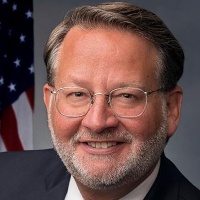
Gary Peters
Senator
MI
Gary Peters
Senator
MI
The Spotted Wing Abatement Trust Act of 2026, or SWAT Act, addresses the significant damage caused by the invasive spotted wing drosophila to U.S. fruit crops. This bill establishes a dedicated research and mitigation fund within the USDA, administered by APHIS. The fund is authorized to receive $6.5 million annually for five years to support efforts to reduce the pest's harmful effects.
This bill exempts specific less-than-lethal projectile devices from federal firearm restrictions, excise taxes, and National Firearms Act regulations to promote de-escalation innovation in law enforcement.
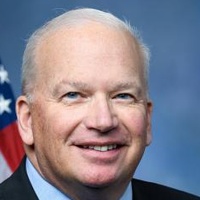
Scott Fitzgerald
Representative
WI
Scott Fitzgerald
Representative
WI
The Law-Enforcement Innovate to De-Escalate Act aims to promote de-escalation by exempting specific, clearly defined less-than-lethal projectile devices from federal firearm restrictions and excise taxes. This legislation provides a formal process for determining which devices qualify for these exemptions under both federal law and the National Firearms Act. The bill also modernizes tax regulations by exempting qualifying less-than-lethal devices and their ammunition from federal excise taxes.
This act establishes a new travel reimbursement for military members who rent vehicles for certain training or duty travel exceeding 150 miles.
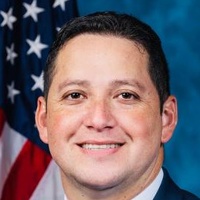
Ernest Gonzales
Representative
TX
Ernest Gonzales
Representative
TX
The Reserve Forces Travel Fairness Act establishes a new travel reimbursement for members of the uniformed services who must rent a vehicle for certain training or duty travel exceeding 150 miles. This provision ensures service members are reimbursed for necessary rental vehicle costs incurred during the period of duty and associated travel days. The Department of Defense is required to update travel regulations within 180 days to implement this change.