This resolution recognizes Chief Richard LaMunyon for founding the Law Enforcement Torch Run, which has grown into a global movement raising over a billion dollars for Special Olympics.
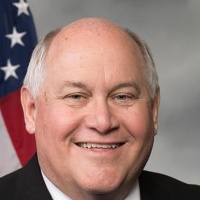
Ron Estes
Representative
KS-4
This resolution honors Chief Richard LaMunyon for founding the Law Enforcement Torch Run (LETR) after being inspired by the Special Olympics in 1979. It recognizes the LETR as the largest grassroots movement supporting Special Olympics, now spanning over 25 countries. The bill celebrates the movement's profound global impact and the over $1.1 billion raised to support individuals with intellectual disabilities.
Resolution Honors Law Enforcement Torch Run: A $1.1 Billion Global Legacy for Special Olympics Since 1981.
This resolution officially recognizes the massive impact of the Law Enforcement Torch Run (LETR) and its founder, former Wichita Police Chief Richard LaMunyon. What started as a small local run in Kansas in 1981 has exploded into a global powerhouse for the Special Olympics, and this measure puts the federal stamp of approval on that legacy. It highlights how a single department’s commitment to removing financial barriers for athletes with intellectual disabilities eventually turned into a worldwide movement involving over 150,000 officers across 25 countries.
From Local Miles to Global Milestones
The resolution tracks the growth of the "Flame of Hope" from its humble beginnings—raising just $300 in its first year—to its current status as the largest grassroots fundraiser for the Special Olympics. For anyone who has seen officers running through their neighborhood with a torch, this bill provides the hard data behind that effort: since 1981, the initiative has raised a staggering $1,139,597,747. It specifically credits Chief LaMunyon’s collaboration with Special Olympics founder Eunice Kennedy Shriver as the catalyst that took this idea from a Kansas summer game to an international standard.
More Than Just a Fundraiser
Beyond the dollar amounts, the resolution focuses on the "stability" this movement provides to the Special Olympics. It commends the 150,000 law enforcement officers who participate annually, noting that their involvement does more than just pay for equipment or travel; it fosters community inclusion. For a family with a child in the Special Olympics, this resolution acknowledges the long-term partnership that ensures these programs remain free and accessible. It’s a rare piece of legislation that focuses entirely on celebrating a successful private-public synergy that has functioned effectively for over four decades.