Legislation
This act establishes a federal student loan refinancing program allowing borrowers to replace existing federal loans with new Direct Loans at current interest rates while preserving credit for past payments toward forgiveness and repayment plans.
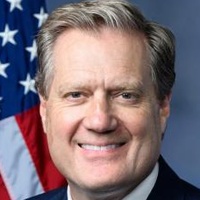
Michael Turner
Representative
OH
Michael Turner
Representative
OH
The Student Loan Refinancing Act of 2026 establishes a new federal program allowing borrowers to refinance eligible federal student loans to current interest rates while keeping original loan terms. This act ensures borrowers who refinance do not lose credit toward existing income-driven repayment or Public Service Loan Forgiveness progress. The Secretary of Education is mandated to launch this refinancing program within 30 days of the bill's enactment.
The Tax Court Parity Act clarifies the U.S. Tax Court's authority to correct clerical mistakes and grant relief from final judgments or orders under specific circumstances.

Tim Scott
Senator
SC
Tim Scott
Senator
SC
The Tax Court Parity Act clarifies and expands the U.S. Tax Court's authority to correct errors in its own judgments and orders. This legislation allows the court to fix clerical mistakes and grants parties the ability to seek relief from a final decision based on grounds such as mistake, newly discovered evidence, or fraud. These provisions aim to ensure fairness and accuracy in Tax Court proceedings.
This resolution designates May 1, 2026, as "United States Foreign Service Day" to honor the service and sacrifice of current and past members of the U.S. Foreign Service.
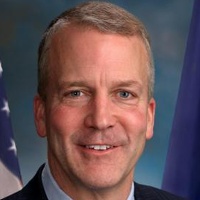
Dan Sullivan
Senator
AK
Dan Sullivan
Senator
AK
This resolution officially designates May 1, 2026, as "United States Foreign Service Day." It recognizes the dedicated service and sacrifices of all current and former members of the U.S. Foreign Service. The day honors those who have given their lives in the line of duty while advancing American interests abroad.
This Act directs the Secretary of Transportation to establish new safety standards for vehicle design and visibility to reduce crashes involving pedestrians and bicyclists, and requires new consumer safety ratings reflecting these protections.
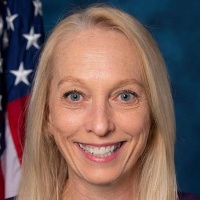
Mary Scanlon
Representative
PA
Mary Scanlon
Representative
PA
The Pedestrian Protection Act directs the Secretary of Transportation to establish new and updated federal safety standards for motor vehicles focused on reducing injuries to pedestrians and bicyclists. This includes mandating specific design standards for vehicle components like hoods and bumpers, as well as setting minimum visibility requirements. Furthermore, the bill requires the publication of comparative safety ratings to inform consumers about how well vehicles protect vulnerable road users and how well drivers can see them.
The DHS CANDOR Act establishes a comprehensive policy to ensure the accuracy, objectivity, and integrity of all public communications and social media use by the Department of Homeland Security.
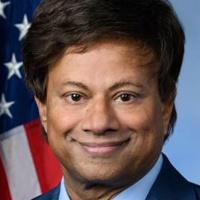
Shri Thanedar
Representative
MI
Shri Thanedar
Representative
MI
The DHS CANDOR Act establishes a comprehensive policy to ensure all public communications from the Department of Homeland Security are accurate, objective, and reliable. It sets strict guidelines for official social media use, mandates annual ethics and communications training for personnel, and requires oversight by the Office of Public Affairs. The bill also mandates regular audits by the Inspector General to ensure compliance with these new standards.
This resolution congratulates the New York Knicks on winning the 2026 NBA Finals and recognizes their historic, inspiring championship run.
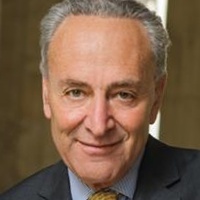
Charles Schumer
Senator
NY
Charles Schumer
Senator
NY
This resolution formally congratulates the New York Knicks on winning the 2026 NBA Finals, their first championship in 53 years. It highlights their historic playoff achievements, including record-breaking comebacks and exceptional team performance. The bill also recognizes Finals MVP Jalen Brunson and commends the team for uniting New Yorkers through their resilience.
This Act authorizes competitive grants to support evidence-based activities designed to increase participation, retention, and completion rates for high-need students in postsecondary education.
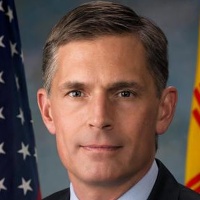
Martin Heinrich
Senator
NM
Martin Heinrich
Senator
NM
The Postsecondary Student Success Act of 2026 aims to boost academic success for high-need students in higher education. It authorizes competitive grants for institutions to implement evidence-based activities that increase student participation, retention, and completion rates. The bill specifically reserves funding for Tribal Colleges and Universities and prioritizes reforms supported by the strongest research evidence.
This resolution honors the life, remarkable career, and lasting legacy of NASCAR champion Kyle Busch.
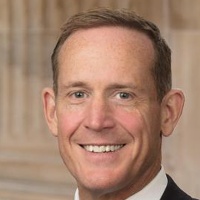
Ted Budd
Senator
NC
Ted Budd
Senator
NC
This resolution honors the life and celebrated career of NASCAR driver Kyle Busch, recognizing his numerous championships, record-breaking victories across all national series, and lasting impact on motorsports. It commemorates his achievements, including being the only modern-era driver to win at every active Cup Series track. The resolution also acknowledges his legacy as a devoted family man and mentor before extending condolences to his family.
The PEARL Act establishes a three-year pilot program for U.S. Customs and Border Protection to adopt and train shelter dogs as support dogs.
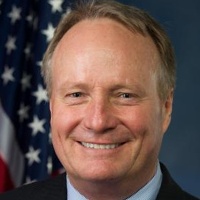
David Joyce
Representative
OH
David Joyce
Representative
OH
The PEARL Act establishes a three-year pilot program within U.S. Customs and Border Protection (CBP) to acquire and train dogs from local animal shelters. These shelter dogs will serve as support dogs, enhancing CBP's existing Support Canine Program.
This bill mandates the Army to develop requirements for a networked, autonomous kinetic defense system against small unmanned aircraft targeting ground combat platforms.
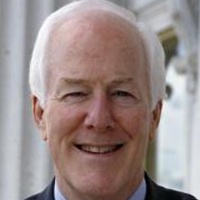
John Cornyn
Senator
TX
John Cornyn
Senator
TX
This bill mandates the Secretary of the Army to establish requirements for a networked, autonomous kinetic system to defend ground platforms against small unmanned aircraft systems (UAS). The system must feature integrated detection, tracking, and automated neutralization capabilities that can share information across combat units. The Secretary is required to report on the implementation timeline for this technology between fiscal years 2028 and 2032.
This bill conditions U.S. support for increasing China's voting power at the IMF on the Treasury Department's certification that China meets specific criteria regarding its exchange rate policies and IMF obligations.
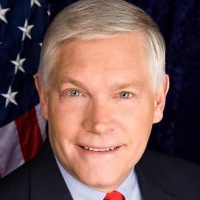
Pete Sessions
Representative
TX
Pete Sessions
Representative
TX
The China Exchange Rate Accountability Act of 2026 places conditions on U.S. support for increasing China's voting power at the International Monetary Fund (IMF). It requires the Treasury Secretary to certify that China meets specific standards regarding exchange rate transparency and fair practices before the U.S. can approve any increase. If these standards are not met, the U.S. must oppose the increase unless the President issues a national interest waiver.
This bill mandates a study on how banks and credit unions use advanced technology to fight fraud and authorizes a pilot program to help smaller institutions adopt these tools.
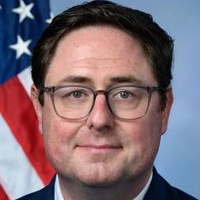
Mike Flood
Representative
NE
Mike Flood
Representative
NE
This bill mandates a comprehensive study by federal banking agencies on the current use, effectiveness, and barriers to adopting advanced fraud detection technologies like AI and machine learning in financial institutions. The study must specifically address challenges faced by smaller community banks and credit unions in accessing these tools. Following the study, the agencies are authorized to launch a voluntary pilot program to help smaller institutions gain better access to and implement these advanced fraud prevention technologies.
The Small LENDER Act modifies small business loan data collection and reporting requirements under the Equal Credit Opportunity Act, providing exemptions and delays for smaller institutions.
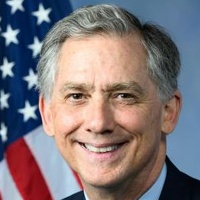
J. Hill
Representative
AR
J. Hill
Representative
AR
The Small LENDER Act modifies how financial institutions collect and report demographic data from small business loan applicants under the Equal Credit Opportunity Act. It mandates written notice to applicants, limits data gathering to self-reporting, and delays enforcement until at least June 1, 2033. The bill also introduces exemptions for smaller financial institutions and narrows the definition of a "small business."
This Act repeals the federal beneficial ownership information reporting requirements for domestic persons and entities, limiting them only to foreign individuals and foreign-connected companies, and mandates the deletion of existing domestic data.
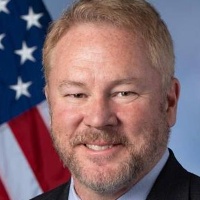
Warren Davidson
Representative
OH
Warren Davidson
Representative
OH
The Repealing Big Brother Overreach Act significantly narrows the federal beneficial ownership information reporting requirements. This legislation limits reporting obligations exclusively to foreign individuals and foreign-connected companies. Furthermore, it mandates the deletion of all previously collected data pertaining to domestic persons and entities.
This Act mandates that group health plans receive broad, timely access to claims data, payment information, and pricing terms from network service providers, while strengthening attestation requirements and imposing penalties for non-compliance.
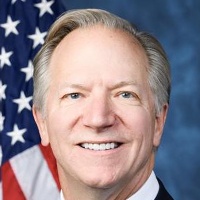
Robert Onder
Representative
MO
Robert Onder
Representative
MO
The Health Data Access, Transparency, and Affordability Act of 2026 significantly increases the required access group health plans have to claims data, payment information, and pricing terms from their network service providers. It voids contract clauses that restrict this data access and strengthens requirements for annual attestations regarding price and quality information. The bill establishes civil penalties for non-compliance and mandates specific electronic formats for data delivery.
This bill directs the Department of Energy to assess how artificial intelligence and high-performance computing can enhance the capacity, reliability, and efficiency of the bulk-power system.
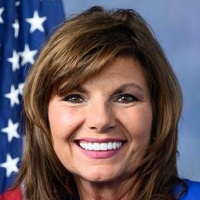
Diana Harshbarger
Representative
TN
Diana Harshbarger
Representative
TN
The Affordable Innovation for the Grid Act directs the Secretary of Energy to assess how artificial intelligence (AI) and high-performance computing can enhance the capacity and efficiency of the bulk-power system. This assessment will identify current uses, potential benefits, and existing barriers to adopting these advanced technologies. The resulting report will include recommendations for overcoming these barriers to promote grid modernization.
This bill establishes the "Workforce for AI Trust Act" to expand NSF fellowships and training in trustworthy AI, and directs NIST to develop a standardized AI workforce framework.
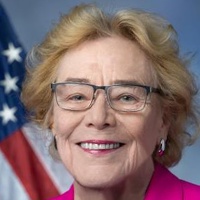
Zoe Lofgren
Representative
CA
Zoe Lofgren
Representative
CA
The Workforce for AI Trust Act aims to strengthen the U.S. artificial intelligence workforce by investing in research and training. It directs the National Science Foundation (NSF) to establish new AI fellowships and skills programs focused on trustworthy AI development. Additionally, the bill mandates the National Institute of Standards and Technology (NIST) to create a comprehensive AI workforce framework to define roles, skills, and competencies for the growing AI sector.
This act establishes a tax credit for private cemeteries that attach government-issued veteran headstone medallions to markers.
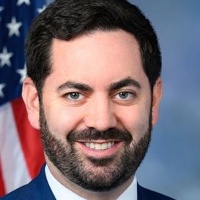
Michael Lawler
Representative
NY
Michael Lawler
Representative
NY
The Veteran Headstone Honor Act establishes a new tax credit for private cemeteries that attach government-issued veteran headstone medallions to grave markers. This credit covers the cemetery's qualified expenses incurred for the attachment work. Cemeteries can use the credit to offset their tax liability or elect to receive a direct payment.
This bill mandates that states implement an asset-based resources test, starting at \$10,000 in 2029, for determining eligibility for certain adults under the Affordable Care Act's Medicaid expansion.
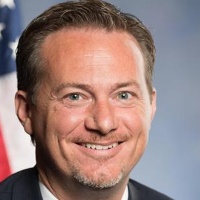
Michael Cloud
Representative
TX
Michael Cloud
Representative
TX
The Medicaid Equal Standards Act mandates that states implement an asset (resources) test for adults covered under the Affordable Care Act's Medicaid expansion, beginning January 1, 2029. This test will set an initial $10,000 limit on countable resources for eligibility determination. States retain the option to set a lower threshold or count normally excluded assets. This requirement applies at initial enrollment and subsequent eligibility redeterminations.
This bill establishes a NIST-led program to support the voluntary reporting, collection, and tracking of artificial intelligence flaws through multi-stakeholder collaboration and the development of national infrastructure.
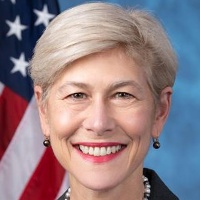
Deborah Ross
Representative
NC
Deborah Ross
Representative
NC
The AI Flaw Reporting and Security Enhancement Act directs the National Institute of Standards and Technology (NIST) to establish a program supporting the voluntary reporting, collection, and tracking of artificial intelligence (AI) flaws. This initiative involves multi-stakeholder collaboration to define terms, develop technical standards, and create infrastructure, including a national database, for managing AI-related vulnerabilities and incidents. The ultimate goal is to enhance AI security and safety through standardized reporting and disclosure norms.