Legislative Activity
Track Eugene's sponsored bills, co-sponsored legislation, and voting record
The IDEA Full Funding Act establishes mandatory, increasing funding levels for the Individuals with Disabilities Education Act (IDEA) from 2026 through 2035, contingent upon offsetting budget cuts.
Jared Huffman
Representative
CA
Jared Huffman
Representative
CA
The IDEA Full Funding Act establishes mandatory, increasing funding levels for the Individuals with Disabilities Education Act (IDEA) programs through fiscal year 2035. This legislation sets specific appropriation targets based on student counts and national average spending to ensure greater financial support for special education services. Furthermore, the bill requires that these new IDEA appropriations adhere to "cut-as-you-go" budget offset rules.
This Act mandates the Department of Labor to establish and enforce comprehensive workplace violence prevention standards for healthcare and social service workers, while also tying compliance to Medicare funding for certain facilities.
Joe Courtney
Representative
CT
Joe Courtney
Representative
CT
This Act mandates the Secretary of Labor to establish an interim and then a final standard requiring comprehensive workplace violence prevention plans for employers in the healthcare and social service sectors. These plans must be developed with employee input and detail risk assessments, hazard controls, reporting procedures, and annual training. Furthermore, the bill amends the Social Security Act to require Medicare-funded hospitals and skilled nursing facilities not covered by OSHA to comply with these new federal workplace violence prevention standards. The legislation also establishes clear definitions for workplace violence and includes strong anti-retaliation protections for employees who exercise their rights under the Act.
The CARE Act of 2025 mandates Medicare to test a new payment model covering emergency response services provided by ground ambulance companies even when patient transport does not occur.
Mike Carey
Representative
OH
Mike Carey
Representative
OH
The CARE Act of 2025 mandates that the Center for Medicare and Medicaid Innovation (CMMI) test a new payment model for emergency services. This model will allow Medicare to pay ground ambulance providers for emergency responses, even when a patient does not ultimately require transport under Medicare Part B. The five-year demonstration aims to evaluate the impact of covering these non-transport emergency responses on patient access and resource utilization.
This resolution expresses Congress's view that the Trump administration's tariffs on Mexico and Canada violate the terms of the United States-Mexico-Canada Agreement (USMCA).
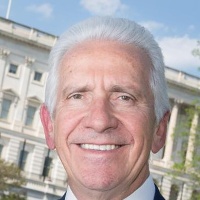
Jim Costa
Representative
CA
Jim Costa
Representative
CA
This resolution expresses the sense of Congress that the Trump administration's planned tariffs on Canada and Mexico violate the spirit and terms of the United States-Mexico-Canada Agreement (USMCA). Congress is urging the President to cease imposing these tariffs, which threaten to undermine the vital trade relationship established by the USMCA. The measure affirms strong support for the existing trade agreement and its framework for fair commerce.
The PLAN for School Safety Act of 2025 establishes a grant program to fund regional centers that provide schools with evidence-based consultation and support for developing and implementing comprehensive safety and mental health plans.
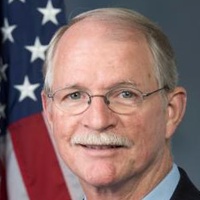
John Rutherford
Representative
FL
John Rutherford
Representative
FL
The PLAN for School Safety Act of 2025 establishes a new federal grant program to create regional School Safety Development Centers. These centers will provide personalized, research-backed consultation and technical assistance to schools on developing and implementing comprehensive safety and mental health plans. The program prioritizes support for rural, Tribal, and low-resource communities, while explicitly prohibiting the use of funds for firearm training.
This Act imposes sweeping, mandatory sanctions, tariffs, and investment prohibitions on the Russian Federation and its affiliates until Russia negotiates a lasting peace with Ukraine.

Brian Fitzpatrick
Representative
PA
Brian Fitzpatrick
Representative
PA
The Sanctioning Russia Act of 2025 imposes sweeping economic penalties on the Russian Federation in response to its aggression against Ukraine. This legislation mandates severe, immediate sanctions against key Russian officials, financial institutions, and energy sector entities, including asset freezes and trade prohibitions. Furthermore, the Act dramatically increases import duties on Russian goods and requires the President to review and reimpose these measures until Russia negotiates a lasting peace with Ukraine.
The EASE Act of 2025 mandates the testing of a new model to improve specialty healthcare access for rural and underserved Medicare and Medicaid beneficiaries using digital tools and coordinated care.
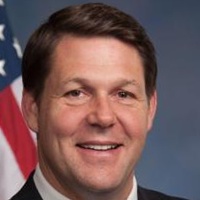
Jodey Arrington
Representative
TX
Jodey Arrington
Representative
TX
The EASE Act of 2025 mandates that the Center for Medicare and Medicaid Innovation (CMMI) test a new model to improve access to specialty health services. This "Specialty Health Care Services Access Model" will utilize digital tools, like telehealth, to connect eligible Medicare, Medicaid, and CHIP beneficiaries in rural or underserved areas with necessary specialty care. The model must be tested through a network of qualified, experienced, and primarily rural-based nonprofit providers.
This Act ensures over-the-road buses receive fair and equal access, rates, and terms when using toll facilities and HOV lanes, and mandates public transparency regarding these rules.
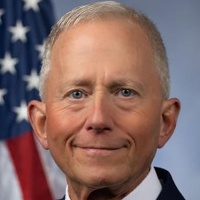
Jefferson Van Drew
Representative
NJ
Jefferson Van Drew
Representative
NJ
The Bus Parity and Clarity Act ensures fair and equal access for over-the-road buses, including scheduled and charter services, on federally regulated toll facilities and in HOV lanes. This legislation mandates that these buses receive the same rates and conditions as standard public transportation vehicles, especially in value pricing programs. Furthermore, the Federal Highway Administration must maintain a public database detailing these access terms.
This bill mandates that businesses receiving or sending goods must allow commercial truck drivers access to restrooms while on their property, and requires port terminal operators to provide adequate restroom facilities for drayage truck operators.
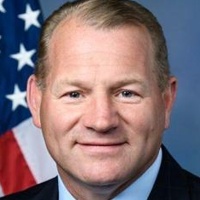
Troy Nehls
Representative
TX
Troy Nehls
Representative
TX
The Trucker Bathroom Access Act ensures that commercial truck drivers are allowed to use restrooms at businesses where they are delivering or picking up goods. This legislation also mandates that operators of marine terminals provide adequate and safe restroom facilities for drayage truck drivers working on port property. The goal is to guarantee basic sanitation access for professional drivers during their work hours.
The COMPLETE Care Act increases Medicare payments to primary care providers for integrating behavioral health services between 2027 and 2029 and provides technical assistance to support these practices.
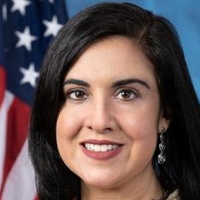
Nicole Malliotakis
Representative
NY
Nicole Malliotakis
Representative
NY
The COMPLETE Care Act aims to improve mental healthcare access by providing Medicare incentives for primary care providers to integrate behavioral health services into their practices between 2027 and 2029. This legislation offers increased Medicare payments for specific integrated services during those years, ensuring these bonuses do not trigger cuts elsewhere in the Medicare budget. Additionally, the bill mandates technical assistance to help primary care offices successfully adopt these new integrated care models.
The Arts Education for All Act mandates the integration, reporting, and research of arts education across early childhood, K-12, and correctional systems to ensure comprehensive access and measure its impact on student development and offender reentry.
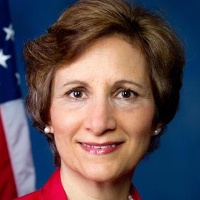
Suzanne Bonamici
Representative
OR
Suzanne Bonamici
Representative
OR
The Arts Education for All Act aims to elevate the status and accessibility of arts education across the entire educational spectrum. It mandates evidence-based training for early childhood providers, requires states to integrate arts education into core academic planning and public reporting, and authorizes the use of the arts in juvenile and adult offender reentry programs. Furthermore, the bill directs federal research agencies to study the impact of the arts and restores arts assessment to the national testing schedule.
The ABC Act mandates a comprehensive review and simplification of processes, forms, and communications across Medicare, Medicaid, CHIP, and Social Security to alleviate burdens on family caregivers.
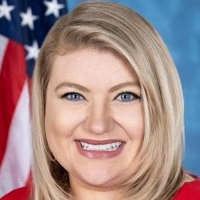
Katherine Cammack
Representative
FL
Katherine Cammack
Representative
FL
The ABC Act mandates a comprehensive review of Medicare, Medicaid, CHIP, and Social Security programs to significantly simplify application processes, forms, and communications for family caregivers. This effort requires federal agencies to streamline requirements, improve customer service, and enhance accessibility across their systems. The goal is to reduce the administrative burden on caregivers while ensuring clear and timely access to essential benefits. Agencies must report their findings and planned actions to Congress within two years of enactment.
This Act establishes a comprehensive security partnership between the U.S., Israel, Greece, and Cyprus to enhance counterterrorism efforts and maritime security through new training programs, interparliamentary groups, and the removal of certain restrictions on defense cooperation with Cyprus.
Nicole Malliotakis
Representative
NY
Nicole Malliotakis
Representative
NY
This Act establishes a comprehensive security partnership between the United States, Israel, Greece, and the Republic of Cyprus focused on counterterrorism and maritime security in the Eastern Mediterranean. It mandates the creation of new joint training programs, formalizes interparliamentary and executive cooperation groups, and removes previous limitations on defense articles for Cyprus. The legislation also authorizes significant funding for security centers and training initiatives in Cyprus and Greece through fiscal year 2029.
This bill excludes certain veterinary student loan repayments and forgiveness amounts from taxable income to encourage veterinarians to practice in rural areas.

Adrian Smith
Representative
NE
Adrian Smith
Representative
NE
The Rural Veterinary Workforce Act aims to encourage more veterinarians to serve in underserved rural areas by making participation in certain loan repayment or forgiveness programs more financially appealing. This bill amends the tax code to exclude amounts received through qualifying state or federal veterinary student loan repayment programs from being counted as taxable income. This tax benefit applies to amounts received for taxable years beginning after December 31, 2025.
This bill mandates a study comparing the quality of mental health and addiction therapy care provided to veterans by the VA versus non-VA providers.
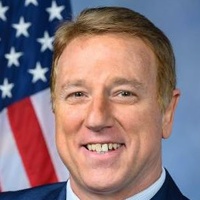
Patrick Fallon
Representative
TX
Patrick Fallon
Representative
TX
This bill mandates a comprehensive, independent study comparing the quality of mental health and addiction therapy provided to veterans by the Department of Veterans Affairs (VA) versus non-VA providers. The study will assess outcomes, treatment methods, coordination, and patient experience across various care settings. The final report will be submitted to Congress and made public to inform future quality improvements.
This act requires federal agencies to conduct detailed cost-benefit analyses for significant job relocations, which are then reviewed by the Inspector General and reported to Congress to ensure transparency.
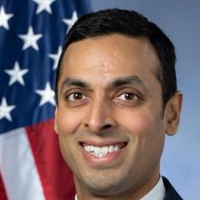
Suhas Subramanyam
Representative
VA
Suhas Subramanyam
Representative
VA
The COST of Relocations Act mandates that Federal agencies conduct a detailed, OMB-guided cost-benefit analysis before executing any "covered relocation" of jobs. Agencies must submit this analysis to their Inspector General (OIG), who then reviews the methodology and findings before reporting directly to Congress. This process ensures transparency and rigorous economic justification for significant federal job moves.
This bill mandates that Medicare provide equitable reimbursement for the transportation and setup of portable ultrasound equipment, mirroring current payments for portable X-ray services.
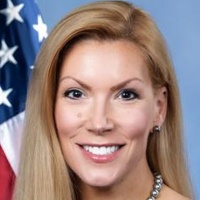
Beth Van Duyne
Representative
TX
Beth Van Duyne
Representative
TX
The Portable Ultrasound Reimbursement Equity Act of 2025 updates Medicare coverage to include diagnostic ultrasound tests. This legislation mandates that Medicare establish separate payments for the transportation and setup of portable ultrasound equipment, mirroring existing payments for portable X-ray services. These changes are set to take effect starting January 1, 2027.
This bill directs the Secretary of Transportation to develop and fund a comprehensive 10-year plan to modernize the aging infrastructure and facilities of the United States Merchant Marine Academy.
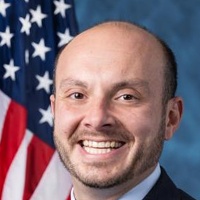
Andrew Garbarino
Representative
NY
Andrew Garbarino
Representative
NY
This bill directs the Secretary of Transportation to develop and implement a comprehensive 10-year Campus Modernization Plan for the United States Merchant Marine Academy. The plan must address critical infrastructure needs, including new training facilities, updated housing, and essential utility overhauls, to support modern maritime education and national security requirements. Congress authorizes up to \$1.02 billion from the Maritime Security Trust Fund between fiscal years 2026 and 2035 to execute this modernization effort.
The TELL Act requires companies storing user data in China to clearly disclose the data's location and any potential access by the Chinese government or state-owned entities.
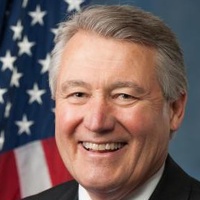
Rick Allen
Representative
GA
Rick Allen
Representative
GA
The TELL Act mandates that websites and mobile apps collecting user data and storing it in China must clearly disclose this storage location and whether the Chinese government or state-owned entities can access that information. Companies are prohibited from knowingly providing false disclosures regarding data storage or access. Violations of this Act will be enforced by the Federal Trade Commission (FTC) as unfair or deceptive business practices.
The PHIT Act of 2025 allows taxpayers to deduct up to \$1,000 annually for qualified expenses related to physical fitness, gym memberships, and exercise instruction to promote healthier lifestyles.
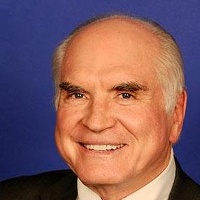
Mike Kelly
Representative
PA
Mike Kelly
Representative
PA
The Personal Health Investment Today Act of 2025 (PHIT Act) aims to improve public health by incentivizing healthier lifestyles, particularly to combat obesity. This bill allows taxpayers to treat certain qualified sports and fitness expenses, such as gym memberships and instruction fees, as deductible medical expenses. Deductions are capped annually at \$1,000 per individual or \$2,000 for joint filers.