Legislative Activity
Track Eugene's sponsored bills, co-sponsored legislation, and voting record
This bill reauthorizes key programs under the North Korean Human Rights Act of 2004, strengthens efforts to promote human rights and freedom of information in North Korea, and addresses the urgent need for family reunions for divided Korean Americans.

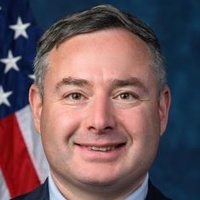
Young Kim
Representative
CA
Young Kim
Representative
CA
The North Korean Human Rights Reauthorization Act of 2025 seeks to continue and strengthen U.S. efforts to promote human rights and democracy in North Korea. The bill reauthorizes key programs and emphasizes the need to increase the flow of outside information into the isolated nation. It also urges China to cease forcibly repatriating North Korean refugees and calls for prioritizing family reunions for divided Korean Americans. Finally, the Act establishes new reporting requirements concerning U.S. human rights activities related to North Korea.
This act mandates that all states allow eligible individuals to register and vote on the same day during federal elections, beginning in November 2026.
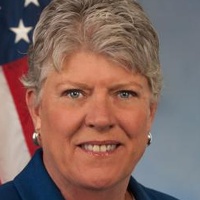
Julia Brownley
Representative
CA
Julia Brownley
Representative
CA
The Same Day Registration Act of 2025 mandates that all states allow eligible individuals to register to vote and cast a ballot on the same day during any federal election, including early voting periods. This requirement applies starting with the November 2026 general election. States without any voter registration requirement for federal elections are exempt from this mandate.
This Act increases investment limits for financial institutions to promote community welfare.
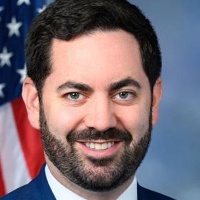
Michael Lawler
Representative
NY
Michael Lawler
Representative
NY
The Community Investment and Prosperity Act aims to boost community welfare by increasing existing investment limits for financial institutions. Specifically, this legislation raises the statutory investment cap from 15% to 20% within relevant sections of the Revised Statutes and the Federal Reserve Act. This adjustment is intended to encourage greater investment activity.
This bill updates the Fair Credit Reporting Act to clarify and standardize the term used for servicemembers eligible for credit monitoring services.

Elise Stefanik
Representative
NY
Elise Stefanik
Representative
NY
This bill, the Servicemember Credit Monitoring Enhancement Act, updates the Fair Credit Reporting Act to clarify and standardize the term used for service members eligible for credit monitoring services. It replaces the outdated term "active duty military consumer" with the broader and more accurate term "uniformed services member consumer." This ensures consistent protection and access to credit monitoring for all eligible members of the uniformed services.
This bill allows volunteer firefighters and emergency medical personnel to claim a charitable deduction for the value of their services, capped at 300 hours per year.
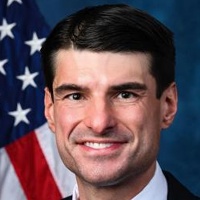
Robert Bresnahan
Representative
PA
Robert Bresnahan
Representative
PA
The Helping Our Heroes Act allows volunteer firefighters and emergency medical personnel to claim a charitable deduction for the value of their services. This deduction is set at \$20 per hour, up to 300 hours annually. The provision also permits taxpayers who do not itemize deductions to claim this specific charitable contribution.
This Act mandates a comprehensive review of veteran overdose deaths over the preceding five years to inform future prevention strategies, particularly those involving non-prescription opioids.
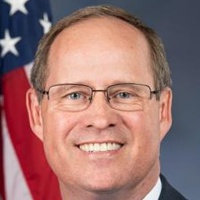
Gregory Murphy
Representative
NC
Gregory Murphy
Representative
NC
The Veterans Heroin Overdose Prevention Examination Act, or Veterans HOPE Act, mandates the Department of Veterans Affairs (VA) to conduct a comprehensive review of veteran overdose deaths over the preceding five years. This review must analyze prescription history, medications present at death, and contributing factors, especially focusing on deaths involving non-prescription opioids like heroin and fentanyl. The findings, including recommendations for improving veteran safety, will be reported to Congress and made publicly available.
This Act expands federal transportation funding to mandate the purchase, deployment, and planning for Automated External Defibrillators (AEDs) in various transportation facilities across the nation.

Jefferson Van Drew
Representative
NJ
Jefferson Van Drew
Representative
NJ
The Public Access to Defibrillation in Transportation Facilities Act of 2025 aims to increase the availability of Automated External Defibrillators (AEDs) in public transportation settings. The bill expands federal grant programs to allow funds to be used for purchasing AEDs and developing emergency response plans at these facilities. Furthermore, it directs the Secretary of Transportation to issue recommendations and guidelines for AED deployment and emergency planning at interstate transportation facilities. This legislation seeks to improve response times to sudden cardiac arrest in areas frequented by the public.
This resolution commemorates the seventh anniversary of Jamal Khashoggi's murder while condemning ongoing Saudi human rights abuses and calling for accountability for those responsible.

James Walkinshaw
Representative
VA
James Walkinshaw
Representative
VA
This resolution commemorates the seventh anniversary of Jamal Khashoggi's murder and addresses ongoing human rights abuses by the Government of Saudi Arabia, including transnational repression against dissidents. Congress calls on Saudi Arabia to hold all individuals accountable for Khashoggi's murder and to immediately release all wrongfully detained persons. The resolution emphasizes that these abuses strain the essential U.S.-Saudi relationship.
The RESTRAIN Act prohibits the United States from conducting any explosive testing of nuclear weapons starting in fiscal year 2026, while still permitting subcritical nuclear tests.

Dina Titus
Representative
NV
Dina Titus
Representative
NV
The RESTRAIN Act prohibits the United States from conducting any explosive testing of nuclear weapons or any other nuclear explosion, effective in fiscal year 2026 and beyond. This legislation specifically bans the use of authorized funds for such testing. However, the Act explicitly allows for the continuation of subcritical nuclear tests.
This Act establishes new regulations and serial number requirements for tableting and encapsulating machines and their critical parts to combat illicit drug manufacturing.
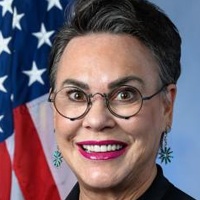
Harriet Hageman
Representative
WY
Harriet Hageman
Representative
WY
The Fight Illicit Pill Presses Act amends the Controlled Substances Act to regulate equipment used in illicit drug manufacturing. This legislation requires manufacturers and distributors of tableting and encapsulating machines, and their critical parts, to apply permanent serial numbers to these items. The bill also prohibits the removal or alteration of these required serial numbers.
This bill extends and modifies various tax credits for energy production, efficiency improvements, and clean vehicle adoption to lower energy costs and support American energy leadership.
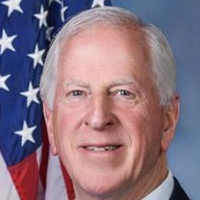
Mike Thompson
Representative
CA
Mike Thompson
Representative
CA
The American Energy Independence and Affordability Act is a comprehensive bill designed to lower energy costs by extending and adjusting key tax incentives across energy production, efficiency, and clean vehicle adoption. It stabilizes support for renewable energy manufacturing, extends deadlines for energy-efficient building credits, and ensures consumer incentives for electric vehicles remain available through 2032. Overall, the legislation aims to provide long-term certainty for energy investments and consumer adoption of cleaner technologies.
This bill implements the transfer and investment of frozen Russian sovereign assets into a dedicated Ukraine Support Fund, mandating regular aid disbursements and requiring diplomatic engagement with allies.

Joe Wilson
Representative
SC
Joe Wilson
Representative
SC
The REPO for Ukrainians Implementation Act of 2025 formally recognizes international calls to repurpose frozen Russian sovereign assets to aid Ukraine. This bill grants the President authority to transfer non-confiscated Russian assets into the Ukraine Support Fund, where they must be invested in U.S. government debt. Furthermore, the Secretary of State is mandated to obligate at least $250 million from the fund to Ukraine every quarter. The Act also requires the President to report on the location of these Russian assets globally and directs diplomatic efforts to encourage allies to contribute quarterly.
This bill mandates the designation of the Russian Federation as a state sponsor of terrorism if the Secretary of State cannot certify the safe return and reintegration of Ukrainian children abducted since the 2022 invasion.
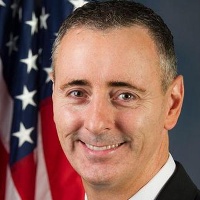
Brian Fitzpatrick
Representative
PA
Brian Fitzpatrick
Representative
PA
This bill mandates the Secretary of State to designate the Russian Federation as a state sponsor of terrorism if Russia fails to ensure the safe return and reintegration of Ukrainian children abducted since the 2022 invasion. The designation triggers existing sanctions unless the Secretary can certify that all forcibly deported children are safely reunited with their families. Removal of this designation requires Russia to cease terrorism support and meet strict criteria regarding the return of all displaced children.
This act establishes an expedited 30-day approval process through the FDA for licensed blood centers seeking to add new apheresis collection devices at existing locations.
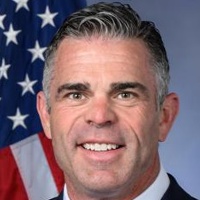
Tony Wied
Representative
WI
Tony Wied
Representative
WI
The BLOOD Centers Act establishes an expedited approval process through the FDA for licensed blood centers seeking to add new apheresis collection devices at existing locations. This fast-track system mandates a 30-day decision window for supplemental Biologics License Application (BLA) supplements, ensuring quicker deployment of new equipment. The goal is to streamline operations for established blood centers that meet high safety and quality standards.
This Act prioritizes and streamlines U.S. security assistance and defense cooperation with key NATO allies on the Eastern Flank to counter threats from Russia.
Joe Wilson
Representative
SC
Joe Wilson
Representative
SC
The Eastern Flank Strategic Partnership Act of 2025 establishes U.S. policy to prioritize defense cooperation and security assistance for key NATO allies bordering Russia and Belarus. This legislation designates specific frontline nations as "Eastern Flank Strategic Defense Partners" based on geographic location and commitment to defense spending. The Act mandates that these partners receive priority access to U.S. military financing, equipment transfers, and pre-positioned war reserve stocks to enhance regional deterrence. Finally, the Secretaries of Defense and State must brief Congress on the implementation of these priorities within 180 days of the Act's enactment.
This act officially recognizes dyslexia under federal education law and ensures equitable access to necessary accommodations for all eligible students.
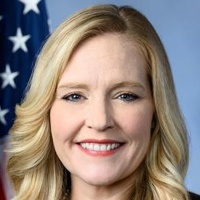
Erin Houchin
Representative
IN
Erin Houchin
Representative
IN
The 21st Century Dyslexia Act formally recognizes dyslexia under federal education law by updating the Individuals with Disabilities Education Act (IDEA) definition of specific learning disabilities. This legislation provides a clear definition of dyslexia, emphasizing unexpected reading difficulty due to phonological processing challenges. Furthermore, the Act ensures equitable access to necessary accommodations and services for all eligible children, specifically addressing disparities for low-income and English language learner students.
This Act reforms Medicare payment for skin substitute products starting in 2026 and enhances program integrity by targeting high-volume providers with increased scrutiny and potential prior authorization requirements.
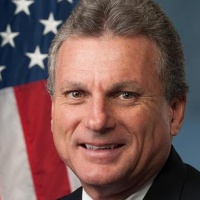
Earl Carter
Representative
GA
Earl Carter
Representative
GA
The Skin Substitute Access and Payment Reform Act establishes a new Medicare Part B payment system for advanced skin substitute products starting in 2026, basing initial payments on 2023 utilization data and subsequent annual updates tied to the Consumer Price Index. The bill also enhances program integrity by identifying high-volume providers for increased scrutiny, including prepayment reviews and mandatory prior authorization requirements starting in 2027. Furthermore, it mandates the creation of a single, consolidated billing code for all skin substitute products by 2026.
This bill, the Healthy Meals Help Kids Learn Act of 2025, increases federal reimbursement rates for school lunches and breakfasts starting in late 2025.
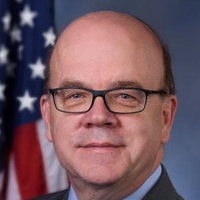
James McGovern
Representative
MA
James McGovern
Representative
MA
The Healthy Meals Help Kids Learn Act of 2025 aims to increase federal reimbursement rates for school meals. Specifically, it provides an additional 45 cents per lunch and 28 cents per breakfast served by school food authorities starting November 1, 2025. These adjusted rates will be subject to future inflation adjustments.
This bill establishes a comprehensive federal program to assess, regulate, and support the development of commercial-scale offshore aquaculture through demonstration projects, workforce training, and dedicated research centers.
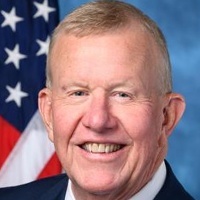
Mike Ezell
Representative
MS
Mike Ezell
Representative
MS
This bill aims to establish and support the commercial-scale offshore aquaculture industry through several key actions. It creates a centralized Office of Aquaculture to coordinate regulatory and scientific efforts and mandates demonstration projects to assess the viability and safety of ocean farming. Furthermore, the legislation invests in workforce development, establishes university Centers of Excellence, and provides grants to preserve vital working waterfronts.
This bill, the Marine Fisheries Habitat Protection Act, establishes a streamlined process for converting inactive offshore oil and gas platforms and pipelines into artificial reefs, contingent upon state assumption of liability.
Mike Ezell
Representative
MS
Mike Ezell
Representative
MS
This bill, the Marine Fisheries Habitat Protection Act, establishes a streamlined process for converting inactive offshore oil and gas platforms and pipelines into artificial reefs. It defines key terms and outlines steps for applicants to seek approval to leave these structures in place, provided they meet environmental and safety criteria. The legislation also facilitates the transfer of long-term liability for these new reefs to participating state agencies. This process temporarily halts government removal orders while applications are under review.