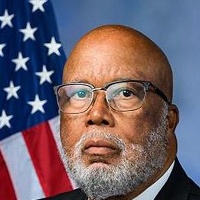
Legislative Activity
Track Bennie's sponsored bills, co-sponsored legislation, and voting record
This bill restricts political appointees and special government employees from accessing Social Security data, establishes civil damages for unauthorized access, mandates Inspector General investigations, and requires a GAO study on the changes.

John Larson
Representative
CT
John Larson
Representative
CT
The Protecting Americans’ Social Security Data Act restricts political appointees and special government employees from accessing sensitive Social Security beneficiary data systems. It establishes a right for individuals to sue the government or responsible parties for unauthorized access or disclosure of their private Social Security information, including specified minimum damages. Furthermore, the bill mandates the Inspector General to investigate such violations and report findings to Congress within 30 days. Finally, it requires the GAO to conduct a comprehensive study on the impact of these new privacy and enforcement measures.
The "Keeping Our Field Offices Open Act" prevents the Social Security Administration from closing or limiting access to field offices, hearing offices, and resident stations, ensuring continued service availability for the public.
John Larson
Representative
CT
John Larson
Representative
CT
The "Keeping Our Field Offices Open Act" prevents the Social Security Administration (SSA) from closing or consolidating field offices, hearing offices, and resident stations, ensuring continued access to services. It requires the SSA Commissioner to justify any planned closures to Congress with detailed analysis and cost-benefit assessments, considering the impact on vulnerable populations. The bill mandates public notice, hearings, and a final report to Congress before any changes, allowing appeals and maintaining the number of offices at or above the January 20, 2025 level, excluding temporary emergency closures.
This resolution affirms the judiciary's authority and calls on the President and his administration to immediately comply with all federal court orders to uphold the rule of law and the separation of powers.
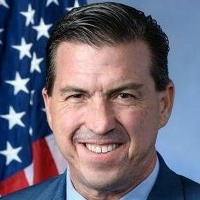
Kevin Mullin
Representative
CA
Kevin Mullin
Representative
CA
This resolution reaffirms the judiciary's constitutional authority to serve as a check on executive power and emphasizes the obligation of the President to comply with all federal court orders. It calls on the Trump administration to immediately adhere to existing judicial rulings, asserting that defiance of these orders undermines the rule of law and the separation of powers.
The MERIT Act mandates the reinstatement of federal probationary employees affected by mass terminations occurring between January 20, 2025, and the Act's enactment, providing back pay and benefits.

LaMonica McIver
Representative
NJ
LaMonica McIver
Representative
NJ
The MERIT Act requires federal agencies to reinstate probationary employees who were terminated as part of a mass termination event between January 20, 2025, and the Act's enactment date, providing them with back pay and benefits. The Act also mandates reports on government employee terminations and the reinstatement process. It defines key terms such as "affected probationary employee" and "mass termination" to clarify the scope and applicability of the Act. This act ensures that affected employees are treated as involuntarily separated without cause and outlines the process for determining back pay and providing notice to eligible employees.
This resolution designates August as Slavery Remembrance Month to honor the lives of enslaved people, condemn the history and legacy of slavery, and recognize the freedom fighters who fought for its abolition.

Al Green
Representative
TX
Al Green
Representative
TX
The "Original Slavery Remembrance Month Resolution" designates August as a time to commemorate the lives of enslaved people and honor the freedom fighters who resisted the institution of slavery. This resolution condemns the history of chattel slavery and its ongoing systemic effects in the United States. It encourages national observance and reflection to ensure the history and legacy of slavery are never forgotten.
The Original Black History Month Resolution of 2025 recognizes February as Black History Month, honoring the theme "African Americans and Labor" and the essential contributions of Black workers throughout U.S. history.
Al Green
Representative
TX
Al Green
Representative
TX
The "Original Black History Month Resolution of 2025" officially recognizes February 2025 as Black History Month with the theme "African Americans and Labor." The resolution honors the essential contributions of Black workers to the U.S. economy from enslavement to the present day while highlighting the ongoing struggle for labor equality. It encourages all Americans to celebrate these achievements and acknowledge the historical and systemic challenges still faced by Black workers today.
The "Second Chances for Rural Hospitals Act" expands Medicare eligibility for rural emergency hospitals to include certain facilities that closed between 2014 and 2020, with modified payment rules for those near existing hospitals.
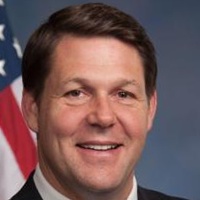
Jodey Arrington
Representative
TX
Jodey Arrington
Representative
TX
The "Second Chances for Rural Hospitals Act" broadens the definition of "rural emergency hospital" under Medicare, enabling certain previously closed rural hospitals to re-qualify. Effective January 1, 2027, it allows facilities that ceased operations between 2014 and 2020 to become rural emergency hospitals. It also modifies payment rules, specifying that increased payments will not apply to facilities located less than 35 miles from the nearest hospital.
The "Safe Schools Improvement Act" amends the Elementary and Secondary Education Act of 1965, requiring states to establish policies that prevent and prohibit bullying and harassment in schools based on protected characteristics, ensuring a safe and inclusive learning environment for all students.

Linda Sánchez
Representative
CA
Linda Sánchez
Representative
CA
The Safe Schools Improvement Act aims to reduce bullying and harassment in schools by requiring states to establish policies prohibiting such conduct based on various characteristics, including race, sex, religion, and disability. It mandates annual notifications, data collection on incidents, biennial evaluations of programs, and regular reports to Congress to ensure accountability and effectiveness. This act does not infringe on existing nondiscrimination laws or freedom of speech but seeks to create a safer, more inclusive learning environment for all students.
This bill officially renames the Robert E. Lee Memorial as the Arlington House National Historic Site.
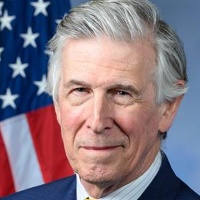
Donald Beyer
Representative
VA
Donald Beyer
Representative
VA
This bill officially redesignates the site currently known as the Robert E. Lee Memorial as the "Arlington House National Historic Site." It mandates that all official U.S. records, maps, and documents be updated to reflect this new name and repeals the previous joint resolutions that established the former designation.
This bill authorizes a joint session of Congress to be held in Philadelphia on July 2, 2026, to commemorate the 250th anniversary of the Declaration of Independence.
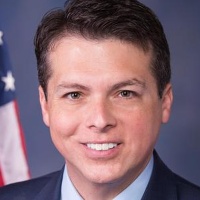
Brendan Boyle
Representative
PA
Brendan Boyle
Representative
PA
This resolution authorizes a joint session of Congress to be held at Independence National Historical Park in Philadelphia on July 2, 2026. This historic meeting will commemorate the 250th anniversary of the signing of the Declaration of Independence.
This bill regulates large capacity ammunition feeding devices, making it illegal to import, sell, manufacture, transfer, or possess them, with certain exceptions for law enforcement and other entities, and allows for Byrne grants to be used for buy-back programs.

Diana DeGette
Representative
CO
Diana DeGette
Representative
CO
The "Keep Americans Safe Act" aims to regulate large capacity ammunition feeding devices by making it illegal to import, sell, manufacture, transfer, or possess magazines holding more than 15 rounds, with exceptions for law enforcement, government entities, and devices lawfully possessed before the law's enactment. It also permits the use of Byrne grants for buy-back programs of these devices and mandates that newly manufactured devices be marked with identifying information. Violators of this Act will face penalties under existing provisions of Title 18 of the U.S. Code.
The Sgt. Isaac Woodard, Jr. and Sgt. Joseph H. Maddox GI Bill Restoration Act of 2025 aims to restore GI Bill benefits to Black World War II veterans and their direct descendants who were denied them due to racial discrimination, and to address inequalities in benefits for female and minority veterans.
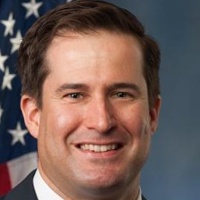
Seth Moulton
Representative
MA
Seth Moulton
Representative
MA
The Sgt. Isaac Woodard, Jr. and Sgt. Joseph H. Maddox GI Bill Restoration Act of 2025 aims to address historical inequities by extending housing and educational benefits to Black World War II veterans and their direct descendants who were previously denied these benefits due to racial discrimination. The bill amends Title 38 of the U.S. Code to include these veterans and their families in housing loan and educational assistance programs. It also establishes a panel to identify and recommend additional support for female and minority veterans.
This act reinstates criminal penalties for individuals who charge unauthorized fees to veterans for assisting with claims for VA benefits.

Chris Pappas
Representative
NH
Chris Pappas
Representative
NH
The GUARD VA Benefits Act establishes criminal penalties for individuals who charge veterans unauthorized fees for assisting with claims for benefits administered by the Department of Veterans Affairs. This legislation amends existing law to prohibit soliciting, contracting for, or receiving compensation for preparing or prosecuting VA benefit claims, except where explicitly authorized by other statutes.
The "Access to Reproductive Care for Servicemembers Act" ensures that members of the Armed Forces and their dependents can access leave and travel reimbursement for reproductive health care services, including abortion and fertility treatments, not covered by the Department of Defense, while safeguarding their privacy and prohibiting adverse actions.
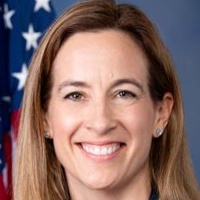
Mikie Sherrill
Representative
NJ
Mikie Sherrill
Representative
NJ
The "Access to Reproductive Care for Servicemembers Act" ensures that members of the Armed Forces and their dependents can access leave and reimbursement for travel expenses related to abortion services and assisted reproductive technology, such as in vitro fertilization, when these services are not available nearby. It protects the privacy of service members seeking such care and prohibits any adverse actions against them for utilizing these provisions. The bill aims to address barriers to reproductive healthcare created by state abortion restrictions and logistical challenges faced by military personnel.
The PAST Act of 2025 significantly strengthens the Horse Protection Act by increasing penalties, banning specific action devices, and mandating licensed inspectors to combat the practice of horse soring.

Brian Fitzpatrick
Representative
PA
Brian Fitzpatrick
Representative
PA
The PAST Act of 2025 significantly strengthens the Horse Protection Act to combat the painful practice of soring in specific horse breeds. This bill increases penalties for violations, establishes stricter licensing and oversight for inspectors, and explicitly bans the use of "action devices" designed to cause unnatural gaits. The legislation aims to enhance enforcement, ensure fairer competition, and hold violators accountable through increased fines and disqualifications.
This bill expands income-driven repayment options for parents who have federal student loans.

Maxine Waters
Representative
CA
Maxine Waters
Representative
CA
The "Affordable PLUS Repayment Options for Parents Act of 2025" expands income-contingent and income-based repayment options to parents who have taken out PLUS loans for their children's education. It removes restrictions that previously made PLUS loan borrowers ineligible for income-based repayment plans. The bill defines "partial financial hardship" based on a borrower's income and family size, ensuring more families can qualify for reduced payments. These changes apply to borrowers with outstanding PLUS loans or consolidation loans used to pay off PLUS loans, who are repaying their loans through income-driven repayment plans on or after the enactment date.
The SAFE Act of 2025 amends existing law to include equines (horses) in the prohibition of slaughtering animals for human consumption.
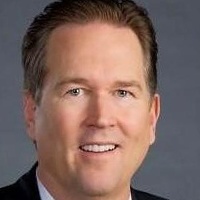
Vern Buchanan
Representative
FL
Vern Buchanan
Representative
FL
The SAFE Act of 2025 amends existing legislation to explicitly prohibit the slaughter of horses for human consumption, reinforcing protections for these animals. This bill seeks to prevent the inhumane treatment of American equines by closing loopholes that allow their slaughter and export for human consumption.
This resolution condemns the Iranian regime’s terrorism and human rights abuses while affirming support for the Iranian people’s right to establish a democratic, secular, and non-nuclear republic.

Tom McClintock
Representative
CA
Tom McClintock
Representative
CA
This resolution condemns the Iranian regime for its ongoing human rights abuses, state-sponsored terrorism, and regional instability. It expresses strong support for the Iranian people's struggle for a democratic, secular, and non-nuclear republic. Furthermore, the bill advocates for international accountability for the regime's crimes and calls for the protection of Iranian political refugees.
The "Securing our Radioactive Materials Act" mandates the Nuclear Regulatory Commission (NRC) to enhance security measures for radioactive materials, considering socioeconomic factors and improving tracking and verification processes for category 3 licenses.

Ritchie Torres
Representative
NY
Ritchie Torres
Representative
NY
The "Securing our Radioactive Materials Act" mandates the Nuclear Regulatory Commission (NRC) to enhance the security of radioactive materials. This includes considering socioeconomic factors in security decisions and immediately improving the tracking and verification processes for category 3 radioactive sources and licenses. The NRC is required to update its guidelines and regulations within a year to implement these changes.
The American Dream and Promise Act of 2025 provides a pathway to permanent residency for eligible individuals who came to the U.S. as children, or who have Temporary Protected Status (TPS) or Deferred Enforced Departure (DED) status.
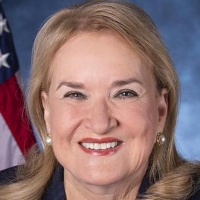
Sylvia Garcia
Representative
TX
Sylvia Garcia
Representative
TX
The American Dream and Promise Act of 2025 provides a pathway to permanent residency for eligible individuals who entered the United States as children and those with Temporary Protected Status (TPS) or Deferred Enforced Departure (DED). Title I, the Dream Act of 2025, establishes conditional permanent residency for eligible individuals who entered the U.S. as children. Title II, the American Promise Act of 2025, allows the Secretary of Homeland Security or the Attorney General to grant permanent resident status to eligible individuals from TPS or DED countries. Title III outlines general provisions, such as background checks, application processes, and fee exemptions, applicable to all seeking to adjust their status under this Act.