Legislative Activity
Track Derek's sponsored bills, co-sponsored legislation, and voting record
The I CAN Act removes practice and billing barriers for Nurse Practitioners, CRNAs, and CNMs across Medicare and Medicaid while increasing transparency in federal health program coverage decisions.
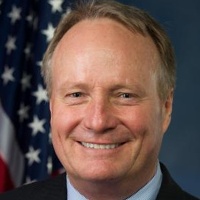
David Joyce
Representative
OH
David Joyce
Representative
OH
The "I CAN Act" is comprehensive legislation designed to remove existing practice and billing barriers for various Advanced Practice Registered Nurses (APRNs)—including Nurse Practitioners, CRNAs, and CNMs—within Medicare and Medicaid. It aims to expand patient access to care by allowing these qualified professionals to supervise, order, and bill for services to the full extent of their state-defined scope of practice. Furthermore, the bill enhances transparency and accountability for Medicare's local coverage decisions affecting APRN services. Overall, this act seeks to integrate APRNs more fully into federal healthcare programs, improving efficiency and service delivery.
This resolution expresses Congressional opposition to imposing new performance fees or royalties on local radio stations and businesses for broadcasting or playing music.
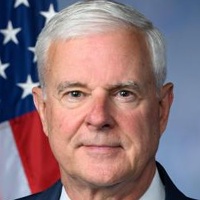
Steve Womack
Representative
AR
Steve Womack
Representative
AR
The Local Radio Freedom Act expresses Congressional opposition to imposing new performance fees, taxes, or royalties on local radio stations and businesses for playing music. It argues that the current system of free airplay provides essential promotional value to artists and that new fees would threaten the financial viability of local broadcasters and the vital community services they provide.
The "Death Tax Repeal Act" eliminates estate and generation-skipping transfer taxes, adjusts gift tax calculations, and sets a $10,000,000 lifetime gift exemption.
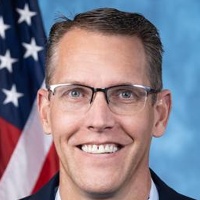
Randy Feenstra
Representative
IA
Randy Feenstra
Representative
IA
The "Death Tax Repeal Act" eliminates both estate and generation-skipping transfer taxes, effective from the date of enactment. It adjusts gift tax calculations by setting the lifetime gift exemption at $10,000,000, with inflation adjustments after 2011. The Act also includes transitional rules for applying certain sections of the Internal Revenue Code during the enactment year.
The "More Homes on the Market Act" increases the tax exclusion for profit from the sale of a primary residence, incentivizing homeowners to sell and increasing housing supply.
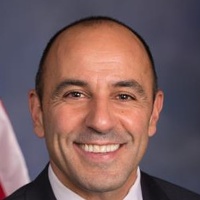
Jimmy Panetta
Representative
CA
Jimmy Panetta
Representative
CA
The "More Homes on the Market Act" increases the tax exclusion for profit from the sale of a primary residence, raising it to $500,000 for single filers and $1,000,000 for married couples filing jointly. These amounts will be adjusted for inflation starting in 2025. This change encourages homeowners to sell their properties, thereby increasing the availability of homes on the market.
The Midnight Rules Relief Act allows Congress to bundle and overturn multiple federal agency regulations finalized during the final year of a presidential term through a single joint resolution of disapproval.

Andy Biggs
Representative
AZ
Andy Biggs
Representative
AZ
The Midnight Rules Relief Act streamlines the congressional review process by allowing lawmakers to bundle multiple federal agency rules issued during a President’s final year into a single joint resolution of disapproval. This legislation simplifies the process for overturning "midnight rules," enabling Congress to vote on several regulations simultaneously rather than individually.
Extends federal death benefits to retired law enforcement officers who die or are disabled from targeted attacks related to their service.
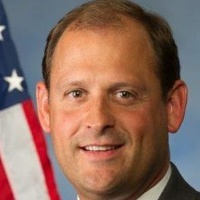
Garland Barr
Representative
KY
Garland Barr
Representative
KY
The "Chief Herbert D. Proffitt Act of 2025" amends the Omnibus Crime Control and Safe Streets Act of 1968 to extend death benefits to retired law enforcement officers who die or are disabled from targeted attacks due to their service. The bill applies retroactively to pending matters before the Bureau of Justice Assistance, or those filed/accruing after the enactment date, with exceptions for actions against retired law enforcement officers that occurred on or after August 28, 2012.
The "Alternatives to PAIN Act" aims to improve Medicare Part D coverage for non-opioid pain management drugs by reducing cost-sharing and removing barriers like step therapy and prior authorization, starting in 2026.
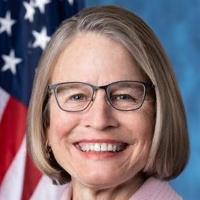
Mariannette Miller-Meeks
Representative
IA
Mariannette Miller-Meeks
Representative
IA
The "Alternatives to PAIN Act" amends Medicare Part D to improve access to non-opioid pain management drugs by waiving deductibles and ensuring they are placed on the lowest cost-sharing tier starting in 2026. The Act also prohibits the use of step therapy and prior authorization requirements for these drugs, further easing access for patients. These changes aim to provide more accessible alternatives for pain management, reducing reliance on opioids.
The United States-Israel Defense Partnership Act of 2025 bolsters defense cooperation between the U.S. and Israel through joint programs, funding increases, and extended authorities related to countering unmanned systems, anti-tunnel technology, emerging technologies, and war reserve stockpiles, while also exploring Israel's inclusion in the national technology and industrial base and assessing integrated air and missile defense in the CENTCOM region.
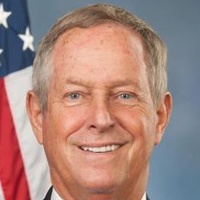
Joe Wilson
Representative
SC
Joe Wilson
Representative
SC
The United States-Israel Defense Partnership Act of 2025 seeks to bolster the defense relationship between the United States and Israel through joint initiatives and increased cooperation. It establishes programs to counter unmanned systems, extend anti-tunnel and counter-UAS cooperation, and promote collaboration in emerging technologies like AI and cybersecurity. The act also mandates the establishment of a Defense Innovation Unit office in Israel and assesses integrated air and missile defense in the U.S. Central Command region. Finally, it explores Israel's potential inclusion in the national technology and industrial base.
The Honoring Our Fallen Heroes Act of 2025 expands public safety officer benefits to include disability and death coverage for certain cancers presumed to be caused by on-duty exposure to carcinogens, and clarifies "line of duty" definitions for first responder benefits.
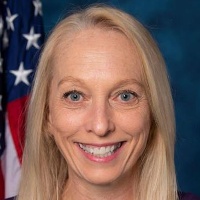
Mary Scanlon
Representative
PA
Mary Scanlon
Representative
PA
The Honoring Our Fallen Heroes Act of 2025 expands public safety officer benefits to include deaths and disabilities caused by exposure-related cancers, presuming that certain cancers diagnosed within 15 years of service are line-of-duty injuries if the officer served for at least 5 years. It defines "exposure-related cancer" and allows for updates to the list based on medical evidence, while also permitting individuals to petition for additions. The Act also clarifies "line of duty action" and applies retroactively to claims dating back to January 1, 2020, with a three-year window for filing claims based on these amendments.
Reauthorizes and amends the PROTECT Our Children Act to bolster efforts against child exploitation and internet crimes, including updating national strategies, expanding task force programs, and increasing funding.
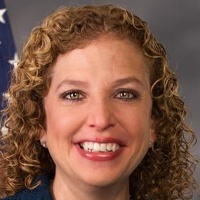
Debbie Wasserman Schultz
Representative
FL
Debbie Wasserman Schultz
Representative
FL
The PROTECT Our Children Reauthorization Act of 2025 reauthorizes and amends the PROTECT Our Children Act of 2008, enhancing efforts to combat child exploitation and internet crimes against children. It updates the National Strategy for Child Exploitation Prevention, expands the ICAC Task Force Program to include Tribal and military entities, and prioritizes investigations likely to rescue children. The act authorizes increased appropriations over the next three fiscal years and mandates that a significant portion of funds support the ICAC Task Force Program through grants. Additionally, it encourages digital forensic examinations, effective prosecutions, and the establishment of a National Internet Crimes Against Children Data System.
The "National Right-to-Work Act" prohibits mandatory union membership as a condition of employment, protecting employees' rights to choose whether or not to join or support a labor union.
Joe Wilson
Representative
SC
Joe Wilson
Representative
SC
The "National Right-to-Work Act" amends both the National Labor Relations Act and the Railway Labor Act to protect an employee's right to choose whether or not to join or support a labor union. It eliminates the possibility of mandatory union membership or dues payments as a condition of employment, ensuring that employees cannot be forced to join or support a union against their will.
The SAFE for America Act of 2025 eliminates the diversity visa program, effective October 1, 2025.
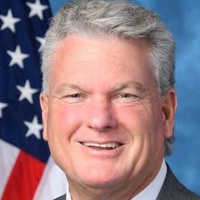
Mike Collins
Representative
GA
Mike Collins
Representative
GA
The SAFE for America Act of 2025 eliminates the Diversity Visa Program, which makes visas available to persons from countries with low rates of immigration to the United States. This is achieved through repealing subsection (c) of Section 203 of the Immigration and Nationality Act. The Act also makes corresponding technical amendments to other sections of the Immigration and Nationality Act to reflect this change. These changes would take effect beginning October 1, 2025.
This bill transfers the functions, assets, and responsibilities of the Food for Peace Act from the U.S. Agency for International Development to the Department of Agriculture.
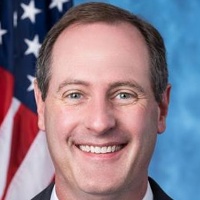
Tracey Mann
Representative
KS
Tracey Mann
Representative
KS
This bill transfers the functions, assets, and responsibilities for implementing the Food for Peace Act from the U.S. Agency for International Development (USAID) to the Department of Agriculture (USDA). The Secretary of Agriculture will now administer the program, though the Famine Early Warning Systems Network will remain under USDA control. This change allows the USDA to quickly update necessary rules to ensure a smooth transition of the program.
This joint resolution disapproves the Federal Trade Commission’s rule regarding premerger notification, reporting, and waiting period requirements, rendering it without legal force or effect.
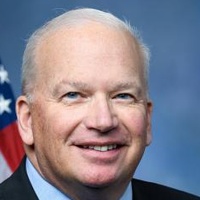
Scott Fitzgerald
Representative
WI
Scott Fitzgerald
Representative
WI
This resolution invokes the Congressional Review Act to formally disapprove the Federal Trade Commission’s recent rule regarding premerger notification, reporting, and waiting period requirements. If enacted, this measure would nullify the rule, rendering it without legal force or effect.
This bill creates a 20-year demonstration project waiving certain Social Security disability benefit rules for blind Americans to encourage their return to work.

Pete Sessions
Representative
TX
Pete Sessions
Representative
TX
The Blind Americans Return to Work Act of 2025 initiates a 20-year demonstration project aimed at helping blind Americans receiving Social Security disability benefits return to work. For the first 10 years, eligibility for benefits will be determined without considering substantial gainful activity, and benefits will be reduced based on earnings above a set amount, incentivizing employment without immediate loss of support. The project waives certain benefit requirements to facilitate successful employment, with participants having the option to opt out after the initial 10-year period. This act aims to support blind individuals in their transition back to the workforce while maintaining a safety net.
This bill would recognize alpha-gal as a major food allergen, requiring food labels to disclose its presence.
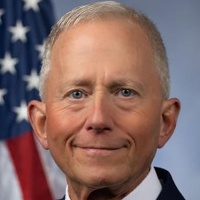
Jefferson Van Drew
Representative
NJ
Jefferson Van Drew
Representative
NJ
The Alpha-gal Allergen Inclusion Act amends the Federal Food, Drug, and Cosmetic Act to include alpha-gal, a sugar found in non-catarrhine primate mammals and red algae, as a major food allergen. This will require food labels to clearly identify the presence of alpha-gal. The amendment will take effect 18 months after the enactment of this Act, with an exception for mammal-derived ingredients where alpha-gal is below a detectable limit as determined by the Secretary.
The "Freedom to Invest in Tomorrow's Workforce Act" expands the use of 529 savings accounts to cover expenses related to postsecondary credentialing programs, including tuition, fees, books, supplies, equipment, and testing fees.

Robert Wittman
Representative
VA
Robert Wittman
Representative
VA
The "Freedom to Invest in Tomorrow's Workforce Act" amends Section 529 savings accounts to include expenses related to postsecondary credentialing programs. This allows 529 funds to cover costs like tuition, fees, books, supplies, and testing fees for recognized programs and credentials, as defined by the bill. These changes would apply to distributions made after the bill is enacted.
This joint resolution seeks to disapprove and nullify the Environmental Protection Agency’s rule regarding the phasedown and management of hydrofluorocarbons.
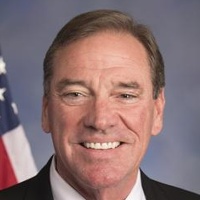
Neal Dunn
Representative
FL
Neal Dunn
Representative
FL
This joint resolution seeks to invoke the Congressional Review Act to disapprove and nullify the Environmental Protection Agency’s recent rule regarding the phasedown and management of hydrofluorocarbons. If enacted, the rule would have no force or effect, effectively blocking the EPA's regulatory framework for these substances.
Exempts family farms and small businesses from asset considerations in need analysis for federal student aid.
Tracey Mann
Representative
KS
Tracey Mann
Representative
KS
The "Family Farm and Small Business Exemption Act" amends the Higher Education Act of 1965 to exclude the net value of a family farm (on which the family resides) or a small business (with no more than 100 employees and owned/controlled by the family) from consideration as an asset when determining financial need for federal student aid. This change aims to make higher education more accessible for students from family farm and small business backgrounds.
The Senior Citizens Tax Elimination Act proposes to repeal federal income taxes on Social Security benefits while ensuring the Social Security and Railroad Retirement trust funds remain fully funded.

Thomas Massie
Representative
KY
Thomas Massie
Representative
KY
The Senior Citizens Tax Elimination Act proposes to repeal federal income taxes on Social Security benefits, ensuring these payments are no longer counted as gross income. To protect the financial stability of the Social Security and Railroad Retirement programs, the bill mandates automatic federal appropriations to offset any resulting revenue loss.