Legislative Activity
Track W.'s sponsored bills, co-sponsored legislation, and voting record
This Act prohibits federal subsidies, tax deductions, and essential health benefit coverage for procedures related to gender transition.
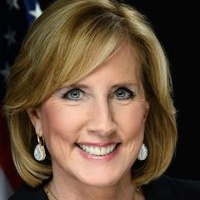
Claudia Tenney
Representative
NY
Claudia Tenney
Representative
NY
This Act prohibits the use of federal funds for gender transition procedures across major public health programs, including Medicaid, CHIP for minors, and Medicare. It also removes the tax deductibility for expenses related to these procedures, defining them broadly as medical interventions intended to change physical appearance to match an identity different from biological sex. The legislation provides specific medical exceptions for conditions like Disorders of Sex Development (DSD) and life-saving care. Finally, it bans gender transition procedures from being classified as an essential health benefit under the Affordable Care Act.
This bill mandates that FEMA use state-licensed professionals for cost estimates, material acquisition, and other technical activities related to certain disaster recovery projects under the Stafford Act.
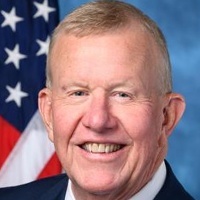
Mike Ezell
Representative
MS
Mike Ezell
Representative
MS
This bill mandates that the Federal Emergency Management Agency (FEMA) use appropriately licensed professionals for crucial disaster recovery activities under the Stafford Act. Specifically, licensed professionals must conduct cost estimates and oversee the acquisition of necessary materials for projects receiving assistance under sections 406 or 428. The legislation limits FEMA's ability to reject plans or purchases made by these licensed professionals unless fraud is evident. Furthermore, it requires state and local entities to hire these licensed professionals for developing the scope of work.
This resolution expresses the House of Representatives' recognition of Robert Aitken's Bible as a historical document of the United States Congress.
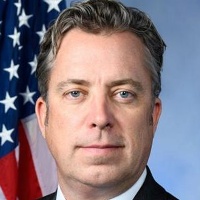
Andrew Ogles
Representative
TN
Andrew Ogles
Representative
TN
This resolution expresses the sense of the House of Representatives to formally recognize the Robert Aitken Bible as a historical document of the U.S. Congress. This Bible holds historical significance as the first English-language Bible printed in North America and was officially endorsed by the Continental Congress in 1782. The resolution simply affirms Congress's acknowledgment of this important piece of American history.
This Act promotes private employee ownership by extending tax deferrals for S corporation ESOP sales, ensuring ESOP-owned businesses retain small business status, and establishing new Treasury and Labor offices to provide assistance and advocacy.
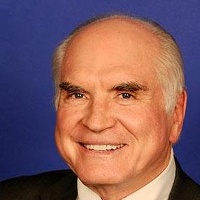
Mike Kelly
Representative
PA
Mike Kelly
Representative
PA
The Promotion and Expansion of Private Employee Ownership Act of 2025 aims to significantly boost employee ownership in S corporations through Employee Stock Ownership Plans (ESOPs). The bill extends key tax deferral benefits for stock sales to ESOPs and removes a major restriction on this tax treatment. Furthermore, it establishes new government offices and an Advocate for Employee Ownership to provide technical assistance and resolve disputes, while ensuring ESOP-owned businesses retain small business status for federal programs.
This bill temporarily exempts certain physician practices from Stark Law restrictions to allow them to dispense designated Medicare Part D prescription drugs directly to their patients while mandating a GAO study on in-office dispensing trends.
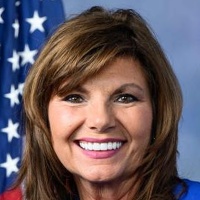
Diana Harshbarger
Representative
TN
Diana Harshbarger
Representative
TN
The Seniors’ Access to Critical Medications Act of 2025 temporarily modifies the physician self-referral prohibition (Stark Law) to allow physician practices to dispense certain Medicare Part D prescription drugs directly to their patients between 2026 and 2030. This exception is subject to specific conditions regarding prescribing, patient history, and dispensing location. The bill also mandates a GAO study to examine trends in physician office drug dispensing and makes a minor adjustment to the allocation for the Medicare Improvement Fund.
This act prohibits federal funding for colleges and universities that mandate COVID-19 vaccinations for students or employees.
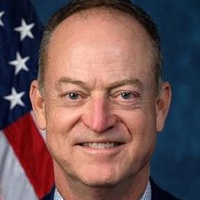
Mark Messmer
Representative
IN
Mark Messmer
Representative
IN
The No Vaccine Mandates in Higher Education Act prohibits the federal government from providing funds to colleges and universities that require students or employees to receive a COVID-19 vaccine. This measure ensures that institutions of higher education cannot mandate vaccination for enrollment, employment, or access to services without risking the loss of federal funding.
This Act prohibits federal agencies from awarding contracts over \$100,000 to companies that boycott Israel and requires existing contractors to refrain from boycotting Israel for the duration of the contract.
Claudia Tenney
Representative
NY
Claudia Tenney
Representative
NY
The Countering Hate Against Israel by Federal Contractors Act prohibits federal agencies from awarding contracts over \$100,000 to companies that boycott Israel. Companies seeking these contracts must certify they are not currently boycotting Israel and agree not to start one during the contract period. Agencies must terminate contracts if a violation is found, unless the company ceases the boycott.
This Act permits the mailing of alcoholic beverages through the USPS under specific conditions and new USPS regulations, while respecting existing state and local laws.
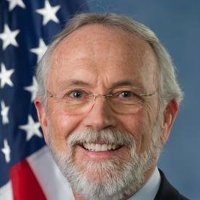
Dan Newhouse
Representative
WA
Dan Newhouse
Representative
WA
The United States Postal Service Shipping Equity Act amends federal law to permit the mailing of alcoholic beverages through the USPS under strict new regulations. These regulations will require age verification upon delivery, restrict shipments to personal use, and mandate that shippers be registered entities. This change does not preempt any existing state or local laws regarding alcohol sales or shipment.
This Act clarifies the duty treatment of whiskies by updating the Harmonized Tariff Schedule and requiring the USITC to add statistical tracking codes for imported whiskies.
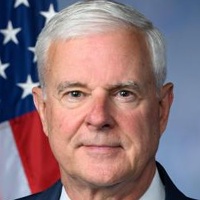
Steve Womack
Representative
AR
Steve Womack
Representative
AR
The Duty Drawback Clarification Act updates the U.S. tariff schedule to standardize the classification of whiskies under Chapter 22. This legislation removes an outdated whiskey classification code and requires the U.S. International Trade Commission to add new statistical tracking codes for imports. These changes will take effect 15 days after the Act is officially enacted.
This act extends the excise tax exemption for alternative motorboat fuels to include certain vessels operating exclusively along one U.S. coast.
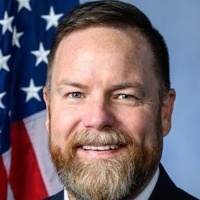
Aaron Bean
Representative
FL
Aaron Bean
Representative
FL
The Maritime Fuel Tax Parity Act extends the existing excise tax exemption for alternative motorboat fuels to include certain vessels operating exclusively between ports on either the Atlantic or Pacific coast. This change ensures that qualifying vessels, such as specific fishing or maritime activity vessels, benefit from the fuel tax break when trading only along a single U.S. coast. The provision applies to fuel sales occurring after December 31, 2023.
The STATES 2.0 Act shields state and tribal cannabis operations from federal drug laws while establishing a federal excise tax framework to cover regulatory costs and directing the FDA to respect tribal self-governance.
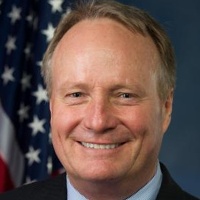
David Joyce
Representative
OH
David Joyce
Representative
OH
The STATES 2.0 Act aims to respect state and tribal authority by exempting marijuana activities compliant with local law from federal drug prohibitions. It mandates federal regulation of interstate cannabis commerce while establishing a new federal excise tax to cover oversight costs. Furthermore, the bill directs the FDA to respect tribal self-governance in marijuana regulation and requires a study on the effects of legalization on traffic safety.
This Act mandates the reimbursement of interest payments made by local governments and electric cooperatives on loans used for disaster recovery activities eligible under the Stafford Act.
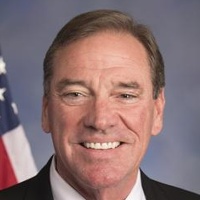
Neal Dunn
Representative
FL
Neal Dunn
Representative
FL
The FEMA Loan Interest Payment Relief Act establishes a program for FEMA to reimburse local governments and electric cooperatives for interest paid on specific disaster recovery loans. This reimbursement is capped at the lesser of the actual interest paid or the interest calculated using the Federal Reserve's prime rate. The law mandates FEMA to quickly establish procedures for states to apply for reimbursement of qualifying interest paid up to nine years prior to enactment.
This Act expands Medicare coverage to include audiology services provided directly by qualified audiologists starting in 2027, removing physician supervision and referral requirements.

Gus Bilirakis
Representative
FL
Gus Bilirakis
Representative
FL
The Medicare Audiology Access Improvement Act of 2025 expands Medicare coverage for audiology services, beginning in 2027. This legislation allows qualified audiologists to provide diagnostic and treatment services without physician referral or supervision, as permitted by state law. The bill also specifies payment rates and includes audiologists in coverage for Rural Health Clinics and Federally Qualified Health Centers.
This act prohibits the use of Elementary and Secondary Education Act funds to teach or advance concepts related to gender ideology.
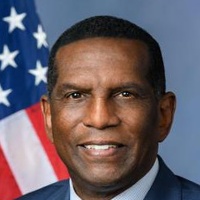
Clarence Owens
Representative
UT
Clarence Owens
Representative
UT
The Say No to Indoctrination Act aims to prohibit the use of federal Elementary and Secondary Education Act (ESEA) funds for teaching or advancing concepts related to gender ideology in schools. This legislation specifically amends existing ESEA provisions to enforce this restriction.
This Act redefines immediate relatives for immigration, caps family-sponsored visas, and creates a new, non-work, temporary visa for parents of adult U.S. citizens.
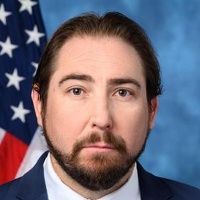
Eli Crane
Representative
AZ
Eli Crane
Representative
AZ
The Nuclear Family Priority Act significantly restructures U.S. family-based immigration by redefining "immediate relatives" to only include spouses and children of U.S. citizens, removing parents from that top category. It also establishes a new, temporary nonimmigrant visa for parents of adult U.S. citizens, which prohibits work and public benefits. Furthermore, the bill revises the annual cap for family-sponsored visas and makes numerous technical amendments across immigration law to align with these changes.
This bill codifies Executive Order 14249 into permanent law to protect American bank accounts from fraud, waste, and abuse.
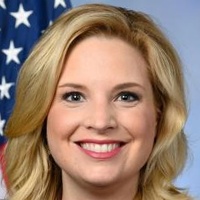
Ashley Hinson
Representative
IA
Ashley Hinson
Representative
IA
The Protecting American Taxpayers from Wasteful Spending Act aims to safeguard federal funds by permanently codifying Executive Order 14249 into law. This action establishes mandatory requirements across government agencies to actively combat fraud, waste, and abuse in the use of taxpayer money. Ultimately, the bill seeks to ensure greater accountability and protection for America's bank accounts.
This bill drastically tightens and expands U.S. sanctions against Iran across its leadership, military, and economy while severely restricting the President's authority to lift these restrictions.
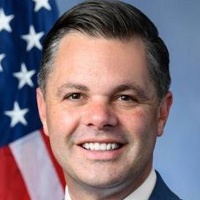
Zachary (Zach) Nunn
Representative
IA
Zachary (Zach) Nunn
Representative
IA
The Maximum Pressure Act dramatically tightens and expands U.S. sanctions against Iran across its military, missile, and economic sectors, codifying existing restrictions and severely limiting the President's authority to grant sanctions relief. It mandates immediate sanctions on top Iranian officials and increases penalties for international parties aiding Iran's weapons programs. Furthermore, the bill enhances oversight by requiring numerous detailed reports to Congress regarding Iran's terrorism financing, nuclear timeline, and economic influence, while also redirecting certain frozen Iranian funds to victims of state-sponsored terrorism.
This resolution formally condemns the wave of domestic terrorism attacks targeting Tesla vehicles and dealerships nationwide and acknowledges the joint FBI-ATF investigation into these violent incidents.
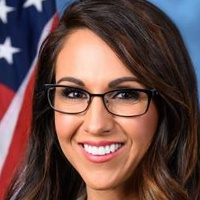
Lauren Boebert
Representative
CO
Lauren Boebert
Representative
CO
This resolution formally condemns the recent wave of violent domestic terrorism attacks targeting Tesla vehicles and dealerships across the nation. It highlights numerous incidents, including arson, gunfire, and vandalism, that have occurred in multiple states. In response to this escalation, the bill notes that the FBI and ATF have established a joint task force to investigate these serious, politically motivated attacks.
This bill codifies Executive Order 14248 into permanent federal law to preserve and protect the integrity of American elections.
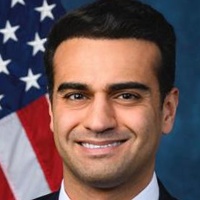
Abraham Hamadeh
Representative
AZ
Abraham Hamadeh
Representative
AZ
This bill seeks to permanently establish the directives of Executive Order 14248 into federal law. By codifying this order, the legislation ensures the measures aimed at preserving and protecting the integrity of American elections remain in effect. This action elevates the existing presidential order to the full force and effect of statutory law.
This Act permits 501(c)(3) organizations to make political campaign statements within the ordinary course of their tax-exempt activities, provided the cost is de minimis.
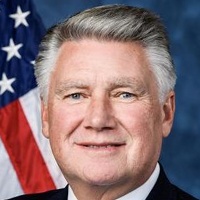
Mark Harris
Representative
NC
Mark Harris
Representative
NC
The Free Speech Fairness Act amends tax law to allow 501(c)(3) organizations to make political campaign statements without jeopardizing their tax-exempt status. This protection applies only if the statement is made as part of the organization's ordinary course of activities and incurs only a de minimis (trivial) cost. This ensures non-profits can speak on political matters related to their mission without penalty, provided spending remains minimal.