Legislative Activity
Track W.'s sponsored bills, co-sponsored legislation, and voting record
The ABC Act mandates a comprehensive review and simplification of processes, forms, and communications across Medicare, Medicaid, CHIP, and Social Security to alleviate burdens on family caregivers.
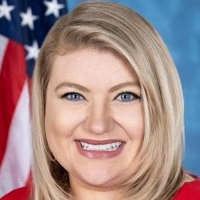
Katherine Cammack
Representative
FL
Katherine Cammack
Representative
FL
The ABC Act mandates a comprehensive review of Medicare, Medicaid, CHIP, and Social Security programs to significantly simplify application processes, forms, and communications for family caregivers. This effort requires federal agencies to streamline requirements, improve customer service, and enhance accessibility across their systems. The goal is to reduce the administrative burden on caregivers while ensuring clear and timely access to essential benefits. Agencies must report their findings and planned actions to Congress within two years of enactment.
This act prohibits all federal funding for the National Public Radio (NPR) and the Public Broadcasting Service (PBS).
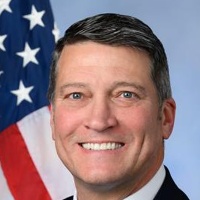
Ronny Jackson
Representative
TX
Ronny Jackson
Representative
TX
The No Partisan Radio and Partisan Broadcasting Services Act (NPR and PBS Act) prohibits all federal funding, direct or indirect, for the National Public Radio (NPR) and the Public Broadcasting Service (PBS). This measure immediately ends government financial support for these two national broadcasting entities. The restriction also applies to any successor organizations.
This bill makes the designation of English as the official language of the United States, established by Executive Order 14224, permanent.
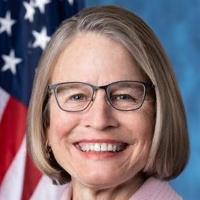
Mariannette Miller-Meeks
Representative
IA
Mariannette Miller-Meeks
Representative
IA
This bill seeks to make the provisions of Executive Order 14224, which designated English as the official language of the United States, permanent. It ensures that all existing rules and actions taken by government agencies under this order remain in full effect indefinitely. Essentially, this legislation codifies the requirement for English as the official language.
This Act prohibits state and local governments from imposing excise taxes on the sale of firearms, ammunition, or related parts in interstate or foreign commerce.
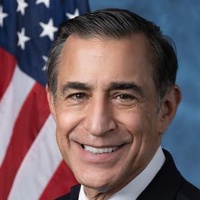
Darrell Issa
Representative
CA
Darrell Issa
Representative
CA
The Freedom from Unfair Gun Taxes Act of 2025 prohibits state and local governments from imposing excise taxes on the sale of firearms, ammunition, or firearm parts. This restriction specifically targets taxes levied on sales that involve interstate or foreign commerce. The Act explicitly preserves existing federal laws, such as the Pittman-Robertson Wildlife Restoration Act.
This bill amends the Internal Revenue Code to allow distributions from Health Savings Accounts (HSAs) for the account beneficiary's funeral expenses, up to a $\$5,000$ limit, to be treated as qualified distributions.
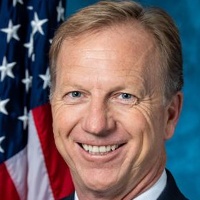
Kevin Hern
Representative
OK
Kevin Hern
Representative
OK
This bill amends the Internal Revenue Code to allow distributions from a Health Savings Account (HSA) for the funeral expenses of the account beneficiary to be treated as qualified, tax-free distributions. These expenses, which include burial, cremation, and related services, are capped at a total of \$5,000 per beneficiary. The legislation also clarifies that funeral expenses incurred within 90 days after the account holder's death can be treated as if they occurred before death for tax purposes.
The SHORT Act redefines "firearm" to exclude certain collector's items, eliminates disparate federal treatment of short-barreled rifles and shotguns, preempts state and local registration/tax burdens on these items, and mandates the destruction of certain existing NFA records.
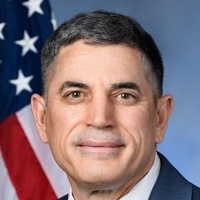
Andrew Clyde
Representative
GA
Andrew Clyde
Representative
GA
The SHORT Act aims to reform federal firearms regulations by redefining what constitutes a "firearm" for tax purposes, largely excluding antique or collector's items. It eliminates disparate federal treatment for short-barreled rifles and shotguns used lawfully and preempts state and local governments from imposing special taxes or registration requirements on these specific weapons. Furthermore, the bill mandates the destruction of certain existing federal registration and transfer records related to defined firearms.
This Act amends the Base Erosion and Anti-Abuse Tax (BEAT) rules to impose stricter regulations on U.S. companies connected to foreign entities subject to specific extraterritorial income taxes.
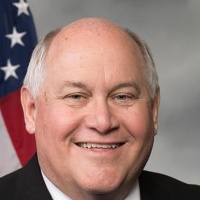
Ron Estes
Representative
KS
Ron Estes
Representative
KS
The Unfair Tax Prevention Act amends the Base Erosion and Anti-Abuse Tax (BEAT) rules to specifically target certain U.S. companies connected to foreign tax systems operating outside their direct jurisdiction. These "foreign-owned extraterritorial tax regime entities" will now be automatically subject to BEAT, with specific exceptions removed and a portion of their cost of goods sold automatically treated as a base erosion benefit. This legislation aims to close loopholes related to complex, indirect foreign ownership structures.
The No Harm Act prohibits the use of federal funds for sex-trait altering medical treatments for minors and establishes legal recourse for violations, parental consent requirements, and conscience protections for providers.
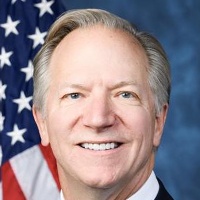
Robert Onder
Representative
MO
Robert Onder
Representative
MO
The No Harm Act prohibits the use of federal funds for sex-trait altering medical treatments for minors. It establishes strict parental consent requirements for such treatments in schools and allows civil lawsuits against entities that violate these prohibitions. Furthermore, the bill grants healthcare providers a broad right of conscience to refuse participation in these procedures without penalty.
This bill establishes national reciprocity for concealed carry permits, allowing individuals legally permitted to carry in their home state to carry a handgun in any other state that allows concealed carry.
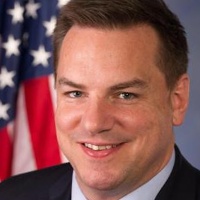
Richard Hudson
Representative
NC
Richard Hudson
Representative
NC
The Constitutional Concealed Carry Reciprocity Act of 2025 establishes a national standard for carrying concealed handguns across state lines. This act allows individuals legally permitted to carry in their home state to carry concealed in any other state that allows its residents to carry concealed firearms. The law does not override private property restrictions or prohibitions on government property, but it provides protections and legal recourse for those traveling in compliance with the new federal standard.
This act eliminates the Optional Practical Training (OPT) program, ending work authorization for F-1 visa students unless explicitly authorized by future Congressional action.

Paul Gosar
Representative
AZ
Paul Gosar
Representative
AZ
The Fairness for High-Skilled Americans Act of 2025 aims to eliminate the Optional Practical Training (OPT) program, which currently allows F-1 student visa holders to gain temporary work authorization after completing their studies. This bill removes the government's authority to grant such work permission unless explicitly authorized by a future Act of Congress.
This bill clarifies and reinforces the President's authority over federal collective bargaining agreements, allowing for termination of conflicting provisions while requiring notification to relevant parties.
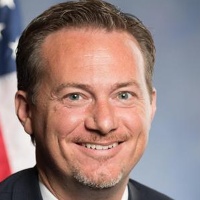
Michael Cloud
Representative
TX
Michael Cloud
Representative
TX
The Preserving Presidential Management Authority Act allows the President, via an agency head, to terminate collective bargaining agreement provisions upon taking office, ensuring presidential directives supersede conflicting agreements. This authority is limited to incoming Presidents, not incumbents. The agency head is required to notify the exclusive representative of the termination or conflicting provisions.
This Act updates Medicare coverage and payment rules for home infusion therapy starting in 2026 to ensure continued patient access, clarify covered services, and adjust supplier reimbursement.

Vern Buchanan
Representative
FL
Vern Buchanan
Representative
FL
The Preserving Patient Access to Home Infusion Act updates Medicare coverage and payment rules for home infusion therapy starting in 2026 to ensure continued patient access. The bill explicitly adds pharmacy services to covered home infusion care and clarifies payment calculations for suppliers, including transitional rules based on infusion hours. Furthermore, it expands who can establish and review patient care plans to include nurse practitioners and physician assistants. Finally, the Act modifies definitions and payment rules for certain non-pump infusion drugs and stops separate Medicare payment for specific disposable supplies when infusion therapy is already being reimbursed.
The Fair and Open Competition Act of 2025 prohibits the federal government from requiring or penalizing bidders or contractors on federally funded construction projects based on their agreement or non-agreement with labor unions.
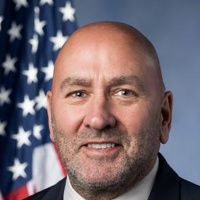
Clay Higgins
Representative
LA
Clay Higgins
Representative
LA
The Fair and Open Competition Act of 2025 ensures fair competition on federally funded construction projects by prohibiting the government from requiring or penalizing bidders based on union agreements. This legislation aims to keep federal agencies neutral in labor relations while promoting cost savings and opening opportunities for all businesses. Exceptions to this neutrality rule are strictly limited to specific public health, safety, or national security emergencies.
Extends the statute of limitations to 10 years for prosecuting fraud related to specific pandemic unemployment programs and rescinds $5,000,000 from unspent COVID-19 relief funds.
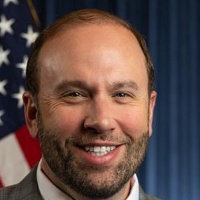
Jason Smith
Representative
MO
Jason Smith
Representative
MO
The "Pandemic Unemployment Fraud Enforcement Act" extends the statute of limitations to 10 years for prosecuting fraud related to specific pandemic unemployment programs. It applies to violations or conspiracies under Title 18 and Title 31 of the U.S. Code and rescinds $5,000,000 from previously allocated funds to offset the budget. The changes made by this law will begin on the date of enactment.
This Act eliminates the waiting periods for Social Security disability benefits and Medicare coverage for individuals diagnosed with metastatic breast cancer.
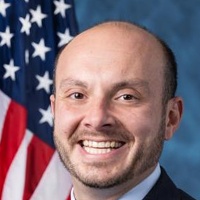
Andrew Garbarino
Representative
NY
Andrew Garbarino
Representative
NY
The Metastatic Breast Cancer Access to Care Act aims to improve support for individuals diagnosed with metastatic breast cancer. This bill eliminates the standard waiting period for receiving Social Security disability insurance benefits and waives the 24-month waiting period for Medicare coverage. These changes ensure immediate access to crucial financial and healthcare support upon diagnosis.
This bill amends the tax code to allow payments to health care sharing ministries to be treated as deductible medical expenses and clarifies that these ministries are not considered insurance for tax purposes, effective for tax years beginning after December 31, 2025.
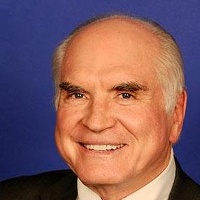
Mike Kelly
Representative
PA
Mike Kelly
Representative
PA
This bill amends the Internal Revenue Code to officially treat payments made to a qualified health care sharing ministry as a deductible medical expense for tax purposes. Furthermore, the legislation clarifies that, for federal tax purposes, these ministries will no longer be considered health insurance plans. These changes are set to take effect for tax years beginning after December 31, 2025.
The VOTE Act would prohibit states from receiving federal election funds for any year they provide federal election ballots in languages other than English, while also eliminating existing federal requirements for bilingual voting materials in certain jurisdictions.
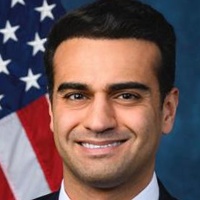
Abraham Hamadeh
Representative
AZ
Abraham Hamadeh
Representative
AZ
The VOTE Act, or Voting Only Through English Act, restricts federal election funding for any state that provides ballots in languages other than English for federal elections. This bill eliminates existing federal requirements that mandate bilingual ballots or assistance in certain jurisdictions. Consequently, states choosing to offer multilingual ballots risk losing federal election administration funds for the entire fiscal year.
The REDI Act allows medical and dental interns and residents to defer both principal and interest payments on their student loans while in training.
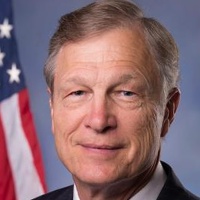
Brian Babin
Representative
TX
Brian Babin
Representative
TX
The Resident Education Deferred Interest (REDI) Act amends federal student loan regulations to provide a specific deferment for medical and dental residents. This allows borrowers currently serving in an internship or residency program to pause principal payments and prevent interest accrual on their student loans during that training period.
This Act expands Medicare eligibility for home health services by explicitly including the need for occupational therapy as a qualifying factor.
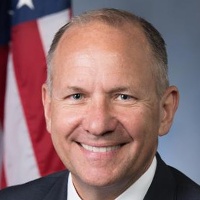
Lloyd Smucker
Representative
PA
Lloyd Smucker
Representative
PA
The Medicare Home Health Accessibility Act updates Medicare rules to explicitly include the need for occupational therapy as a valid basis for qualifying for home health services under both Part A and Part B. This change ensures that occupational therapy is treated equally alongside physical and speech therapy when determining eligibility for in-home care. These new provisions will take effect for services provided on or after January 1, 2026.
This act amends the tax code to give businesses the option to immediately deduct or amortize (spread out over at least five years) their research and experimental expenditures.
Ron Estes
Representative
KS
Ron Estes
Representative
KS
The American Innovation and R&D Competitiveness Act of 2025 revises how businesses treat research and experimental (R&E) expenditures for tax purposes. Taxpayers can now choose between immediately deducting R&E costs or amortizing them over a period of at least 60 months. This legislation also makes technical adjustments to ensure consistency between immediate deductions and claiming the research tax credit.