Legislative Activity
Track W.'s sponsored bills, co-sponsored legislation, and voting record
This resolution condemns socialism in all its forms while reaffirming support for election security measures, including the requirement that only U.S. citizens participate in American elections.
Jeff Crank
Representative
CO
Jeff Crank
Representative
CO
This resolution formally condemns socialism in all its forms, asserting that its ideology is incompatible with American values and the U.S. Constitution. It reaffirms the necessity of secure, citizen-only elections and calls for the enactment of the SAVE America Act to prevent noncitizen voting and strengthen election integrity.
The Kayleigh’s Law Act of 2026 mandates lifetime no-contact injunctions for defendants convicted of federal violent or sexual crimes to ensure the ongoing protection of victims.

Abraham Hamadeh
Representative
AZ
Abraham Hamadeh
Representative
AZ
The Kayleigh’s Law Act of 2026 mandates that federal courts issue lifetime no-contact orders for defendants convicted of specific violent or sexual offenses. These permanent protections ensure victims are shielded from further harassment without incurring any legal fees. The legislation provides a clear framework for these orders to remain in effect unless a conviction is overturned or specific legal conditions for termination are met.
The Freedom to Home Distill Act exempts small-scale, personal-use home distilling from federal excise taxes, registration requirements, and associated penalties.

Diana Harshbarger
Representative
TN
Diana Harshbarger
Representative
TN
The Freedom to Home Distill Act seeks to legalize the production of distilled spirits for personal or family use by exempting home distilleries from federal excise taxes and registration requirements. The bill establishes clear production limits for households and mandates safety standards for distilling equipment. These provisions are set to take effect for spirits produced and equipment sold after December 31, 2026.
This resolution commemorates the 13 U.S. servicemembers killed at Abbey Gate and condemns the Biden administration’s handling of the 2021 withdrawal from Afghanistan.

Matt Van Epps
Representative
TN
Matt Van Epps
Representative
TN
This resolution commemorates the 13 U.S. servicemembers killed during the 2021 Abbey Gate bombing in Afghanistan. It formally condemns the Biden-Harris administration for its handling of the withdrawal, citing failures in planning, security, and accountability. The measure denounces the administration's decisions as a dereliction of duty that compromised national security and abandoned American allies.
The Permanent CBDC Ban Act prohibits the Federal Reserve from issuing a central bank digital currency.
Michael Cloud
Representative
TX
Michael Cloud
Representative
TX
The Permanent CBDC Ban Act seeks to codify a long-term prohibition on the issuance of a Central Bank Digital Currency (CBDC) by the Federal Reserve. By amending the Federal Reserve Act, this legislation aims to permanently restrict the government from implementing a digital dollar.
This bill prohibits all United States contributions to the United Nations Relief and Works Agency (UNRWA) while establishing strict vetting requirements for alternative humanitarian aid providers.
Christopher Smith
Representative
NJ
Christopher Smith
Representative
NJ
The Stop Support for UNRWA Act of 2026 prohibits the United States from providing any voluntary or assessed contributions to the United Nations Relief and Works Agency (UNRWA). While it bars direct funding to the agency, the bill allows for humanitarian aid to be delivered through alternative organizations, provided they are certified to be free of ties to terrorism, violence, or antisemitism.
The Stop EU Overreach Act mandates a formal investigation by the U.S. Trade Representative into the economic burden and extraterritorial impact of European Union sustainability and environmental regulations on American businesses.
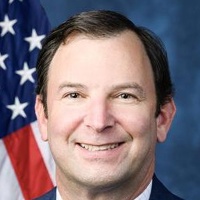
Craig Goldman
Representative
TX
Craig Goldman
Representative
TX
The Stop EU Overreach Act mandates that the United States Trade Representative (USTR) launch a formal Section 301 investigation into the extraterritorial impact of various European Union environmental and sustainability regulations on U.S. businesses. The bill seeks to address concerns that these EU mandates impose unfair, burdensome, and conflicting requirements on U.S. companies for operations occurring outside of Europe. If the investigation confirms these practices harm U.S. commerce, the USTR is authorized to take retaliatory trade actions to eliminate those burdens.
The Fair Treatment of Religious Organizations Act of 2026 protects the tax-exempt status of religious organizations by ensuring their beliefs regarding marriage, sexuality, and gender identity are not deemed inconsistent with public policy.
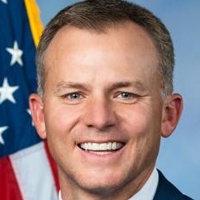
Blake Moore
Representative
UT
Blake Moore
Representative
UT
The Fair Treatment of Religious Organizations Act of 2026 protects the tax-exempt status of religious organizations by ensuring their beliefs regarding marriage, sexuality, and gender identity are not deemed inconsistent with public policy. Additionally, it clarifies that religious beliefs do not need to be central to a specific faith system to qualify for tax-exempt recognition.
This bill clarifies that a franchisor is only considered a joint employer of a franchisee's workers if it exercises substantial, direct, and immediate control over essential terms of employment.
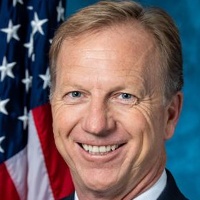
Kevin Hern
Representative
OK
Kevin Hern
Representative
OK
The American Franchise Act aims to protect the traditional franchise business model by clarifying the definition of a "joint employer." This legislation establishes that a franchisor is only considered a joint employer if it exercises "substantial direct and immediate control" over the essential terms of employment for a franchisee's workers. This change specifically targets liability risks associated with maintaining brand standards, ensuring franchisors are not automatically held responsible for local labor practices. The new standard applies prospectively to future legal proceedings.
This act amends Title IX to explicitly define "sex," "female," and "male" based on biological characteristics.
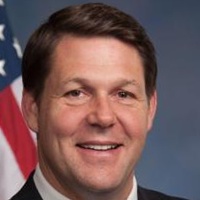
Jodey Arrington
Representative
TX
Jodey Arrington
Representative
TX
The Title IX Clarification Act of 2026 amends Title IX to explicitly define "sex," "female," and "male" based on an individual's biologically determined sex and reproductive system. This legislation clarifies the scope of sex-based protections under federal education law. The changes take effect immediately upon enactment.
This Act authorizes the Secretary of Health and Human Services to mandate the destruction of refused imported articles that pose a significant public health risk, prohibiting their re-export or movement within U.S. commerce.
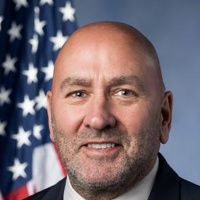
Clay Higgins
Representative
LA
Clay Higgins
Representative
LA
The Destruction of Hazardous Imports Act authorizes the Secretary of Health and Human Services to mandate the destruction of imported goods that pose a significant public health risk and have been refused admission into the U.S. This legislation removes the option for owners to export these hazardous items and requires them to cover all destruction costs. Owners are granted due process through formal notice and hearing procedures before any destruction order is finalized.
The FORMULA Act of 2026 mandates stricter federal safety standards, testing requirements, and contaminant limits for infant formula to ensure product purity and protect infant health.
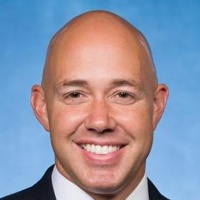
Brian Mast
Representative
FL
Brian Mast
Representative
FL
The FORMULA Act of 2026 strengthens infant safety by mandating strict federal limits on contaminants in infant formula, including heavy metals, PFAS, and microplastics. The bill requires manufacturers to conduct rigorous product testing, maintain detailed records, and report violations to ensure compliance with new health standards. These measures aim to protect infant development by ensuring the domestic formula supply chain meets the highest feasible safety benchmarks.
The Chloe Cole Act of 2026 establishes a private right of action allowing individuals to sue healthcare providers for damages resulting from gender-transition medical interventions performed on them as minors.
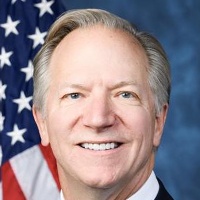
Robert Onder
Representative
MO
Robert Onder
Representative
MO
The Chloe Cole Act of 2026 establishes a federal private right of action allowing individuals to sue healthcare professionals and institutions for damages related to gender-transition medical interventions performed on them as minors. The bill permits lawsuits regardless of when the intervention occurred and sets a statute of limitations extending 25 years past the individual's 18th birthday. Additionally, it mandates strict liability for such interventions performed after the Act's enactment.
The Essential Caregivers Act of 2026 mandates that long-term care facilities allow residents to designate essential caregivers who maintain in-person visitation rights even during periods when regular visitation is suspended.

Claudia Tenney
Representative
NY
Claudia Tenney
Representative
NY
The Essential Caregivers Act of 2026 ensures that residents in long-term care facilities maintain access to designated essential caregivers, even when general visitation is suspended. The bill mandates that facilities allow residents to appoint up to two caregivers who can provide in-person support, provided they adhere to established safety protocols. It also prioritizes the investigation of access complaints and guarantees that these visitation rights cannot be waived during emergencies.
The Rural Patient Monitoring Access Act establishes a minimum payment floor for rural remote patient monitoring services and sets new quality and reporting requirements for Medicare reimbursement starting in 2026.
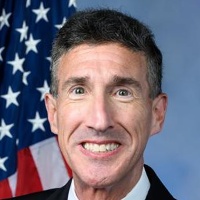
David Kustoff
Representative
TN
David Kustoff
Representative
TN
The Rural Patient Monitoring Access Act aims to improve access to remote patient monitoring (RPM) for rural Medicare beneficiaries. It establishes a minimum payment floor for the geographic indices used to calculate practice expense and malpractice costs for RPM services starting in 2026. Furthermore, the bill sets new quality requirements for RPM providers to qualify for Medicare payment, including real-time clinical availability and data interoperability. Finally, it mandates a future report analyzing the actual cost savings generated by these enhanced RPM services.
This bill amends the federal charter of the Daughters of the American Revolution to restrict membership eligibility to individuals who meet the organization's genealogical requirements and are defined as adult human females.

Ben Cline
Representative
VA
Ben Cline
Representative
VA
The Daughters of the American Revolution Membership Integrity Act amends the organization’s federal charter to formally define membership eligibility. The bill restricts membership to adult human females, establishing a biological definition for the term "female" based on reproductive system development.
This bill mandates electronic prior authorization, increases transparency through required data reporting, and establishes faster decision timelines for Medicare Advantage plans to improve timely access to care for seniors.
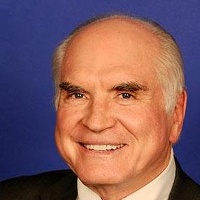
Mike Kelly
Representative
PA
Mike Kelly
Representative
PA
The Improving Seniors’ Timely Access to Care Act of 2025 aims to streamline and modernize the prior authorization process within Medicare Advantage plans. This bill mandates the adoption of electronic prior authorization systems and significantly increases transparency regarding approval rates and decision times starting in 2027. Furthermore, it establishes new enrollee protections and grants the Secretary authority to enforce faster decision timeframes for medical services.
This Act prohibits payment card networks and processors from assigning specific merchant category codes to identify firearms retailers, protecting the privacy of firearm and ammunition purchases.

Riley Moore
Representative
WV
Riley Moore
Representative
WV
The Protecting Privacy in Purchases Act prohibits payment card networks and processors from assigning specific merchant category codes to firearms retailers. This legislation aims to protect consumer privacy by preventing the tracking of firearm and ammunition purchases through specialized financial classification. The Attorney General is tasked with enforcing these provisions and reporting annually on compliance.
This resolution honors the life, selfless service, and heroic sacrifice of Corey Comperatore, a dedicated volunteer firefighter and community leader from Sarver, Pennsylvania.
Mike Kelly
Representative
PA
Mike Kelly
Representative
PA
This resolution honors the life and legacy of Corey Comperatore, a dedicated volunteer firefighter, U.S. Army Reserve veteran, and community leader from Sarver, Pennsylvania. It recognizes his selfless sacrifice and heroic actions in protecting his family, while extending the House of Representatives' deepest condolences to his loved ones.
This bill extends the window for military survivors to contribute death benefits to a Roth IRA or Coverdell ESA from one year to three years.
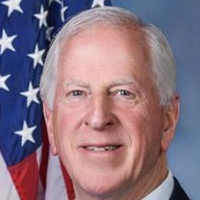
Mike Thompson
Representative
CA
Mike Thompson
Representative
CA
The GRACE for Military Survivors Act extends the window for military survivors to contribute death benefits to a Roth IRA or Coverdell education savings account from one year to three years. This change applies to benefits received on or after the date of enactment, and retroactively covers benefits received since October 7, 2001. This provides survivors with more time to utilize these tax-advantaged savings options.