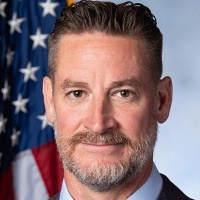
Legislative Activity
Track W.'s sponsored bills, co-sponsored legislation, and voting record
This bill requires the District of Columbia to allow Members of Congress with valid concealed carry permits from their home states to carry concealed firearms within the District.
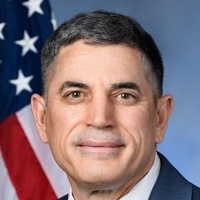
Andrew Clyde
Representative
GA
Andrew Clyde
Representative
GA
This bill would require the District of Columbia to recognize valid concealed carry permits or the legal right to carry a concealed firearm held by Members of Congress from their home states. Specifically, it allows Senators, Representatives, Delegates, and Resident Commissioners to carry a concealed firearm in D.C. provided they meet federal eligibility requirements and carry proper identification.
This act establishes a new two-part test under the Fair Labor Standards Act and the National Labor Relations Act to determine when an individual is classified as an independent contractor rather than an employee.
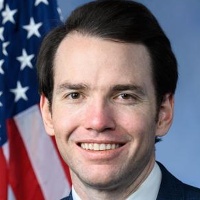
Kevin Kiley
Representative
CA
Kevin Kiley
Representative
CA
The Modern Worker Empowerment Act establishes a new, two-part test under federal law to determine if a worker is an independent contractor rather than an employee. This test focuses on the degree of control exercised over the work's details and whether the worker has the risks and opportunities of entrepreneurship. The Act applies this updated classification standard to both the Fair Labor Standards Act and the National Labor Relations Act.
This bill ends the liability shield for vaccine manufacturers by allowing individuals to sue directly in court or seek compensation through the existing program, while also removing time limits for program claims and excluding COVID-19 vaccines from countermeasure liability protections.

Paul Gosar
Representative
AZ
Paul Gosar
Representative
AZ
The End the Vaccine Carveout Act fundamentally changes vaccine injury compensation by allowing individuals to choose between filing a claim through the existing National Vaccine Injury Compensation Program or suing the manufacturer or administrator directly in court. This legislation removes the liability shield for vaccine makers and eliminates time limits for filing claims with the Program. Additionally, it specifically excludes COVID-19 vaccines from existing countermeasure liability protections.
This Act mandates a review of U.S.-South Africa bilateral relations, requiring presidential certification on whether South Africa's alignment with Russia, China, and Hamas harms U.S. interests, followed by a comprehensive relationship review and a report on sanctionable officials.
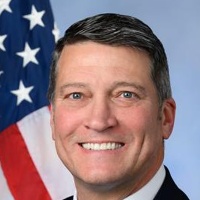
Ronny Jackson
Representative
TX
Ronny Jackson
Representative
TX
The U.S.-South Africa Bilateral Relations Review Act of 2025 mandates the President to formally assess South Africa's foreign policy alignment, particularly concerning its ties with Russia, China, and Hamas. This review requires the President to certify whether South Africa's actions harm U.S. national security interests within 30 days of enactment. Furthermore, the bill requires a comprehensive review of the entire bilateral relationship and a classified report identifying South African officials eligible for sanctions due to corruption or human rights abuses.
This Act prohibits U.S. commerce and services for vessels associated with ports in Western Hemisphere trade partners that have illegally seized access-controlling land belonging to American entities since 2024.
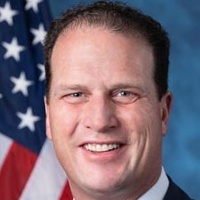
August Pfluger
Representative
TX
August Pfluger
Representative
TX
The Defending American Property Abroad Act of 2025 targets foreign governments in the Western Hemisphere that have seized or unfairly controlled port infrastructure essential to U.S. trade access since early 2024. The bill requires the executive branch to identify this "prohibited property" and subsequently ban any associated vessels from accessing U.S. ports or receiving services. Furthermore, the Act expands the definition of unfair trade practices to explicitly include the nationalization or discriminatory treatment of U.S. assets by foreign nations.
This bill allows tax-exempt small nonprofit employers to claim retirement plan startup and auto-enrollment tax credits against their payroll taxes.

Vern Buchanan
Representative
FL
Vern Buchanan
Representative
FL
The Small Nonprofit Retirement Security Act of 2025 allows tax-exempt nonprofit organizations to claim valuable federal retirement plan startup and auto-enrollment tax credits. Instead of receiving a refund, eligible nonprofits can apply these credits directly against their required payroll tax obligations. This measure aims to encourage small tax-exempt employers to establish retirement plans for their employees.
This Act prohibits the Federal Reserve from directly or indirectly issuing a Central Bank Digital Currency (CBDC) and bars the Fed from developing or using one for monetary policy without explicit Congressional authorization.
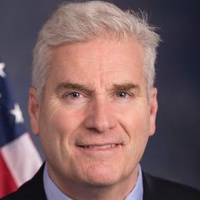
Tom Emmer
Representative
MN
Tom Emmer
Representative
MN
The Anti-CBDC Surveillance State Act strictly prohibits the Federal Reserve from directly or indirectly issuing a Central Bank Digital Currency (CBDC) to individuals. This legislation prevents the Fed from developing, testing, or implementing any digital currency that functions as a direct liability of the Federal Reserve. Furthermore, Congress asserts that any authority to create such a digital asset must explicitly come from Congress itself.
This act mandates the FDA to study the human health impacts of microplastic exposure through food and water and report recommendations to Congress.
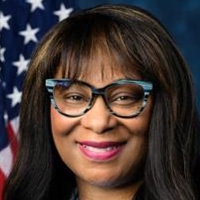
Janelle Bynum
Representative
OR
Janelle Bynum
Representative
OR
The Microplastics Safety Act mandates the FDA to conduct a comprehensive study on the human health impacts of microplastic exposure through food and water. This research must specifically investigate risks to children's health, endocrine function, cancer, and reproduction. Following the study, the FDA is required to report its findings and recommend necessary legislative or regulatory actions to Congress.
This Act prohibits the District of Columbia from establishing or maintaining Sister City relationships with foreign adversary nations and restricts the use of federal funds for related outreach without certification of compliance.

John Moolenaar
Representative
MI
John Moolenaar
Representative
MI
The District of Columbia Sister City Integrity Act prohibits the District from establishing new Sister City relationships with any city or region located in a country designated as a foreign adversary. Existing partnerships with such nations must be terminated within 180 days or upon the agreement's expiration. Furthermore, the District cannot use federal funds for international liaison services without certifying compliance with this Act to the President.
This resolution formally condemns the severe, ongoing persecution of Christians in Muslim-majority countries and urges the President to prioritize their protection in U.S. foreign policy.
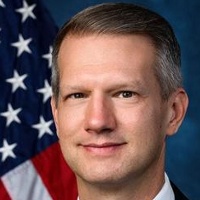
Riley Moore
Representative
WV
Riley Moore
Representative
WV
This resolution formally condemns the severe, ongoing persecution of Christians in Muslim-majority countries worldwide. It documents specific instances of violence, discrimination, and legal restrictions faced by Christian communities across numerous nations. The bill urges the President to prioritize the protection of these religious minorities in all U.S. foreign policy and diplomatic engagement.
This resolution formally condemns the violent attack on the U.S. Border Patrol facility in McAllen, Texas, on July 7, 2025, while expressing support for law enforcement personnel.
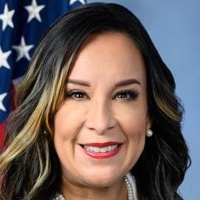
Mónica De La Cruz
Representative
TX
Mónica De La Cruz
Representative
TX
This resolution formally condemns the violent attack on the U.S. Border Patrol facility in McAllen, Texas, on July 7, 2025. It expresses support for the injured agents and reaffirms Congress's strong backing for the dedicated men and women of the Border Patrol. The bill emphasizes that such violence against law enforcement is unacceptable and undermines national security efforts.
This resolution solemnly marks the one-year anniversary of the attempted assassination of President Trump, condemns ongoing political violence, and honors the victims and first responders.
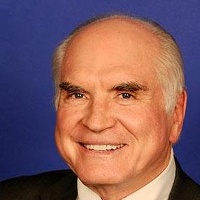
Mike Kelly
Representative
PA
Mike Kelly
Representative
PA
This resolution solemnly marks the one-year anniversary of the attempted assassination of President Donald J. Trump, condemning the multiple violent attempts against the President's life. It honors the victims of the shooting, including the late Corey D. Comperatore, and recognizes the bravery of first responders. Furthermore, the resolution condemns all incitement of violence against elected officials and calls for national unity against political violence.
This resolution affirms support for decisive U.S. action against Iran's nuclear program and proxies while strongly backing Israel's right to self-defense.
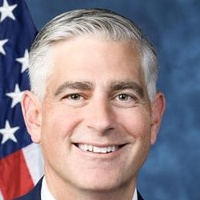
Michael Baumgartner
Representative
WA
Michael Baumgartner
Representative
WA
This resolution strongly supports President Trump's decisive actions against Iran's nuclear program and affirms unwavering support for Israel's right to self-defense. It justifies recent U.S. military action by citing Iran's state sponsorship of terrorism, regional aggression, and material support for the October 7th attacks. The bill advocates for a permanent end to Iran's nuclear ambitions through verifiable agreements backed by sustained pressure.
The FADS Act of 2025 clarifies the authority to dispose of certain foreign-origin radiological materials, like Russian-made americium-241, at the Waste Isolation Pilot Plant (WIPP) for national security reasons.
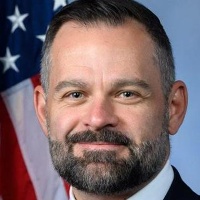
Cory Mills
Representative
FL
Cory Mills
Representative
FL
The FADS Act of 2025 clarifies the authority for the Department of Energy to dispose of certain foreign-origin radiological materials, specifically Russian-made Americium-241, at the Waste Isolation Pilot Plant (WIPP). This change addresses a current regulatory gap that prevents the safe and efficient disposal of these materials alongside similar U.S.-origin waste. The legislation ensures that these proliferation-attractive sources can be quickly removed from circulation.
The CONNECT for Health Act of 2025 permanently expands Medicare telehealth access by removing geographic restrictions, increasing practitioner flexibility, bolstering program integrity, and mandating supports for quality remote care delivery.
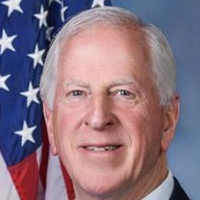
Mike Thompson
Representative
CA
Mike Thompson
Representative
CA
The CONNECT for Health Act of 2025 significantly expands and permanently secures access to Medicare telehealth services by eliminating outdated geographic restrictions and allowing more practitioners to offer remote care. The bill also strengthens program integrity by dedicating funds for telehealth oversight while clarifying rules around providing necessary technology to patients. Finally, it mandates the creation of tailored educational resources and public reporting to improve quality measurement and transparency in remote care delivery.
The OCED Elimination Act abolishes the Office of Clean Energy Demonstrations (OCED) within the Department of Energy and repeals related provisions, including Section 41201 of the Infrastructure Investment and Jobs Act.
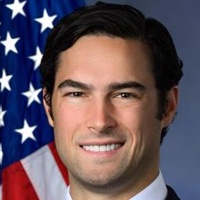
Brandon Gill
Representative
TX
Brandon Gill
Representative
TX
The OCED Elimination Act officially abolishes the Office of Clean Energy Demonstrations (OCED) within the Department of Energy. This legislation also repeals Section 41201 of the Infrastructure Investment and Jobs Act, eliminating associated programs and requirements. In short, this bill shuts down the OCED and removes a specific section of prior energy legislation.
This act prohibits the use of political litmus tests in the accreditation of institutions of higher education and protects the ability of religious institutions to maintain their faith-based standards.
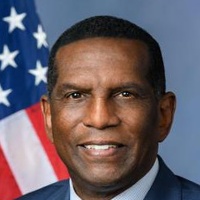
Clarence Owens
Representative
UT
Clarence Owens
Representative
UT
The Accreditation for College Excellence Act of 2025 prohibits accrediting agencies from imposing political litmus tests on institutions of higher education. This legislation ensures that accreditation decisions are based on academic quality and financial stability, not on an institution's ideological or political viewpoints. Furthermore, it protects the ability of religious institutions to maintain standards consistent with their faith-based missions.
The GOLDEN DOME Act of 2025 establishes a comprehensive, rapidly deployable, next-generation missile defense shield by creating a powerful Program Manager, accelerating technology acquisition, and authorizing over $23 billion for integrated air, sea, land, and space defense systems.
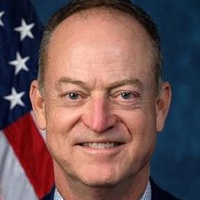
Mark Messmer
Representative
IN
Mark Messmer
Representative
IN
The GOLDEN DOME Act of 2025 establishes a comprehensive, next-generation missile defense shield to counter rapidly evolving threats from adversaries like China and Russia. It creates a powerful, direct-reporting Program Manager with broad authority to accelerate the development, acquisition, and deployment of integrated air and missile defense systems across all domains. This funding prioritizes space-based sensors, advanced interceptors, and modernized command and control capabilities to ensure the defense of U.S. citizens against all aerial and missile attacks. The Act also includes provisions to streamline procurement processes and protect the competitive space industrial base.
The LEDGER Act mandates the establishment of a comprehensive, government-wide system to track and record the exact destination and availability period of every federal expenditure.
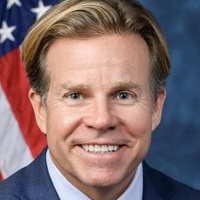
Mike Haridopolos
Representative
FL
Mike Haridopolos
Representative
FL
The LEDGER Act mandates the creation of a comprehensive, centralized system managed by the Secretary of the Treasury to track every expenditure made by all branches of the U.S. Government. This new system must detail exactly where federal funds are spent and how long those funds were available for obligation. The goal is to significantly enhance the traceability and transparency of government spending.
The RISE Act caps the tax rate on a portion of adjusted net capital gains at 15 percent to encourage investment and savings.
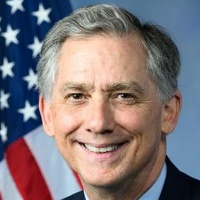
J. Hill
Representative
AR
J. Hill
Representative
AR
The Revitalizing Investment, Savings, and Entrepreneurship (RISE) Act aims to encourage investment by capping the federal tax rate on a specific portion of adjusted net capital gains at 15 percent. This change modifies existing tax code provisions to provide a lower, predictable rate for certain investment profits.