Legislative Activity
Track Terri's sponsored bills, co-sponsored legislation, and voting record
This bill establishes a pilot program to provide specialized, long-term development loans up to $100,000 with low-interest rates and mandatory management training for beginning farmers and ranchers.

Marilyn Strickland
Representative
WA
Marilyn Strickland
Representative
WA
The Capital for Beginning Farmers and Ranchers Act of 2025 establishes a new pilot loan program to address the unique upfront capital needs of new farmers and ranchers. This program offers specialized development loans, up to $100,000, with flexible repayment terms (3-10 years) for long-term business investments. Borrowers must also receive mandatory training in farm and ranch management.
The George Floyd Justice in Policing Act of 2025 comprehensively reforms policing by increasing accountability, mandating transparency through data collection, restricting dangerous tactics, and prohibiting sexual misconduct by officials acting under color of law.
Glenn Ivey
Representative
MD
Glenn Ivey
Representative
MD
The George Floyd Justice in Policing Act of 2025 is a comprehensive bill designed to increase police accountability and transparency nationwide through federal mandates and funding incentives. It reforms standards for prosecuting civil rights violations, eliminates qualified immunity, and establishes national registries for police misconduct and use-of-force data. Furthermore, the Act bans specific dangerous police tactics like chokeholds and restricts the transfer of military equipment to local departments.
This bill posthumously awards a Congressional Gold Medal to honor the groundbreaking civil rights achievements of Constance Baker Motley and authorizes the production and sale of bronze duplicates.

Rosa DeLauro
Representative
CT
Rosa DeLauro
Representative
CT
This bill, the Congressional Tribute to Constance Baker Motley Act of 2025, posthumously awards the Congressional Gold Medal to the pioneering civil rights attorney and federal judge, Constance Baker Motley. The legislation recognizes her historic achievements, including her role in *Brown v. Board of Education* and her service as the first African-American woman appointed as a federal judge. The Secretary of the Treasury is authorized to strike the medal, and provisions are made for selling bronze duplicates to cover production costs.
This bill prohibits federal health agencies from sharing identifiable Medicaid data with U.S. Immigration and Customs Enforcement (ICE).

Sydney Kamlager-Dove
Representative
CA
Sydney Kamlager-Dove
Representative
CA
The Limiting ICE’s Nationwide Encroachment Act (LINE Act) prohibits federal health agencies, like CMS and HHS, from sharing the personally identifiable Medicaid enrollment data of individuals with U.S. Immigration and Customs Enforcement (ICE). This measure is designed to protect the private health information of Medicaid recipients from being used for immigration enforcement purposes.
This resolution demands the President provide the House with documents detailing the Department of Government Efficiency's access to and planned use of a cloud copy of the Social Security Administration's NUMIDENT database.

John Larson
Representative
CT
John Larson
Representative
CT
This resolution is a formal request from the House of Representatives demanding the President provide specific documents regarding the Department of Government Efficiency's access to and use of sensitive Social Security Administration (SSA) data, particularly the NUMIDENT database. Congress seeks detailed information on the creation of a cloud copy of NUMIDENT, including its intended uses, security assessments, and who has been granted access. The inquiry specifically targets records concerning data usage for federal audits, benefit denials, AI training, and potential private sales.
The RESULTS Act reforms how Medicare determines payment rates for clinical diagnostic laboratory tests by mandating the use of comprehensive, real-world private payor claims data collected from an independent entity.
Richard Hudson
Representative
NC
Richard Hudson
Representative
NC
The Reforming and Enhancing Sustainable Updates to Laboratory Testing Services Act of 2025 (RESULTS Act) aims to improve Medicare payment rates for clinical lab tests by mandating the collection of more accurate, real-world payment data directly from large, independent private insurance claims databases. This legislation updates definitions, collection timelines, and calculation methods to ensure Medicare payments for widely available tests reflect current market rates. It also establishes default payment rules if sufficient private payor data cannot be secured.
This resolution recognizes suicide as a serious public health crisis and expresses support for designating September as National Suicide Prevention Month and September 10, 2025, as World Suicide Prevention Day.

Shri Thanedar
Representative
MI
Shri Thanedar
Representative
MI
This resolution officially recognizes suicide as a serious public health crisis in the United States, highlighting the urgent need for prevention efforts across all demographics. It expresses strong support for designating September as "National Suicide Prevention Month" and September 10th as "World Suicide Prevention Day" to raise awareness. The measure calls for prioritizing comprehensive, tailored strategies to improve access to mental health and suicide prevention services nationwide.
This act modifies the Family and Medical Leave Act (FMLA) to establish specific eligibility criteria and leave calculation methods for paraprofessionals and other essential education support staff.

Sean Casten
Representative
IL
Sean Casten
Representative
IL
This bill, the ESP, Paraprofessional, and Education Support Staff Family Leave Act, updates eligibility requirements for certain school employees under the Family and Medical Leave Act (FMLA). It adjusts how paraprofessionals and education support staff meet the required hours of service by using a percentage of expected monthly hours worked during the school year. Furthermore, the bill mandates clear guidelines for calculating FMLA leave entitlement for these employees to account for non-standard school schedules.
This bill aims to expand research, coordinate efforts across federal agencies, and launch targeted public education campaigns to address rising endometrial cancer rates and racial disparities in outcomes.
David Scott
Representative
GA
David Scott
Representative
GA
The Endometrial Cancer Research and Education Act of 2025 aims to address rising rates and racial disparities in endometrial cancer. This bill mandates the National Institutes of Health (NIH) to intensify research and ensure equitable inclusion of African-American women in clinical trials. Furthermore, it directs the CDC to launch targeted public education campaigns, specifically focusing on informing African-American women about risks and available treatments.
This bill formally integrates Puerto Rico into the federal Supplemental Nutrition Assistance Program (SNAP) structure, outlining a transition plan away from its current block grant system.
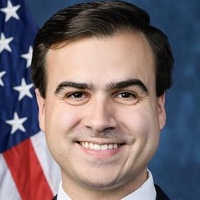
Pablo José Hernández Rivera
Representative
PR
Pablo José Hernández Rivera
Representative
PR
The Puerto Rico Nutrition Assistance Fairness Act aims to integrate Puerto Rico into the federal Supplemental Nutrition Assistance Program (SNAP) structure, aligning it with other territories like Guam. The bill mandates a transition period where Puerto Rico must submit a plan of operation to the Secretary of Agriculture for approval to join SNAP. During this transition, existing block grant funding may continue for up to five years while the territory moves toward full participation under federal SNAP rules.
This Act enables states to establish specialized Medicaid health homes for individuals with sickle cell disease, mandating dental and vision coverage for enrollees.
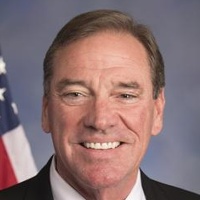
Neal Dunn
Representative
FL
Neal Dunn
Representative
FL
The Sickle Cell Disease Comprehensive Care Act enables states to establish specialized Medicaid health homes focused exclusively on individuals with sickle cell disease starting in 2026. If a state adopts this program, it must provide mandatory dental and vision coverage to enrolled patients, regardless of standard state Medicaid policies. States implementing these health homes will also be required to report on patient outcomes, access to care, and expenditures.
This bill extends Haiti's preferential trade benefits until 2037, enhances annual labor compliance reviews for producers, and mandates U.S. technical assistance to boost and diversify Haitian exports.

Stacey Plaskett
Representative
VI
Stacey Plaskett
Representative
VI
The HOPE for Haitian Prosperity Act of 2025 strengthens trade benefits for Haiti by extending preferential duty treatment until 2037 and increasing annual labor compliance reviews focusing on wages and working conditions. The bill also mandates the U.S. Trade Representative to provide targeted technical assistance aimed at increasing and diversifying Haitian exports to the United States. These measures seek to enhance Haiti's economic competitiveness while ensuring adherence to core labor standards.
The PrEP and PEP are Prevention Act mandates no-cost coverage for HIV prevention services, including FDA-approved drugs, testing, and counseling, across private insurance, Medicare, Medicaid, CHIP, and the Federal Employees Health Benefits Program.

Maxine Waters
Representative
CA
Maxine Waters
Representative
CA
The PrEP and PEP are Prevention Act mandates that essential HIV prevention services, including FDA-approved medications like PrEP and PEP, must be covered at no cost to the patient across private insurance, Medicare, Medicaid, CHIP, and the Federal Employees Health Benefits program. This law eliminates financial barriers such as deductibles, copays, and prior authorization requirements for these preventive treatments and necessary related care. The goal is to ensure universal, barrier-free access to critical HIV prevention tools.
This Act pauses scheduled Medicare home health payment reductions for 2026 and 2027 to ensure continued beneficiary access to services.
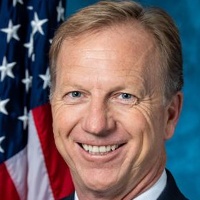
Kevin Hern
Representative
OK
Kevin Hern
Representative
OK
The Home Health Stabilization Act of 2025 aims to ensure continued access to Medicare home health services by pausing automatic payment reductions scheduled for 2026 and 2027. This is achieved by mandating a positive adjustment to the standard payment rate to fully offset proposed cuts. Furthermore, the bill clarifies that these temporary payment increases will not negatively impact future rate calculations for providers.
This Act allocates \$2.165 billion in dedicated funding for the CDC's National Center for HIV, Viral Hepatitis, STD, and Tuberculosis Prevention for the 2026 fiscal year.
Maxine Waters
Representative
CA
Maxine Waters
Representative
CA
The HIV Prevention Now Act secures **\$2.165 billion** in dedicated funding for the CDC's National Center for HIV, Viral Hepatitis, STD, and Tuberculosis Prevention for Fiscal Year 2026. This appropriation is specifically earmarked to support the center's prevention programs and activities. This funding is supplemental to, and cannot be transferred from, other existing appropriations.
The INFORM Act of 2025 mandates that Homeland Security must notify the immediate family of a transferred immigration detainee within 24 hours, providing details about the relocation and the new facility's contact information.
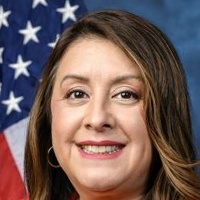
Luz Rivas
Representative
CA
Luz Rivas
Representative
CA
The INFORM Act of 2025 mandates that Homeland Security must notify the immediate family of any individual transferred between immigration detention facilities within 24 hours. This notification must include the reason for the transfer and contact information for the new location. The Act broadly defines "immediate family" to cover a wide range of relatives, including step- and foster-family members.
This resolution officially establishes August 20th as Original Slavery Remembrance Day to recognize the history of slavery, honor those who fought against it, and acknowledge its lasting effects.

Al Green
Representative
TX
Al Green
Representative
TX
This resolution officially establishes August 20th as **Original Slavery Remembrance Day** to formally recognize and condemn the history of slavery in the U.S. and globally. It commemorates the lives of enslaved people, honors historical figures who fought for freedom, and acknowledges the lasting effects of slavery on contemporary society. The resolution requests the President to issue a proclamation calling for appropriate national observance of this day.
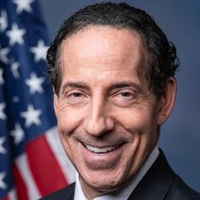
This resolution terminates the President's declared crime emergency in the District of Columbia, asserting that the emergency is unwarranted and the legal basis for federal MPD control is flawed.
Jamie Raskin
Representative
MD
Jamie Raskin
Representative
MD
This resolution terminates the President's August 11, 2025, declaration of a crime emergency in the District of Columbia. Congress asserts that the President lacks the legal authority under the D.C. Home Rule Act to take operational control of the Metropolitan Police Department. Furthermore, the bill notes that local violent crime rates have been declining significantly.
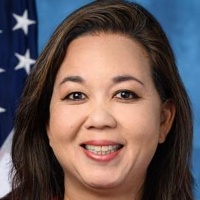
The Keep Seniors Fed Act amends the Food and Nutrition Act of 2008 to include Title II Social Security payments when calculating eligibility for food assistance benefits.
Jill Tokuda
Representative
HI
Jill Tokuda
Representative
HI
The Keep Seniors Fed Act makes technical amendments to the Food and Nutrition Act of 2008 regarding how income is calculated for food assistance eligibility. Specifically, it mandates that income received under Title II of the Social Security Act must now be counted when determining eligibility for benefits. These changes will take effect 90 days after the bill is signed into law.
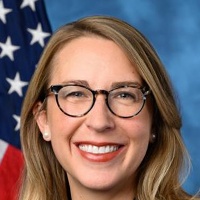
This Act establishes new federal grants to help public wastewater treatment plants upgrade their systems to treat or eliminate emerging contaminants like PFAS.
Hillary Scholten
Representative
MI
Hillary Scholten
Representative
MI
The Public Utility Remediation and Enhancement for Water Act establishes a new federal grant program administered by the EPA to help public wastewater treatment plants upgrade facilities. These grants specifically target the planning, design, and construction needed to treat or eliminate emerging contaminants like PFAS chemicals. The federal government will cover at least 75% of eligible project costs to improve water quality.