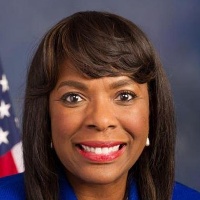
Legislative Activity
Track Terri's sponsored bills, co-sponsored legislation, and voting record
This Act imposes sweeping, mandatory sanctions, tariffs, and investment prohibitions on the Russian Federation and its affiliates until Russia negotiates a lasting peace with Ukraine.
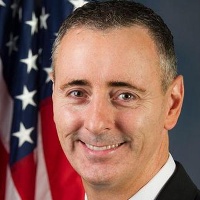
Brian Fitzpatrick
Representative
PA
Brian Fitzpatrick
Representative
PA
The Sanctioning Russia Act of 2025 imposes sweeping economic penalties on the Russian Federation in response to its aggression against Ukraine. This legislation mandates severe, immediate sanctions against key Russian officials, financial institutions, and energy sector entities, including asset freezes and trade prohibitions. Furthermore, the Act dramatically increases import duties on Russian goods and requires the President to review and reimpose these measures until Russia negotiates a lasting peace with Ukraine.
This resolution expresses support for designating April 2025 as "Second Chance Month" to raise awareness about collateral consequences and encourage support for formerly incarcerated individuals.
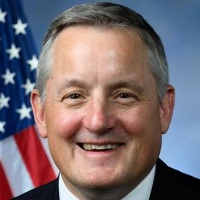
Bruce Westerman
Representative
AR
Bruce Westerman
Representative
AR
This resolution expresses strong support for designating April 2025 as "Second Chance Month." It aims to raise public awareness about the significant legal and social barriers, known as collateral consequences, that prevent individuals with past criminal records from successfully reentering society. The bill encourages communities and employers nationwide to actively work toward removing these obstacles and offering meaningful second chances to those who have paid their debt to society.
This bill prohibits the use of federal funds for the removal of 3 percent or more of the Department of Health and Human Services (HHS) employees or any of its sub-agencies within any 60-day period.
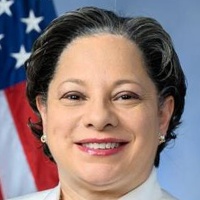
Jennifer McClellan
Representative
VA
Jennifer McClellan
Representative
VA
This bill restricts the use of federal funds to carry out large-scale removals of employees within the Department of Health and Human Services (HHS). Specifically, it prohibits using federal money for terminations if 3% or more of the total HHS workforce, or 3% or more of any individual sub-agency's staff, are removed within a 60-day period. This measure aims to prevent sudden, mass layoffs across the department and its major divisions.
This bill amends tax code to provide special rules allowing certain financial guaranty insurance companies to avoid being classified as Passive Foreign Investment Companies (PFICs).
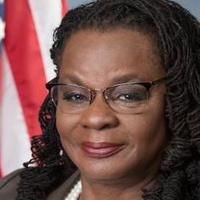
Gwen Moore
Representative
WI
Gwen Moore
Representative
WI
This bill amends tax code rules to provide special treatment for certain financial guaranty insurance companies under the Passive Foreign Investment Company (PFIC) regulations. It allows these companies to count unearned premium reserves as insurance liabilities, making it easier for them to avoid PFIC classification for U.S. investors. The provisions are contingent upon the company meeting specific, high-exposure thresholds related to the debt or bonds they insure.
This Act mandates the Department of Labor to establish and enforce comprehensive workplace violence prevention standards for healthcare and social service workers, while also tying compliance to Medicare funding for certain facilities.
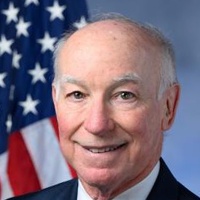
Joe Courtney
Representative
CT
Joe Courtney
Representative
CT
This Act mandates the Secretary of Labor to establish an interim and then a final standard requiring comprehensive workplace violence prevention plans for employers in the healthcare and social service sectors. These plans must be developed with employee input and detail risk assessments, hazard controls, reporting procedures, and annual training. Furthermore, the bill amends the Social Security Act to require Medicare-funded hospitals and skilled nursing facilities not covered by OSHA to comply with these new federal workplace violence prevention standards. The legislation also establishes clear definitions for workplace violence and includes strong anti-retaliation protections for employees who exercise their rights under the Act.
The CARE Act of 2025 mandates Medicare to test a new payment model covering emergency response services provided by ground ambulance companies even when patient transport does not occur.
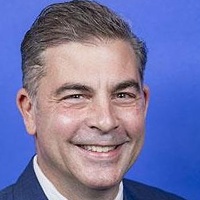
Mike Carey
Representative
OH
Mike Carey
Representative
OH
The CARE Act of 2025 mandates that the Center for Medicare and Medicaid Innovation (CMMI) test a new payment model for emergency services. This model will allow Medicare to pay ground ambulance providers for emergency responses, even when a patient does not ultimately require transport under Medicare Part B. The five-year demonstration aims to evaluate the impact of covering these non-transport emergency responses on patient access and resource utilization.
This Act allows taxpayers whose original IRS refund check was lost or stolen to elect to receive the replacement refund via direct deposit.
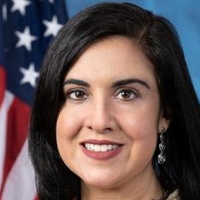
Nicole Malliotakis
Representative
NY
Nicole Malliotakis
Representative
NY
The Recovery of Stolen Checks Act allows taxpayers whose original IRS refund check was lost or stolen to elect to receive the replacement refund via direct deposit. This change aims to provide a faster and more secure method for taxpayers to receive their rightful funds. The Treasury Secretary is required to establish the necessary procedures for this option.
This resolution formally reaffirms the Federal Government's commitment to recognizing the enduring legacy, vital contributions, and future success of Historically Black Colleges and Universities (HBCUs).
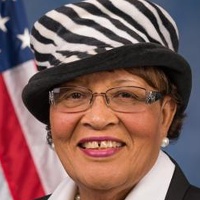
Alma Adams
Representative
NC
Alma Adams
Representative
NC
This resolution formally recognizes and honors the enduring legacy and vital contributions of Historically Black Colleges and Universities (HBCUs) to the nation. It reaffirms the Federal Government's commitment to supporting these essential institutions that drive economic growth and produce a disproportionate number of professionals in critical fields. The measure serves as a strong statement celebrating HBCUs as centers of excellence and opportunity.
The COMPLETE Care Act increases Medicare payments to primary care providers for integrating behavioral health services between 2027 and 2029 and provides technical assistance to support these practices.
Nicole Malliotakis
Representative
NY
Nicole Malliotakis
Representative
NY
The COMPLETE Care Act aims to improve mental healthcare access by providing Medicare incentives for primary care providers to integrate behavioral health services into their practices between 2027 and 2029. This legislation offers increased Medicare payments for specific integrated services during those years, ensuring these bonuses do not trigger cuts elsewhere in the Medicare budget. Additionally, the bill mandates technical assistance to help primary care offices successfully adopt these new integrated care models.
This resolution officially recognizes and supports the goals of National Women's History Month for March 2025, honoring the ongoing struggle and achievements of women throughout American history.
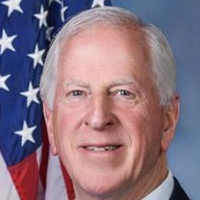
Mike Thompson
Representative
CA
Mike Thompson
Representative
CA
This resolution officially recognizes and celebrates National Women's History Month for March 2025, honoring the long struggle and significant achievements of women throughout American history. It highlights key milestones in women's suffrage, political leadership, and social progress. The House of Representatives supports the goals of ensuring women's history is taught and recognizes the 2025 theme, "Moving Forward Together! Women Educating Inspiring Generations!"
The Hot Foods Act of 2025 lifts the general ban on purchasing ready-to-eat hot foods with SNAP benefits while imposing a sales cap on retailers that primarily sell such items.

Grace Meng
Representative
NY
Grace Meng
Representative
NY
The Hot Foods Act of 2025 removes the general federal ban on using Supplemental Nutrition Assistance Program (SNAP) benefits to purchase hot, ready-to-eat foods. This legislation clarifies that hot foods are now eligible for purchase with SNAP benefits, while also setting a new rule that limits SNAP-participating retailers to deriving no more than 50% of their gross sales from these ready-to-eat hot items. The act updates existing statutes to reflect this expanded purchasing power for recipients.
This bill prohibits the Department of Homeland Security from assigning its functions to Internal Revenue Service personnel unless the Treasury Inspector General for Tax Administration certifies that the IRS staff are adequately trained and the assignment will not interfere with the IRS's core tax administration duties.

Suzan DelBene
Representative
WA
Suzan DelBene
Representative
WA
The Protecting Taxpayer Resources Act restricts the Department of Homeland Security (DHS) from assigning its functions to Internal Revenue Service (IRS) personnel. Before any such assignment can occur, the Treasury Inspector General for Tax Administration (TIGTA) must formally determine that the IRS staff are adequately trained and that the assignment will not interfere with the IRS's core tax administration mission. This determination must be published in the Federal Register to take effect.
This act eliminates the President's authority under Section 122 of the Trade Act of 1974 related to balancing international payments.
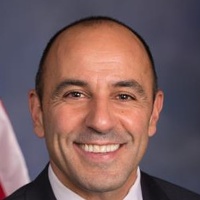
Jimmy Panetta
Representative
CA
Jimmy Panetta
Representative
CA
The Reclaim Trade Powers Act focuses on streamlining U.S. trade law by eliminating outdated presidential authority. Specifically, this bill repeals Section 122 of the Trade Act of 1974, which granted the President powers related to balancing international payments. This action reclaims and modernizes existing trade statutes.
This act establishes a statewide community eligibility option for schools to receive federal funding for free meals, provided the state covers any funding gaps.
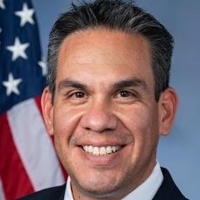
Pete Aguilar
Representative
CA
Pete Aguilar
Representative
CA
The No Hungry Kids in Schools Act establishes a new statewide community eligibility option for schools starting July 1, 2025. This option allows states to ensure all schools receive full federal reimbursement for 100% of meals served by covering any funding gaps with non-federal money. By opting in, states can eliminate the minimum participation threshold and calculate eligibility based on the entire statewide student population.
The School Infrastructure Finance and Innovation Act establishes new tax-credit bonds to finance the construction and upgrades of net-zero energy school facilities through public-private partnerships.
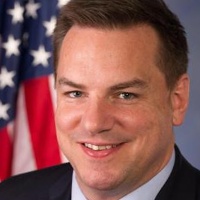
Richard Hudson
Representative
NC
Richard Hudson
Representative
NC
The School Infrastructure Finance and Innovation Act (SIFIA Act) establishes new tax-credit bonds to finance the construction and upgrades of qualified school facilities. These bonds require that financed projects be net-zero energy buildings developed through public-private partnerships. The Act sets a total issuance cap of \$10 billion, with specific allocations reserved for rural projects. Holders of these bonds receive a refundable tax credit based on the bond's annual credit amount.
This bill repeals Section 338 of the Tariff Act of 1930, eliminating an outdated and unilateral tariff authority.
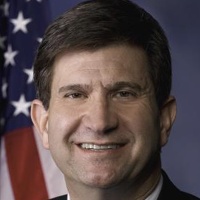
Bradley Schneider
Representative
IL
Bradley Schneider
Representative
IL
This bill, the Repealing Outdated and Unilateral Tariff Authorities Act, aims to modernize U.S. trade law by eliminating outdated provisions. Specifically, it repeals Section 338 of the Tariff Act of 1930. This action removes an old, unilateral tariff authority from the books.
This bill excludes certain veterinary student loan repayments and forgiveness amounts from taxable income to encourage veterinarians to practice in rural areas.

Adrian Smith
Representative
NE
Adrian Smith
Representative
NE
The Rural Veterinary Workforce Act aims to encourage more veterinarians to serve in underserved rural areas by making participation in certain loan repayment or forgiveness programs more financially appealing. This bill amends the tax code to exclude amounts received through qualifying state or federal veterinary student loan repayment programs from being counted as taxable income. This tax benefit applies to amounts received for taxable years beginning after December 31, 2025.
This Act establishes a 20% federal tax credit for converting eligible commercial buildings into affordable housing units, subject to state allocation and specific income restrictions.
Mike Carey
Representative
OH
Mike Carey
Representative
OH
The Revitalizing Downtowns and Main Streets Act establishes a new 20% federal tax credit for converting eligible, older commercial buildings into affordable housing. This incentive aims to increase housing supply by requiring that at least 20% of the converted units remain rent-restricted for low-income residents for 30 years. State agencies will allocate these credits, which are subject to a national cap of $12 billion, based on approved plans prioritizing financially necessary projects.
This resolution expresses Congressional support for designating March 2025 as "Music in Our Schools Month" to recognize the cultural importance and academic benefits of music education for all students.
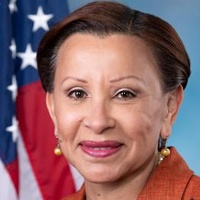
Nydia Velázquez
Representative
NY
Nydia Velázquez
Representative
NY
This resolution expresses strong Congressional support for designating March 2025 as "Music in Our Schools Month." It highlights the cultural importance and proven academic and social benefits of music education for all students. The bill specifically calls attention to disparities in access to quality music programs, particularly for students in underserved communities.
This Act raises the minimum age for Federal Firearms Licensees to sell certain semiautomatic rifles and shotguns to 21, with exceptions for qualified individuals aged 18-20, and mandates an FBI report on its public access line operations.
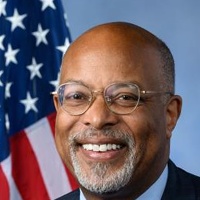
Glenn Ivey
Representative
MD
Glenn Ivey
Representative
MD
The Raise the Age Act of 2025 generally prohibits Federal Firearms Licensees from selling certain semiautomatic centerfire rifles or shotguns capable of holding magazines over five rounds to anyone under 21, with exceptions for qualified military or government personnel. The bill also maintains the existing minimum age of 18 for general firearm purchases, excluding the newly restricted categories. Finally, it mandates that the FBI Director report on the operational procedures of its public access line within 90 days of enactment.