Legislative Activity
Track Scott's sponsored bills, co-sponsored legislation, and voting record
The Dismantle DEI Act of 2025 immediately rescinds federal diversity, equity, and inclusion (DEI) mandates across executive offices, contracting, grants, and education, while banning related training and imposing penalties for non-compliance.
Michael Cloud
Representative
TX
Michael Cloud
Representative
TX
The Dismantle DEI Act of 2025 aims to immediately rescind diversity, equity, and inclusion (DEI) mandates across the federal government, including shutting down related offices and banning specific ideological training for federal personnel and contractors. The bill prohibits the use of federal funds for DEI activities by grant recipients and mandates that federal advisory committees cease all such practices or face termination. Furthermore, it establishes strong enforcement mechanisms, allowing individuals to sue violators and seek financial penalties for non-compliance.
The No Regulation Through Litigation Act of 2025 restricts federal agencies from using settlement agreements to bypass regulatory authority or pay private attorney fees for litigation-driven policy changes.
Michael Cloud
Representative
TX
Michael Cloud
Representative
TX
The No Regulation Through Litigation Act of 2025 prevents federal agencies from bypassing the standard rulemaking process through legal settlements. It prohibits agencies from agreeing to consent decrees that exceed a court's authority and restricts them from paying the attorney fees or litigation costs of opposing parties when a settlement results in new regulations or guidance.
This bill mandates the termination of the U.S. Department of Education effective December 31, 2026.

Thomas Massie
Representative
KY
Thomas Massie
Representative
KY
This bill proposes the complete termination of the United States Department of Education. If enacted, the agency would be officially dissolved on December 31, 2026.
This bill amends the Internal Revenue Code to require taxpayers to provide valid, work-authorized Social Security numbers for themselves and their qualifying children to claim the Child Tax Credit and Earned Income Tax Credit.
Clay Higgins
Representative
LA
Clay Higgins
Representative
LA
The Safeguarding American Workers’ Benefits Act updates eligibility requirements for the Child Tax Credit and the Earned Income Tax Credit. It mandates that taxpayers and qualifying children provide a valid Social Security number—issued to a U.S. citizen or work-authorized noncitizen—before the tax return due date to claim these benefits. These changes are set to take effect for tax years beginning after December 31, 2025.
The Life at Conception Act declares that the constitutional right to life begins at the moment of fertilization and applies to every member of the species *homo sapiens* at all stages of development.
Eric Burlison
Representative
MO
Eric Burlison
Representative
MO
The Life at Conception Act declares that the constitutional right to life begins at the moment of fertilization, defining all human beings as persons from that point forward. The bill establishes legal personhood for every member of the species *homo sapiens* at all stages of development. Additionally, it explicitly prohibits the prosecution of any woman for the death of her unborn child.
The CBO Show Your Work Act mandates that the Congressional Budget Office publicly release the models, data, and computational details used in its legislative cost estimates to ensure transparency and independent replicability.
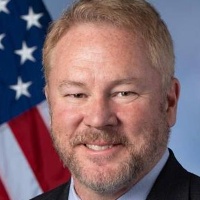
Warren Davidson
Representative
OH
Warren Davidson
Representative
OH
The CBO Show Your Work Act mandates that the Congressional Budget Office publicly release the models, data, and computational details used to estimate the fiscal and economic impacts of legislation. By requiring transparency and replicability, the bill ensures that outside parties can independently verify CBO findings. It also establishes clear protocols for handling confidential data to maintain privacy while maximizing public access to information.
This bill establishes a new "Schedule PolicyCareer" category within the federal excepted service to increase executive branch accountability by streamlining the classification and removal of employees in policy-influencing positions.
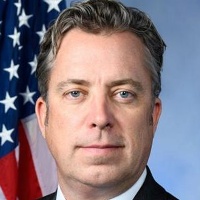
Andrew Ogles
Representative
TN
Andrew Ogles
Representative
TN
The "End the Deep State Act" aims to increase executive branch accountability by reclassifying certain federal positions involved in policy-making and confidential work into a new "Schedule PolicyCareer" category. This legislation removes standard civil service protections for these roles, allowing for greater presidential control over the federal workforce. Additionally, the bill mandates regular agency reviews to identify positions for this new classification and requires employees in these roles to faithfully implement administration policies.
The National Constitutional Carry Act prohibits state and local governments from restricting the public carry of firearms by individuals who are legally eligible to possess them under federal law.
Thomas Massie
Representative
KY
Thomas Massie
Representative
KY
The National Constitutional Carry Act seeks to protect the Second Amendment right of law-abiding citizens to carry firearms in public for self-defense. The bill prohibits state and local governments from imposing criminal or civil penalties on individuals who are legally eligible to possess firearms. By overriding restrictive local regulations, the legislation aims to ensure a uniform standard for the right to bear arms across the United States.
The Main Street Tax Certainty Act makes the 20% pass-through business income deduction permanent by removing its scheduled expiration after 2025.
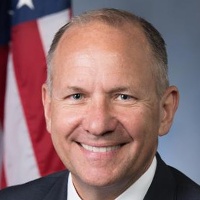
Lloyd Smucker
Representative
PA
Lloyd Smucker
Representative
PA
The Main Street Tax Certainty Act makes the 20% pass-through business income deduction permanent. By removing the current 2025 expiration date, this legislation ensures long-term tax relief for owners of qualified pass-through entities.
This bill proposes a constitutional amendment to permanently set the number of Supreme Court justices at nine, requiring ratification by three-fourths of the states within seven years.

Dusty Johnson
Representative
SD
Dusty Johnson
Representative
SD
This bill proposes a constitutional amendment to fix the number of Supreme Court justices at nine. For this amendment to be valid, three-fourths of the state legislatures must ratify it within seven years of its submission.
The Birthright Citizenship Act of 2025 limits automatic birthright citizenship to children born in the U.S. to at least one parent who is a U.S. citizen, a lawful permanent resident, or an alien serving in the U.S. armed forces.
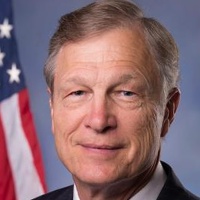
Brian Babin
Representative
TX
Brian Babin
Representative
TX
The Birthright Citizenship Act of 2025 proposes to limit automatic birthright citizenship to children born in the United States who have at least one parent who is a U.S. citizen, a lawful permanent resident, or an alien serving in the U.S. armed forces. This legislation would exclude children born to parents without legal status or those on temporary visas from receiving automatic citizenship. These changes would apply only to individuals born on or after the date of the Act's enactment.
This bill removes the lesser prairie-chicken from the Endangered Species Act and permanently prohibits its future listing as a threatened or endangered species.
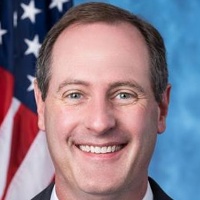
Tracey Mann
Representative
KS
Tracey Mann
Representative
KS
This bill mandates the immediate removal of the lesser prairie-chicken from the federal lists of threatened and endangered species. Furthermore, it amends the Endangered Species Act to permanently prohibit the Secretary of the Interior from designating the species as threatened or endangered in the future.
This bill mandates the destruction of existing firearm transaction records from closed businesses and prohibits the ATF from collecting such records in the future.
Michael Cloud
Representative
TX
Michael Cloud
Representative
TX
The "No Retaining Every Gun In a System That Restricts Your Rights Act" mandates the destruction of all firearm transaction records currently held by the ATF from discontinued businesses. Furthermore, it amends federal law to prohibit the future collection and transfer of these records to the government when a firearms business ceases operations. The bill also requires the ATF to submit a formal report to Congress confirming the number of records destroyed.
This bill amends the Immigration and Nationality Act to deem aliens convicted of or admitting to committing sex offenses, domestic violence, stalking, child abuse, or violating protection orders as inadmissible and deportable. It broadens the definition of crimes against children to include domestic violence, regardless of grant funding status.

Nancy Mace
Representative
SC
Nancy Mace
Representative
SC
The "Preventing Violence Against Women by Illegal Aliens Act" amends the Immigration and Nationality Act to deem aliens inadmissible and deportable if they have committed or admitted to acts constituting sex offenses, domestic violence, stalking, child abuse, or violating protection orders. It broadens the definition of crimes against children to include any crime constituting domestic violence.
The Offshore Lands Authorities Act of 2025 nullifies previous presidential withdrawals of unleased offshore lands and establishes strict new limitations and congressional oversight procedures for future executive leasing restrictions.
Clay Higgins
Representative
LA
Clay Higgins
Representative
LA
The Offshore Lands Authorities Act of 2025 nullifies several previous Presidential withdrawals of offshore lands, effectively reopening those areas to potential mineral leasing. The bill also establishes strict new limitations on the President’s authority to withdraw unleased offshore lands, including size and duration caps, mandatory resource assessments, and a streamlined congressional disapproval process.
The Federal Agency Sunset Commission Act of 2025 establishes a bipartisan commission to systematically review, evaluate, and periodically abolish federal agencies unless they are explicitly reauthorized by Congress.
Michael Cloud
Representative
TX
Michael Cloud
Representative
TX
The Federal Agency Sunset Commission Act of 2025 establishes a bipartisan commission tasked with systematically reviewing federal agencies to determine their efficiency and necessity. Under this act, agencies will be subject to periodic review and automatic abolishment unless Congress passes legislation to reauthorize them. The commission is empowered to recommend the consolidation, reorganization, or termination of agencies to improve government efficiency and reduce redundancy.
The SHOW UP Act of 2025 mandates that executive agencies revert to pre-pandemic telework policies and requires rigorous certification before any future expansion of remote work.

James Comer
Representative
KY
James Comer
Representative
KY
The SHOW UP Act of 2025 requires executive agencies to revert their telework policies to pre-pandemic levels by December 31, 2019. Any future expansion of telework must be supported by a comprehensive impact study and certified by the Office of Personnel Management to ensure it improves mission performance and reduces agency costs.
The No Tax on Tips Act provides a federal income tax deduction of up to $25,000 for qualified cash tips and extends the FICA tax credit for employer-paid tips to include beauty service establishments.

Vern Buchanan
Representative
FL
Vern Buchanan
Representative
FL
The "No Tax on Tips Act" proposes a federal tax deduction of up to $25,000 per year for cash tips received by workers in traditionally tipped occupations. Additionally, the bill expands the existing tax credit for employer-paid Social Security taxes on tips to include beauty service establishments. These changes are designed to provide tax relief for service workers and support businesses where tipping is customary.
This bill mandates the implementation of the Migrant Protection Protocols, requiring the Secretary of Homeland Security to return qualifying noncitizens arriving from contiguous countries to Mexico or Canada during their immigration proceedings.
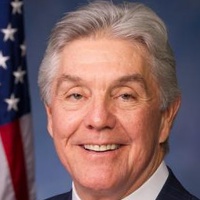
Roger Williams
Representative
TX
Roger Williams
Representative
TX
The Make the Migrant Protection Protocols Mandatory Act of 2025 amends the Immigration and Nationality Act to require, rather than permit, the return of certain noncitizens to Mexico or Canada while their immigration proceedings are pending. This legislation removes discretionary authority from the Department of Homeland Security, effectively mandating the implementation of the "Remain in Mexico" policy.
This bill reclassifies silencers under federal tax law, removes federal registration requirements for legally transferred silencers, preempts state taxation and registration of silencers in commerce, and mandates the destruction of existing federal silencer registration records.

Ben Cline
Representative
VA
Ben Cline
Representative
VA
The Hearing Protection Act aims to remove silencers from the purview of the National Firearms Act (NFA) by treating them similarly to standard firearms under federal tax law. This legislation preempts certain state and local taxes and registration requirements related to silencers involved in interstate commerce. Furthermore, the bill mandates the destruction of existing federal silencer registration records and updates federal marking requirements for manufacturers.