Legislative Activity
Track Scott's sponsored bills, co-sponsored legislation, and voting record
The No Welfare for the Wealthy Act of 2025 amends the Food and Nutrition Act to strictly enforce income and resource eligibility requirements for food assistance benefits.

Ben Cline
Representative
VA
Ben Cline
Representative
VA
The "No Welfare for the Wealthy Act of 2025" amends the Food and Nutrition Act of 2008 to strictly enforce income and resource eligibility requirements for food assistance benefits. By closing existing loopholes, the bill ensures that program resources are reserved for households that meet established financial criteria. These changes will take effect one year following the date of enactment.
This bill prohibits federal funding for the United Nations’ iVerify platform and any other international initiatives that label or censor speech as misinformation, disinformation, or malinformation.
Ben Cline
Representative
VA
Ben Cline
Representative
VA
The End U.N. Censorship Act prohibits the use of federal funds to support the United Nations' iVerify platform or any other international initiatives that label or monitor speech as misinformation, disinformation, or malinformation. The bill further mandates that any funds withheld under these restrictions be permanently rescinded and returned to the U.S. Treasury.
The TRUST in Congress Act requires Members of Congress, their spouses, and their dependent children to place certain investment assets into qualified blind trusts to prevent conflicts of interest.

Seth Magaziner
Representative
RI
Seth Magaziner
Representative
RI
The TRUST in Congress Act requires Members of Congress, their spouses, and their dependent children to place covered financial investments into qualified blind trusts to prevent conflicts of interest. The bill establishes strict deadlines for asset transfers and mandates public certification of compliance. These measures ensure that lawmakers cannot influence or benefit from their personal investments while serving in office.
The Border Safety and Security Act of 2025 authorizes the Secretary of Homeland Security to suspend the entry of inadmissible aliens at U.S. borders when detention capacity is unavailable or operational control is compromised.

Chip Roy
Representative
TX
Chip Roy
Representative
TX
The Border Safety and Security Act of 2025 authorizes the Secretary of Homeland Security to suspend the entry of inadmissible aliens at U.S. borders to maintain operational control. It mandates a suspension of entry whenever the government lacks the capacity to properly detain or monitor these individuals. Additionally, the bill empowers state attorneys general to sue the federal government to enforce these border security requirements.
The REMAIN in Mexico Act of 2025 mandates the implementation of the Migrant Protection Protocols, requiring asylum seekers to wait in Mexico while their claims are processed.

Brandon Gill
Representative
TX
Brandon Gill
Representative
TX
The REMAIN in Mexico Act of 2025 mandates that the Secretary of Homeland Security reinstate the Migrant Protection Protocols (MPP). This legislation requires that asylum seekers be returned to Mexico to await their U.S. immigration proceedings, effectively codifying the 2019 policy guidance into law.
The Legal Workforce Act mandates that all U.S. employers use a phased-in electronic verification system to confirm the employment eligibility of all new and existing employees.
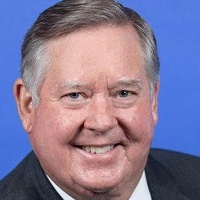
Ken Calvert
Representative
CA
Ken Calvert
Representative
CA
The Legal Workforce Act mandates that all U.S. employers use a new, electronic verification system to confirm the work eligibility of every new hire. This legislation replaces the existing E-Verify program with a phased-in, mandatory process that requires employers to verify both identity and work authorization for all employees. Additionally, the bill increases penalties for hiring unauthorized workers, establishes new fraud prevention measures, and preempts state laws to create a uniform national employment verification policy.
This bill mandates the formal abolishment of the Bureau of Alcohol, Tobacco, Firearms and Explosives (ATF).
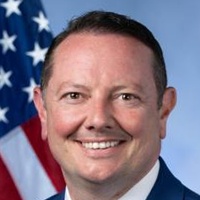
Eric Burlison
Representative
MO
Eric Burlison
Representative
MO
The Abolish the ATF Act is a legislative proposal that mandates the immediate dissolution of the Bureau of Alcohol, Tobacco, Firearms and Explosives. This bill seeks to formally terminate the agency and eliminate its federal oversight functions.
This bill proposes a constitutional amendment to limit members of the House of Representatives to three terms and Senators to two terms, with specific provisions for partial terms. Terms served before the amendment's ratification would not be counted towards these limits, and the amendment must be ratified within seven years to be valid.
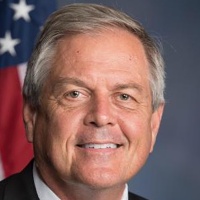
Ralph Norman
Representative
SC
Ralph Norman
Representative
SC
This bill proposes a constitutional amendment to limit the number of terms a member of Congress can serve. Representatives would be limited to 3 terms and Senators to 2 terms, with specific rules for partial terms. Terms served before the amendment's ratification would not be counted. The amendment must be ratified by three-fourths of the states within seven years to be valid.
The Stopping Border Surges Act implements stricter asylum eligibility requirements, accelerates deportation timelines for unaccompanied minors, and mandates family detention to deter unauthorized border crossings.

Andy Biggs
Representative
AZ
Andy Biggs
Representative
AZ
The Stopping Border Surges Act proposes comprehensive reforms to U.S. immigration policy by tightening asylum eligibility and accelerating the processing of unaccompanied minors. The bill mandates stricter screening standards, expands detention authority for families, and limits legal protections for those seeking asylum. Ultimately, the legislation aims to deter fraudulent claims and expedite removals through more restrictive border and interior enforcement measures.
The Federal Reserve Transparency Act of 2025 mandates a comprehensive audit of the Federal Reserve System by the Comptroller General, ensuring greater transparency and accountability. This act requires a detailed report to Congress with findings and recommendations, while also repealing audit limitations.

Thomas Massie
Representative
KY
Thomas Massie
Representative
KY
The Federal Reserve Transparency Act of 2025 mandates a comprehensive audit of the Federal Reserve System by the Comptroller General within one year. Following the audit, a detailed report must be submitted to Congress, including findings and recommendations. This act aims to increase transparency and accountability within the Federal Reserve System by repealing audit limitations.
The FIND Act prohibits federal agencies from contracting with entities that discriminate against the firearm and ammunition industry, ensuring fair access to government contracts for these businesses. Contractors must certify they do not discriminate against firearm entities, with violations leading to contract termination.
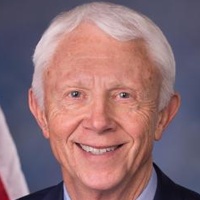
Jack Bergman
Representative
MI
Jack Bergman
Representative
MI
The FIND Act prohibits federal agencies from contracting with entities that discriminate against the firearm and ammunition industry. It requires federal contractors to certify they do not discriminate against firearm entities and prohibits them from awarding subcontracts to entities that do not provide a similar certification. Violations of these clauses will result in contract termination. The act defines "discriminate" as making judgments or refusing/limiting services based on biased criteria, rather than case-by-case evaluations, empirical data, financial risk, or legal non-compliance.
The FairTax Act of 2025 proposes replacing federal income, payroll, and estate taxes with a national consumption-based sales tax, accompanied by monthly family rebates and the eventual sunsetting of the IRS.
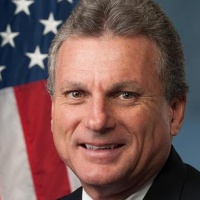
Earl Carter
Representative
GA
Earl Carter
Representative
GA
The FairTax Act of 2025 proposes a fundamental overhaul of the U.S. tax system by repealing federal income, payroll, estate, and gift taxes starting in 2027. In their place, the legislation establishes a national sales tax on new goods and services, supported by a monthly rebate for qualified families to offset the cost of basic necessities. The bill also transitions tax administration to the Treasury Department and includes a sunset provision that terminates the sales tax if the Sixteenth Amendment is not repealed within seven years.
The Regulations from the Executive in Need of Scrutiny (REINS) Act of 2025 increases congressional accountability by requiring federal agencies to obtain legislative approval for all "major" rules before they can take effect.

Katherine Cammack
Representative
FL
Katherine Cammack
Representative
FL
The Regulations from the Executive in Need of Scrutiny (REINS) Act of 2025 aims to increase federal regulatory accountability by requiring Congress to approve any "major" rule before it can take effect. Under this legislation, rules with a significant economic impact require a joint resolution of approval from both chambers of Congress to become law. By shifting this authority back to the legislative branch, the Act seeks to ensure greater transparency and oversight of the federal rulemaking process.
The Land and Social Security Optimization (LASSO) Act allocates 10% of the annual revenue from Department of Interior and Agriculture activities on public lands to the Social Security Trust Fund, without raising prices or reducing funds to states or tribes.

Paul Gosar
Representative
AZ
Paul Gosar
Representative
AZ
The Land And Social Security Optimization Act (LASSO Act) directs 10% of the revenue generated from activities on public lands managed by the Department of the Interior and the Forest Service to be deposited into the Social Security Trust Fund annually. This act does not authorize increasing prices for activities on public lands, nor does it reduce funds available to states, Indian Tribes, territories, or local governments from revenue generated on public lands.
The "Injunctive Authority Clarification Act of 2025" limits the ability of federal courts to issue injunctions that prevent the enforcement of laws against individuals or entities not directly involved in the lawsuit, unless those non-parties are legally represented in the case.
Andy Biggs
Representative
AZ
Andy Biggs
Representative
AZ
The "Injunctive Authority Clarification Act of 2025" limits the ability of federal courts to issue injunctions that prevent the enforcement of laws against individuals or entities not directly involved in the lawsuit. This bill amends Title 28 of the U.S. Code to ensure that court orders only apply to parties in the case, unless non-parties are legally represented within the suit.