Legislative Activity
Track Scott's sponsored bills, co-sponsored legislation, and voting record
The Permanent CBDC Ban Act prohibits the Federal Reserve from issuing a central bank digital currency.
Michael Cloud
Representative
TX
Michael Cloud
Representative
TX
The Permanent CBDC Ban Act seeks to codify a long-term prohibition on the issuance of a Central Bank Digital Currency (CBDC) by the Federal Reserve. By amending the Federal Reserve Act, this legislation aims to permanently restrict the government from implementing a digital dollar.
The Healthy Recess for Learning Act encourages school districts to provide students with at least 60 minutes of daily physical activity to improve student health and academic performance.
Tom Barrett
Representative
MI
Tom Barrett
Representative
MI
The Healthy Recess for Learning Act encourages school districts to provide students with at least 60 minutes of daily physical activity, including recess and physical education. By amending the Elementary and Secondary Education Act, the bill supports schools in integrating these healthy habits to improve student focus, behavior, and academic performance.
This bill restricts stock trading by Members of Congress and their families while establishing new federal requirements for voters to provide photo identification in federal elections.
Bryan Steil
Representative
WI
Bryan Steil
Representative
WI
The Stop Insider Trading Act restricts Members of Congress, their spouses, and dependent children from purchasing or selling individual stocks to prevent conflicts of interest. Additionally, the bill mandates that voters provide valid photo identification when voting in person or by mail in federal elections.
The D.C. Taxing Authority Review Act requires explicit congressional approval for all District of Columbia laws related to taxes, fees, or Title 47 of the D.C. Code before they can take effect.

James Comer
Representative
KY
James Comer
Representative
KY
The D.C. Taxing Authority Review Act requires explicit congressional approval for any District of Columbia legislation that imposes or increases taxes or fees, or relates to Title 47 of the D.C. Code. Under this bill, such acts will no longer take effect automatically after the standard review period but must instead be passed by a joint resolution of Congress. Additionally, the legislation establishes expedited, one-hour debate limits in the Senate for these specific approval resolutions.
This bill clarifies that a franchisor is only considered a joint employer of a franchisee's workers if it exercises substantial, direct, and immediate control over essential terms of employment.
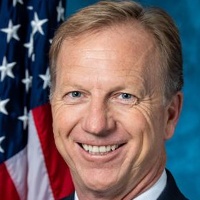
Kevin Hern
Representative
OK
Kevin Hern
Representative
OK
The American Franchise Act aims to protect the traditional franchise business model by clarifying the definition of a "joint employer." This legislation establishes that a franchisor is only considered a joint employer if it exercises "substantial direct and immediate control" over the essential terms of employment for a franchisee's workers. This change specifically targets liability risks associated with maintaining brand standards, ensuring franchisors are not automatically held responsible for local labor practices. The new standard applies prospectively to future legal proceedings.
The Federal Lands Lawful Carry Act permits individuals to possess firearms in designated federal recreational areas, provided they comply with applicable state laws and federal firearm prohibitions.
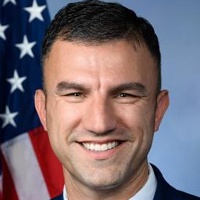
Rudy Yakym
Representative
IN
Rudy Yakym
Representative
IN
The Federal Lands Lawful Carry Act allows individuals to possess firearms in designated federal areas, such as national parks and forests, provided they comply with state law and are not otherwise prohibited from firearm ownership. This legislation creates an exception to general federal facility firearm bans for units managed by agencies including the National Park Service, the Bureau of Land Management, and the U.S. Forest Service.
This Act prohibits payment card networks and processors from assigning specific merchant category codes to identify firearms retailers, protecting the privacy of firearm and ammunition purchases.
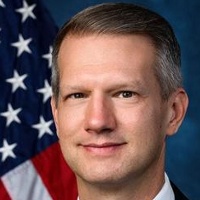
Riley Moore
Representative
WV
Riley Moore
Representative
WV
The Protecting Privacy in Purchases Act prohibits payment card networks and processors from assigning specific merchant category codes to firearms retailers. This legislation aims to protect consumer privacy by preventing the tracking of firearm and ammunition purchases through specialized financial classification. The Attorney General is tasked with enforcing these provisions and reporting annually on compliance.
The Preserving Our Constitution Act of 2026 prohibits federal courts and government entities from recognizing or enforcing any foreign or religious laws that conflict with the U.S. Constitution and the fundamental rights it guarantees.
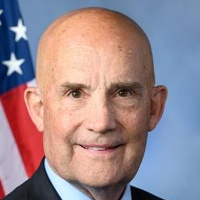
Keith Self
Representative
TX
Keith Self
Representative
TX
The Preserving Our Constitution Act of 2026 prohibits U.S. courts and government entities from recognizing or enforcing any foreign or religious laws, customs, or practices that conflict with the U.S. Constitution. This legislation ensures that individual rights and liberties remain protected by preventing the application of legal systems that violate constitutional protections, such as equal protection and due process.
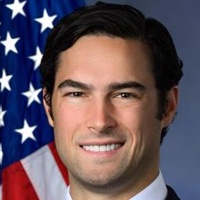
This bill restricts eligibility for FHA mortgage insurance and the purchase/securitization of mortgages by Fannie Mae and Freddie Mac to only United States citizens.
Brandon Gill
Representative
TX
Brandon Gill
Representative
TX
This bill, the "Homeownership Eligibility Reform Act," restricts eligibility for federally backed mortgages. It mandates that only United States citizens can qualify for mortgage insurance through the Federal Housing Administration (FHA). Furthermore, it prohibits Fannie Mae and Freddie Mac from purchasing or securitizing conventional mortgages for one- to four-unit homes if the borrower is not a U.S. citizen.
This bill proposes to repeal the Seventeenth Amendment, returning the election of U.S. Senators to state legislatures.
Keith Self
Representative
TX
Keith Self
Representative
TX
This proposed constitutional amendment seeks to repeal the Seventeenth Amendment, thereby eliminating the direct popular election of U.S. Senators. If ratified, it would restore the original method of senatorial selection by state legislatures. Sitting Senators would complete their current terms under the existing rules.
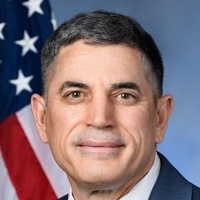
This bill restricts the Environmental Protection Agency's authority by prohibiting regulations that restrict vehicle sales, mandate fuel-switching, reduce grid reliability, or require commercially unavailable or cost-prohibitive technologies.
Andrew Clyde
Representative
GA
Andrew Clyde
Representative
GA
The End EPA Abuse Act of 2026 aims to significantly limit the regulatory authority of the Environmental Protection Agency (EPA). This bill amends the Clean Air Act to prohibit the EPA from issuing regulations that restrict vehicle sales, mandate fuel-switching at power plants, or reduce electric grid reliability. It also bars the EPA from requiring the use of technologies deemed commercially unavailable, cost-prohibitive without subsidies, or otherwise infeasible.
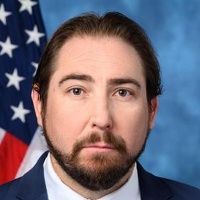
The USCP Empowerment Act of 2025 grants the United States Capitol Police Board new authority to track, disrupt, seize, or destroy drones posing a credible threat to Capitol facilities, while establishing strict privacy and reporting requirements.
Eli Crane
Representative
AZ
Eli Crane
Representative
AZ
The USCP Empowerment Act of 2025 grants the United States Capitol Police Board new authority to detect, disrupt, or seize unmanned aircraft systems (drones) that pose a credible threat to Capitol facilities. This allows the USCP to override certain communication interception laws when necessary to neutralize a threat. The Act mandates strict privacy safeguards for any intercepted communications and requires regular reporting to Congress on the use of these new powers.
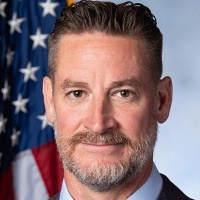
This act prohibits the use of federal funds, Treasury borrowing, or Federal Reserve lending to bail out state and local governments facing or at risk of default after January 1, 2026, except in cases of declared disasters.
W. Steube
Representative
FL
W. Steube
Representative
FL
The Government Bailout Prevention Act aims to prohibit the use of federal funds, Treasury borrowing, and Federal Reserve lending to bail out financially distressed state and local governments. This ban applies to entities that default or face default after January 1, 2026, with an exception for assistance provided in response to a declared disaster. The legislation specifically targets debt guarantees and financial assistance to state, municipal, and local entities.
This bill revokes the tax-exempt status of the Southern Poverty Law Center, making it subject to taxation.
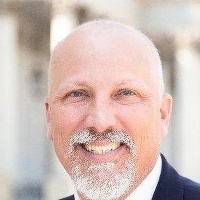
Chip Roy
Representative
TX
Chip Roy
Representative
TX
This bill, the "Stop Subsidizing Political Lawfare by Charities Act of 2026," revokes the tax-exempt status of the Southern Poverty Law Center (SPLC). By ending its 501(c)(3) status, the SPLC will be subject to federal income taxation. This change aims to stop government subsidization of the organization's activities through tax exemptions.
This bill mandates sweeping border wall construction, tightens asylum eligibility to near-impossible standards, expands detention capacity, and reforms immigration parole while penalizing visa overstays.
Chip Roy
Representative
TX
Chip Roy
Representative
TX
The Permanent Trump Secure Border Act mandates immediate and accelerated construction of the border wall, significantly tightens asylum eligibility standards by raising the "credible fear" threshold, and severely restricts the use of immigration parole. The bill also requires comprehensive technology upgrades for border security, mandates specific staffing levels for Border Patrol, and increases penalties for visa overstays. Overall, it represents a sweeping legislative effort to enhance physical barriers, restrict entry pathways, and increase interior immigration enforcement.
This bill updates federal law to require a warrant for government access to the content of stored electronic communications, regardless of how long they have been stored, while also clarifying provider disclosure rules.

Suzan DelBene
Representative
WA
Suzan DelBene
Representative
WA
The Email Privacy Act updates federal law regarding electronic communication privacy and government access to stored digital data. This bill mandates that law enforcement must obtain a warrant to compel service providers to disclose the content of any stored electronic communication, regardless of how long it has been stored. It also clarifies the rules under which providers may voluntarily disclose customer information.
This bill directs a study on the transparency and potential risks of sister city partnerships involving communities from countries with significant public sector corruption.
Chip Roy
Representative
TX
Chip Roy
Representative
TX
The Sister City Transparency Act mandates a study of U.S. sister city partnerships involving communities from countries with significant public sector corruption. This study will examine partnership activities, transparency measures, and potential national security risks. The findings and recommendations will be reported to Congress within six months.
This act exempts capital gains from the sale of a qualified family farm to a qualified family member from gross income.
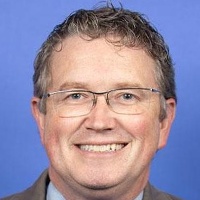
Thomas Massie
Representative
KY
Thomas Massie
Representative
KY
This act eliminates capital gains tax for family members selling qualified farm property to a direct relative. The exclusion applies to the seller's profit, provided the farm meets specific ownership and usage requirements. This measure aims to facilitate the transfer of family farms across generations while establishing beneficial basis rules for the purchasing family member.
This Act repeals the federal beneficial ownership information reporting requirements for domestic persons and entities, limiting them only to foreign individuals and foreign-connected companies, and mandates the deletion of existing domestic data.
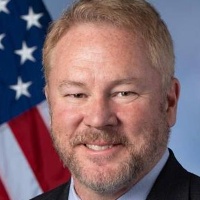
Warren Davidson
Representative
OH
Warren Davidson
Representative
OH
The Repealing Big Brother Overreach Act significantly narrows the federal beneficial ownership information reporting requirements. This legislation limits reporting obligations exclusively to foreign individuals and foreign-connected companies. Furthermore, it mandates the deletion of all previously collected data pertaining to domestic persons and entities.
This bill removes references to "socially disadvantaged farmers and ranchers" across federal agriculture laws and prohibits the USDA from giving preference based on race or gender in its programs.
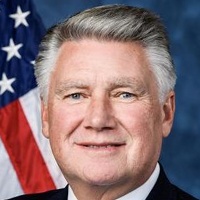
Mark Harris
Representative
NC
Mark Harris
Representative
NC
The Equal Treatment for Farmers Act amends federal agriculture laws to remove "socially disadvantaged farmers and ranchers" as a distinct category for program eligibility, set-asides, and definitions across various USDA programs. This legislation also explicitly prohibits the Department of Agriculture from giving any preference or priority based on race or gender in its programs. The bill aims to standardize eligibility criteria across farm loans, crop insurance, and conservation efforts.