Legislative Activity
Track Scott's sponsored bills, co-sponsored legislation, and voting record
This bill eliminates federal regulations requiring flame mitigation devices and child-resistance standards for portable gas containers.

Chip Roy
Representative
TX
Chip Roy
Representative
TX
The "Gas Can Freedom Act of 2025" repeals the Portable Fuel Container Safety Act of 2020 and the Children's Gasoline Burn Prevention Act, eliminating regulations regarding flame mitigation devices and child-resistance standards for portable gasoline containers. It prohibits the Consumer Product Safety Commission from reinstating similar regulations.
The "Death Tax Repeal Act" eliminates estate and generation-skipping transfer taxes, adjusts gift tax calculations, and sets a $10,000,000 lifetime gift exemption.
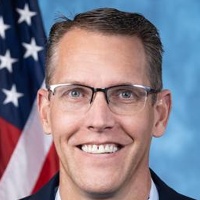
Randy Feenstra
Representative
IA
Randy Feenstra
Representative
IA
The "Death Tax Repeal Act" eliminates both estate and generation-skipping transfer taxes, effective from the date of enactment. It adjusts gift tax calculations by setting the lifetime gift exemption at $10,000,000, with inflation adjustments after 2011. The Act also includes transitional rules for applying certain sections of the Internal Revenue Code during the enactment year.
This resolution expresses Congressional opposition to imposing new performance fees or royalties on local radio stations and businesses for broadcasting or playing music.
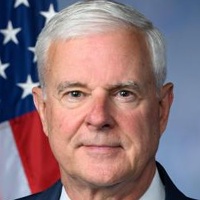
Steve Womack
Representative
AR
Steve Womack
Representative
AR
The Local Radio Freedom Act expresses Congressional opposition to imposing new performance fees, taxes, or royalties on local radio stations and businesses for playing music. It argues that the current system of free airplay provides essential promotional value to artists and that new fees would threaten the financial viability of local broadcasters and the vital community services they provide.
Prohibits federal funding for disinformation research grants and related programs.
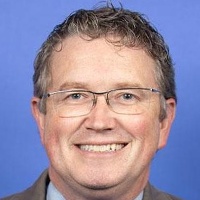
Thomas Massie
Representative
KY
Thomas Massie
Representative
KY
This bill prohibits federal funds from being used for disinformation research grants. It also blocks funding for Secure and Trustworthy Cyberspace grants. Additionally, the bill defunds programs within the National Science Foundation's Track F: Trust and Authenticity in Communications Systems.
The USA Batteries Act removes lead oxide, antimony, and sulfuric acid from the list of taxable chemicals under the Superfund excise taxes to support American battery manufacturers.
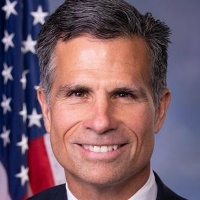
Daniel Meuser
Representative
PA
Daniel Meuser
Representative
PA
The USA Batteries Act seeks to amend Superfund excise taxes by removing lead oxide, antimony, and sulfuric acid from the list of taxable chemicals. This change aims to alleviate the tax burden on domestic battery manufacturers, ensuring fair competition with imported batteries. The Act recognizes the economic importance and high recyclability of lead batteries, which are crucial for various sectors, and emphasizes the need to support American manufacturing and jobs in the battery industry. Ultimately, the Act intends to bolster the global competitiveness of the U.S. lead battery industry by reducing raw material costs.
The "National Right-to-Work Act" prohibits mandatory union membership as a condition of employment, protecting employees' rights to choose whether or not to join or support a labor union.
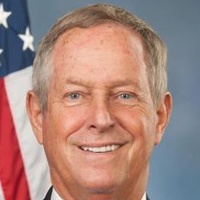
Joe Wilson
Representative
SC
Joe Wilson
Representative
SC
The "National Right-to-Work Act" amends both the National Labor Relations Act and the Railway Labor Act to protect an employee's right to choose whether or not to join or support a labor union. It eliminates the possibility of mandatory union membership or dues payments as a condition of employment, ensuring that employees cannot be forced to join or support a union against their will.
This Act allows schools participating in the National School Lunch Program to offer organic or non-organic whole milk alongside other options, while clarifying saturated fat accounting and restricting milk sourcing from China state-owned enterprises.
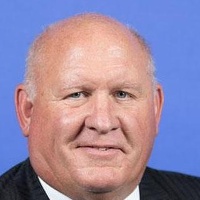
Glenn Thompson
Representative
PA
Glenn Thompson
Representative
PA
The Whole Milk for Healthy Kids Act of 2025 expands milk options available to students in the National School Lunch Program by allowing schools to offer organic or non-organic whole milk. This legislation provides greater flexibility for schools in providing fluid milk choices while maintaining accommodations for students with special dietary needs. Importantly, the saturated fat content of these offered milk options will not count toward the meal's overall saturated fat limits.
The SAFE for America Act of 2025 eliminates the diversity visa program, effective October 1, 2025.
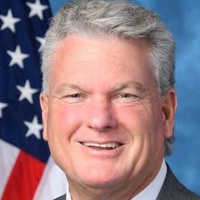
Mike Collins
Representative
GA
Mike Collins
Representative
GA
The SAFE for America Act of 2025 eliminates the Diversity Visa Program, which makes visas available to persons from countries with low rates of immigration to the United States. This is achieved through repealing subsection (c) of Section 203 of the Immigration and Nationality Act. The Act also makes corresponding technical amendments to other sections of the Immigration and Nationality Act to reflect this change. These changes would take effect beginning October 1, 2025.
The "Emergency Border Control Resolution" establishes the federal budget for fiscal year 2025, setting spending and revenue levels, and mandating House committees to propose legislative changes to reduce the deficit.
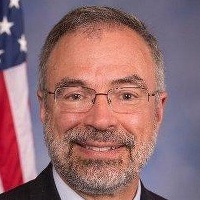
Andy Harris
Representative
MD
Andy Harris
Representative
MD
The "Emergency Border Control Resolution" establishes the federal budget for fiscal year 2025, replacing previous resolutions and setting budgetary levels through 2034. It outlines recommended levels and amounts for federal revenues, budget authority, outlays, deficits, and debt. The resolution instructs House committees to propose legislative changes to either increase or reduce the deficit by specific amounts. It also sets a policy to restore federal spending to pre-COVID-19 pandemic levels, adjusted to protect Social Security, Medicare, and debt service obligations.
This bill abolishes the United States Agency for International Development (USAID), redirecting its assets and responsibilities to the Secretary of State.
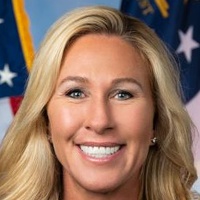
Marjorie Greene
Representative
GA
Marjorie Greene
Representative
GA
This bill proposes to eliminate the United States Agency for International Development (USAID). It would cut off all federal funding to USAID starting from the bill's enactment date. Any unspent funds previously allocated to USAID would be rescinded and transferred to the Secretary of State, along with all remaining assets and liabilities of the agency.
The "LOCAL Act" codifies the Bureau of Land Management headquarters in Grand Junction, Colorado, mandates a study on relocating additional BLM positions to western states, and aims to improve federal land management and community coordination.
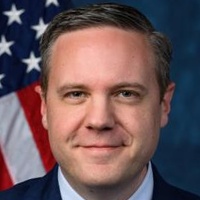
Jeff Hurd
Representative
CO
Jeff Hurd
Representative
CO
The LOCAL Act mandates the Bureau of Land Management headquarters be located in Grand Junction, Colorado. It requires a study on the feasibility of relocating additional BLM employee positions to Grand Junction or another western state. The study will assess the potential benefits of relocation on federal land management, community coordination, and various land uses. A report on the study's findings must be submitted to the House and Senate Committees on Natural Resources and Energy and Natural Resources within 365 days.
The Senior Citizens Tax Elimination Act proposes to repeal federal income taxes on Social Security benefits while ensuring the Social Security and Railroad Retirement trust funds remain fully funded.
Thomas Massie
Representative
KY
Thomas Massie
Representative
KY
The Senior Citizens Tax Elimination Act proposes to repeal federal income taxes on Social Security benefits, ensuring these payments are no longer counted as gross income. To protect the financial stability of the Social Security and Railroad Retirement programs, the bill mandates automatic federal appropriations to offset any resulting revenue loss.
This bill prohibits businesses with significant ties to the People's Republic of China from receiving assistance from the Small Business Administration.
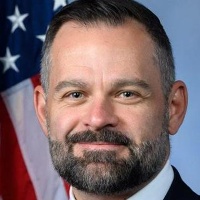
Cory Mills
Representative
FL
Cory Mills
Representative
FL
The "Preventing SBA Assistance from Going to China Act" amends the Small Business Act to prevent businesses with significant ties to the People's Republic of China from being classified as a small business. A business is ineligible if it is based or incorporated in China, or if more than 25% of its voting stock is owned by Chinese citizens or entities. This ensures that SBA assistance is not directed towards businesses affiliated with the Chinese government.
This resolution expresses the sense of Congress that the United States should formally recognize Taiwan as an independent nation, establish full diplomatic relations, negotiate a free trade agreement, and support its membership in international organizations.
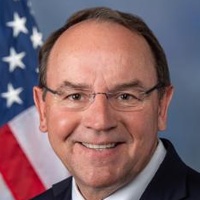
Thomas Tiffany
Representative
WI
Thomas Tiffany
Representative
WI
This resolution expresses the sense of Congress that the United States should formally recognize Taiwan as an independent, sovereign nation and abandon the obsolete "One China Policy." It calls for the normalization of diplomatic relations, the negotiation of a bilateral free trade agreement, and active U.S. support for Taiwan’s membership in international organizations.
The "UNPLUG EVs Act" rescinds unspent funds from electric vehicle charging and fueling grant programs and the National Electric Vehicle Infrastructure Formula Program to reduce the federal deficit.
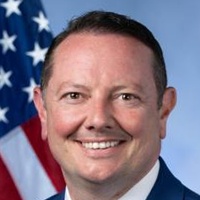
Eric Burlison
Representative
MO
Eric Burlison
Representative
MO
The "UNPLUG EVs Act" rescinds any unspent funds allocated for electric vehicle charging and fueling grants, as well as funds from the National Electric Vehicle Infrastructure Formula Program. The recovered funds will be deposited into the Treasury's general fund and used to reduce the federal deficit.
This proposed constitutional amendment would base the apportionment of U.S. House of Representatives seats on the number of U.S. citizens in each state rather than the total population.
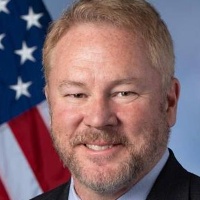
Warren Davidson
Representative
OH
Warren Davidson
Representative
OH
This proposed constitutional amendment would change how seats in the U.S. House of Representatives are apportioned among the states. Instead of using total population, the amendment mandates that representation be based solely on the number of U.S. citizens residing in each state.
Mandates the prompt release of immigration status information to state officials for voter eligibility verification.
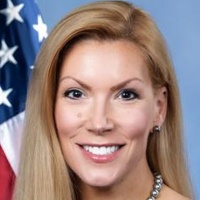
Beth Van Duyne
Representative
TX
Beth Van Duyne
Representative
TX
The "Voter Eligibility Verification Act of 2025" aims to ensure accurate voter rolls by requiring the prompt release of immigration status information to state officials. The Attorney General or Secretary of State must receive an individual's immigration status within 15 days of requesting it, including for potential voters. This will allow states to verify the eligibility of individuals for voter registration.
The Fair Access to Banking Act prohibits large financial institutions and payment networks from denying services to law-abiding businesses based on subjective, non-financial, or political criteria.
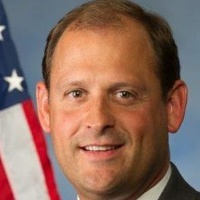
Garland Barr
Representative
KY
Garland Barr
Representative
KY
The Fair Access to Banking Act prohibits large financial institutions and payment networks from denying services to law-abiding businesses based on subjective, politically motivated, or reputational criteria. The bill mandates that financial institutions use impartial, quantitative, risk-based standards to evaluate customers rather than category-based exclusions. To ensure compliance, the legislation establishes enforcement mechanisms through federal regulators and provides a legal pathway for businesses to sue for damages if they are unfairly denied access to financial services.
The Dismantle DEI Act of 2025 immediately rescinds federal diversity, equity, and inclusion (DEI) mandates across executive offices, contracting, grants, and education, while banning related training and imposing penalties for non-compliance.
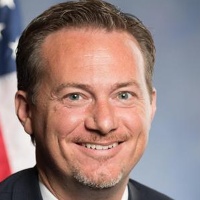
Michael Cloud
Representative
TX
Michael Cloud
Representative
TX
The Dismantle DEI Act of 2025 aims to immediately rescind diversity, equity, and inclusion (DEI) mandates across the federal government, including shutting down related offices and banning specific ideological training for federal personnel and contractors. The bill prohibits the use of federal funds for DEI activities by grant recipients and mandates that federal advisory committees cease all such practices or face termination. Furthermore, it establishes strong enforcement mechanisms, allowing individuals to sue violators and seek financial penalties for non-compliance.
This bill mandates the termination of the U.S. Department of Education effective December 31, 2026.
Thomas Massie
Representative
KY
Thomas Massie
Representative
KY
This bill proposes the complete termination of the United States Department of Education. If enacted, the agency would be officially dissolved on December 31, 2026.