Legislative Activity
Track August's sponsored bills, co-sponsored legislation, and voting record
The "Death Tax Repeal Act" eliminates estate and generation-skipping transfer taxes, adjusts gift tax calculations, and sets a $10,000,000 lifetime gift exemption.
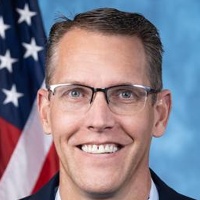
Randy Feenstra
Representative
IA
Randy Feenstra
Representative
IA
The "Death Tax Repeal Act" eliminates both estate and generation-skipping transfer taxes, effective from the date of enactment. It adjusts gift tax calculations by setting the lifetime gift exemption at $10,000,000, with inflation adjustments after 2011. The Act also includes transitional rules for applying certain sections of the Internal Revenue Code during the enactment year.
The DRIVE Act of 2025 mandates that the VA increase veteran travel reimbursement rates to match the federal employee mileage rate and ensures veterans receive these payments within 90 days of submitting a complete claim.
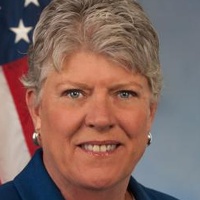
Julia Brownley
Representative
CA
Julia Brownley
Representative
CA
The DRIVE Act of 2025 ensures that the Department of Veterans Affairs (VA) travel reimbursement rate for veterans' medical appointments will never fall below the standard federal employee mileage rate. This legislation mandates that the VA must process and pay these mileage allowances within 90 days of a veteran submitting a complete request. Essentially, the bill aims to increase equity and speed in compensating veterans for necessary travel to VA healthcare.
This resolution expresses Congressional opposition to imposing new performance fees or royalties on local radio stations and businesses for broadcasting or playing music.
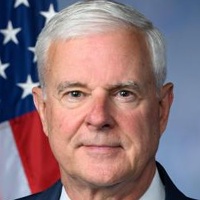
Steve Womack
Representative
AR
Steve Womack
Representative
AR
The Local Radio Freedom Act expresses Congressional opposition to imposing new performance fees, taxes, or royalties on local radio stations and businesses for playing music. It argues that the current system of free airplay provides essential promotional value to artists and that new fees would threaten the financial viability of local broadcasters and the vital community services they provide.
This bill prohibits the Secretary of Health and Human Services from enforcing the CMS minimum staffing standards for nursing homes published on May 10, 2024.
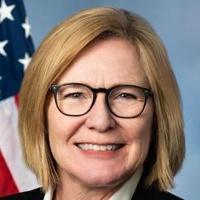
Michelle Fischbach
Representative
MN
Michelle Fischbach
Representative
MN
The Protecting America’s Seniors’ Access to Care Act prohibits the Secretary of Health and Human Services from implementing the minimum staffing level rules for nursing homes that were published by CMS on May 10, 2024. This legislation effectively blocks the enforcement of those specific staffing mandates.
The "One Flag for All Act" would generally require only the U.S. flag to be displayed on the exterior and in public areas of federal buildings, with specific exceptions for POW/MIA flags, flags of visiting dignitaries, state flags of members of congress, armed forces flags, flags of historical significance, public safety flags, flags commemorating national observances, flags representing religious organizations during religious events at military facilities, flags representing a Federal agency, flags representing an Indian Tribe, and flags representing the State, territory, county, city, or local jurisdiction where the public building is located.
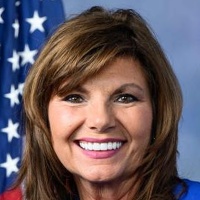
Diana Harshbarger
Representative
TN
Diana Harshbarger
Representative
TN
The "One Flag for All Act" generally prohibits the display of flags other than the U.S. flag on the exterior or in public areas of covered federal buildings. There are explicit exceptions for flags such as POW/MIA flags, state flags displayed at a Member of Congress's office, flags representing the Armed Forces, flags of historical significance, and flags representing local jurisdictions where the building is located. The bill defines "covered public buildings" broadly, including federal buildings, Senate and House buildings, military installations, and U.S. embassies and consulates.
Extends federal death benefits to retired law enforcement officers who die or are disabled from targeted attacks related to their service.
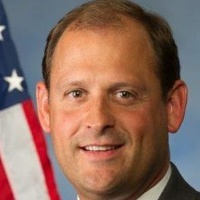
Garland Barr
Representative
KY
Garland Barr
Representative
KY
The "Chief Herbert D. Proffitt Act of 2025" amends the Omnibus Crime Control and Safe Streets Act of 1968 to extend death benefits to retired law enforcement officers who die or are disabled from targeted attacks due to their service. The bill applies retroactively to pending matters before the Bureau of Justice Assistance, or those filed/accruing after the enactment date, with exceptions for actions against retired law enforcement officers that occurred on or after August 28, 2012.
The "National Right-to-Work Act" prohibits mandatory union membership as a condition of employment, protecting employees' rights to choose whether or not to join or support a labor union.
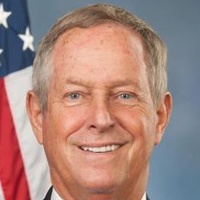
Joe Wilson
Representative
SC
Joe Wilson
Representative
SC
The "National Right-to-Work Act" amends both the National Labor Relations Act and the Railway Labor Act to protect an employee's right to choose whether or not to join or support a labor union. It eliminates the possibility of mandatory union membership or dues payments as a condition of employment, ensuring that employees cannot be forced to join or support a union against their will.
This bill mandates that Medicare Part D drug coinsurance be based on the actual, lower cost of the drug, not the inflated wholesale price, starting in 2026.
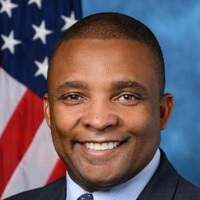
Donald Davis
Representative
NC
Donald Davis
Representative
NC
The "Reducing Drug Prices for Seniors Act" mandates that Medicare Part D drug coinsurance be calculated based on a drug's actual acquisition cost rather than the wholesale price, beginning January 1, 2026. This change affects costs incurred between the annual deductible and the out-of-pocket threshold. The actual acquisition cost is defined as the negotiated price less any manufacturer concessions.
The SAFE for America Act of 2025 eliminates the diversity visa program, effective October 1, 2025.
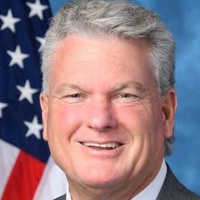
Mike Collins
Representative
GA
Mike Collins
Representative
GA
The SAFE for America Act of 2025 eliminates the Diversity Visa Program, which makes visas available to persons from countries with low rates of immigration to the United States. This is achieved through repealing subsection (c) of Section 203 of the Immigration and Nationality Act. The Act also makes corresponding technical amendments to other sections of the Immigration and Nationality Act to reflect this change. These changes would take effect beginning October 1, 2025.
The "Alternatives to PAIN Act" aims to improve Medicare Part D coverage for non-opioid pain management drugs by reducing cost-sharing and removing barriers like step therapy and prior authorization, starting in 2026.
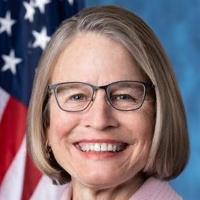
Mariannette Miller-Meeks
Representative
IA
Mariannette Miller-Meeks
Representative
IA
The "Alternatives to PAIN Act" amends Medicare Part D to improve access to non-opioid pain management drugs by waiving deductibles and ensuring they are placed on the lowest cost-sharing tier starting in 2026. The Act also prohibits the use of step therapy and prior authorization requirements for these drugs, further easing access for patients. These changes aim to provide more accessible alternatives for pain management, reducing reliance on opioids.
This bill seeks to reimburse the State of Texas for expenses incurred while securing the southern border between 2021 and 2025 due to the Federal Government's lack of action.
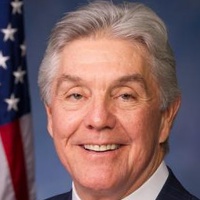
Roger Williams
Representative
TX
Roger Williams
Representative
TX
The "Operation Lone Star Reimbursement Act" seeks to reimburse the State of Texas for the $11.1 billion in expenses incurred for securing the southern border between 2021 and 2025 due to the Federal Government's lack of action. The Governor of Texas must apply for reimbursement from the Department of Homeland Security and the Treasury, including a detailed list of expenses. The Secretary of Homeland Security will review the application and determine eligible expenses, and the Treasury Secretary will then pay Texas the reimbursable amount from unallocated funds.
The Freight RAILCAR Act of 2025 incentivizes freight railcar modernization by establishing a tax credit for qualified newly built replacement railcars and qualified railcar modernization expenditures.
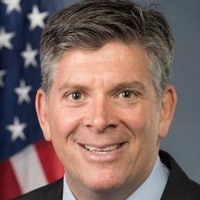
Darin LaHood
Representative
IL
Darin LaHood
Representative
IL
The "Freight RAILCAR Act of 2025" introduces a tax credit for modernizing freight railcars, encouraging investments in newer, more efficient railcars. Taxpayers can claim a credit equal to 10% of their freight railcar fleet modernization expenses, with a limit of 1,000 qualified freight railcars per year. The credit applies to railcars that increase capacity, improve fuel efficiency, or meet updated performance standards, and is available for three years after the Act's enactment. The Secretary of the Treasury is required to submit a report to Congress detailing the credit's usage and impact on railcar modernization and scrapping.
The "Protect Medicaid Act" prohibits federal Medicaid funding for state administrative costs related to providing health benefits to unauthorized immigrants and requires a report on state practices and funding mechanisms for healthcare provided to non-lawfully admitted noncitizens.
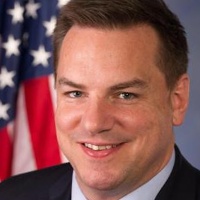
Richard Hudson
Representative
NC
Richard Hudson
Representative
NC
The "Protect Medicaid Act" prohibits federal Medicaid funding for state administrative costs associated with providing healthcare benefits to unauthorized immigrants. It requires a report from the Inspector General of the Department of Health and Human Services on how states that offer health benefits to non-lawfully admitted noncitizens handle Medicaid program administration costs separately. The report will also cover how these states fund programs for non-lawfully admitted noncitizens and analyze the impact of these non-lawfully admitted noncitizens receiving outpatient drugs purchased under the Medicaid Drug Rebate Program or the 340B drug discount program.
This joint resolution seeks to disapprove and nullify the Environmental Protection Agency’s rule regarding the phasedown and management of hydrofluorocarbons.
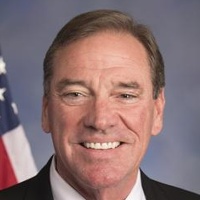
Neal Dunn
Representative
FL
Neal Dunn
Representative
FL
This joint resolution seeks to invoke the Congressional Review Act to disapprove and nullify the Environmental Protection Agency’s recent rule regarding the phasedown and management of hydrofluorocarbons. If enacted, the rule would have no force or effect, effectively blocking the EPA's regulatory framework for these substances.
The HALT Fentanyl Act permanently classifies fentanyl-related substances as Schedule I controlled substances while streamlining registration procedures for legitimate scientific research.
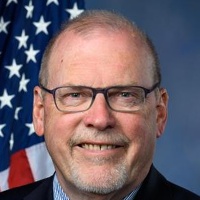
H. Griffith
Representative
VA
H. Griffith
Representative
VA
The Halt All Lethal Trafficking of Fentanyl (HALT Fentanyl) Act permanently classifies fentanyl-related substances as Schedule I controlled substances to strengthen enforcement and penalties against their trafficking. Additionally, the bill streamlines registration processes for researchers to facilitate legitimate scientific study of these substances. It also includes technical corrections and mandates updated federal rulemaking to ensure effective implementation.
The Marc Fischer Memorial Act mandates the implementation of a comprehensive digital mail scanning strategy across all federal prisons to detect and interdict synthetic drugs like fentanyl.
Don Bacon
Representative
NE
Don Bacon
Representative
NE
The Marc Fischer Memorial Act mandates that the Bureau of Prisons implement a comprehensive strategy to achieve 100% digital scanning of all inmate mail to interdict fentanyl and other synthetic drugs. By transitioning to digital mail processing, the Act aims to protect staff and inmates from lethal exposure, improve institutional security, and alleviate the administrative burden on correctional personnel.
The Safe Passage on Interstates Act of 2025 establishes federal criminal penalties for individuals who knowingly obstruct, interfere with, or endanger the normal flow of traffic on interstate highways.
Mike Collins
Representative
GA
Mike Collins
Representative
GA
The Safe Passage on Interstates Act of 2025 establishes federal criminal penalties for knowingly obstructing or interfering with the normal use of an interstate highway. The bill imposes significant fines and prison sentences for activities that delay traffic, endanger motorists, or impede emergency vehicles. Lawful activities authorized by government entities remain exempt from these prohibitions.
This bill mandates that able-bodied adults aged 18 to 64 participate in at least 20 hours of work or volunteer activities per week to remain eligible for Medicaid coverage.

Dan Crenshaw
Representative
TX
Dan Crenshaw
Representative
TX
The Jobs and Opportunities for Medicaid Act mandates that able-bodied adults aged 18 to 64 must work or volunteer at least 20 hours per week to remain eligible for Medicaid coverage. The bill includes specific exemptions for individuals such as pregnant women, primary caregivers, and those with medical conditions. These requirements are scheduled to take effect on January 1, 2026.
This resolution expresses the sense of Congress that the United States should formally recognize Taiwan as an independent nation, establish full diplomatic relations, negotiate a free trade agreement, and support its membership in international organizations.
Thomas Tiffany
Representative
WI
Thomas Tiffany
Representative
WI
This resolution expresses the sense of Congress that the United States should formally recognize Taiwan as an independent, sovereign nation and abandon the obsolete "One China Policy." It calls for the normalization of diplomatic relations, the negotiation of a bilateral free trade agreement, and active U.S. support for Taiwan’s membership in international organizations.
The Fair Access to Banking Act prohibits large financial institutions and payment networks from denying services to law-abiding businesses based on subjective, non-financial, or political criteria.
Garland Barr
Representative
KY
Garland Barr
Representative
KY
The Fair Access to Banking Act prohibits large financial institutions and payment networks from denying services to law-abiding businesses based on subjective, politically motivated, or reputational criteria. The bill mandates that financial institutions use impartial, quantitative, risk-based standards to evaluate customers rather than category-based exclusions. To ensure compliance, the legislation establishes enforcement mechanisms through federal regulators and provides a legal pathway for businesses to sue for damages if they are unfairly denied access to financial services.