Legislative Activity
Track August's sponsored bills, co-sponsored legislation, and voting record
The Love Lives On Act of 2025 ensures that surviving spouses of veterans and service members retain their earned dependency compensation, survivor benefits, and TRICARE eligibility regardless of remarriage.
Richard Hudson
Representative
NC
Richard Hudson
Representative
NC
The Love Lives On Act of 2025 ensures that surviving spouses of veterans and service members retain their earned benefits, including dependency and indemnity compensation, educational assistance, and Survivor Benefit Plan annuities, regardless of remarriage. Additionally, the bill expands TRICARE eligibility to include widows and widowers whose subsequent marriages have ended. This legislation protects the financial security and healthcare access of surviving families by removing penalties associated with remarriage.
This Act authorizes the minting of commemorative coins to honor America’s 250th anniversary, with proceeds supporting the Stephen Siller Tunnel to Towers Foundation’s programs for Gold Star families, veterans, and first responders.
Nicole Malliotakis
Representative
NY
Nicole Malliotakis
Representative
NY
The 250 Years of Service and Sacrifice Commemorative Coin Act authorizes the U.S. Treasury to mint and issue commemorative coins in 2028 to honor America’s semiquincentennial and the legacy of those who serve. Proceeds from the sale of these coins will benefit the Stephen Siller Tunnel to Towers Foundation, supporting programs for Gold Star families, veterans, and first responders. The program is designed to be self-sustaining, ensuring no net cost to the federal government.
This bill prohibits state and local governments from imposing special taxes, insurance requirements, or user fees as a condition for the ownership, manufacture, or transfer of firearms and ammunition.
Ronny Jackson
Representative
TX
Ronny Jackson
Representative
TX
The "No User Fees for Gun Owners Act" prohibits state and local governments from imposing special taxes, insurance requirements, or user fees as a condition for owning, manufacturing, or transferring firearms and ammunition. The bill ensures that firearms are only subject to standard, generally applicable sales taxes, preventing discriminatory financial barriers to gun ownership.
This resolution disapproves and nullifies the Federal Communications Commission’s rule aimed at expanding the E-Rate program to provide home internet access for students.
Russ Fulcher
Representative
ID
Russ Fulcher
Representative
ID
This resolution exercises congressional authority to overturn a recent Federal Communications Commission (FCC) rule regarding the E-Rate program. If passed, the resolution would nullify the FCC’s plan to expand E-Rate funding to provide home internet access for students, rendering the rule void and without legal effect.
The Dismantle DEI Act of 2025 immediately rescinds federal diversity, equity, and inclusion (DEI) mandates across executive offices, contracting, grants, and education, while banning related training and imposing penalties for non-compliance.
Michael Cloud
Representative
TX
Michael Cloud
Representative
TX
The Dismantle DEI Act of 2025 aims to immediately rescind diversity, equity, and inclusion (DEI) mandates across the federal government, including shutting down related offices and banning specific ideological training for federal personnel and contractors. The bill prohibits the use of federal funds for DEI activities by grant recipients and mandates that federal advisory committees cease all such practices or face termination. Furthermore, it establishes strong enforcement mechanisms, allowing individuals to sue violators and seek financial penalties for non-compliance.
The Health Out-of-Pocket Expense (HOPE) Act of 2025 establishes tax-exempt trust accounts to help eligible individuals save for and pay qualified medical expenses.
Blake Moore
Representative
UT
Blake Moore
Representative
UT
The Health Out-of-Pocket Expense (HOPE) Act of 2025 establishes tax-exempt trust accounts designed to help individuals cover qualified medical expenses. These accounts allow for tax-advantaged contributions from employers and state programs, provided the account holder meets specific eligibility and coverage requirements. Distributions used for qualified medical expenses are tax-free, while non-medical withdrawals are subject to income tax and a 30 percent penalty.
This bill provides a 6.62 percent Medicare payment increase for physicians and practitioners from April through December 2025 to help stabilize medical practices.
Gregory Murphy
Representative
NC
Gregory Murphy
Representative
NC
The Medicare Patient Access and Practice Stabilization Act of 2025 aims to support healthcare providers by extending Medicare payment adjustments through the end of 2025. Specifically, the bill provides a 6.62 percent payment increase for services rendered between April 1, 2025, and December 31, 2025, to help practitioners adjust to evolving Medicare payment policies.
This bill recognizes the significant contributions of tax-exempt fraternal benefit societies to communities across the United States through charitable activities, volunteer work, and financial support for their members, and expresses Congressional support for their continued promotion.
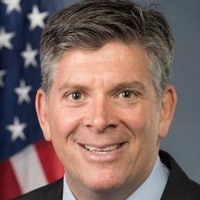
Darin LaHood
Representative
IL
Darin LaHood
Representative
IL
This bill recognizes the significant historical and ongoing contributions of tax-exempt fraternal benefit societies to communities across the United States through charitable activities, volunteer work, and financial support for members. It expresses the sense of Congress that these societies are a valuable support system that addresses unmet needs and generates substantial returns to the U.S. through their tax-exempt status. The bill also advocates for the continued promotion of fraternal benefit societies.
The Defund the CFPB Act proposes eliminating all federal funding for the Bureau of Consumer Financial Protection.
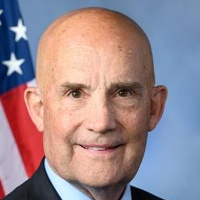
Keith Self
Representative
TX
Keith Self
Representative
TX
The "Defund the CFPB Act" proposes eliminating all federal funding for the Bureau of Consumer Financial Protection. By capping the agency's budget at $0, the bill effectively seeks to terminate the Bureau's financial operations and its ability to function as established under the Consumer Financial Protection Act of 2010.
The Life at Conception Act declares that the constitutional right to life begins at the moment of fertilization and applies to every member of the species *homo sapiens* at all stages of development.
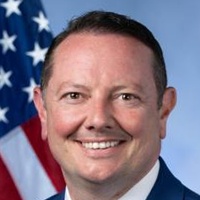
Eric Burlison
Representative
MO
Eric Burlison
Representative
MO
The Life at Conception Act declares that the constitutional right to life begins at the moment of fertilization, defining all human beings as persons from that point forward. The bill establishes legal personhood for every member of the species *homo sapiens* at all stages of development. Additionally, it explicitly prohibits the prosecution of any woman for the death of her unborn child.
The Born-Alive Abortion Survivors Protection Act requires health care practitioners to provide the same level of care to infants born alive after an abortion attempt as they would to any other newborn, mandating immediate hospitalization and imposing penalties for violations, while protecting the mother from prosecution. It also allows the mother of a child born alive to file a civil action against anyone who violated the act.
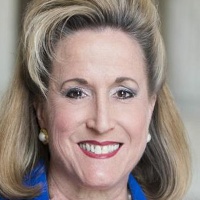
Ann Wagner
Representative
MO
Ann Wagner
Representative
MO
The "Born-Alive Abortion Survivors Protection Act" ensures that infants born alive after an abortion receive the same medical care as any other newborn, mandating immediate hospitalization and requiring healthcare practitioners to report any failures to comply. Violators face fines, imprisonment, and potential prosecution for homicide or attempted homicide, while the mother of the child cannot be prosecuted. The bill also allows the woman who had the abortion to file a civil action against anyone who violated the act. It defines abortion and attempts at abortion, and renames "Partial-Birth Abortions" to "Abortions" in relevant sections of the U.S. Code.
The SAVE Moms and Babies Act of 2025 prohibits the FDA from approving new abortion drugs and imposes strict federal restrictions on the distribution, usage, and reporting requirements for existing abortion medications.
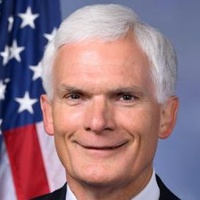
Robert Latta
Representative
OH
Robert Latta
Representative
OH
The SAVE Moms and Babies Act of 2025 prohibits the FDA from approving new abortion drugs and restricts the use of existing ones. The bill mandates strict safety protocols, including in-person administration requirements, expanded adverse event reporting, and limitations on gestational age for drug use.
This bill amends the Internal Revenue Code to allow corporations to deduct intangible drilling and development costs when calculating adjusted financial statement income for the corporate alternative minimum tax.

Mike Carey
Representative
OH
Mike Carey
Representative
OH
The Promoting Domestic Energy Production Act revises corporate tax accounting rules to incentivize domestic energy investment. By allowing corporations to deduct intangible drilling and development costs when calculating their alternative minimum tax, the bill aims to reduce the tax burden on energy producers.
The Main Street Tax Certainty Act makes the 20% pass-through business income deduction permanent by removing its scheduled expiration after 2025.
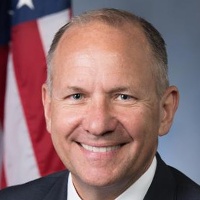
Lloyd Smucker
Representative
PA
Lloyd Smucker
Representative
PA
The Main Street Tax Certainty Act makes the 20% pass-through business income deduction permanent. By removing the current 2025 expiration date, this legislation ensures long-term tax relief for owners of qualified pass-through entities.
The FARM Act strengthens national security by bringing U.S. agricultural systems under the review of the Committee on Foreign Investment in the United States (CFIUS) and mandating regular reporting on foreign influence in the agricultural sector.
Ronny Jackson
Representative
TX
Ronny Jackson
Representative
TX
The Foreign Adversary Risk Management (FARM) Act strengthens national security by bringing U.S. agriculture and its supply chains under the oversight of the Committee on Foreign Investment in the United States (CFIUS). By adding the Secretary of Agriculture to the committee and classifying agricultural systems as critical infrastructure, the bill ensures foreign investments in the sector undergo rigorous security reviews. Additionally, the Act mandates annual reporting to Congress to monitor foreign influence, espionage, and potential threats to the U.S. agricultural industry.
This bill prohibits federal funding for abortions and for health insurance plans that cover abortions, clarifies these prohibitions under the Affordable Care Act, and requires health plans to disclose the extent of their abortion coverage and any related surcharges.
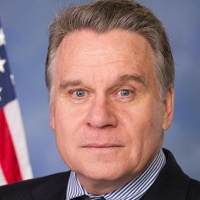
Christopher Smith
Representative
NJ
Christopher Smith
Representative
NJ
The "No Taxpayer Funding for Abortion and Abortion Insurance Full Disclosure Act of 2025" seeks to prohibit the use of federal funds for abortions and for health plans that cover abortions, while allowing individuals and entities to purchase separate abortion coverage with non-federal funds. It clarifies that premium tax credits and cost-sharing reductions under the Affordable Care Act (ACA) cannot be used for health plans that include abortion coverage. The Act also revises notice requirements for health plans, mandating clear disclosure of abortion coverage and any associated premium surcharges to enrollees. Exceptions to the funding restrictions are included for cases of rape, incest, or when the mother's life is in danger.
The Birthright Citizenship Act of 2025 limits automatic birthright citizenship to children born in the U.S. to at least one parent who is a U.S. citizen, a lawful permanent resident, or an alien serving in the U.S. armed forces.
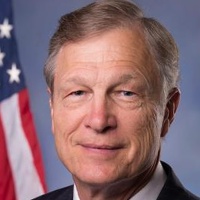
Brian Babin
Representative
TX
Brian Babin
Representative
TX
The Birthright Citizenship Act of 2025 proposes to limit automatic birthright citizenship to children born in the United States who have at least one parent who is a U.S. citizen, a lawful permanent resident, or an alien serving in the U.S. armed forces. This legislation would exclude children born to parents without legal status or those on temporary visas from receiving automatic citizenship. These changes would apply only to individuals born on or after the date of the Act's enactment.
This bill mandates the destruction of existing firearm transaction records from closed businesses and prohibits the ATF from collecting such records in the future.
Michael Cloud
Representative
TX
Michael Cloud
Representative
TX
The "No Retaining Every Gun In a System That Restricts Your Rights Act" mandates the destruction of all firearm transaction records currently held by the ATF from discontinued businesses. Furthermore, it amends federal law to prohibit the future collection and transfer of these records to the government when a firearms business ceases operations. The bill also requires the ATF to submit a formal report to Congress confirming the number of records destroyed.
This bill increases the railroad track maintenance tax credit, introduces annual inflation adjustments, and extends the eligibility period for qualifying expenditures.

Mike Kelly
Representative
PA
Mike Kelly
Representative
PA
This bill amends the Internal Revenue Code to expand the railroad track maintenance credit by increasing the per-mile tax credit to $6,100 and implementing annual inflation adjustments starting in 2026. It also extends the eligibility window for qualifying maintenance expenditures to include costs incurred through 2023. These updates aim to provide greater financial support for ongoing railroad infrastructure improvements.
The Chiropractic Medicare Coverage Modernization Act of 2025 expands Medicare coverage to include all services provided by doctors of chiropractic that are within the scope of their state licensure.
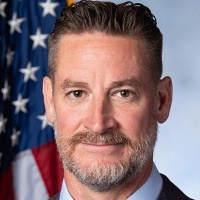
W. Steube
Representative
FL
W. Steube
Representative
FL
The Chiropractic Medicare Coverage Modernization Act of 2025 expands Medicare coverage to include all services legally authorized under a chiropractor’s state license, moving beyond the current restriction limited to manual spinal manipulation. This legislation aligns Medicare benefits with private insurance and other federal health programs to better reflect modern chiropractic practice. To provide these expanded services, chiropractors will be required to complete a one-time training program verified by the Secretary of Health and Human Services.